
Gravity feels so ordinary that we barely notice it – until you remember it shapes everything from the fall of a coffee mug to the birth of galaxies. For centuries we’ve treated it as the most familiar of forces, the quiet background that keeps our feet on the ground and the planets in their orbits. Yet the deeper scientists dig into gravity, the stranger and more unsettling it becomes.
Right now, in 2026, we can send probes to Pluto with pinpoint accuracy using our equations for gravity, but we still can’t say what gravity actually is at the most fundamental level. It’s like we’re using a piece of software every day without the faintest clue how the code underneath really works. Let’s walk through the biggest puzzles that still keep physicists awake at night – the places where gravity stubbornly refuses to make sense.
Einstein’s Beautiful Theory Still Stops Short
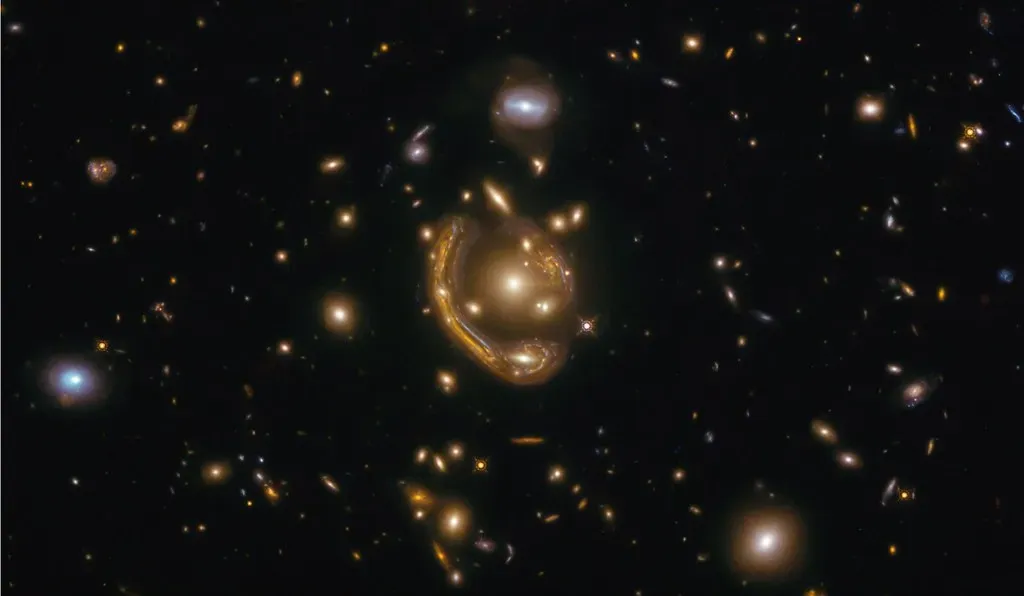
Einstein’s general relativity describes gravity as the bending of space and time themselves, and it’s absurdly accurate in many tests. We’ve seen starlight curve around the sun, measured time slowing down near massive objects, and in the last decade detected ripples in spacetime known as gravitational waves. Every time we point a new instrument at the universe, Einstein’s equations nod back, as if to say, yes, that’s exactly how I told you it would be.
And yet, general relativity is still a classical theory, not a quantum one, which means it leaves out the world of the very small where particles behave like waves and uncertainty rules. When we look at black holes or the first instant after the Big Bang, we run into regions where we need both gravity and quantum mechanics to play nicely together. Right now, they don’t. The math breaks down, giving meaningless infinities that scream that something about our understanding is incomplete.
Gravity Refuses To Fit Into Quantum Physics
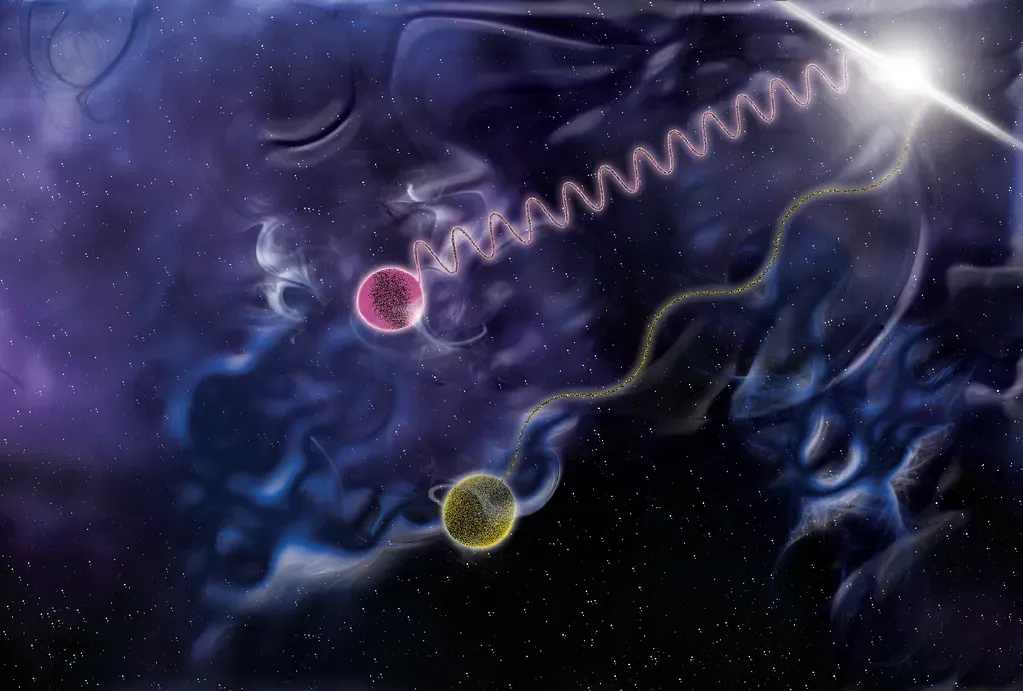
Every other fundamental force – electromagnetism, the strong force, the weak force – is described successfully by quantum field theory. These are the forces that govern atoms, particles, and all the messy quantum behavior that underlies modern technology. Gravity stands awkwardly apart, like the one family member who never joins the group photo. When physicists try to treat gravity as just another quantum field, the calculations quickly explode into contradictions.
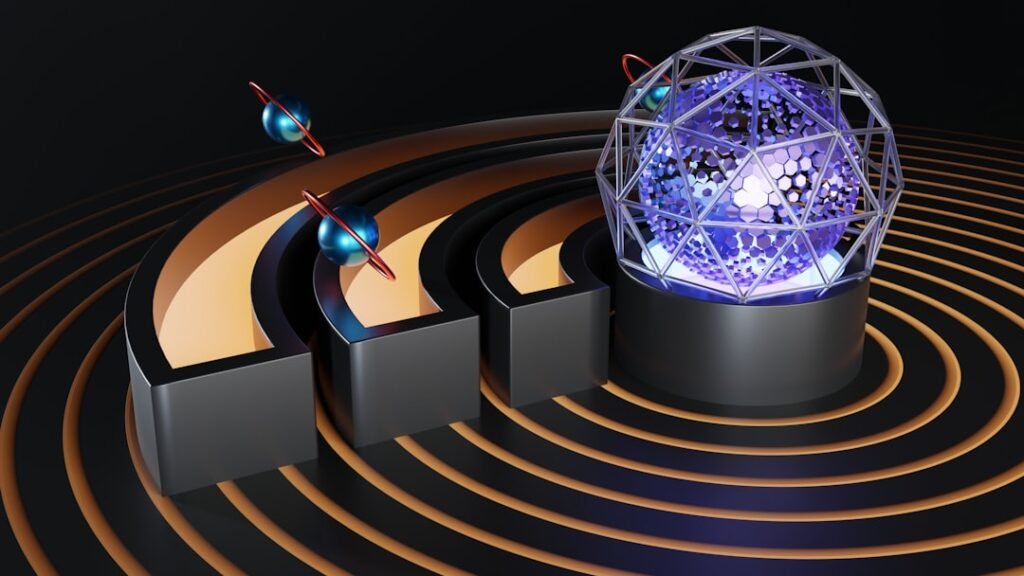
This is why theories like string theory and loop quantum gravity exist: they’re attempts to build a framework where gravity becomes naturally quantum. String theory imagines tiny vibrating strings instead of point-like particles, while loop quantum gravity tries to make spacetime itself granular, like a network of tiny loops. But despite decades of work, none of these approaches has nailed down clear, testable predictions that experiments can check. It’s a bit like having several beautiful maps of a city you’ve never actually visited – you don’t yet know which one, if any, matches the real streets.
Dark Matter: Is Gravity Hiding a Cheat Code?
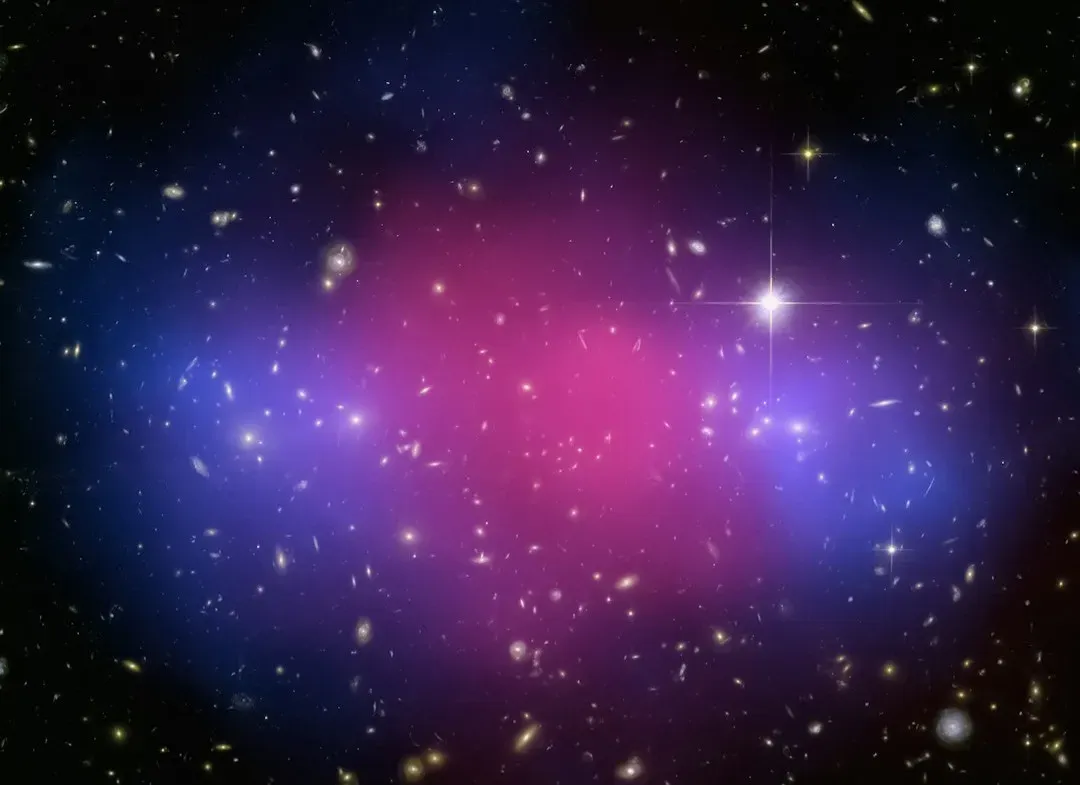
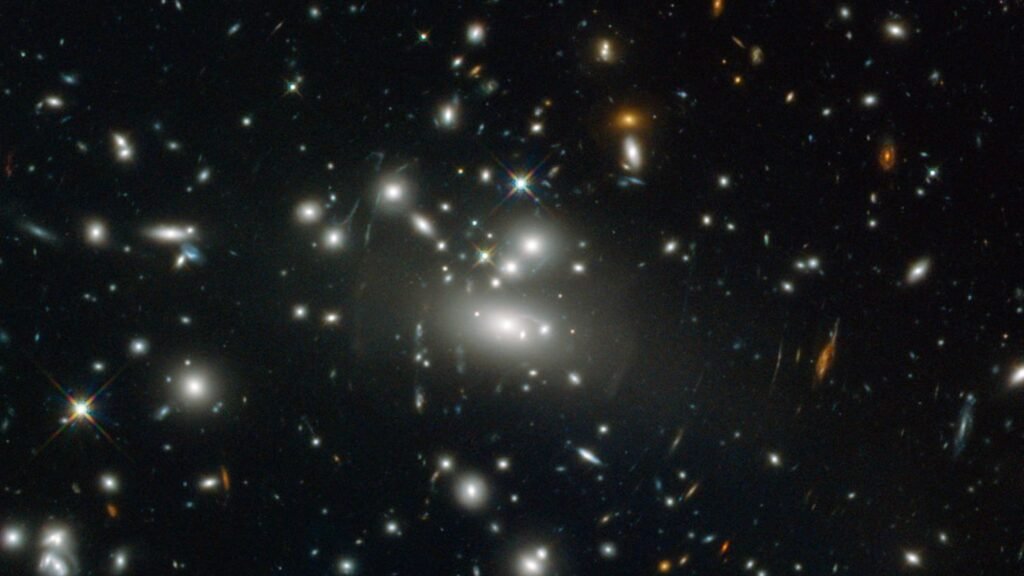
When astronomers look at how galaxies rotate, something bizarre shows up: the stars on the outer edges move too fast to be held together by the visible matter alone. By our standard understanding of gravity, those galaxies should fly apart like a carousel spinning out of control. Instead, they hold together, calm and stubborn, as if there’s an invisible mass glued throughout them. To fix this mismatch, scientists proposed dark matter – some unknown stuff that interacts through gravity but not light.
For decades now, observatories, underground detectors, and particle accelerators have been hunting for dark matter particles. So far, nothing definitive. This has led some physicists to ask a more unsettling question: what if our equations for gravity are wrong on very large scales? Modified gravity theories suggest that instead of adding new invisible matter, we might need to tweak how gravity works at great distances or tiny accelerations. Either answer – a new form of matter, or a rewrite of gravity itself – would transform our picture of the universe.
Dark Energy And Gravity’s Strange Cosmic Behavior
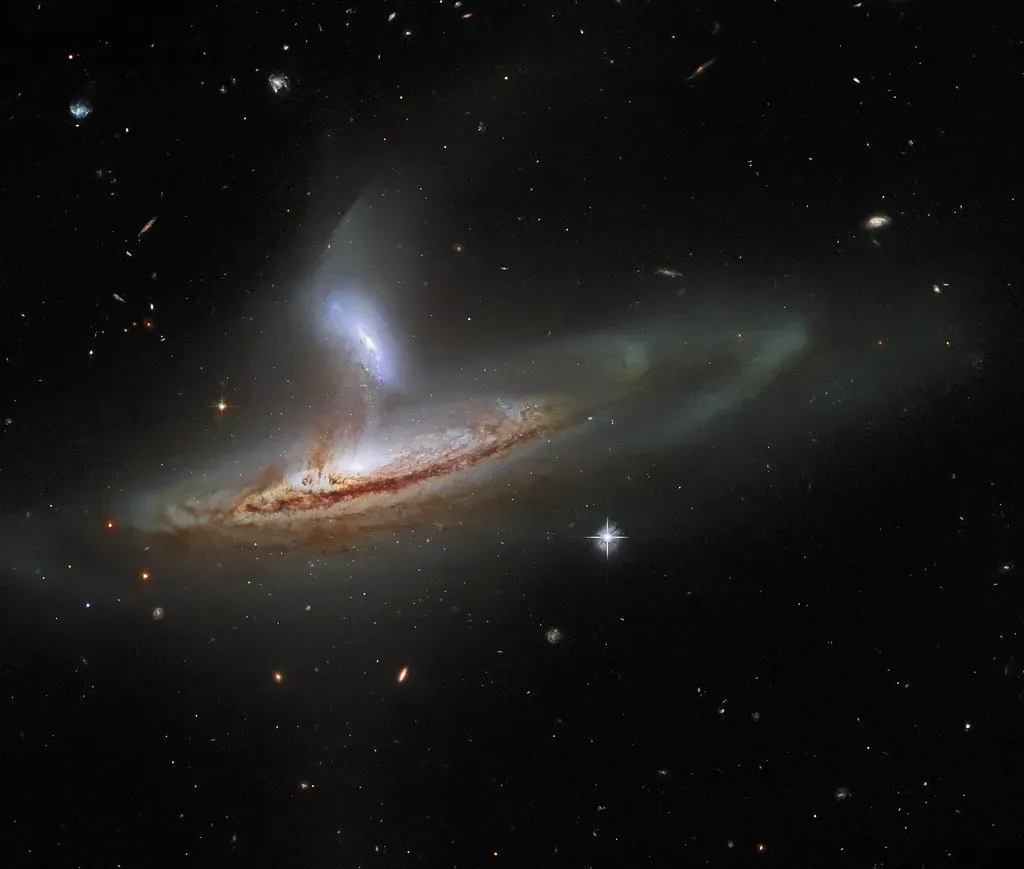
In the late twentieth century, astronomers discovered that the expansion of the universe isn’t slowing down under gravity’s pull as everyone expected. Instead, it’s speeding up. That’s like throwing a ball into the air and watching it not only resist falling back but shoot upward faster and faster. To account for this, scientists introduced dark energy, an unknown component of the cosmos that seems to push space apart, dominating the universe on the largest scales.
What makes this even weirder is that Einstein’s own equations allow for something like dark energy through a term often called the cosmological constant. The trouble is, if you try to calculate this energy from quantum physics, you get a value wildly different from what astronomers observe – off by an astonishing number of orders of magnitude. It’s one of the most embarrassing mismatches in all of theoretical physics. Gravity, which should be calmly pulling things together, seems to be playing a double role: binding locally while allowing a cosmic repulsion to rule globally.
Black Holes And The Information Paradox
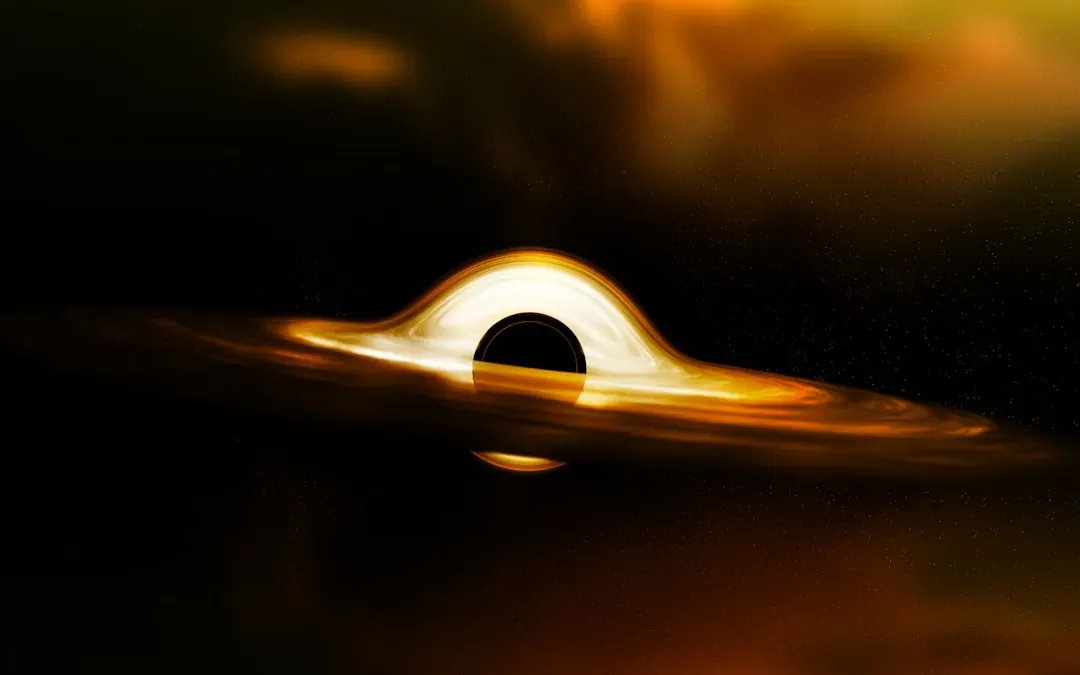
Black holes are where gravity goes absolutely wild, crushing matter into regions where not even light can escape. According to general relativity, once something crosses the event horizon – the point of no return – all details about it are gone to the outside universe. But quantum mechanics insists that information can’t be destroyed, even if matter is rearranged or shredded beyond recognition. This clash leads to the infamous black hole information paradox.
When you add in Hawking radiation, which suggests black holes slowly evaporate, you’re left with a puzzle: if the black hole disappears, where did the information go? Over the years, ideas involving holographic principles, quantum entanglement, and exotic structures near the horizon have been proposed. Some research hints that information might be encoded in subtle correlations in the outgoing radiation, but a fully consistent, universally accepted solution is still missing. At the heart of this mess is gravity, forcing us to rethink what space, time, and information even mean.
Why Is Gravity So Incredibly Weak?
If you’ve ever picked up a paperclip with a small magnet, you’ve casually defeated the entire gravitational pull of the Earth on that tiny piece of metal. That’s how weak gravity is compared with electromagnetism. In particle physics, this mismatch is called the hierarchy problem: why should one fundamental interaction be so absurdly feeble compared with the others? Our equations can account for the strength of gravity once we plug in the numbers, but they don’t tell us why the numbers are what they are.
Some theories suggest that gravity might leak into extra dimensions beyond the three of space we know, which would make it look weaker in our slice of reality. Others imagine that the apparent weakness is tied to the way spacetime and quantum fields are structured at unimaginably small scales. So far, experiments at facilities like particle colliders and precision tests of gravity at short distances have not found clear evidence of extra dimensions or new forces. The question of gravity’s strange weakness remains a nagging hint that our picture of the universe is missing a crucial piece.
Is Gravity Even Fundamental – Or Just An Emergent Illusion?
There’s a radical idea that’s gained more attention over the last couple of decades: maybe gravity isn’t truly fundamental at all. Instead, it could be an emergent phenomenon, like temperature or pressure arising from the collective behavior of countless underlying particles. Some physicists have proposed that gravity might emerge from the way information and quantum entanglement are organized in spacetime, as if space itself is woven out of invisible threads of correlations.
In this view, what we feel as gravity could be a kind of statistical effect, not a basic interaction like the others. These ideas are still highly speculative, with no clear experimental confirmation, but they reflect a growing suspicion that our usual categories might be too simple. Personally, I find this both unsettling and strangely satisfying, like discovering that solid objects are mostly empty space. If gravity turns out to be a mirage created by something deeper, then the real story of the universe might be far stranger than the familiar tug that keeps us on the ground.
Living With A Familiar Stranger
Gravity is the most everyday of forces and at the same time one of the least understood, a familiar stranger that quietly runs the show while refusing to explain itself. From dark matter and dark energy to black holes and the early universe, the biggest mysteries in cosmology all seem to have gravity tangled at their core. Our best theories work brilliantly in their own domains, yet fall apart when we push them into the extremes where everything intersects.
In a way, that’s the exciting part: the gaps in our understanding of gravity are signposts pointing toward the next big breakthroughs in physics. Somewhere in those puzzles might lie a new theory that unifies the very large and the very small, reshaping how we think about space, time, and reality itself. When you drop your keys or look up at the night sky, it’s worth remembering that behind that simple pull downward is a cosmic riddle still waiting to be solved. Which of these mysteries would you most want to see unraveled first?