Imagine waking up one day and being told that gravity, the force you’ve trusted your whole life to keep your feet on the ground, might not really be a fundamental force at all. Not wrong in the everyday sense, but something deeper and stranger: a side effect, an illusion that only looks like a fundamental force when you zoom out. That’s the wild claim at the heart of some of the most cutting‑edge ideas in physics today.
For most of us, gravity feels like the most obvious thing in the universe. You drop a glass, it falls. Planets orbit the sun, galaxies spin, tides rise and fall. Yet, when physicists try to combine gravity with quantum mechanics – the theory that rules the tiny world of atoms and particles – things stop making sense. To fix that, some researchers are taking a bold step: maybe we’ve been thinking about gravity the wrong way from the very beginning.
The Shocking Idea: Gravity As Emergent, Not Fundamental
Here’s the unsettling proposal: gravity might be like temperature or pressure, not like an elementary building block of reality. Temperature doesn’t exist in a single atom; it appears when you have a huge number of atoms interacting, and you step back far enough to see the big picture. According to emergent gravity ideas, the “force” pulling you toward the Earth could be the large‑scale result of countless microscopic processes, not a basic ingredient of nature.
In this view, you don’t start with gravity and work down to smaller pieces. You start with something more fundamental – like quantum information, or microscopic degrees of freedom hiding in spacetime – and gravity shows up only when you look at the system from far away. It’s like how a crowd at a stadium can form a wave even though each person is just standing and sitting; the wave is real, but it’s not a separate thing, it’s a pattern. Gravity, on this picture, is that kind of pattern.
How Einstein’s Beautiful Theory Starts To Crack
Einstein’s theory of general relativity has been spectacularly successful for more than a century. It describes gravity not as a pull, but as the bending of spacetime by mass and energy, and it has passed every experimental test we’ve thrown at it, from the orbit of Mercury to GPS satellites. But when we try to apply Einstein’s equations to the extreme edges of reality – inside black holes, or at the first fractions of a second after the Big Bang – we run into paradoxes and infinities that scream there’s something missing.
The biggest clash comes when we try to merge general relativity with quantum mechanics into a single, consistent theory. Quantum theory is all about probabilities, fluctuations, and discrete chunks of energy, while relativity treats spacetime as a smooth, continuous fabric. At very tiny scales, the two theories give incompatible answers. This is where the idea that gravity is emergent becomes attractive: maybe Einstein’s beautiful theory is like the smooth surface of water, while the true quantum “atoms” of spacetime are hidden below.
From Holograms To Information: Where Gravity Really Comes From
One of the strangest inspirations for emergent gravity comes from something called the holographic principle. This idea suggests that the information needed to describe a region of space – say, everything inside a black hole or even a universe – might actually live on its boundary, like a cosmic hologram. Just as a flat hologram can encode a full 3D image, the universe might be “encoded” on lower‑dimensional surfaces in a way we don’t directly see.
Some physicists think that gravity could emerge from the way this information is organized and processed. In these models, what we call spacetime curvature is a kind of bookkeeping rule for how quantum information is entangled and distributed. It’s as if gravity is the story your brain tells when it tries to make sense of an unimaginably complex web of invisible connections, turning pure information into the geometry we experience as space and time.
Verlinde’s Entropic Gravity: Gravity As A Kind Of Thermodynamics

One of the best‑known modern attempts to treat gravity as emergent comes from physicist Erik Verlinde, who proposed that gravity might be an entropic force. Entropy is a measure of disorder or the number of ways a system can arrange itself; it’s the reason heat flows from hot to cold and why ice melts into water. Verlinde’s radical suggestion is that when objects move in space, the change in underlying information and entropy can generate something that looks exactly like gravity.
In this picture, when you feel the Earth “pulling” you down, what’s really happening is that the universe is nudging you toward states with more possible microscopic configurations – toward higher entropy. The force you feel is not fundamental, it’s like the tension in a rubber band snapping back to a relaxed state. This framework has even been used to explain some galactic phenomena that we usually attribute to dark matter, by tweaking how gravity behaves at very large scales, though the jury is still very much out on whether it truly matches observations.
Dark Matter, Dark Energy, And The Search For Better Explanations
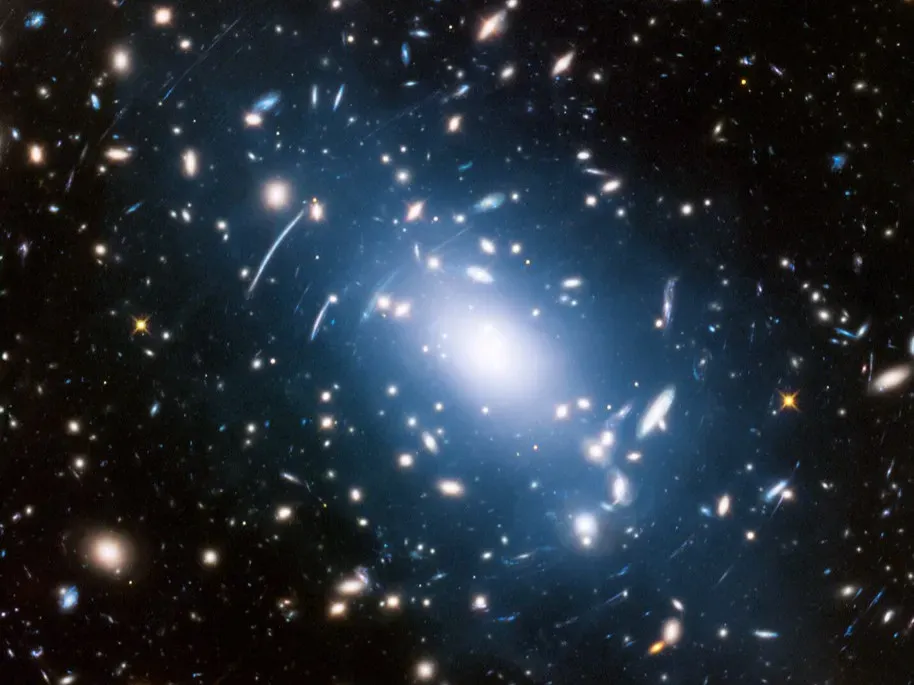
Modern cosmology relies heavily on two mysterious ingredients: dark matter and dark energy. Dark matter is a kind of invisible mass introduced to explain why galaxies spin the way they do and why large‑scale structures in the universe hold together. Dark energy is an even stranger component that seems to be driving the accelerated expansion of the universe. Together, these two “dark” players make up the vast majority of the cosmos, while ordinary matter is just a small fraction.
Emergent gravity theories step into this story with a bold claim: maybe some of the effects we attribute to these unseen substances are actually telling us that our understanding of gravity is incomplete. Instead of adding more and more invisible stuff, perhaps we should change the rules of how spacetime and gravity work on very large scales. Right now, standard dark matter models still fit a wide range of data extremely well, but persistent discrepancies and new high‑precision surveys keep the door open for alternatives, keeping emergent gravity in the conversation.
What This Means For Reality: Is Spacetime Itself An Illusion?
If gravity can emerge from more fundamental ingredients, then it’s natural to ask the next uncomfortable question: what about spacetime itself? Some approaches to quantum gravity suggest that space and time might not be basic building blocks, but byproducts of deeper quantum relationships. In some models, the network of entanglement between quantum systems gives rise to the very notion of distance, direction, and time flow when seen from far away.
That’s a profound shift in perspective. It turns the universe from a stage on which particles and fields move into something more like a massive, evolving computation, with spacetime as the interface. Personally, the first time I seriously sat with this idea, it felt like learning that the solid ground under my feet was actually a clever visual trick. Yet if the math and experiments support it, then our everyday intuition may just be a useful story built on top of a much stranger, more abstract reality.
How We Might Actually Test Whether Gravity Is An Illusion
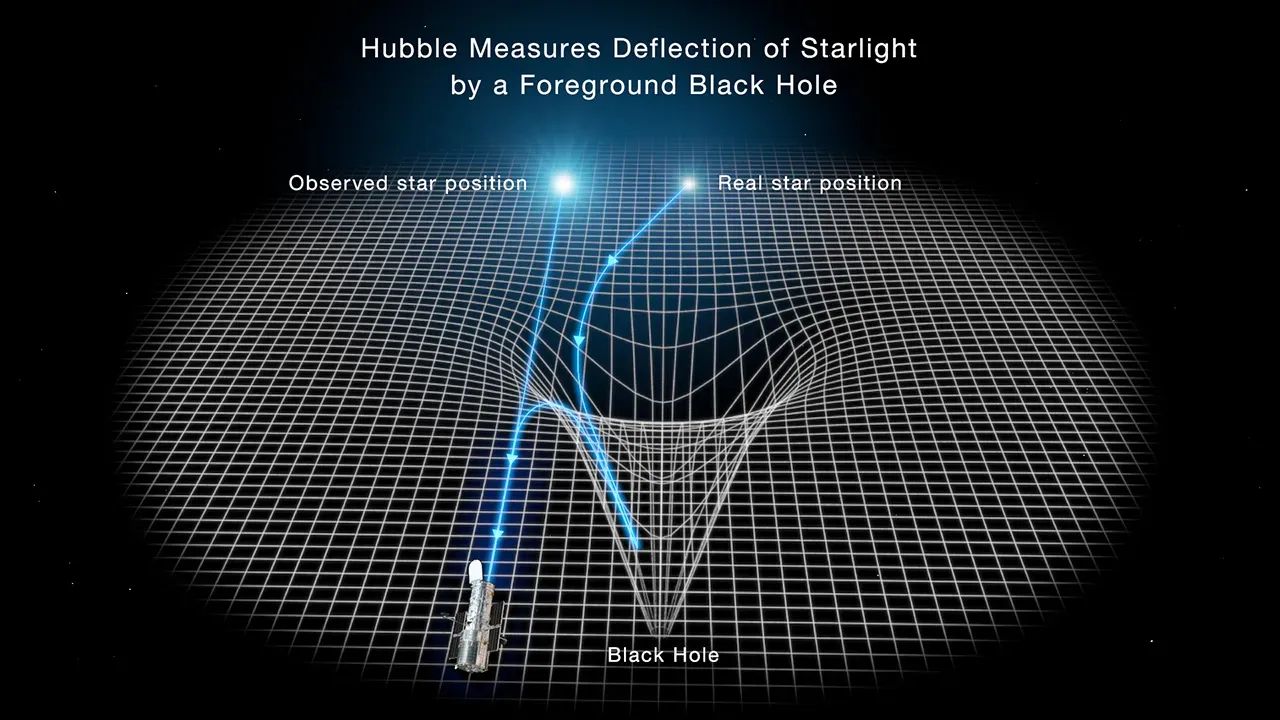
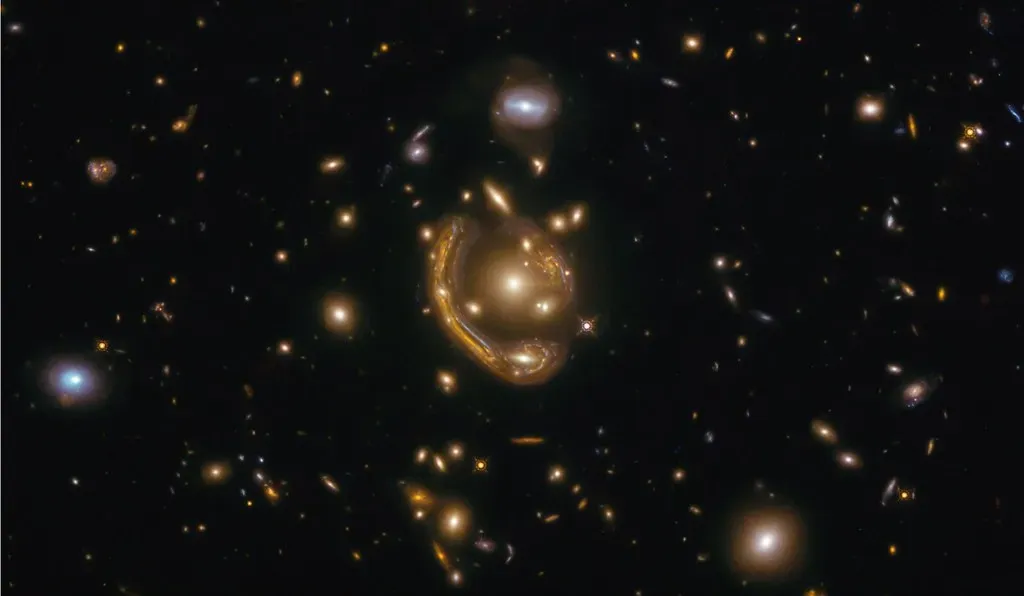
The real test for any radical theory is not how mind‑bending it sounds, but whether it makes predictions that can be checked. Emergent gravity ideas are being probed using galaxy rotation curves, gravitational lensing, the motion of satellite galaxies, and the cosmic web at enormous scales. High‑precision measurements of how light bends around clusters, or how structures grow over billions of years, can reveal tiny deviations from Einstein’s predictions that might hint at a different underlying mechanism.
On smaller scales, experiments with ultra‑cold atoms, tabletop tests of gravity at sub‑millimeter distances, and increasingly sensitive gravitational wave observations all add pieces to the puzzle. So far, general relativity continues to hold up impressively well, but it hasn’t closed the door on emergent explanations. We’re in that thrilling phase where several daring ideas are on the table, and only sharper data will decide which story of gravity survives. In the end, whether gravity is truly fundamental or an astonishing illusion, the universe will keep us honest – what do you think it will reveal?