
Picture this. One morning in September 2015, scientists in Louisiana and Washington detected something that had traveled over a billion years to reach us. Something Einstein himself doubted we’d ever find, even though he predicted it a century earlier. Ripples in the fabric of spacetime called gravitational waves arrived at the earth from a cataclysmic event in the distant universe.
This wasn’t just another discovery. It was a moment that rewrote the rules of astronomy and gave humanity a completely new sense, a way to “hear” the universe rather than just see it. Let’s be real, the implications are staggering.
The Century-Long Hunt for Cosmic Ripples
Albert Einstein predicted the existence of gravitational waves in 1916 in his general theory of relativity. His equations suggested that when massive objects accelerate through space, they create ripples in the very fabric of reality itself. Think of it like dropping a stone into a cosmic pond, except the pond is spacetime and the stone weighs as much as the sun.
Here’s the thing. Einstein himself doubted that they could ever be detected. The waves are so minuscule that even from the most violent cosmic events, they barely register. Yet researchers spent decades building instruments sensitive enough to catch these whispers from the universe. The challenge was immense, requiring technology that could measure changes smaller than the width of a proton across distances of several kilometers.
LIGO: The Observatory That Listens to the Universe
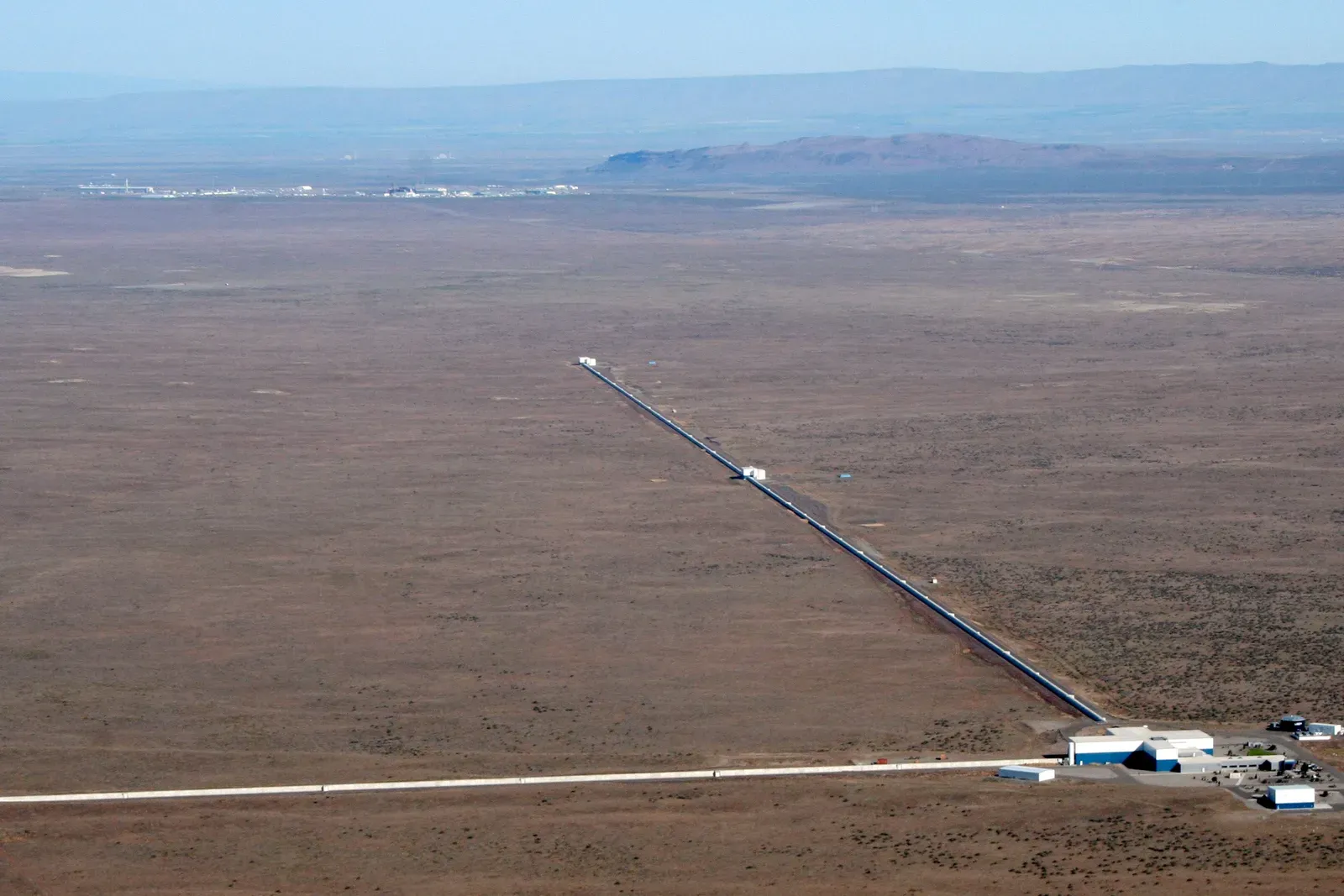
The gravitational waves were detected on September 14, 2015, at 5:51 a.m. EDT, using the twin LIGO interferometers, located in Livingston, Louisiana and Hanford, Washington. Each L-shaped interferometer spans 4 kilometers in length and uses laser light split into two beams that travel back and forth through each arm, bouncing between precisely configured mirrors. The setup is breathtakingly precise.
LIGO is so sensitive that it can detect a change smaller than 1/10,000 the width of a proton. To put that in perspective, imagine measuring the distance to the nearest star and noticing a change equal to the width of a human hair. The technology required to achieve this level of sensitivity pushed the boundaries of engineering and physics. Both detectors needed to register the same signal within milliseconds to confirm it wasn’t just local noise from a truck rumbling by or an earthquake.
Two Black Holes Collide: The First Detection
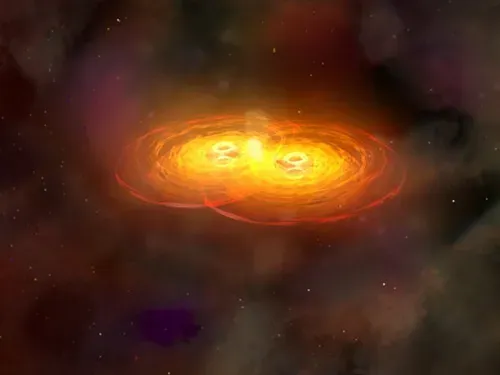
So what exactly did LIGO detect that September morning? A pair of black holes orbiting around each other lost energy through the emission of gravitational waves, causing them to gradually approach each other over billions of years, and then much more quickly in the final minutes. During the final fraction of a second, the two black holes collided into each other at nearly one-half the speed of light and formed a single more massive black hole.
Based on the observed signals, LIGO scientists estimated that the black holes for this event were about 29 and 36 times the mass of the sun, and the event took place 1.3 billion years ago. About 3 times the mass of the sun was converted into gravitational waves in a fraction of a second – with a peak power output about 50 times that of the whole visible universe. Let that sink in. For a brief moment, this collision was more luminous in gravitational waves than all the stars we can see combined. The sheer magnitude is almost incomprehensible.
What Gravitational Waves Reveal About Reality
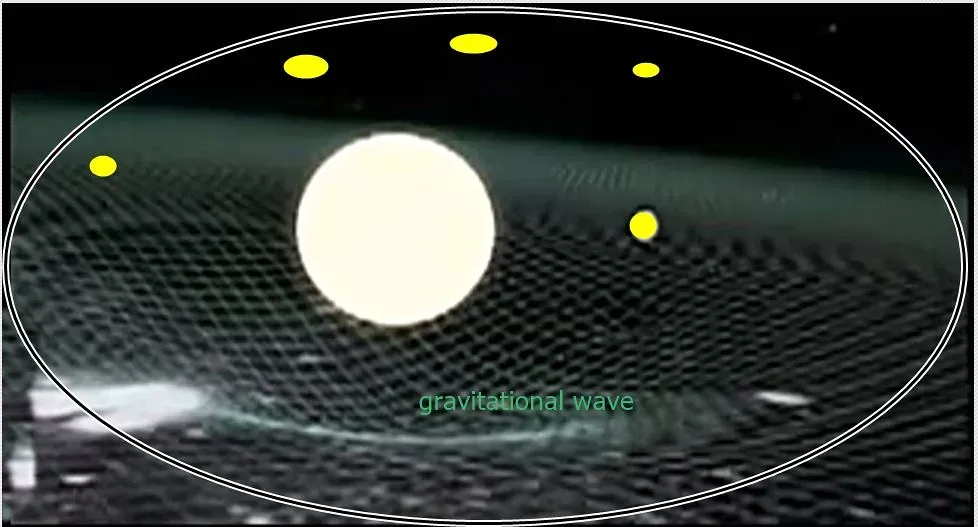
In 1916, Albert Einstein demonstrated that gravitational waves result from his general theory of relativity as “ripples in spacetime.” In Albert Einstein’s general theory of relativity, gravity is treated as a phenomenon resulting from the curvature of spacetime. This curvature is caused by the presence of mass. If the masses move, the curvature of spacetime changes. Essentially, gravity isn’t just a force pulling objects together. It’s the shape of reality itself bending and flexing.
These cosmic ripples would travel at the speed of light, carrying with them information about their origins, as well as clues to the nature of gravity itself. The strongest gravitational waves are produced by cataclysmic events such as colliding black holes, supernovae (massive stars exploding at the end of their lifetimes), and colliding neutron stars. Each type of event produces a unique signature, almost like a cosmic fingerprint. Scientists can now decode these signals to understand what happened billions of years ago in distant corners of the universe.
Neutron Stars: Gold Factories in Space
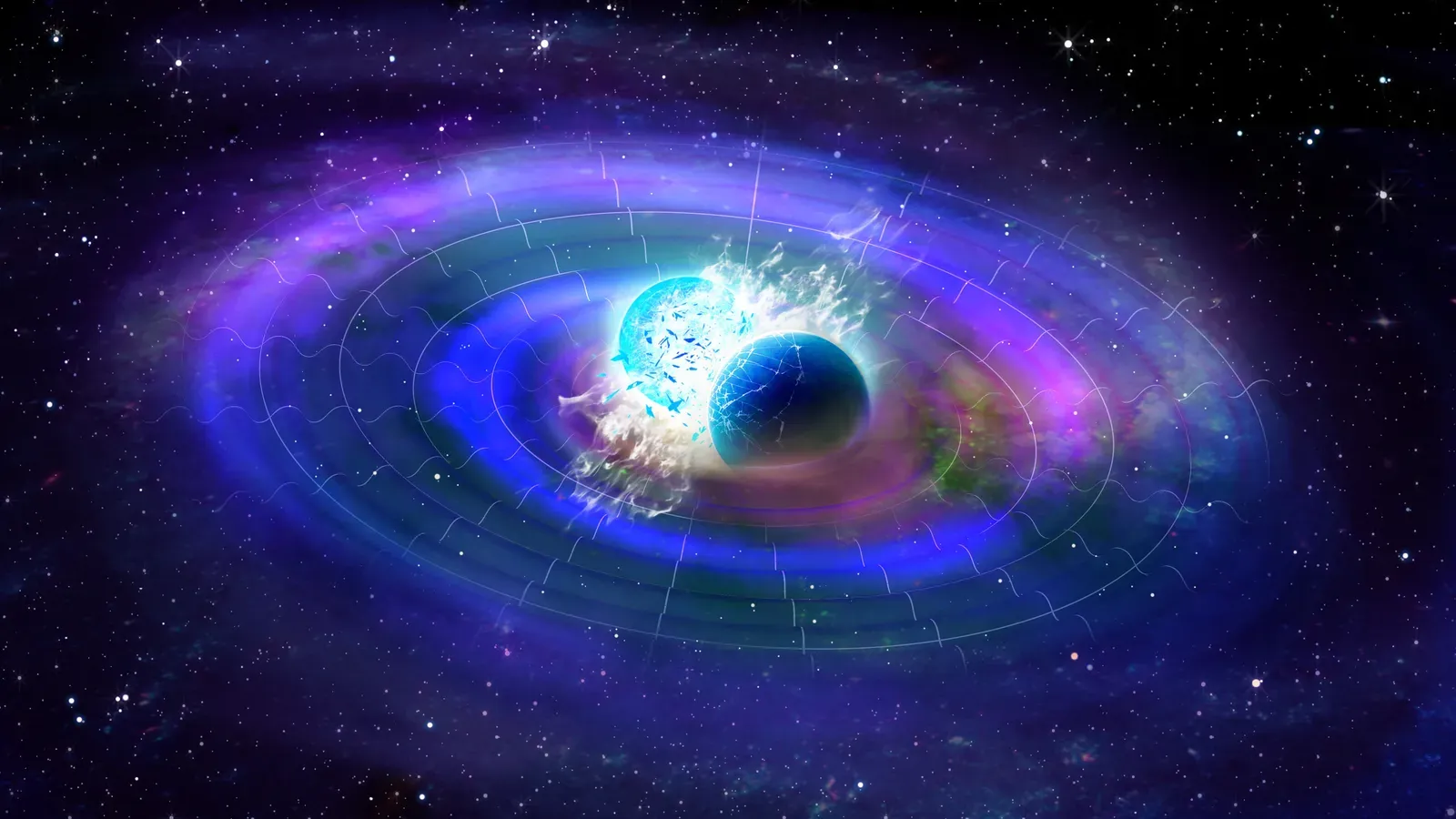
Black holes weren’t the only cosmic dancers detected by LIGO. On 17 August 2017, the LIGO and Virgo interferometers observed GW170817, a gravitational wave associated with the merger of a binary neutron star (BNS) system in NGC 4993, an elliptical galaxy in the constellation Hydra about 140 million light-years away. GW170817 co-occurred with a short (roughly 2-second-long) gamma-ray burst, GRB 170817A, first detected 1.7 seconds after the GW merger signal, and a visible light observational event first observed 11 hours afterwards. This was a game changer.
For the first time, astronomers witnessed both gravitational waves and light from the same event. The new light-based observations show that heavy elements, such as lead and gold, are created in these collisions and subsequently distributed throughout the universe. Every gold ring on your finger, every platinum component in technology, was forged in the violent merger of neutron stars billions of years ago. The universe literally manufactures precious metals in its most extreme moments. Honestly, that’s more spectacular than any science fiction.
Opening a New Window on the Cosmos
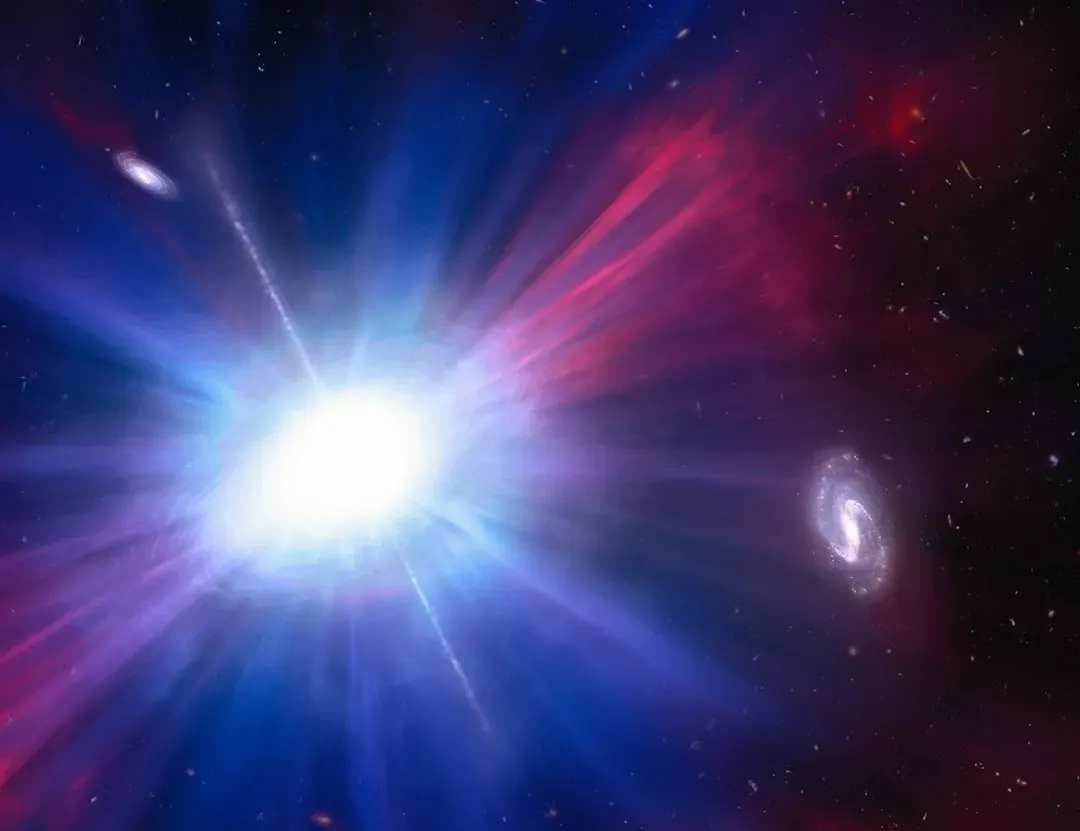
The observation confirmed the last remaining directly undetected prediction of general relativity and corroborated its predictions of space-time distortion in the context of large scale cosmic events (known as strong field tests). It was heralded as inaugurating a new era of gravitational-wave astronomy, which enables observations of violent astrophysical events that were not previously possible and allows for the direct observation of the earliest history of the universe.
Think about what this means. Before 2015, we could only observe the universe through electromagnetic radiation: light, radio waves, X-rays. Now we have an entirely different sense. Gravitational-wave astronomy has the advantage that, unlike electromagnetic radiation, gravitational waves are not affected by intervening matter. They pass through everything, carrying pristine information from events we could never see with telescopes. Scientists are detecting roughly one gravitational wave event per week now, and future observatories will push sensitivity even further, potentially revealing signals from the Big Bang itself.
The Future: What’s Next for Gravitational Wave Science
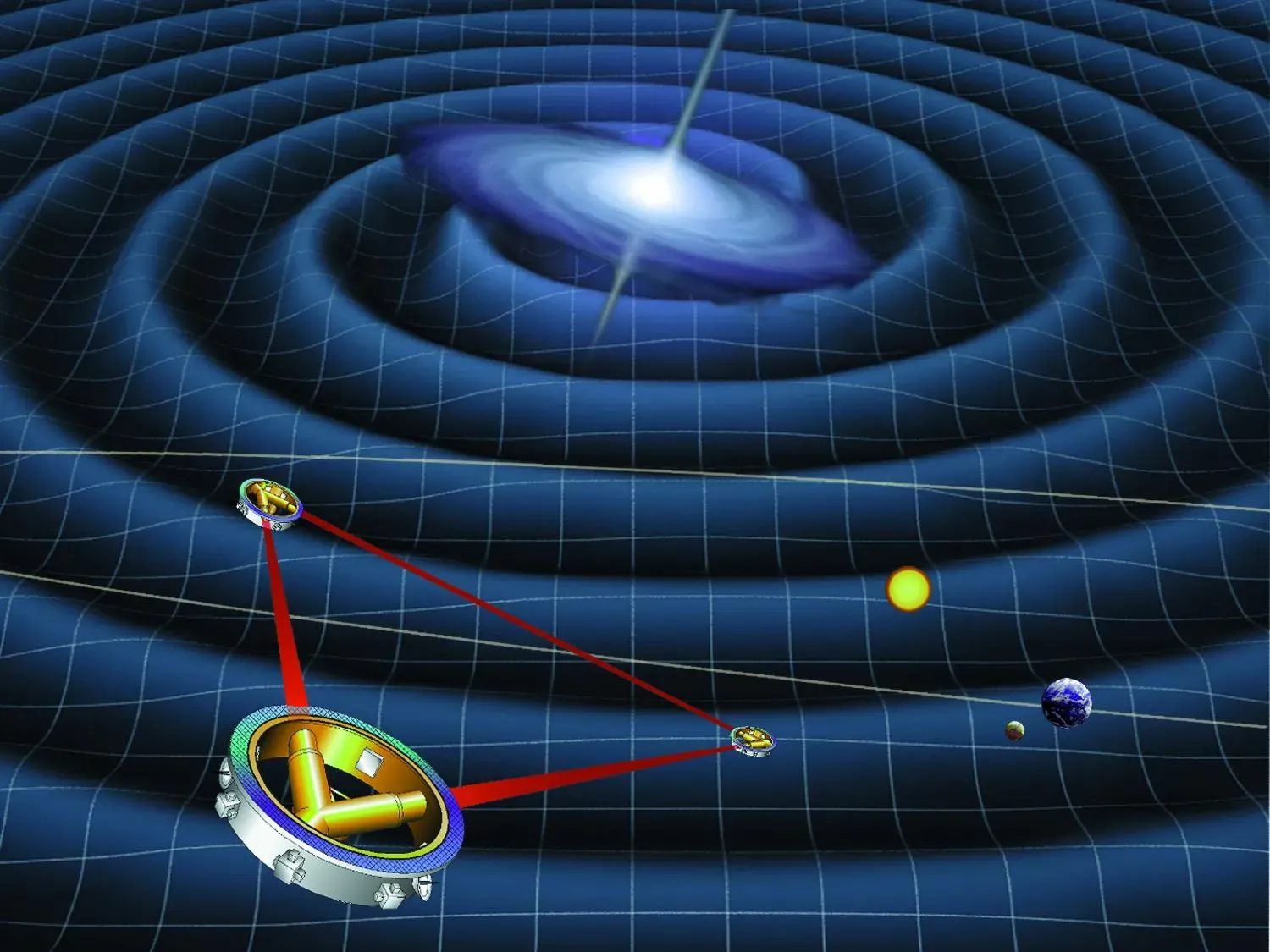
The story is far from over. Experts are discussing the science case and roadmap for the next generation of gravitational-wave detectors on the ground. The third-generation detectors will cover the entire range of gravitational-wave frequencies that can be measured on Earth – between about 1 Hz and 10 kHz – and will be able to observe a volume of the Universe about 1000 times larger than that accessible to current observatories. We’re talking about observatories that could detect events from the edge of the observable universe.
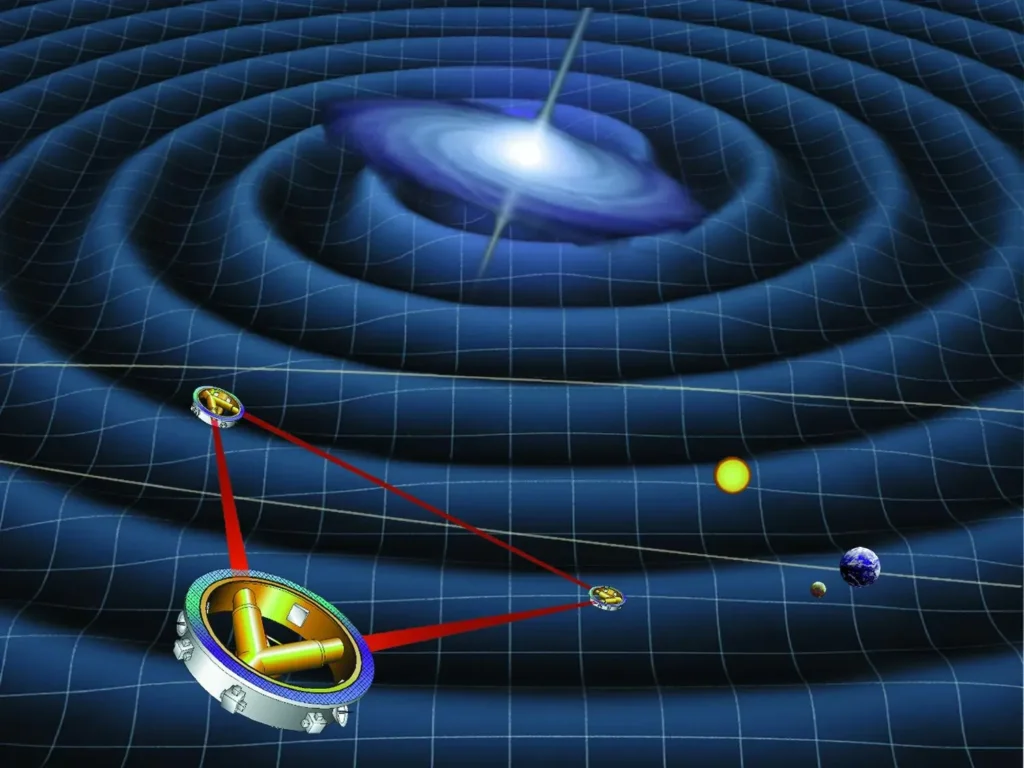
Beyond Earth, space-based detectors are in development. Laser Interferometer Space Antenna (LISA) is a proposed space based observation mission to detect gravitational waves. With the proposed sensitivity range of LISA, merging binaries like GW150914 would be detectable about 1000 years before they merge. LISA Pathfinder, LISA’s technology development mission, was launched in December 2015 and it demonstrated that the LISA mission is feasible. Imagine being able to track black holes spiraling together for a millennium before they finally collide. The scientific opportunities are staggering. Machine learning and AI are also revolutionizing analysis, enabling scientists to process signals within seconds that previously took hours to interpret.
A century after Einstein’s prediction, we’re not just confirming his theory. We’re using it to explore realms of physics he never imagined we’d reach. Gravitational waves have given us ears to hear the universe’s most violent and beautiful symphonies. What will we discover next when we listen even more carefully? The universe is speaking, and we’re finally learning its language.