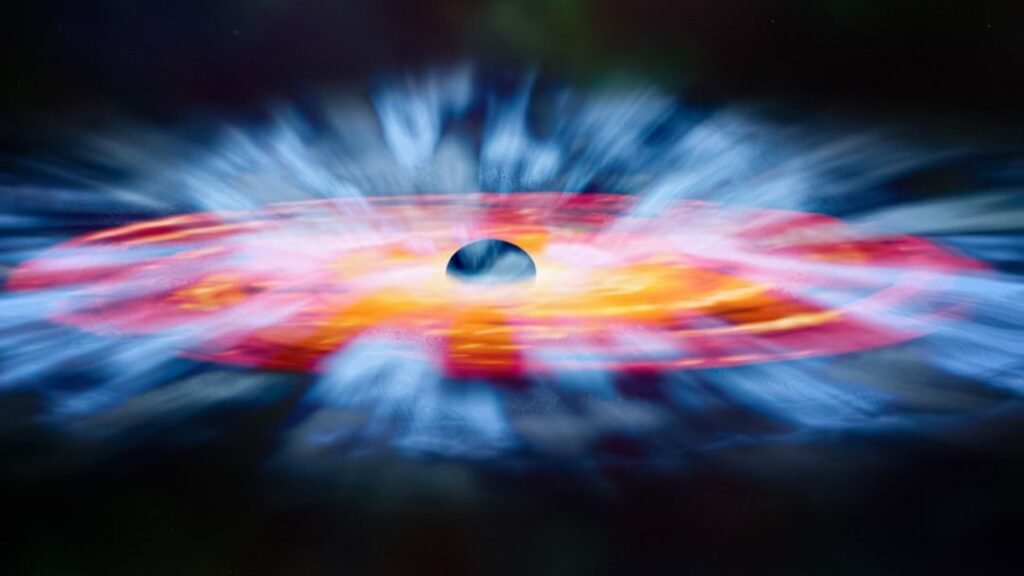

There’s something almost poetic about a black hole being so powerful that it doesn’t just consume matter – it prevents life from ever beginning nearby. Most people know black holes as cosmic vacuum cleaners, swallowing everything in sight. But here’s the thing: the real story is far stranger and, honestly, far more fascinating than simple destruction.
New research is revealing that stellar black holes create a kind of gravitational exclusion zone around themselves, a region where the laws of star formation effectively break down. The implications stretch beyond astrophysics textbooks and into our deepest understanding of how galaxies are built. So let’s dive in.
The Discovery That’s Rewriting Stellar Physics
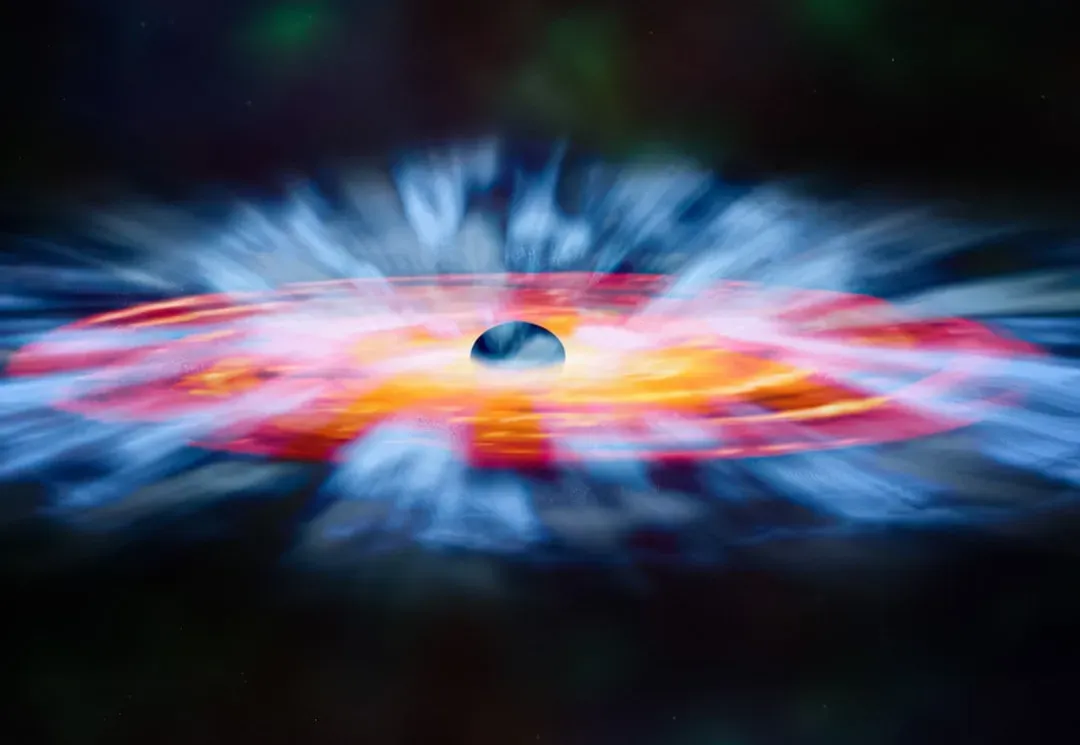
Imagine trying to build a sandcastle right next to a crashing ocean wave. No matter how carefully you pile the sand, the wave keeps tearing it apart before it can hold its shape. That’s essentially what’s happening around stellar black holes, and scientists have now put hard numbers to this long-suspected phenomenon.
Research published in April 2026 has confirmed that the gravitational and radiative forces surrounding stellar mass black holes create conditions that actively suppress and prevent star formation within a defined surrounding region. This isn’t a minor statistical curiosity. It’s a fundamental mechanism that shapes the architecture of entire star systems and possibly galaxies.
The research draws on advanced modeling techniques combined with observational data, giving scientists a clearer picture than ever before of just how dominant a black hole’s influence can be even over processes happening at significant distances from the event horizon itself.
What Exactly Is a “Forbidden Zone”?
The term “forbidden zone” sounds dramatic, and honestly, I think it earns the title. It refers to the spatial region around a stellar black hole where the combined forces, including tidal disruption, intense radiation, and gravitational perturbations, make it effectively impossible for gas and dust clouds to collapse into new stars.
Star formation depends on a delicate process. A gas cloud must be dense enough and cool enough to collapse under its own gravity. Near a stellar black hole, that balance is constantly being disrupted. The black hole injects energy into surrounding gas, heats it, stirs it, and shreds it before it ever gets the chance to condense.
Think of it like trying to freeze water while someone keeps stirring it with a hot poker. The conditions just never settle into what’s needed. Scientists are now mapping these forbidden zones with increasing precision, and what they’re finding suggests these regions are larger than many previously assumed.
The Role of Radiation and Gravitational Tidal Forces
It’s not purely gravity doing the heavy lifting here. The radiation environment around an active stellar black hole is extraordinarily hostile. X-rays and other high-energy emissions pour outward, ionizing nearby gas and raising its temperature to the point where gravitational collapse becomes essentially impossible.
Tidal forces add another layer of complexity. Close to a black hole, the gravitational pull varies so dramatically across short distances that gas clouds get stretched and sheared rather than compressed. It’s the same principle that tears apart asteroids passing too close to a planet, just applied to the raw material of future stars.
What makes this research particularly compelling is the way these two forces, radiation and tidal disruption, work in tandem. Neither alone might be sufficient to create a total forbidden zone. Together, they form an almost impenetrable barrier against stellar birth. Honestly, nature rarely does things by halves.
How Large Are These Zones and What Determines Their Size?
Here’s where things get genuinely surprising. The size of the forbidden zone isn’t fixed. It scales with the mass of the black hole and with its current level of activity. A more massive or more actively accreting black hole projects a wider zone of suppression around itself.
For stellar mass black holes, which typically range from a few times the mass of our Sun up to several dozen solar masses, these forbidden zones can extend across regions that would otherwise be prime real estate for star formation. We’re talking about distances that, in cosmic terms, could encompass entire stellar nurseries.
This variability is scientifically important because it means the forbidden zone isn’t a static feature. As a black hole’s activity fluctuates over time, the zone effectively breathes in and out, sometimes suppressing star formation over a wide area, sometimes pulling back to allow formation closer in. That dynamic quality makes modeling it significantly more complex, and significantly more interesting.
What This Means for Galaxy Evolution
Zoom out for a moment. If individual stellar black holes can suppress star formation across meaningful regions of space, then the cumulative effect of millions of such black holes distributed across a galaxy could be enormous. We may have been underestimating the role of stellar mass black holes in regulating a galaxy’s overall star formation rate.
Supermassive black holes at galactic centers have long been recognized as key players in galaxy evolution. The so-called AGN feedback, where energy from a supermassive black hole quenches star formation across vast scales, is already a cornerstone of modern galaxy formation theory. What this newer research suggests is that the same basic mechanism operates at far smaller scales too, distributed throughout the galactic disk like countless tiny regulators.
It’s almost like discovering that not only does the factory manager control production, but so does every single floor supervisor. The galaxy’s star formation history may be far more locally regulated than we imagined. That’s a big conceptual shift, and I think it deserves more attention than it’s currently getting in mainstream science communication.
Observational Evidence Supporting the Model
Good theory only gets you so far. What anchors this research is its grounding in observable data. Astronomers have examined regions near known stellar black holes and found statistically significant deficits in young stellar populations, exactly the kind of pattern you’d expect if star formation was being actively suppressed.
The consistency between predicted forbidden zone sizes and observed stellar voids near black hole candidates adds significant credibility to the model. It’s not a perfect one-to-one match in every case, and researchers are careful to acknowledge remaining uncertainties. But the overall pattern is hard to dismiss.
What’s particularly clever about the methodology is how it uses the absence of stars as evidence, rather than relying solely on direct detection of suppression mechanisms. Stellar voids near black holes essentially become silent fingerprints of the forbidden zone effect. It’s a bit like deducing a predator’s territory by mapping where the prey animals aren’t.
Open Questions and Where the Research Goes Next
Let’s be real: this research raises as many questions as it answers. Exactly how does the forbidden zone interact with binary star systems, where a stellar black hole has a companion? Does the presence of that companion alter the zone’s shape or effectiveness? These are genuinely open questions that the current models don’t fully resolve.
There’s also the question of timescales. Star formation suppression measured over millions of years is very different from a temporary disruption. Scientists want to understand whether these forbidden zones represent a permanent condition around a given black hole or whether they evolve significantly as the black hole’s accretion activity changes over cosmic time.
Future observations using next-generation space telescopes and radio arrays will be crucial for probing these questions more deeply. The more precisely astronomers can map stellar populations around known black holes, the tighter the constraints on theoretical models become. It’s a genuinely exciting frontier, one of those areas in astrophysics where major revisions to our understanding still feel very much within reach.
Conclusion: The Universe Draws Its Own Boundaries
What strikes me most about this research is the elegance of the idea. Black holes don’t just destroy. They also define. They carve out territories in the cosmos where creation itself is forbidden, shaping the universe’s architecture not through violence alone but through the quiet persistence of physical law.
This discovery matters beyond academic curiosity. Understanding how stellar black holes regulate star formation feeds directly into our models of galaxy evolution, cosmic chemistry, and ultimately the conditions that allow planets and perhaps life itself to emerge in certain places rather than others.
The universe, it turns out, has rules about where new stars are allowed to be born. Some neighborhoods are simply off-limits. What do you think – does the idea of a gravitational forbidden zone change how you see the night sky? Tell us in the comments.