Imagine wandering through a prehistoric landscape, only to stumble upon a creature as big as a Volkswagen Beetle, covered in a shell tougher than a knight’s armor. This is no monster from a fantasy novel, but the mighty Glyptodon—a real-life giant that once roamed South America. The story of Glyptodon is one of power, resilience, and astonishing adaptation, captivating scientists and nature lovers alike. It’s a tale of survival, extraordinary design, and the deep connections between ancient beasts and their modern relatives. Let’s journey into the world of this ancient armored titan and discover why its legacy still inspires awe today.
The Discovery That Shocked the World
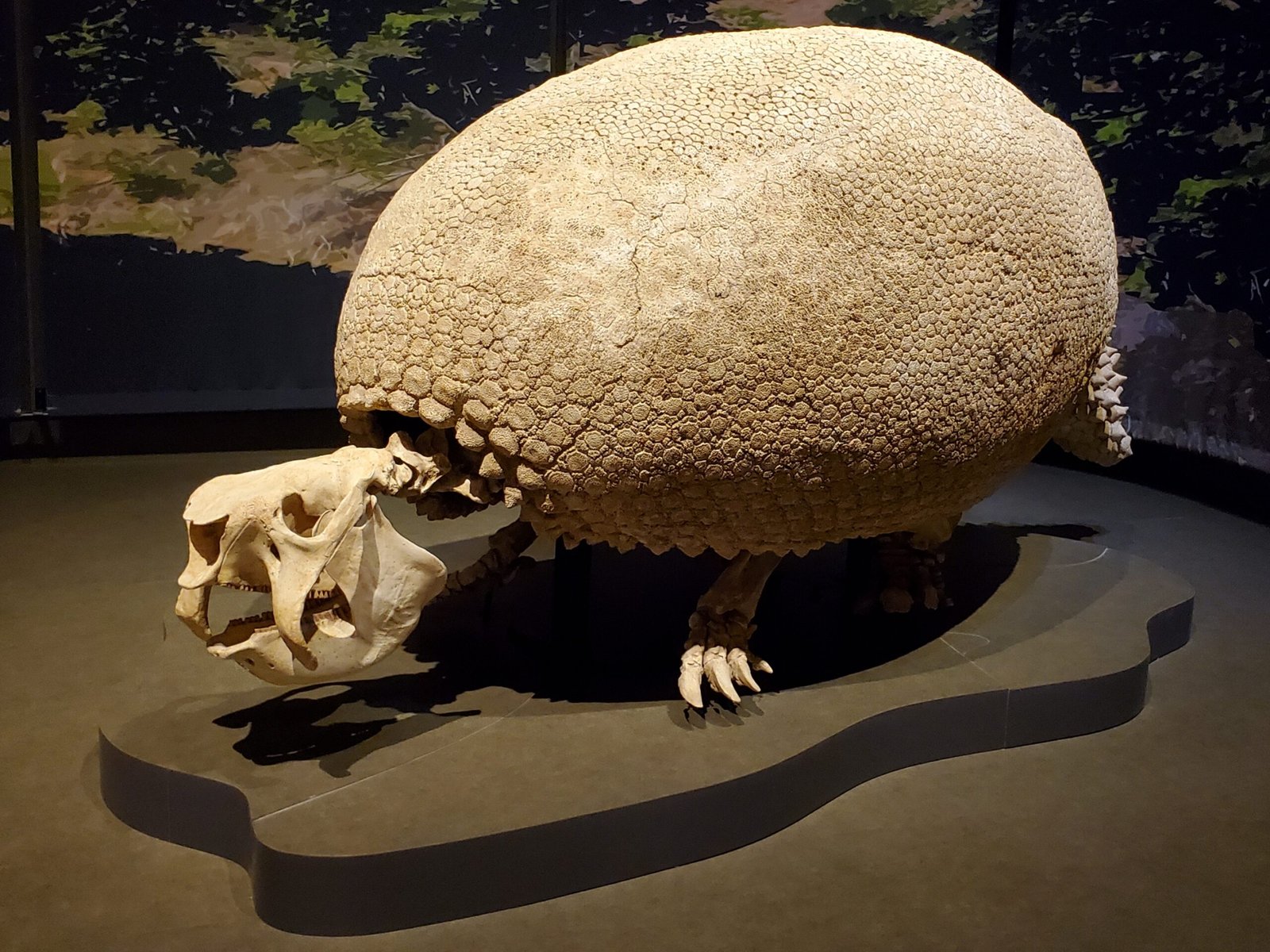
The first Glyptodon fossils were unearthed in the 19th century, and they caused an immediate sensation among paleontologists. Imagine the shock of finding bones so massive and a shell so perfectly preserved that it looked like a petrified tank. Charles Darwin himself encountered Glyptodon remains during his travels in South America, describing their distinctive armor and strange appearance. These discoveries sparked heated debates about evolution, extinction, and the mysterious creatures that once dominated the continents. The sheer scale and uniqueness of Glyptodon’s remains set the stage for a new era in paleontology, inspiring generations of scientists to dig deeper into Earth’s ancient past.
Anatomy of a Living Fortress

Glyptodon was a marvel of natural engineering. Its most striking feature was its domed carapace, made up of hundreds of bony plates called osteoderms, fused together to form an almost impenetrable shield. This shell could reach over three feet in height and stretched across the creature’s back like a living suit of armor. Beneath this protective covering, Glyptodon’s body was stout and muscular, built for power rather than speed. It also boasted a heavy, club-like tail, some species even possessing spiked tips for defense. With its small head, short legs, and broad feet, Glyptodon looked like an armored tank on four legs, perfectly adapted to its environment.
Glyptodon’s Ancient Relatives
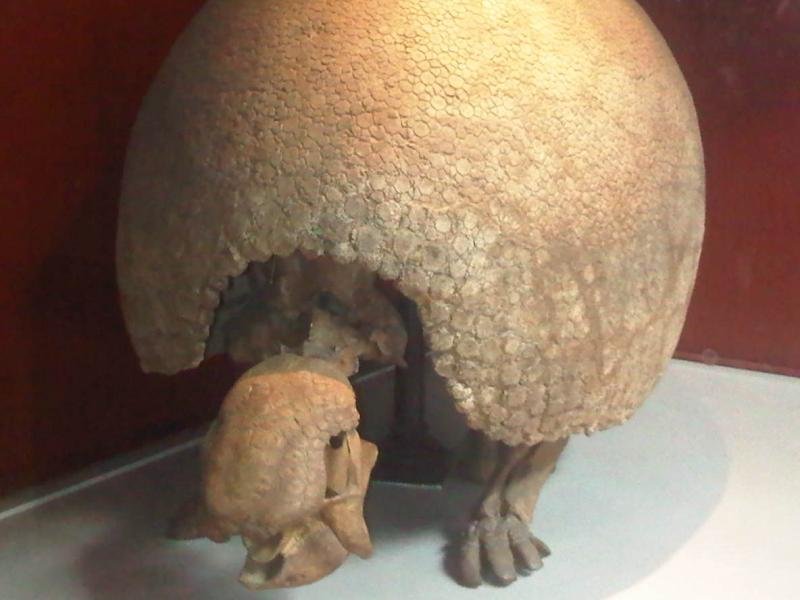
While Glyptodon might seem unique, it belonged to a larger family known as the Cingulata, which also includes today’s armadillos. Both Glyptodon and armadillos share the signature trait of body armor, though Glyptodon’s was far more formidable. Over millions of years, evolutionary forces shaped these animals to survive in different environments. Armadillos, much smaller and more agile, adapted to burrowing and foraging, while Glyptodon relied on its sheer size and armor for protection. This family tree reveals just how creative nature can be, producing relatives that range from the humble armadillo to the mighty Glyptodon.
A Giant Among Giants
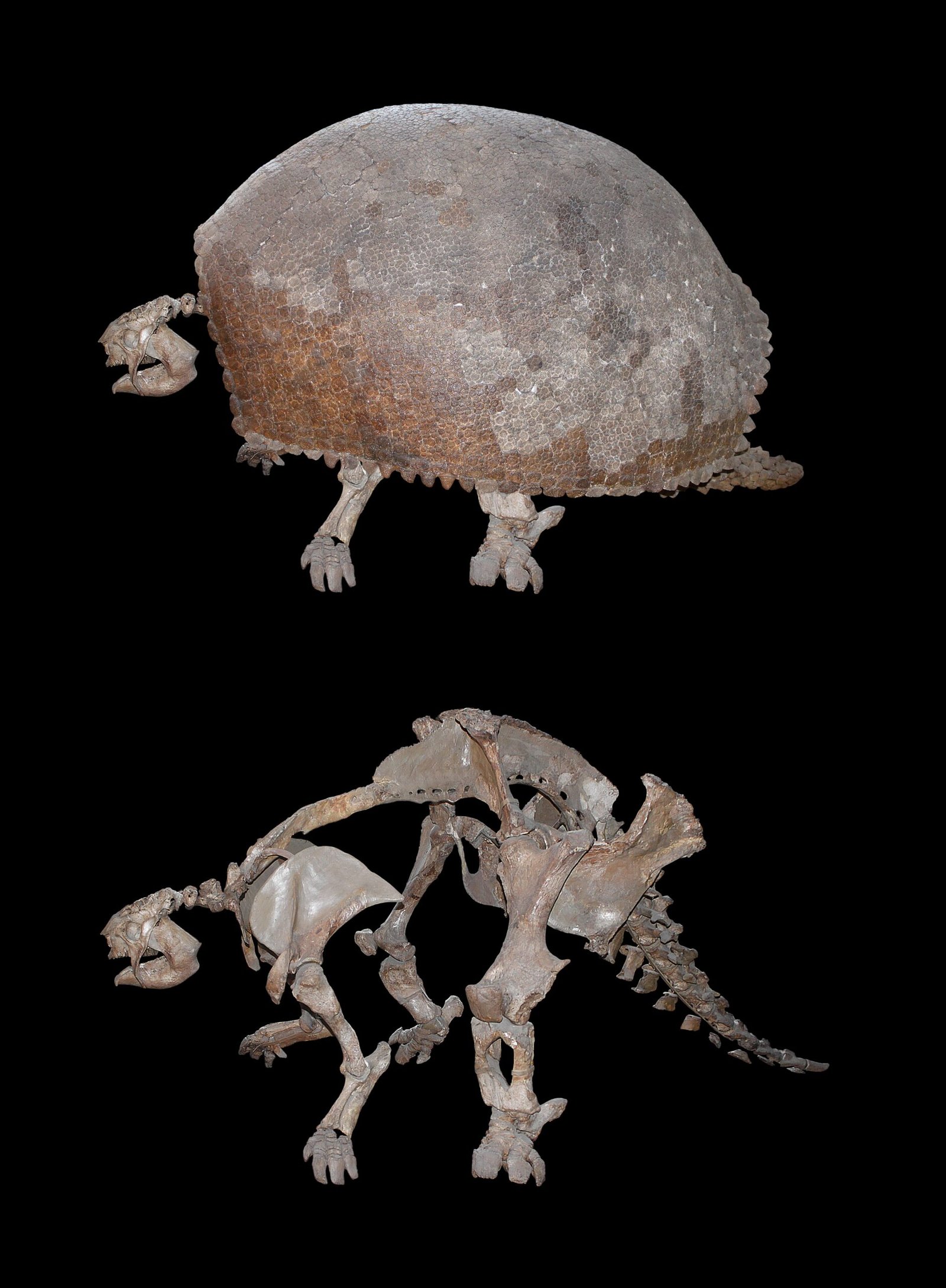
Weighing up to two tons and measuring over ten feet long, Glyptodon was one of the largest members of the extinct group known as glyptodonts. To put its size into perspective, a grown man could easily hide behind its shell, and predators would have thought twice before attacking. Its enormous bulk meant Glyptodon was mostly safe from all but the most determined hunters, such as saber-toothed cats or early human groups. The sheer size of this animal made it a dominant presence in its habitat, shaping the ecosystem around it and leaving a lasting mark on the fossil record.
The Armor That Saved Its Life

Glyptodon’s armor wasn’t just for show—it was its primary line of defense against a world full of danger. The bony plates covering its back, head, and even parts of its tail acted like a natural shield, protecting it from the bites and claws of predators. Some scientists believe that the tail club could have been used as a weapon, swinging with enough force to break bones or fend off attackers. This remarkable adaptation gave Glyptodon the confidence to graze in open areas, knowing few animals could threaten it. The evolution of such armor is a testament to the challenges of prehistoric life and the ingenuity of nature.
Diet: The Ancient Grazer
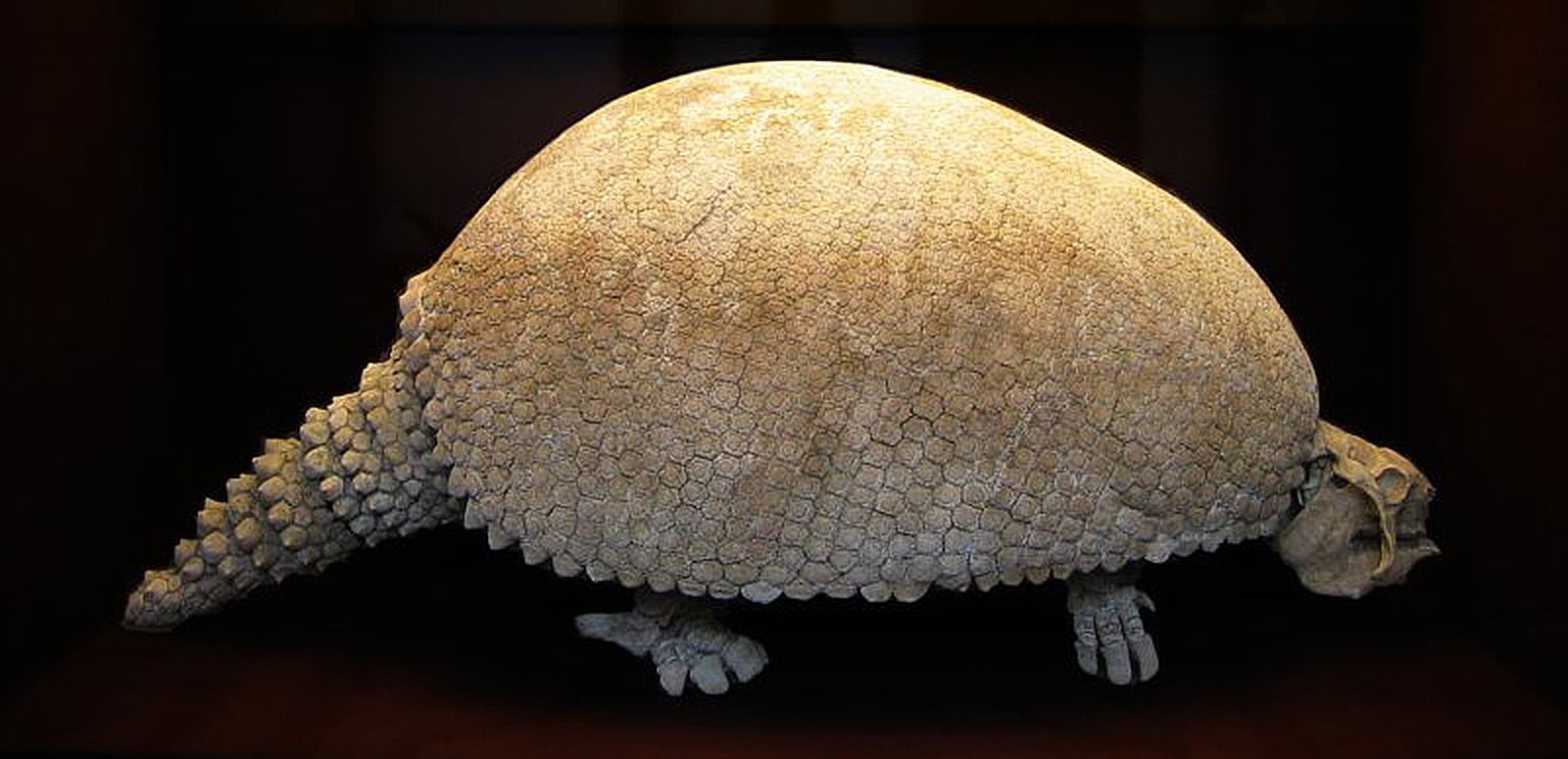
Despite its fearsome appearance, Glyptodon was a gentle giant, feeding mainly on tough grasses and plants. Its teeth were perfectly shaped for grinding down fibrous vegetation, much like modern cows or bison. The structure of its jaws and skull supported powerful chewing muscles, allowing it to crush even the hardest plant material. Glyptodon’s digestive system was likely adapted to extract the maximum nutrition from poor-quality forage, helping it survive in open grasslands and savannas. This herbivorous lifestyle made Glyptodon a crucial part of its ecosystem, shaping the landscape through its grazing habits.
Life in the Ice Age

Glyptodon thrived during the Pleistocene epoch, a time when massive glaciers advanced and retreated across the planet. The climate was harsh, alternating between frigid cold and warmer interglacial periods. Glyptodon’s thick armor and large body helped it conserve heat and survive in cooler conditions. It roamed the open plains and riverbanks of South America, sharing its world with other Ice Age giants like mammoths, giant sloths, and saber-toothed cats. The landscape was a patchwork of grasslands and wetlands, providing Glyptodon with plenty of food and space to roam. Its presence was a reminder of nature’s incredible ability to adapt and flourish, even in the face of changing climates.
Predators and Perils
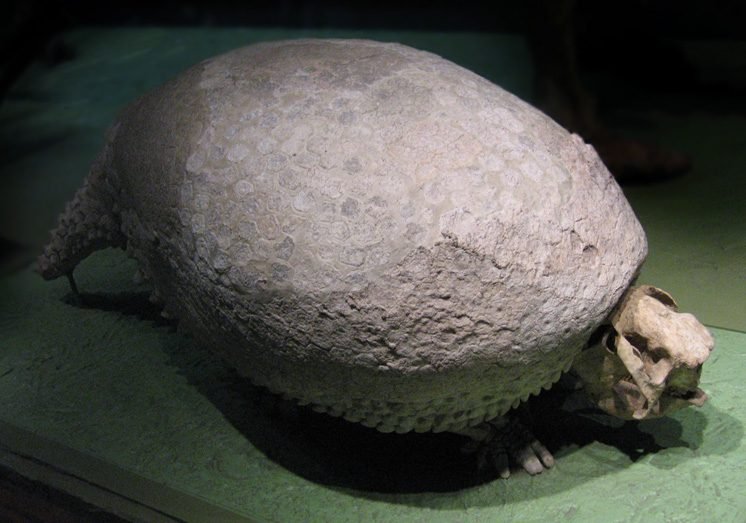
Living in a world filled with danger, Glyptodon faced threats from some of the most formidable predators of its time. Saber-toothed cats, giant terror birds, and packs of prehistoric wolves prowled the same lands. Although Glyptodon’s armor offered solid protection, young or weakened individuals could still fall prey to hungry carnivores. There’s even evidence suggesting that early humans may have hunted Glyptodon, using its shell for shelter or tools. The constant struggle for survival shaped Glyptodon’s behavior and biology, driving the evolution of its unique defensive traits.
The Mysterious Extinction
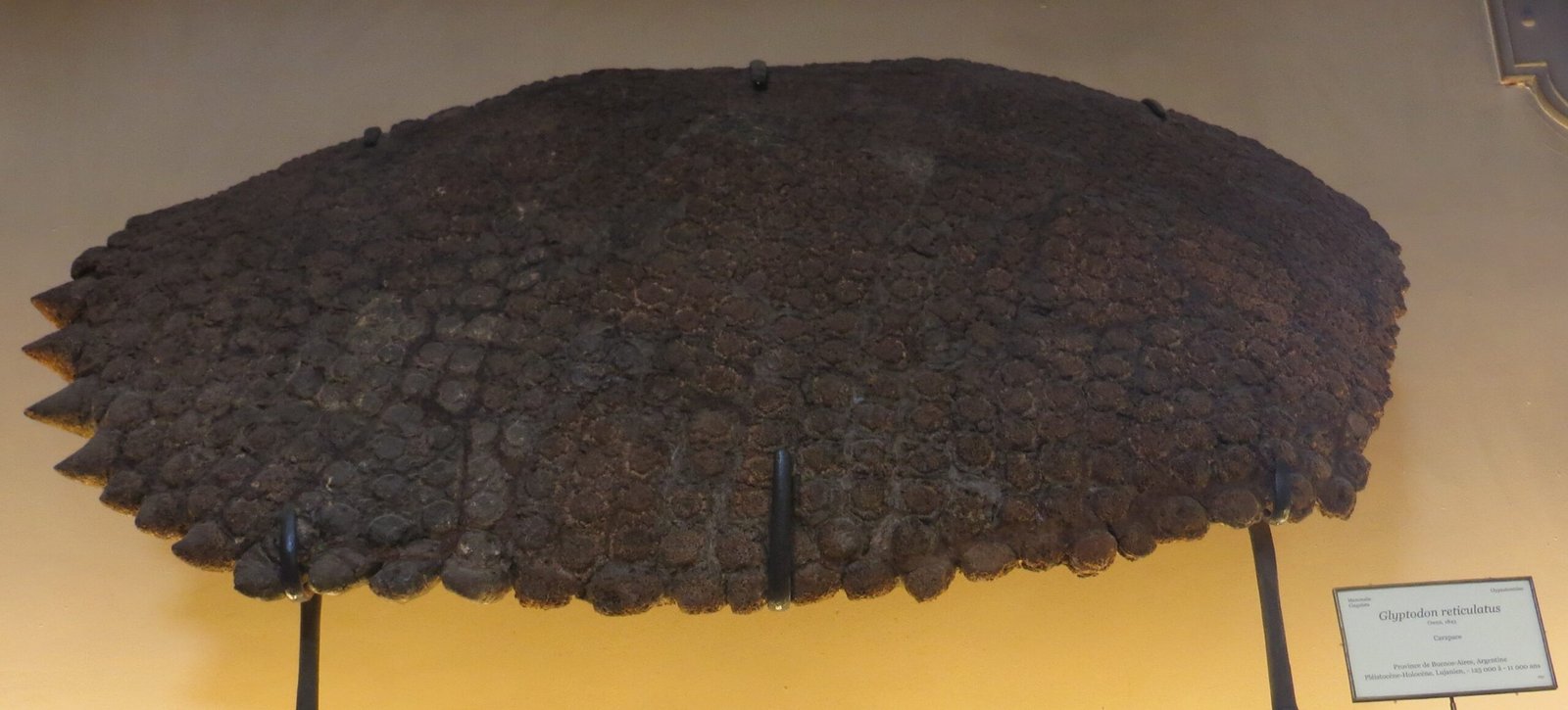
About 10,000 years ago, Glyptodon vanished from the earth, along with many other Ice Age megafauna. The reasons for its extinction remain a subject of ongoing debate among scientists. Some point to climate change at the end of the Ice Age, which transformed Glyptodon’s habitat and reduced its food supply. Others suggest that the arrival of early humans played a role, as hunting pressure and habitat alteration may have tipped the balance. The disappearance of Glyptodon is a sobering reminder of the fragility of life and the complex web of factors that determine a species’ fate.
Legacy in Modern Armadillos

Though Glyptodon is long gone, its legacy lives on in the armadillos we see today. These modern relatives carry echoes of their giant ancestor’s armor, though on a much smaller scale. Some armadillo species, like the three-banded armadillo, can curl into a ball for protection—a clever twist on Glyptodon’s armored defense. The evolutionary journey from the massive Glyptodon to the tiny armadillo is a testament to nature’s adaptability. It’s a story of survival, transformation, and the enduring power of genetic heritage.
Glyptodon in Popular Imagination

Glyptodon’s unique appearance and fascinating story have captured the imagination of artists, writers, and filmmakers. Its fossilized remains are a highlight of natural history museums, where children and adults alike marvel at its size and armor. In popular culture, Glyptodon often appears as a symbol of prehistoric wonder, featured in documentaries, books, and even video games. Its legacy continues to inspire curiosity and awe, reminding us that Earth’s history is filled with creatures as strange and wonderful as any fiction.
What Glyptodon Teaches Us Today

The story of Glyptodon is more than just an ancient tale—it’s a powerful lesson about adaptation, survival, and the interconnectedness of life. Its armored shell is a symbol of resilience, showing how living beings can overcome even the harshest challenges. By studying Glyptodon and its relatives, scientists gain valuable insights into evolution, extinction, and the ever-changing face of our planet. The mysteries that surround Glyptodon encourage us to keep exploring, asking questions, and seeking answers about the natural world. What other secrets might be waiting beneath our feet, just waiting to be discovered?