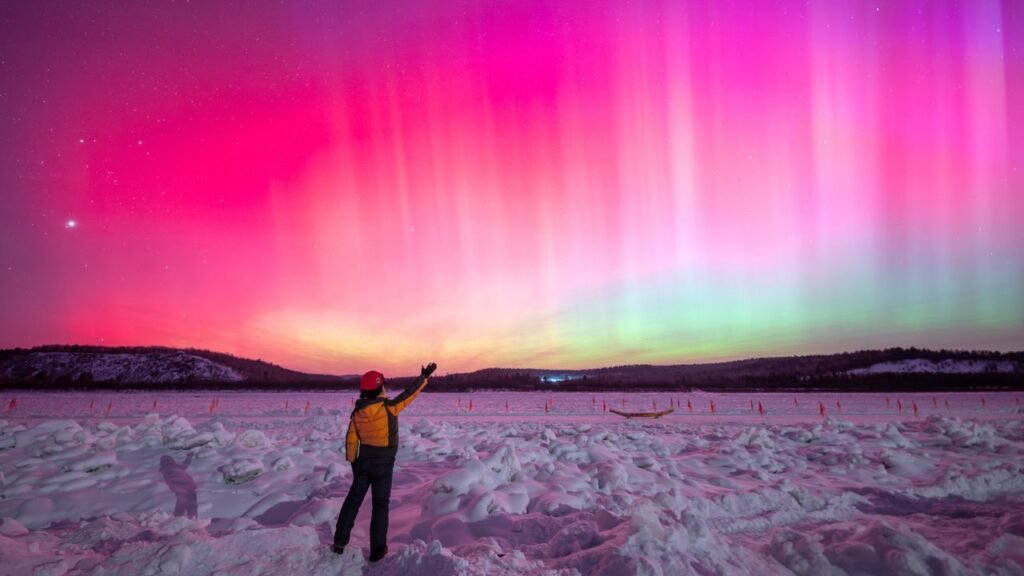

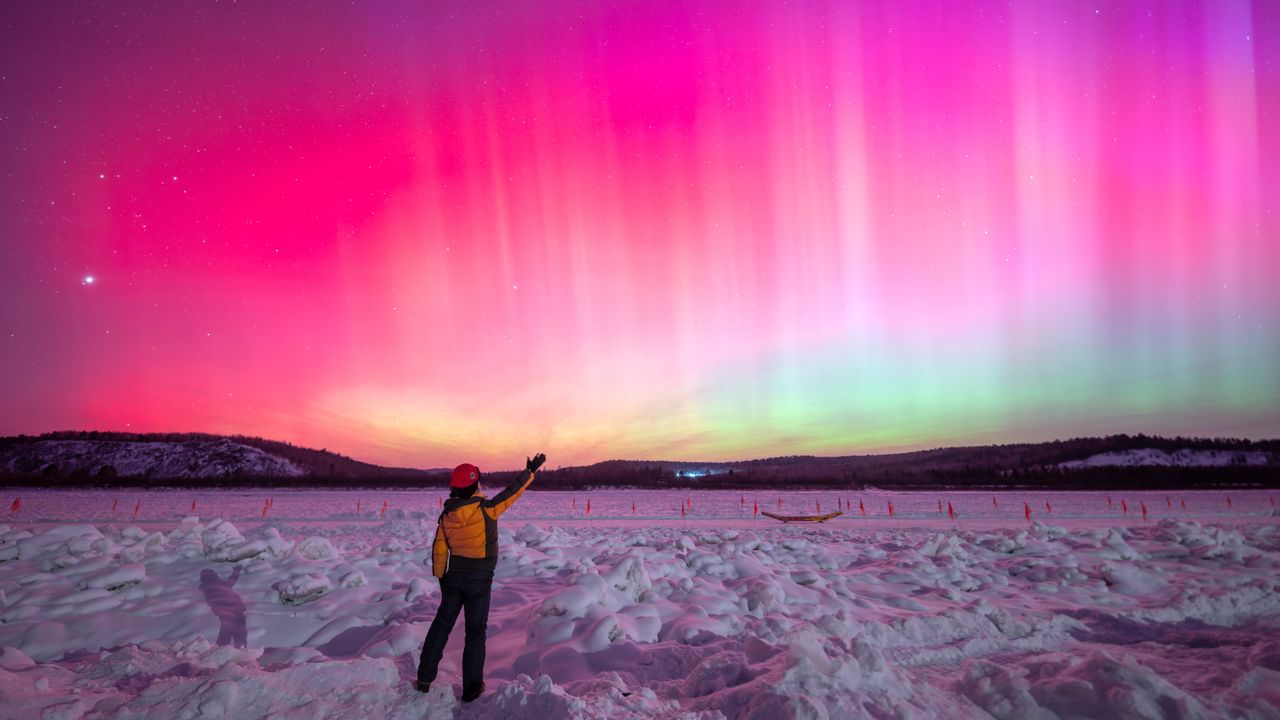
The Fury of a Solar Surge (Image Credits: Cdn.mos.cms.futurecdn.net)
A rare and powerful solar event transformed ordinary nights into a canvas of shimmering lights, drawing eyes upward across continents this week.
The Fury of a Solar Surge
Forecasters had warned of an incoming coronal mass ejection, but few anticipated the sheer intensity when it struck Earth on January 19, 2026. The event triggered a G4-level geomagnetic storm, one of the strongest in recent years, as charged particles from the sun collided with Earth’s magnetic field. This interaction supercharged the atmosphere, producing vivid auroras that danced far beyond their usual polar confines.
According to the National Oceanic and Atmospheric Administration’s Space Weather Prediction Center, the storm reached its peak with a Kp index of 8, classifying it as severe. Such disturbances occur when solar flares eject massive bursts of plasma, traveling millions of miles to disrupt our planet’s protective shield. Observers reported the lights beginning around evening hours, escalating into a full display by midnight in many time zones.
Unexpected Reach: Lights in Unlikely Places
From the northern reaches of Alaska to the southern edges of Alabama, the aurora painted the sky in greens, purples, and reds, surprising residents who rarely witness such spectacles. In Europe, sightings extended to central regions, with reports from Switzerland and even hints of visibility in northern Italy under clear conditions. This widespread visibility stemmed from the storm’s full-halo coronal mass ejection, which enveloped Earth from all sides.
Skywatchers in the United States shared accounts of the lights appearing as early as 10 p.m. local time, visible to the naked eye in northern states and through cameras further south. The phenomenon extended to parts of Canada and Scandinavia, where it blended with local winter darkness for an even more dramatic effect. Social media buzzed with photos from urban areas, highlighting how city lights did little to dim the solar show’s brilliance.
Technological Ripples from the Storm
While the visual display enthralled many, the geomagnetic storm carried practical consequences for modern infrastructure. High-frequency radio communications faced blackouts, particularly over polar routes, as the influx of solar particles ionized the ionosphere. Satellite operators monitored for potential disruptions, with some GPS signals experiencing brief inaccuracies during the peak hours.
Power grids remained stable overall, thanks to advanced monitoring systems, but the event served as a reminder of solar weather’s reach. An accompanying S4 solar radiation storm added to the intensity, marking it as one of the most significant since 2003. Experts noted that while no major outages occurred, the storm underscored the need for ongoing vigilance in space weather forecasting.
Tips for Catching Future Auroras
Enthusiasts eager to witness similar events should prioritize dark-sky locations away from urban glow. Smartphone cameras proved invaluable during this storm, capturing faint auroras invisible to the unaided eye in southern latitudes. Checking forecasts from reliable sources, such as the NOAA Space Weather Prediction Center, allows for timely planning.
To maximize chances, aim for nights with low cloud cover and monitor solar activity indices. Joining online communities can provide real-time alerts and viewing tips. Remember, the best shows often follow major solar flares, so staying informed pays off.
- Seek out rural or park areas with minimal light pollution.
- Use long-exposure settings on cameras for enhanced visibility.
- Track Kp index levels above 5 for potential aurora activity.
- Bundle up for cold nights, as polar viewing often means winter conditions.
- Respect local guidelines in protected natural areas.
Key Takeaways
- The G4 storm highlighted solar activity’s global impact, visible from Alabama to Europe.
- No severe technological failures occurred, but monitoring remains essential.
- Future events could offer more opportunities for southern skywatchers with clear nights.
This geomagnetic spectacle not only reminded us of the sun’s dynamic power but also connected people worldwide through shared wonder. As solar cycles peak, more displays may follow – grab your coat and gaze skyward next time conditions align. What was your favorite aurora memory? Share in the comments below.