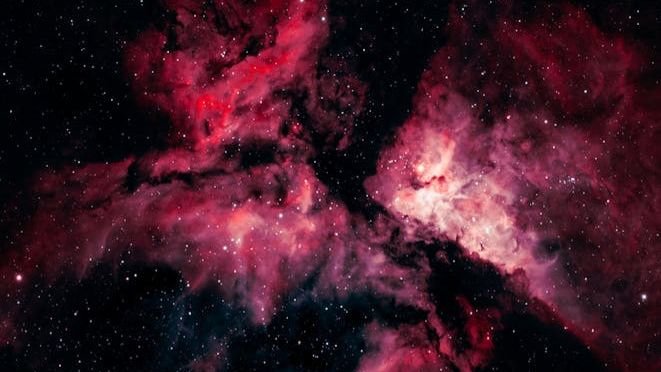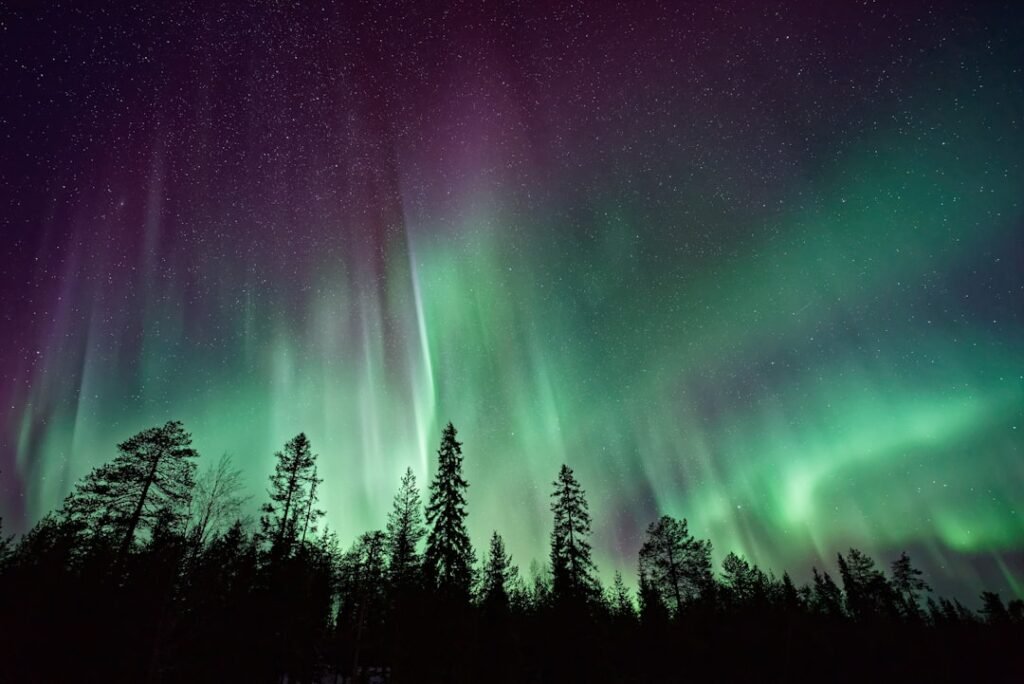

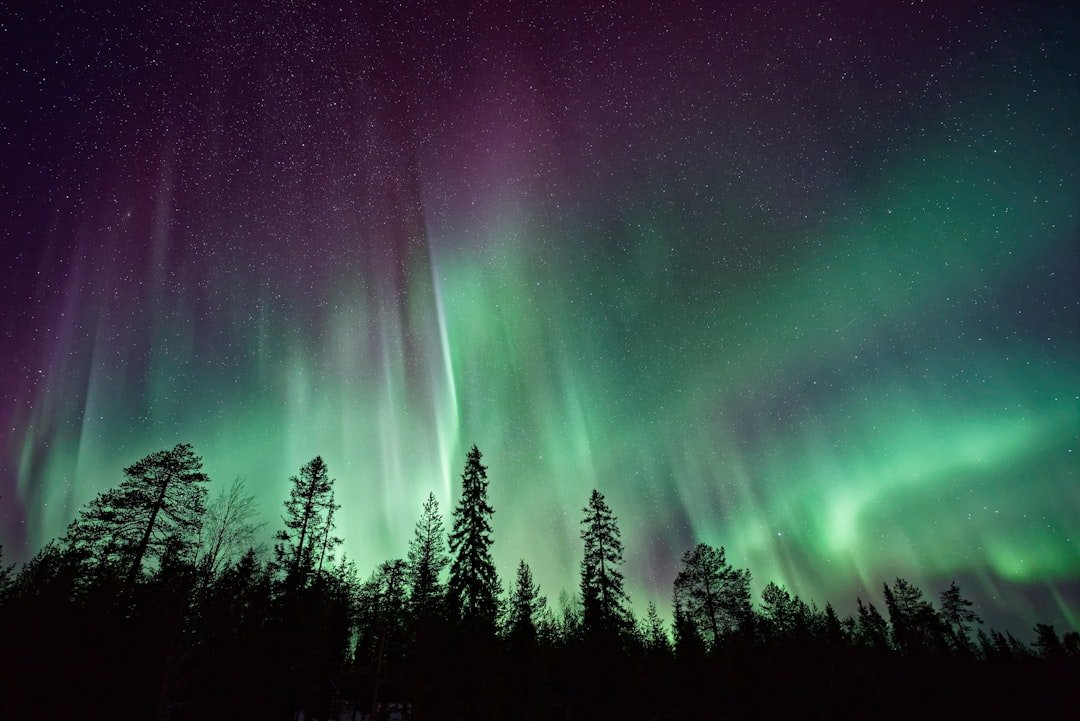
Solar Flare Ignites the Storm (Image Credits: Unsplash)
Stargazers across the United States prepared for a celestial treat as a coronal mass ejection barreled toward Earth. The event, tied to recent solar activity, promised heightened chances for northern lights displays extending unusually far south. Forecasters highlighted March 19 as the prime date, coinciding with the vernal equinox for amplified effects.[1][2]
Solar Flare Ignites the Storm
Sunspot region AR4392 unleashed an M2.8 solar flare on March 16. This eruption hurled a massive plume of plasma and magnetic fields – known as a coronal mass ejection – directly toward our planet. The flare also triggered an R1 radio blackout over the Atlantic Ocean, underscoring the sun’s rising activity during solar maximum.[2]
NOAA’s Space Weather Prediction Center issued a G2 moderate geomagnetic storm watch shortly after. Analysts modeled the CME’s arrival for March 19, UTC day. Conditions quieted in the interim, with only unsettled levels expected through March 18. Yet the equinox timing added intrigue, as Earth’s tilted magnetic field aligns better with incoming solar particles.[1]
Storm Strength and Peak Impacts
Forecasters predicted G2 conditions as the baseline, with a slim chance for escalation to G3 strong levels. On the Kp index, this translates to 6 for G2 and 7 for G3 – enough to rattle Earth’s magnetosphere. The Russell-McPherron effect, peaking near equinoxes, funnels more energy from the solar wind into auroral zones.[1]
Such storms historically spark vivid displays but rarely disrupt daily life at this scale. High-latitude power grids and satellites faced minor risks, though no widespread outages loomed. Geomagnetic activity promised to shift from quiet on March 17-18 to active by late March 19, sustaining into early March 20.[2]
Aurora Visibility Across the Nation
Northern lights typically hug high latitudes, but this storm could push them southward. At G2 strength, viewers in New York and Idaho might catch glimpses. Should G3 materialize, Illinois and Oregon entered the viewline, offering rare sights for Midwestern and Pacific Northwest residents.[1]
Prime spots included northern states like Minnesota, Michigan, and Maine, where displays could intensify overhead. The equinox boost doubled odds compared to solstices, per recent studies. Clear, dark skies remained essential, away from city lights.
Essential Tips for Chasing the Lights
Aurora hunters should monitor real-time forecasts closely. Apps provided location-based alerts and visibility ovals. Optimal viewing fell between 10 p.m. and 2 a.m. local time, when activity peaked.
- Download “My Aurora Forecast & Alerts” for iOS/Android – tracks Kp and cloud cover.
- Try “Space Weather Live” for solar data and push notifications.
- Head to rural areas; use tripods for long-exposure photos.
- Check NOAA’s aurora dashboard for oval maps.
- Layer up – nights turned chilly under clear skies.
Patience paid off, as displays ebbed and flowed. Binoculars enhanced fainter arcs, though the naked eye sufficed for bright shows.[1]
Why This Event Matters Now
Solar cycle 25 nears its crescendo in 2026, fueling frequent storms. March marked an equinox “sweet spot,” blending peak sunspots with optimal geometry. Past events, like January’s G4 storm, reminded observers of nature’s power.[3]
Communities rallied online, sharing chase plans. Schools and observatories organized watch parties. The storm underscored space weather’s reach into everyday skies.
Key Takeaways
- G2 watch for March 19 from March 16 CME; possible G3 upgrade.
- Auroras potentially visible to Illinois, boosted by equinox.
- Use apps for alerts; seek dark skies post-10 p.m.
This geomagnetic event offered a front-row seat to solar-terrestrial drama. As particles collided with our atmosphere, green veils and magenta ripples could paint the night. Will you venture out? Share your plans or sightings in the comments.