
A First-of-Its-Kind Experiment Takes Flight (Image Credits: Pixabay)
Ithaca, NY – Scientists demonstrated that certain microbes effectively extract valuable metals from meteorites under microgravity conditions aboard the International Space Station.[1][2]
A First-of-Its-Kind Experiment Takes Flight
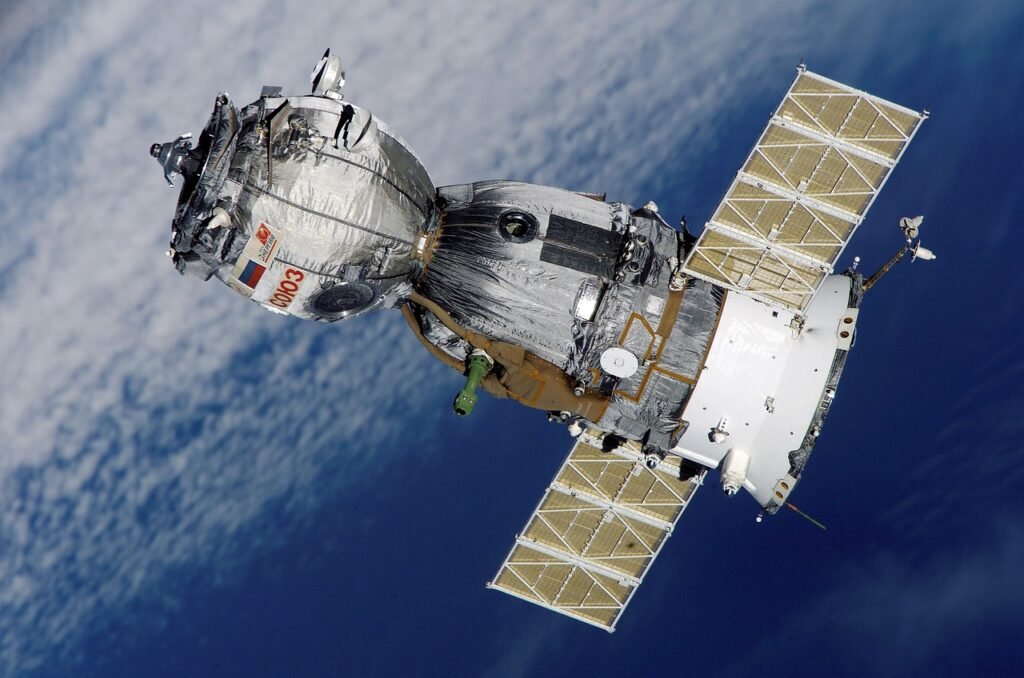
Fungi surprised researchers by ramping up their metabolic activity in space, pulling more palladium from rock samples than on Earth. The BioAsteroid project marked the initial test of microbial metal extraction from meteorites on the ISS. NASA astronaut Michael Scott Hopkins activated the setup, exposing samples to zero gravity for 19 days.[1]
Teams from Cornell University and the University of Edinburgh prepared the materials. They targeted L-chondrite meteorite, a type rich in platinum-group elements. Controls ran simultaneously on Earth to highlight gravity’s influence. Lead author Rosa Santomartino, an assistant professor at Cornell, noted the novelty of the work. “This is probably the first experiment of its kind on the International Space Station on meteorite,” she stated.[2]
Microbes Selected for Biomining Prowess
Researchers chose two organisms known for breaking down minerals through acid production. The bacterium Sphingomonas desiccabilis and fungus Penicillium simplicissimum interacted with pulverized meteorite in liquid cultures.
- Sphingomonas desiccabilis: Forms biofilms and secretes compounds to dissolve rocks.
- Penicillium simplicissimum: Thrives by generating carboxylic acids that bind to metals.
- Both tested alone and together to compare extraction efficiencies.
- Non-biological leaching served as a baseline using chemical solutions alone.
A metabolomic analysis examined secondary metabolites in the cultures post-experiment. This revealed shifts in biomolecule production, especially for the fungus in space.[3]
Microgravity Alters Extraction Dynamics
The study assessed 44 elements, with microbes facilitating the release of 18. Penicillium simplicissimum boosted palladium and platinum yields in microgravity. Its metabolism surged, producing more carboxylic acids to complex minerals.
| Leaching Type | Microgravity Performance | Earth Performance |
|---|---|---|
| Biological (Fungus) | Enhanced Pd/Pt extraction | Baseline |
| Biological (Overall) | Consistent | Consistent |
| Non-biological | Reduced for many elements | Higher |
Alessandro Stirpe, a Cornell research associate, analyzed the data element by element. “We don’t see massive differences, but there are some very interesting ones,” he said.[1] Extraction varied by metal, microbe, and gravity. Microbes stabilized yields where chemistry faltered.[4]
Pathways to Sustainable Space Exploration
These findings suggest biomining could supply fuels, catalysts, and electronics for deep-space missions. Palladium, for instance, absorbs hydrogen efficiently for fuel cells. Traditional mining gear proves impractical in orbit, making microbes lightweight allies.
Terrestrial applications loom large too. Biomining could reclaim metals from waste or arid sites. Santomartino emphasized the complexity: “The extraction rate changes a lot depending on the metal that you are considering, and also depending on the microbe and the gravity condition.”[2] Further tests will refine combinations of species and substrates. The study appeared January 30 in npj Microgravity.[1]
- Fungi like Penicillium simplicissimum enhance palladium extraction in space.
- Microbes maintain steady performance across gravity levels.
- Non-biological methods weaken in microgravity.
Microbes emerge as quiet powerhouses for humanity’s cosmic ambitions, turning space rocks into resources. What role do you see for biomining in future missions? Tell us in the comments.