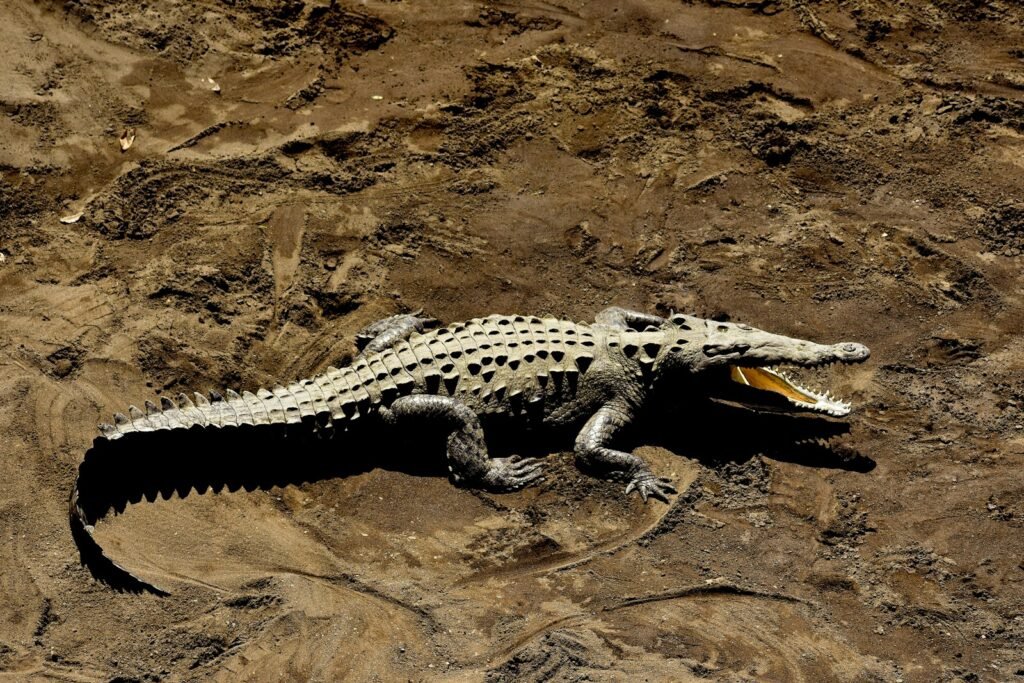

In an age where ancient reverence meets modern fear, crocodiles have traveled one of the most remarkable journeys in human-animal relationships. These prehistoric beasts, once worshipped as gods and revered as sacred beings, now find themselves at the center of a growing conflict with humanity’s expanding footprint. From the temple walls of ancient Egypt to the warning signs in Indonesian villages, the crocodile’s story reflects our own evolution as a species – and perhaps our disconnection from the natural world that once shaped our deepest beliefs.
The Ancient Crocodile Gods: Power in the Nile

Sobek, the ancient Egyptian deity with a crocodile head, was one of the most powerful figures in the Egyptian pantheon, representing the dual nature of the Nile River itself. He was associated with pharaonic power, fertility, and military prowess, but also served as a protective deity with qualities that safeguarded people from the very dangers the Nile presented. Sobek enjoyed a presence that spanned millennia, from the Old Kingdom of Egypt around 2686-2181 BCE through the Roman period ending around 350 CE. Think about it – that’s over 2,500 years of continuous worship, longer than Christianity has existed. The entire Faiyum region served as Sobek’s cult center, with most towns developing their own localized versions of the crocodile god, each with unique names and characteristics. At these temples, mummified crocodiles were used as cult images, while specialized priests bore titles like “prophet of the crocodile-gods” and “one who buries the bodies of the crocodile-gods.” Imagine the reverence required to dedicate your entire existence to serving an animal that could easily kill you – yet that’s exactly what ancient Egyptians did for centuries.
Beyond Egypt: Crocodiles in World Mythology

In Mesoamerican creation myths, crocodiles represented primordial power and creation, often associated with water and embodying the life-giving aspects of rivers and lakes. Their formidable presence reflected the duality of life and death, crucial themes in ancient cultures, with rituals and ceremonies frequently incorporating crocodile imagery as sacred symbols that reminded communities of the intricate relationship between human existence and nature. In African cultures, the crocodile’s association with art traces back to ancient times when civilizations revered nature and animals, with crocodiles symbolizing both positive and negative attributes – representing strength, power, and survival as some of the oldest and most resilient creatures on Earth. Their ability to thrive in both water and on land linked them to the concept of dual existence, bridging the realms of the living and the dead, making them potent symbols of transition and transformation in African cosmologies. Picture these ancient peoples, living so closely with nature that they could see the spiritual significance in a creature’s ability to move between worlds – something we’ve largely lost in our modern understanding.
The Aboriginal Dreaming: Crocodiles in Australian Culture

The Crocodile Dreaming Story, or Awurrapun in the Batyamal language, comes from the Daly River area about 230 kilometers south of Darwin and tells the sad story of how the salt water crocodile got its distinctive skin. The story tells of a legendary fisherman who was admired by all in his tribe for his ability to provide food not only for his family but for other tribes as well, though his legendary status eventually bred jealousies. According to the story, the husband and wife didn’t die but turned into salt water crocodiles that continue to reproduce. Aboriginal people of Australia have a special place for the saltwater crocodile in their culture, with legends telling of the first humans being born from a crocodile. The crocodile stone, which crocodiles keep in their belly to digest food, represents the Dreaming and is passed on from generation to generation. These stories reveal how indigenous peoples understood crocodiles not as monsters, but as fundamental parts of the creation story itself.
Sacred Protectors and Ancestral Spirits

In some African cultures, crocodiles are believed to protect ancestral burial sites where the remains of forefathers rest, with the spirits of the deceased thought to take the form of these powerful reptiles, guarding the resting places of their descendants. In some African creation myths, crocodiles play a pivotal role as primordial beings associated with the formation of the world or significant events in the universe’s history, with their depiction in art connecting communities to their ancestral origins and reinforcing their identity and cultural heritage. In ancient times, crocodiles were regarded as God-like, seeing all but not being seen, and with a similar life expectancy to humans, they were believed to become quite wise as they aged – in ancient Egypt, the dead were even thought to become transformed into crocodiles of knowledge. This transformation of the dead into crocodiles suggests a profound respect for these creatures as keepers of wisdom and guardians of the afterlife. What’s fascinating is how consistently different cultures around the world came to similar conclusions about crocodiles’ spiritual significance, despite having no contact with each other.
The Sacred Crocodile Industry of Ancient Egypt

Ancient Egyptians both worshiped the crocodile god Sobek and bred, raised, and mummified tons of baby crocodiles, with Sobek and affiliated reptilian deities having their headquarters in the Faiyum oasis, reaching peak popularity during the Greco-Roman period, and a crocodile cemetery in Tebtunis containing thousands of mummies. The sheer number of crocodile mummies meant that people would have had to capture or breed them by the thousands, with breeding likely being easier after several generations of taming the animals rather than trapping dozens of reptiles or stealing eggs. In the Faiyum town of Narmouthis, archaeologists discovered what appears to be “a crocodile nursery and hatchery,” suggesting an institutional breeding program, with about ninety crocodile eggs found buried in deep holes being incubated, and once hatched, baby crocodiles would reside in shallow basins before being “sacrificed, mummified and then sold to worshipers as votive dedications.” This was essentially the world’s first crocodile farming industry, but driven by religious devotion rather than commercial gain. The level of organization and infrastructure required suggests that crocodile worship wasn’t just a casual belief system – it was a massive economic and social enterprise.
From Temples to Terror: The Shift in Perception

The transformation of crocodiles from sacred beings to feared predators didn’t happen overnight. Other animals that were feared by ancient Egyptians, such as crocodiles and hippopotami, were revered and worshipped in order to protect them from their wrath, with the crocodile said to be the god of water and able to act as a symbol of pharaonic power and strength. This reveals an important truth – ancient peoples were never naive about the dangers crocodiles posed. They understood perfectly well that these animals could kill them, but they chose to respond with reverence rather than hatred. The crocodile, a formidable predator of the Nile River, held a significant place in ancient Egyptian hearts and minds not just as a feared creature but also as a revered symbol of power, authority, and fertility, leaving an indelible mark on ancient Egyptian culture. The shift from reverence to fear represents a fundamental change in how humans relate to the natural world.
The Rise of Modern Crocodile Attacks

Today’s reality paints a starkly different picture. Between 1975 and the end of 2024, Australia had only 44 fatal crocodile attacks, while between 2007 and the end of 2024, East Timor recorded 173 crocodile attacks on humans, 78 of them fatal – figures that represented a record high and a 23-fold increase since East Timorese independence. In 2024, there were 179 crocodile attacks in Indonesia, the highest number of crocodile attacks in the world, with 92 fatalities, according to CrocAttack, an independent database. As recently as April 28, 2025, a 29-year-old man was bitten by a 15-foot saltwater crocodile after intentionally entering an enclosure in the Philippines, with footage showing the crocodile repeatedly dragging and throwing the victim around until rescued. These aren’t just statistics – they represent real people whose lives have been forever changed by encounters with animals their ancestors might have worshipped. It’s estimated that each year hundreds of people die from crocodile attacks in Africa, with many of these attacks never reported in the media.
Urban Expansion and Habitat Destruction

In villages surrounding the Budong-Budong River in Indonesia, crocodiles have become a daily topic of conversation, with their presence becoming so common that warning signs now mark areas where they lurk, from the river mouth to waterways that were once popular swimming spots for children. Palm oil plantations with their canals are now visible in the background of areas where crocodile attacks are occurring. This tells the story of habitat destruction and human encroachment in a single image. Urban land-cover change threatens biodiversity and affects ecosystem productivity through loss of habitat, biomass, and carbon storage. The threat to biodiversity hotspots comes from direct land-cover change and subsequent loss of habitat, and from increased colonization by introduced species as urban areas expand, requiring coordinated efforts among multiple cities and municipalities to establish biodiversity corridors. What we’re witnessing is a collision between ancient ecosystems and modern development, with both humans and crocodiles caught in the middle.
Climate Change: The New Variable

In Sri Lanka, unusual heavy rustling and crawling sounds disturbed a woman plucking tea in the estates of Akuressa, who screamed when she realized it was a giant crocodile – an animal that doesn’t typically frequent tea estates. As climate change potentially expands crocodile habitats and human populations continue to grow in northern Australia, managing human-crocodile conflict will likely remain a significant challenge. Climate change is predicted to have devastating impacts on apex predators such as eliminating their required habitats, with crocodilians being no exception. Rising temperatures could force the birth of more female crocodiles and fewer males, potentially causing some crocodile populations to disappear, since crocodile gender is determined by temperature during incubation. It’s ironic that climate change might both expand crocodile ranges into new areas while simultaneously threatening their long-term survival through disrupted reproduction.
The Psychology of Fear: Why We’ve Turned Against Crocodiles

Following a crocodile attack in Indonesia, victim Munirpa was hospitalized for a month and had two surgeries, with her fear still clearly visible months later along with scars on her legs and thighs, saying “I am so scared. I don’t want to go to the beach. Even to the back of the house, I don’t dare to go.” This represents the human cost of our changing relationship with these animals. Human-wildlife conflict has become a global conservation concern when wildlife presents actual or perceived threats to humans, with attacks on humans being a pressing issue for saltwater crocodile conservation as incidents foster increased fear and reduced tolerance towards crocodiles in communities, often leading to retaliation and removal of crocodiles. Unlike our ancestors who channeled their fear into reverence and ritual, modern humans have largely responded to crocodile threats with attempts at elimination and control. We’ve lost the cultural frameworks that once helped us coexist with dangerous predators.
Conservation Paradox: Protecting What We Fear

Residents in Indonesia are learning to coexist with crocodiles, a legally protected species, as they balance conservation with looking out for their safety, but as attacks rise, several residents and experts have called for better government interventions. For estuarine crocodiles in the Northern Territory, a plateauing of attack risk occurred once crocodile density reached about 2 crocodiles per kilometer of river, because high crocodile densities instigated management and education initiatives by the government that evoked a change in human behavior around waterways and stabilized the attack rate. While crocodile populations have recovered significantly since protection measures were implemented, this recovery has coincided with increased human activity in crocodile habitats, requiring continued research, public education, and adaptive management strategies to minimize fatal encounters while ensuring conservation. We’re now in the strange position of trying to protect animals that many people would prefer to see eliminated entirely.
Media and the Amplification of Fear

Social media videos showing crocodile appearances and attacks in Sulawesi and other regions in Indonesia are on the rise. Negative media coverage was frequently reported in western Indonesia, and by combining social information of negative media reporting with ecological information of crocodile attack hotspots, researchers identified 170,500 square kilometers of priority risk areas, a notable 65.8% reduction in area size compared to attack hotspots alone. The modern media landscape, particularly social media, has created an echo chamber effect where dramatic crocodile encounters are shared globally within hours. Every attack is now potentially viral content, creating a perception that crocodile encounters are far more common than they actually are. This is the opposite of how ancient cultures dealt with dangerous animals – through ritualized storytelling that emphasized respect and coexistence rather than sensational fear.
The Economics of Human-Crocodile Conflict

A total of 665 crocodile attacks were recorded and mainly distributed in western and central Indonesia, with the estimated number of attacks being higher in areas with lower forest biomass and human density, and wider cellular network coverage. In the last fiscal year 2023-24, crocodiles ranked the third major cause of human fatalities in Chitwan National Park and its buffer zone after tigers and rhinos, with attacks by crocodiles on the rise lately and becoming more frequent in recent years, ranking as the third major cause of human fatalities. Social activist Malindu Gajadeera notes the impact of crocodile incidents on local communities, with a decline in traditional activities like swimming due to fears of attacks, while the Director General of the Wildlife Conservation Department urges vigilance and caution when navigating waterways inhabited by crocodiles. The economic impact extends beyond direct medical costs to include lost tourism revenue, decreased property values near waterways, and the psychological toll on communities that can no longer use their local water sources safely.
Modern Rituals: Warning Signs Replace Sacred Symbols

Warning signs are now displayed by rivers in West Sulawesi, Indonesia, reading “Beware of crocodile! Please be on alert while doing activities in the river. Crocodile might be stalking.” These stark warnings represent our modern “rituals” – bureaucratic rather than spiritual, focused on avoidance rather than reverence. Management efforts now include removal of bold animals and exclusion zones. Compare this to the elaborate temples, mummification processes, and centuries-long worship practices of ancient Egypt. We’ve replaced sacred rituals with safety protocols, spiritual connection with administrative management. While certainly more practical, something profound has been lost in this translation from the sacred to the secular.
The Science of Coexistence

According to conservationist Bed Bahadur Khadka, mugger crocodiles are normally gentle animals but become aggressive when nesting and raising hatchlings, generally