
You’ve probably heard stories about the lightbulb, the telephone, and the internet. Those are the innovations that fill history books and classroom lessons. Yet lurking beneath these famous milestones lies a whole different layer of forgotten wonders that quietly rewrote civilization itself. Some vanished because nobody understood them. Others were deemed too dangerous or simply lost in time’s unforgiving shuffle. Still, their impact was nothing short of revolutionary.
Think about how often you rely on technology that traces its roots to innovations almost nobody talks about anymore. What if entire movies could fit on a postage stamp or if skyscrapers never existed because one crucial safety mechanism had been overlooked? Let’s dive into these overlooked marvels and discover what makes them so captivating.
Greek Fire: The Byzantine Weapon That Ruled the Seas

Around 672, Greek Fire was developed and used by the Eastern Roman (Byzantine) Empire. This wasn’t just another weapon. Whatever it contained, Greek Fire burned on water, and forever changed the course of history. Imagine enemy ships approaching, confident in their numbers, only to witness their fleet engulfed in flames that refused to be extinguished, even by the sea itself.
The only indication concerning its production comes from Anna Komnene, a Byzantine princess and scholar, who described it as being made from inflammable resin collected from pine and evergreen trees, rubbed with sulfur and blown through reed tubes. The exact formula disappeared into the fog of time, making it one of the most fiercely guarded secrets ever. Historians still debate what made it so effective. This mysterious concoction gave the Byzantines a massive advantage at sea, protecting their empire when they needed it most.
Roman Concrete: The Material That Outlasted Empires

The secret behind the lasting strength of Roman concrete has fascinated architects and scientists alike, as it was used to build iconic structures like the Pantheon and vast aqueduct systems that possess the remarkable ability to grow stronger with age. Walk through Rome today and you’ll still see ancient buildings standing proud after two millennia. Modern concrete often crumbles within decades, yet Roman structures endure like silent witnesses to a lost science.
Central to its resilience was a unique mix – particularly a volcanic ash ingredient – that was forgotten after Rome’s fall, and as a result, centuries passed before comparable building materials emerged. The Romans figured out something modern engineers are still trying to replicate. Their mix created a chemical reaction with seawater that actually strengthened the material over time. That knowledge vanished with the empire, leaving us to rediscover it through expensive research and trial.
The Antikythera Mechanism: An Ancient Computer Lost at Sea
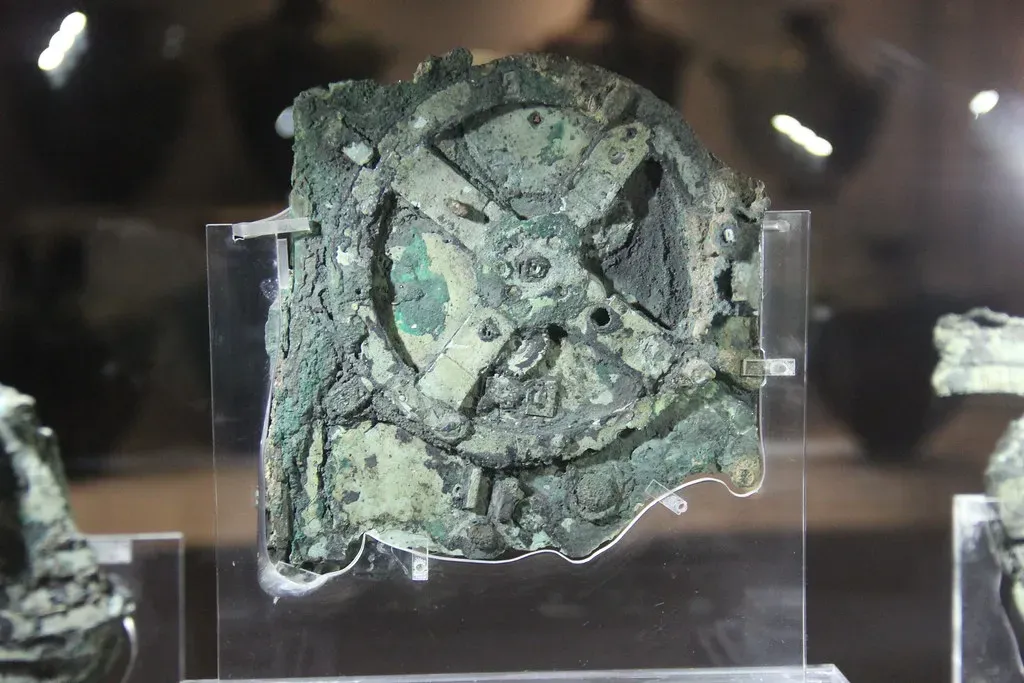
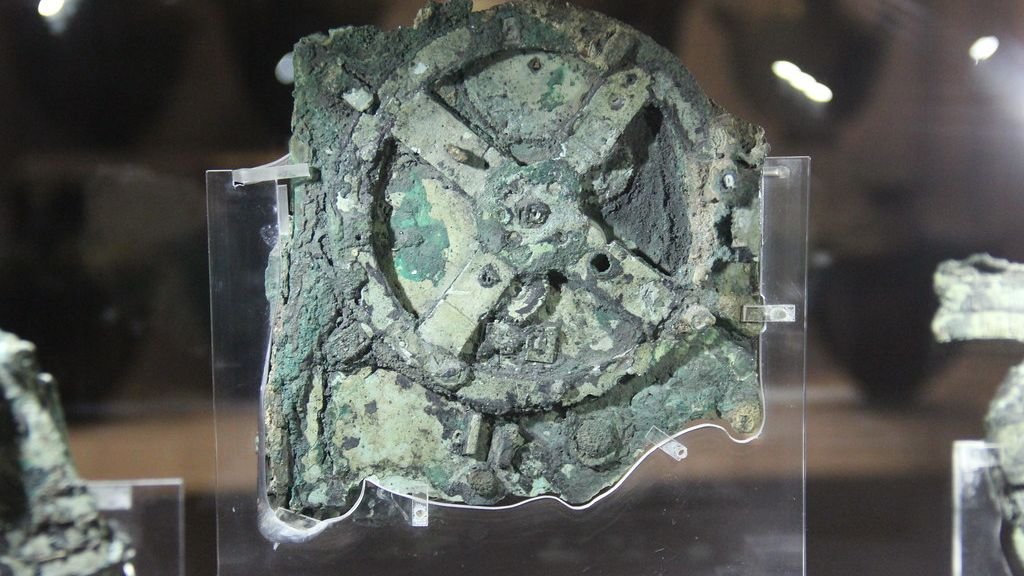
Among the most astonishing ancient discoveries is the Antikythera Mechanism, recovered from a Greek shipwreck, an intricate device that acted as an early analog computer, capable of predicting astronomical events and tracking celestial bodies. This isn’t science fiction. Found rusted and corroded at the bottom of the Aegean Sea, this collection of bronze gears seemed impossibly advanced for its time.
Decades of study revealed it to be a complex mechanical computer, built around 100 BCE, capable of predicting eclipses and tracking planetary movements. Nothing remotely similar appeared for over a thousand years afterward. Historians wonder what other technologies might have existed that simply didn’t survive. If something this sophisticated could be built in ancient Greece, what else did they create that we’ll never know about?
Heron’s Aeolipile: The Steam Engine That Came Too Early
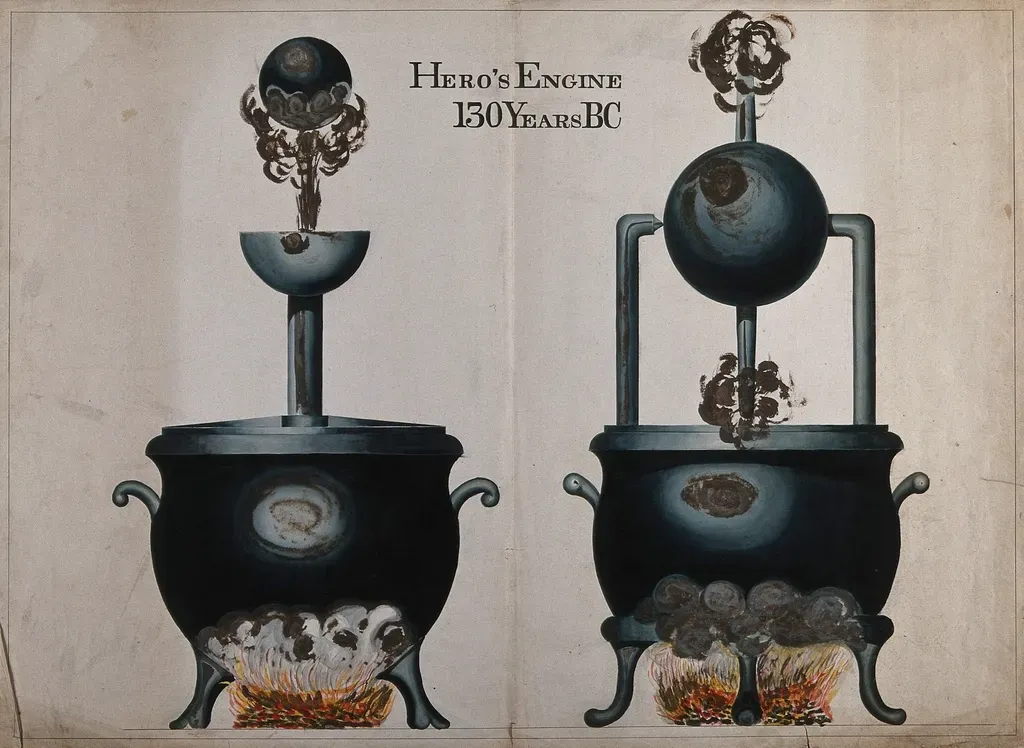
Hero of Alexandria was a Greek mathematician and engineer most known today for his formula to calculate the area of a triangle, but Heron was an amazing inventor, taking credit among others for the first windwheel, the first vending machine, and even the first steam engine. Picture a working steam engine roughly two thousand years before the Industrial Revolution. That’s what Heron created in ancient Alexandria.
The Heron Engine, also called an aeolipile, was a simple bladeless steam turbine, spinning when the central water container is heated, producing torque from steam jets exiting the turbine, much like a rocket engine does today. Heron’s invention went unnoticed for over 1500 years. Why didn’t this spark an industrial age centuries earlier? Sometimes the world simply isn’t ready for brilliance. Society lacked the infrastructure, the economic need, or the vision to see its potential.
Damascus Steel: The Lost Art of Legendary Blades

Known by its distinctive pattern, extreme toughness and ability to be honed to extreme sharpness, Damascus Steel is a prime example of an invention lost due to a lack of source material, as the original steel was brought in from India to Damascus where local bladesmiths learned to make the highest quality steel – and swords. Warriors across continents knew these blades by reputation. They could slice through lesser weapons and hold an edge that seemed almost supernatural.
Damascus steel production was brought to an end rather unceremoniously, as the raw material deposits ran out, with the key trace impurities of vanadium and tungsten making the deposits so special, and a similar deposit has never been found. Modern smiths have tried endlessly to recreate it, but without those exact mineral traces, perfect replication remains elusive. The technique itself died with the artisans who knew its secrets.
Tesla’s Wardenclyffe Tower: The Dream of Wireless Power
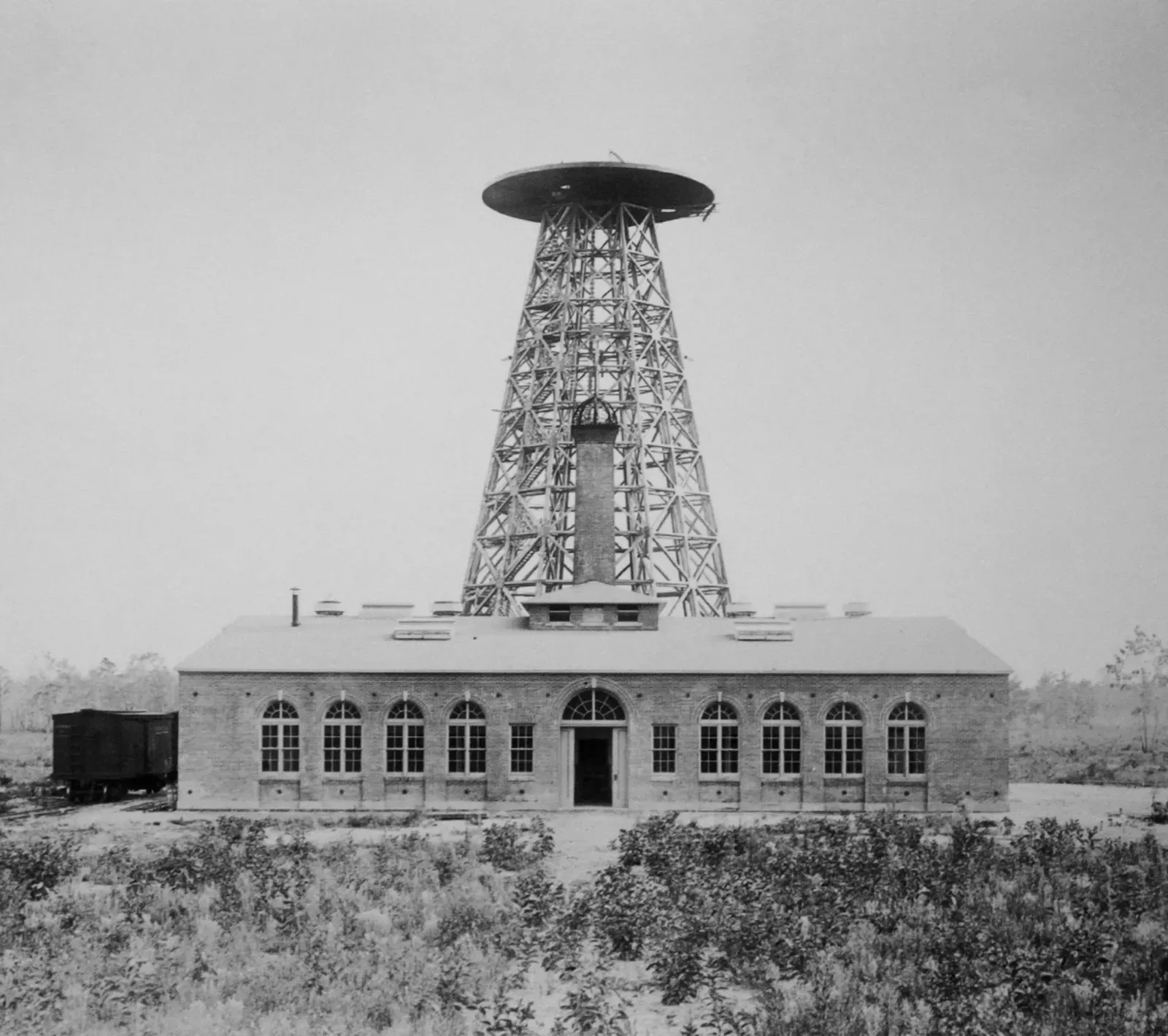
Nikola Tesla’s ambitious Wardenclyffe Tower was envisioned as a means to transmit wireless electricity across vast distances, possibly providing free energy to the world. Imagine a world where power lines never crisscrossed landscapes, where electricity flowed through the air itself. Tesla believed it was possible, and he poured his genius into making it real.
Unfortunately, the project collapsed due to lack of funding, and much of Tesla’s documentation was lost or destroyed, with the true potential of Wardenclyffe remaining a matter of speculation. Investors pulled out when they realized they couldn’t easily profit from free, wireless energy. His ability to wirelessly power light bulbs and other devices short distances is something we still cannot replicate or implement in an economic way today. Tesla’s vision was decades, perhaps centuries, ahead of practical reality.
The Baghdad Battery: Ancient Electricity or Clever Clay Pot?
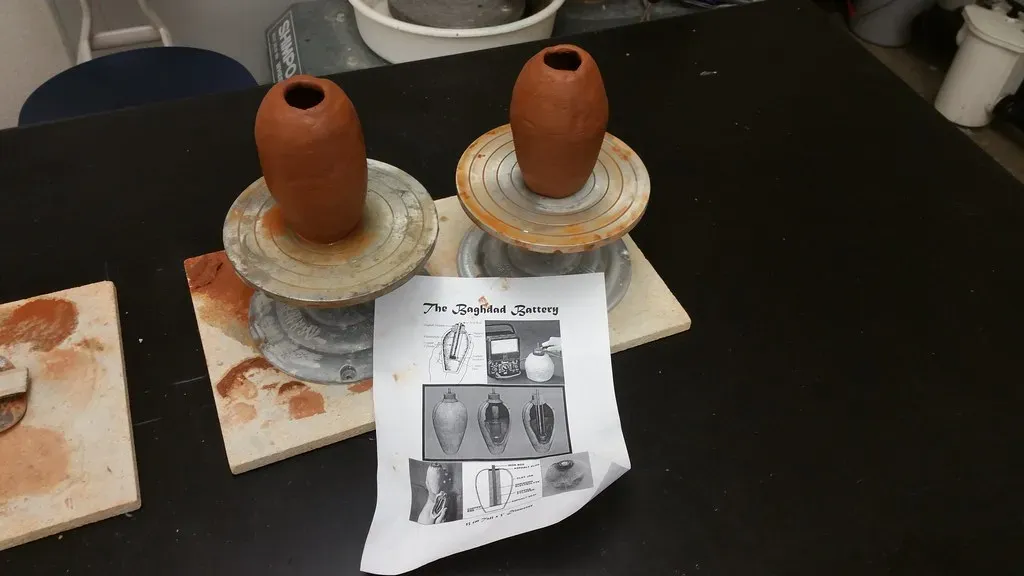
This curious artifact, dating back to around 250 BCE, has puzzled historians for decades, as the Baghdad Battery might have been used for electroplating or other mysterious purposes. Found near Baghdad, this simple clay jar contained an iron rod surrounded by copper. When filled with an acidic solution, it could theoretically generate a small electric current.
It showcases an advanced understanding of electricity in the ancient world. Skeptics argue it might have been used for something entirely different, but the design is suspiciously similar to a primitive battery. If ancient Mesopotamians truly harnessed electricity for gilding or other purposes, they were far more scientifically sophisticated than we give them credit for. The knowledge disappeared without a clear trace.
Starlite: The Wonder Material That Vanished with Its Creator

Starlite, an incredibly heat-resistant magical material, is one of them, developed by amateur chemist and hairdresser Maurice Ward in the 1980s, and the material is said to be able to withstand extreme heat and act as both an insulator and protectant. Demonstrations showed it resisting blowtorches and even simulated nuclear flashes. Scientists and investors were stunned.
Worried that this material would end up in the wrong hands, Mr. Ward was adamant that he would maintain a 51% control of the projects and wanted to make sure that no one could reverse engineer Starlite, and Ward passed away in 2011, with no agreements being made. Ward alleged that some of his immediate family knew the recipe so there is always the chance we will see large scale use of the material in the future. For now, though, Starlite remains one of modern history’s most tantalizing mysteries.
The Sloot Digital Coding System: Too Good to Be True?

In the 1990s, Dutch engineer Romke Jan Bernhard Sloot stunned the tech world with a claim: his digital coding system could compress entire movies into just a few kilobytes, with the implications for data storage seeming limitless. Imagine storing thousands of films on a single floppy disk. Tech companies took notice, and deals were in the works.
Sloot died of an unexpected heart attack, just days before he was to sell the source code for the invention, and as the transaction never occurred the code was never recovered and his claims were unable to be verified. Some believe it was revolutionary. Others think it was too good to be true, perhaps even a hoax. Either way, the world will never know, and data compression remains one of the tech industry’s ongoing challenges.
Conclusion: The Fragile Thread of Human Progress

These forgotten inventions remind us that history isn’t a clean, straight line. Progress is messy, fragile, and sometimes heartbreakingly temporary. Brilliant ideas can slip through our fingers when funding dries up, secrets die with their creators, or society simply isn’t ready to embrace them. Greek Fire protected an empire. Roman concrete still stands tall in the heart of Italy. Tesla dreamed of free energy for all.
Each of these lost marvels carried world-changing potential. Some might still be rediscovered, their secrets unlocked by modern science. Others may remain mysteries forever, whispered about in the margins of history books. They teach us a crucial lesson: innovation is precious, and preserving knowledge is just as important as creating it.
What other forgotten wonders might be hiding in dusty archives or buried beneath ancient ruins? Could one of them hold the key to solving problems we face today? What do you think about these lost inventions? Did any of them surprise you?