
At daybreak on a tropical river, a shadow ripples beneath mangrove roots, and a flash of spined silhouette breaks the water’s skin. The sailfin dragon – an agamid lizard born of islands and floodplains – moves like a rumor, half fish, half lightning. For years, these reptiles were a footnote beside flashier jungle icons, glimpsed between paddles or disappearing in a boiling splash. Now, a new wave of river-focused science is pulling them into the spotlight, revealing a creature whose survival tells a bigger story about freshwater, forests, and people. The mystery is straightforward yet profound: how does a lizard built for both bank and current navigate a world of shrinking shade and rising heat?
The Hidden Clues

Finding a sailfin dragon often starts with reading the river rather than the reptile. On muddy banks, their long tails scribble looping tracks, and basking logs warm enough to shimmer are the stage where they hold court. I’ve stood at a lowland stream and watched a ripple resolve into a spiny profile, only for the animal to slip back into the green like a secret kept by water. Field teams talk about a rhythm – bask, forage, vanish – that changes with cloud cover and the geometry of roots. Even the pattern of scales along the flanks can serve as a natural barcode, helping researchers recognize individuals across seasons. When the river runs low, they hug the deeper bends; when it swells, they ride eddies and raid the fringe of figs and fallen flowers. Each clue is small on its own, but together they sketch the outline of a specialist living at the edge of two worlds.
Island Origins and Evolutionary Swagger

Belonging to the genus Hydrosaurus, sailfin dragons evolved in a maze of islands where distance is measured in currents and storm tracks. Isolation has a way of shaping swagger: males in particular carry taller sails and heavier heads, traits that likely grew louder through generations of island-to-island divergence. The result is a family resemblance with local dialects – subtle differences in color, crest height, or scale texture hinting at long separations by straits and channels. Their semi-aquatic lifestyle echoes the riverine basilisk lizards of the Americas, yet the resemblance is convergent, not kinship, a reminder that water writes similar solutions on distant lineages. Sea levels that rose and fell over ice-age pulses probably stitched populations together and then split them apart, leaving today’s patchwork. In evolutionary terms, the sailfin dragon is a case study in how geography can sculpt behavior and body at the same time.
Anatomy for a Semi-Aquatic Life

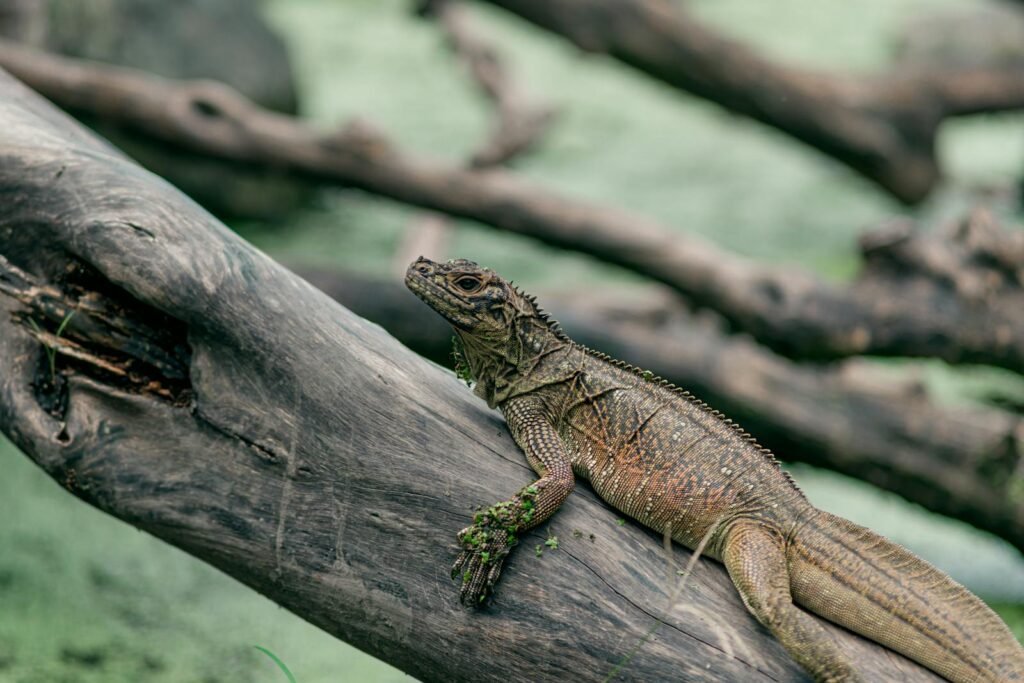
The headline feature is right there in the name: a tall, laterally compressed tail crowned with a sail that slices water and signals rivals. Broad toes, edged with slight fringes, act like paddles, and a deep chest powers sudden bursts upstream when a rival arrives or a heron dives. The head carries a helmet of bony ridges and a crest that, depending on light, can look like wet bronze or burnished stone. Skin tones lean toward mottled greens and browns, a camouflage that turns a basking dragon into a leaf shadow, with some populations showing richer highlights in bright sun. That sail also helps with thermoregulation, trading heat quickly when clouds move or when the animal shifts from blackwater shade to open sky. It’s a body plan tuned to the physics of rivers: lift, drag, and display rolled into one flamboyant silhouette.
Behavior in Fast and Slow Water

By mid-morning, sailfin dragons turn riverbanks into observation decks, angling their bodies to the sun and flicking dew from spines with quick shakes. Threats send them airborne into water, where they do something surprising for a big lizard – they don’t just flee, they maneuver, diving under driftwood and using root tangles as underwater blinds. Diet shifts with age and season: younger animals lean insectivorous, snapping up crickets and beetles, while larger adults fold in leaves, fruits, and occasional aquatic fare. Social life rides on body language rather than sound – head bobs, push-ups, flared throats, and that unmistakable tail sail – but clashes usually end in splashy chases rather than prolonged combat. Territories seem to string along sunny banks and favored logs, parceled out like riverfront real estate. As water levels change, the same animal may patrol very different micro-habitats, proving its playbook is flexible even if its home remains the river corridor.
From Ancient Tools to Modern Science

The earliest accounts of these lizards came from patient sketches and specimen jars, snapshots of animals separated from their habitat. Today’s toolkit is built for water and time: motion-triggered cameras watching logs from dawn to dusk, and tiny temperature loggers that track how often a dragon has to bask as the season swings. Environmental DNA now adds a powerful layer, letting researchers detect the genetic calling cards animals leave behind in water without ever catching a tail or counting a footprint. Drones map the lattice of canopy shade that keeps river edges cool enough for basking, while machine learning can flag the same individual across months by comparing scale constellations on flanks and faces. Together, these methods replace guesswork with trendlines, linking behavior to flood pulses, heat spikes, and human disturbance. It’s the difference between a photograph and a time-lapse: the story doesn’t freeze, it unfolds.
Why It Matters

Rivers in the tropics are more than scenery; they are engines that feed farms, buffer floods, and ferry nutrient-rich leaf litter to the sea. Sailfin dragons sit right on that seam, and their presence – or absence – says something urgent about the health of riparian forests. Where banks erode to bare clay and shade thins, basking logs vanish and so do the dragons, a subtle alarm bell that rings before fisheries crash or water turns warmer and murkier. Traditional monitoring leans on fish counts or water chemistry snapshots, but a conspicuous, semi-aquatic vertebrate adds a complementary, behavior-based indicator. Protecting sailfin habitat keeps root webs intact, which tethers soil during storms and keeps downstream communities safer. In conservation terms, they function like an umbrella: shelter the dragon’s riverbank, and you shelter a suite of plants, birds, insects, and amphibians that depend on the same ribbon of green.
Global Perspectives

Across their range in the Philippines and Indonesia, local knowledge about these lizards is rich but often unrecorded, living in fishing routes, foraging calendars, and the choice of which trees to spare at the water’s edge. In some places, community guards patrol river corridors to curb snaring and encourage visitors to watch from a distance rather than pursue a photo at any cost. International demand for exotic pets has complicated the picture, making clear lines between legal, captive-bred animals and wild-caught ones essential for sustainability. Ecotourism offers a counterweight when it’s genuinely low-impact, funneling income to river communities that keep shade trees standing and trash out of water. Citizen scientists – students, paddlers, village guides – can already contribute controlled observations through photo submissions that document basking sites and seasonal shifts. The big idea is simple: global attention can help, but only if it follows local leadership and the logic of rivers.
The Future Landscape

Looking ahead, climate extremes promise flashier floods and longer scorchers, the kind of whiplash that can scramble basking schedules and drown nests on low banks. Remote sensing will likely get personal, with high-resolution satellite data revealing when riparian canopy thins enough to nudge a dragon off its favorite log. Automated call-and-response pipelines – water sampling for genetic traces paired with AI image recognition – could flag new populations in days rather than seasons. Habitat restoration may hinge on planting the right mix of fast-growing shade and deep-rooted stabilizers, a living scaffold that cools water and pins soil in place. There’s also a cultural frontier: as short videos propel rare reptiles into overnight stardom, demand can spike, so transparent supply chains and clear buyer guidance will matter more than ever. If science, policy, and communities row in the same direction, the sailfin’s silhouette can remain a common sight rather than a memory.
Conclusion

You don’t need a canoe and a field notebook to help. Support riparian reforestation projects and local groups that keep riverbanks shaded and clean, because cool shade is as crucial as clean water. If you’re a reptile enthusiast, choose only verifiably captive-bred animals and ask sellers for proof, or better yet, enjoy these dragons in the wild with guides who follow no-disturbance rules. Teachers and parents can fold riverside biology into school projects, turning a weekend walk into a mini-survey that notes basking logs, shade cover, and wildlife sightings. Travelers can direct their spending to outfitters that cap group sizes, keep respectful distances, and give back to communities along the river. Share accurate information and refuse viral clips that promote handling or harassment; we vote with our clicks whether we like it or not. Will the next generation meet the sailfin dragon as a living neighbor on a sunlit log, or as a legend told secondhand?
Suhail Ahmed is a passionate digital professional and nature enthusiast with over 8 years of experience in content strategy, SEO, web development, and digital operations. Alongside his freelance journey, Suhail actively contributes to nature and wildlife platforms like Discover Wildlife, where he channels his curiosity for the planet into engaging, educational storytelling.
With a strong background in managing digital ecosystems — from ecommerce stores and WordPress websites to social media and automation — Suhail merges technical precision with creative insight. His content reflects a rare balance: SEO-friendly yet deeply human, data-informed yet emotionally resonant.
Driven by a love for discovery and storytelling, Suhail believes in using digital platforms to amplify causes that matter — especially those protecting Earth’s biodiversity and inspiring sustainable living. Whether he’s managing online projects or crafting wildlife content, his goal remains the same: to inform, inspire, and leave a positive digital footprint.