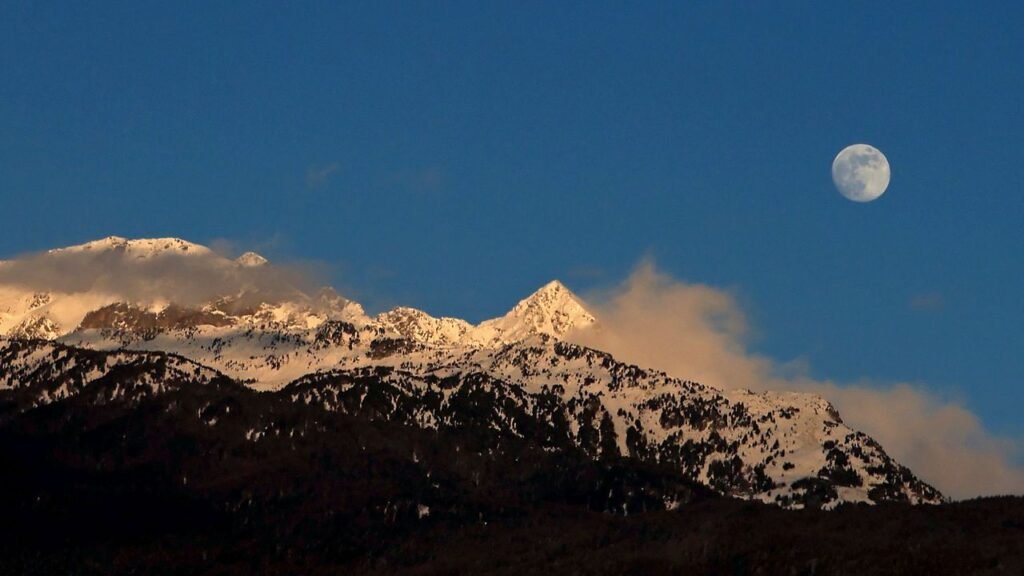

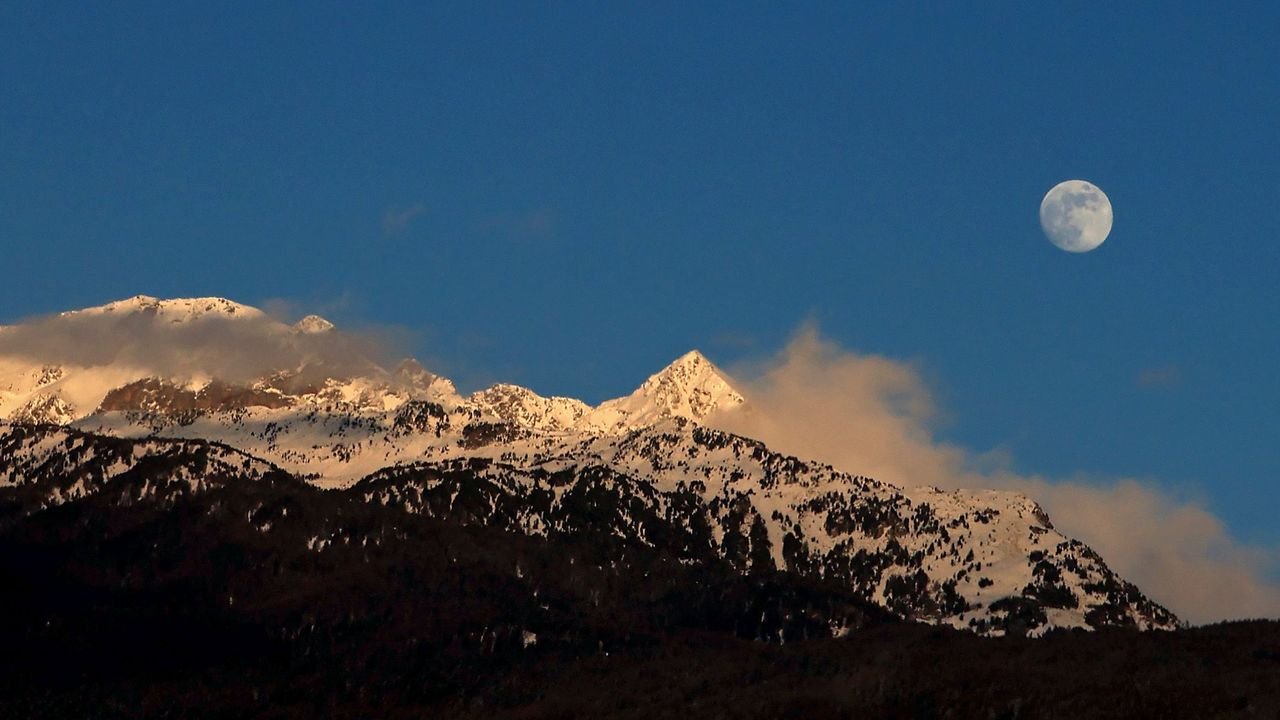
Winter’s Signature Lunar Namesake (Image Credits: Cdn.mos.cms.futurecdn.net)
Skywatchers from New York to Sydney gazed upward on February 1, 2026, as the Snow Moon achieved peak illumination, bathing winter nights in silvery light.[1][2]
Winter’s Signature Lunar Namesake
February’s full moon earned its Snow Moon moniker from the heavy snowfalls that often blanket North America during the month.[1] Native American tribes, colonial settlers, and European traditions contributed to these evocative names, applied to the entire lunar cycle.
Other designations reflect the season’s challenges. Tribes called it the Hungry Moon due to scarce game in deep winter or the Bear Moon to mark the birth of bear cubs in hibernation dens. Storm Moon captured the fierce weather patterns gripping the Northern Hemisphere.
- Snow Moon: heaviest snow month
- Hungry Moon: difficult hunting
- Bear Moon: bear cub season
- Storm Moon: turbulent skies
- Bald Eagle Moon or Raccoon Moon: regional Native American variants
Peak Moment and Viewing Highlights
The moon hit full phase at 22:09 UTC on February 1, or 5:09 p.m. EST, rising near sunset for dramatic effect worldwide.[3] Observers noted its enlarged appearance low on the horizon, a classic optical illusion amplified by foreground landscapes.
Moonrise timings varied by location, offering prime windows after dusk. In eastern U.S. cities, it climbed around 5 p.m. local time; western spots saw it later amid twilight hues of orange and yellow from atmospheric scattering.
| City | Moonrise (Local, Feb 1) |
|---|---|
| New York | 5:03 p.m. ET |
| Los Angeles | 5:25 p.m. PT |
| London | 4:13 p.m. |
Clear eastern horizons yielded the best views. Binoculars helped pierce the glare for nearby clusters like the Beehive in Cancer.
Starry Companions Steal the Spotlight
Jupiter gleamed as a brilliant evening star high in the east, flanked by Gemini’s twins Castor and Pollux, while Orion’s belt sparkled to the right.[2] Aldebaran winked from Taurus above, and Regulus in Leo hovered below the moon.
Enthusiasts in North America caught a bonus on February 2: the moon occulted Regulus, briefly hiding the star before reemerging after about an hour in places like New York around 9 p.m. EST.[4] Snow-covered ground reflected the moonlight, intensifying the glow for ground observers.
Echoes in Global Traditions
Beyond Western names, the full moon aligned with Magha Purnima in India, a day of charity, fasting, and prayer. Devotees honored Guru Ravidas Jayanti through processions and worship, emphasizing equality.[2]
In the Southern Hemisphere, names like Grain Moon or Red Moon prevailed, tying the event to local harvests and seasons. Visibility spanned hemispheres, uniting cultures under one luminous orb.
Key Takeaways
- Snow Moon peaked February 1 at 22:09 UTC, visible full for several nights.
- Snow reflection and horizon illusion heightened the spectacle.
- Regulus occultation offered a rare treat on February 2-3 over North America.
The Snow Moon reminded millions of celestial rhythms amid winter’s hush, bridging science and story. As March’s Worm Moon and total lunar eclipse approach, stargazers anticipate more wonders. What captured your view of this lunar marvel? Share in the comments.