Picture this: the universe isn’t a fixed stage where events unfold regardless of whoever watches. Instead — maybe — reality needs you to help build it. That’s the shocking idea behind the “your brain is the architect of the universe” theory: the notion that consciousness doesn’t just passively observe the cosmos — it actively participates in forming it.
This flips the usual view on its head. Rather than reality being independent of the observer, perhaps every act of observation helps “collapse” possibilities into the concrete world we experience. That’s what makes the theory so irresistible — and so unsettling.
The Mystery at the Heart: The Measurement Problem
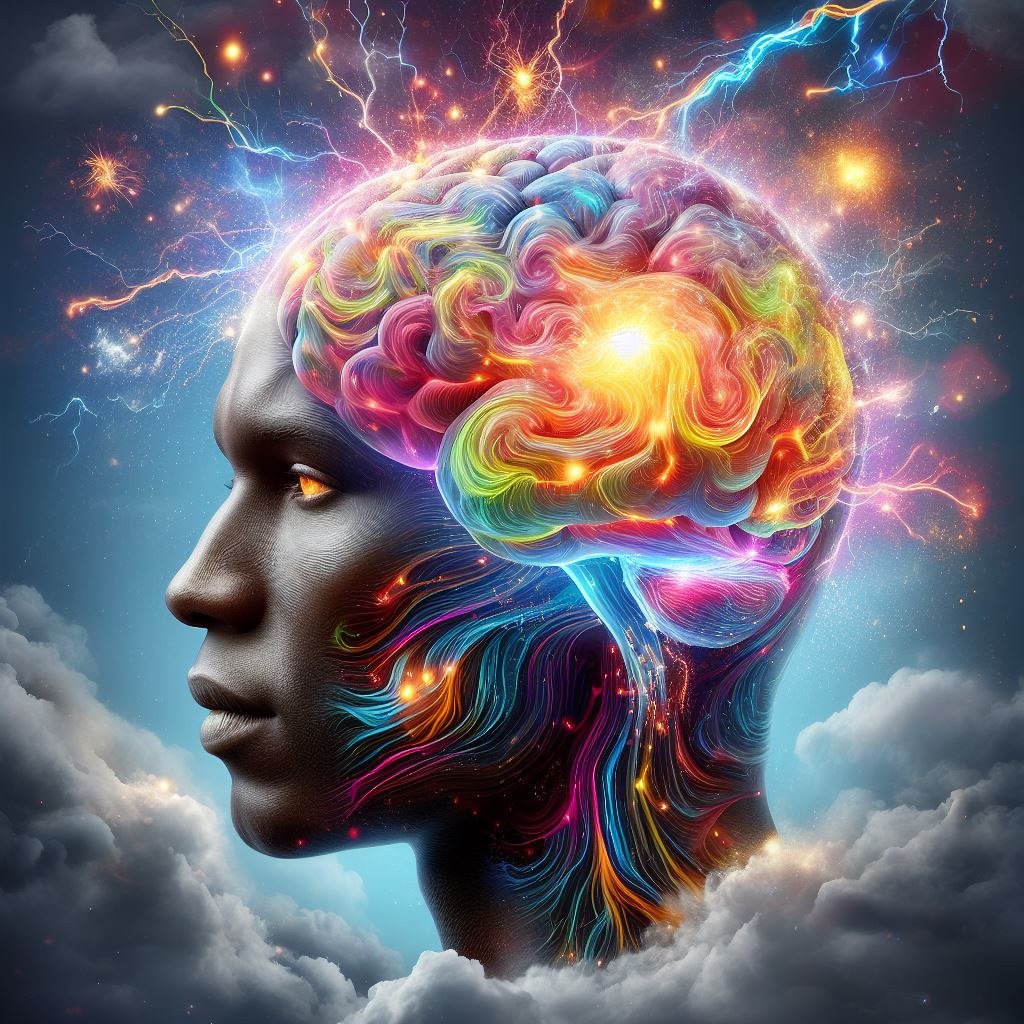
At the core of this idea is a century-old puzzle in quantum physics called the measurement problem. In quantum mechanics, particles (like electrons) can exist in multiple states at once — a strange phenomenon known as superposition.
But as soon as someone measures or observes the particle — for example using a detector — that superposition “collapses,” and the particle snaps into one definite state.
Dr. Eric Cavalcanti, a physicist at Griffith University, explains this process.
He explains that when an electron lands on a detector, it triggers a cascading effect—ionizing nearby atoms and generating an electrical signal that instruments can pick up. For most scientists, that’s the whole explanation: measurement is simply a physical process, and it doesn’t require a conscious observer to make it happen. Dr. Magdalena Zych of Stockholm University shares this view. She likens the human eye to a basic detector, noting that when photons strike the retina, the interaction is no different from photons hitting a machine. Consciousness doesn’t need to enter the equation.
To many physicists, the universe naturally contains an element of randomness that we can observe but not influence—and that’s simply part of its fundamental nature.
This triggers a deep question: what counts as a “measurement”? Is it any physical interaction — a detector, a machine, even another particle — or does the presence of a conscious observer really make a difference? Many physicists argue that consciousness isn’t needed; a camera, or atom, or detector suffices.
But the mind-bending theory challenges that: what if consciousness does matter?
Observers Watching Observers — The Paradox of Perspectives
Things get extra weird when you consider more than one observer. One thought experiment often cited is Wigner’s Friend. Imagine your friend (call her Alice) is in a sealed lab performing a quantum experiment — measuring, say, an electron’s spin. From Alice’s view, once she measures, the particle collapses into a definite state (e.g. “up” or “down”) and she writes down her result.
But to you — standing outside that sealed lab — the entire lab (Alice + particle + apparatus) may still be in a superposition. Until you open the lab and observe the outcome, you have no concrete “reality.”
So, who’s right? From Alice’s perspective, the spin is determined. From yours, it isn’t — at least until you look. This paradox suggests that “facts” may not be universal. Instead, each observer might have their own valid version of reality. As one of the physicists quoted in the original article puts it: different observers could have different — but equally valid — realities.
If that’s true, then reality becomes deeply personal and observer-dependent.
When Physics Meets Mind: Interpretations That Put Consciousness in the Driver’s Seat
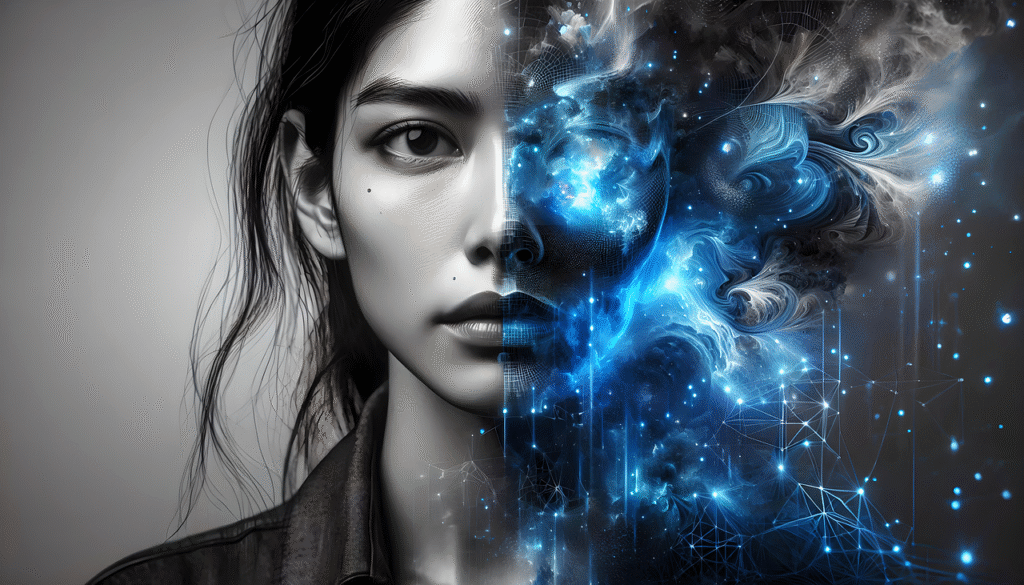
To tackle these enigmas, scientists and philosophers have developed alternative interpretations and models of quantum mechanics — some of which place consciousness at the center.
One of the most intriguing approaches is QBism (Quantum Bayesianism). According to QBism, quantum theory doesn’t describe an objective world “out there.” Instead, it’s more like a “user’s manual” for how an observer should update their beliefs after gathering information through measurements.
In this view, when you measure something, the wave function doesn’t physically collapse. Instead, you update your beliefs. Reality isn’t a fixed external thing; it’s personal — a kind of “observer-centric” universe.
An Even Broader Vision: Consciousness as Universal Substrate
Some speculative frameworks suggest consciousness isn’t just inside brains — but a more fundamental aspect of reality itself. For instance, pull from interpretations where consciousness and spacetime geometry emerge together as facets of a deeper quantum substrate.
In such views, your brain isn’t building reality alone — but tapping into, or co-creating with, something far bigger: a universal, information-driven web where mind and matter are inseparable.
What This Could Mean — If We’re Right (Or Even Close)
If these ideas hold water (and let me emphasize — that’s a big “if”), the implications are profound:
Reality might not be a fixed, objective “thing.” Instead, what we see — what we experience — could depend on who is observing.
Consciousness might not just be a byproduct of brain activity, but a fundamental piece of the universe’s fabric — perhaps on par with space, time, matter, energy.
The dividing line between mind and matter, subject and object, could blur, dissolving centuries-old assumptions about an “outside world” that exists independently of us.
Philosophy, physics, and neuroscience might converge in ways that challenge modern materialism — raising deep questions about free will, identity, and the nature of existence.
Why Many Remain Skeptical — The Criticisms That Still Stand
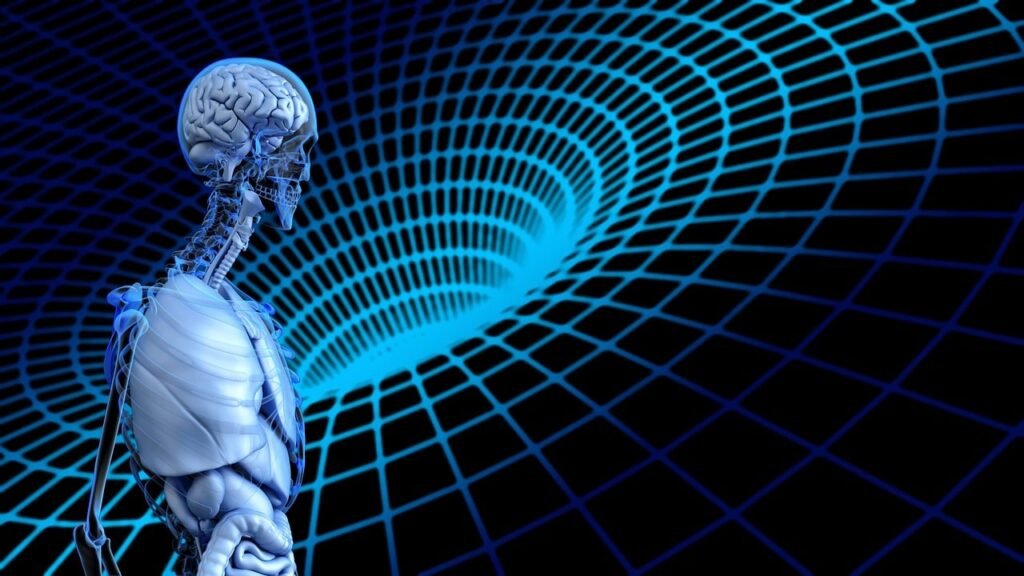
Despite its allure, the “consciousness shapes reality” idea remains controversial. Critics point out serious challenges:
The brain is often considered too “warm, wet and noisy” for delicate quantum phenomena (like superposition) to survive long enough to influence consciousness.
Even the main proponents of quantum-consciousness theories admit there’s no consensus. As one physicist quoted in the original article says: “we have many options, but there’s no consensus on what the right answer is.”
Some argue that these ideas drift into metaphysics or mysticism rather than testable science — a concern that surfaces especially with more speculative models linking mind and cosmos directly.
So far, there’s no decisive proof. But with advances in neuroscience, quantum biology, and physics, the door isn’t closed yet.
A Universe Full of Possibilities — Do We Build Reality by Observing It?
At the end of the day, this mind-bending theory does more than challenge physics — it challenges identity, perception, reality itself. It asks: Are we passive spectators, or collaborators in creation?
Maybe each time we look around — each time we observe — we help the universe solidify, nudging possibilities into reality. Maybe our consciousness is the glue that binds spacetime, matter, and meaning.
I don’t have answers — but I’m fascinated by the questions.
Hi, I’m Andrew, and I come from India. Experienced content specialist with a passion for writing. My forte includes health and wellness, Travel, Animals, and Nature. A nature nomad, I am obsessed with mountains and love high-altitude trekking. I have been on several Himalayan treks in India including the Everest Base Camp in Nepal, a profound experience.