
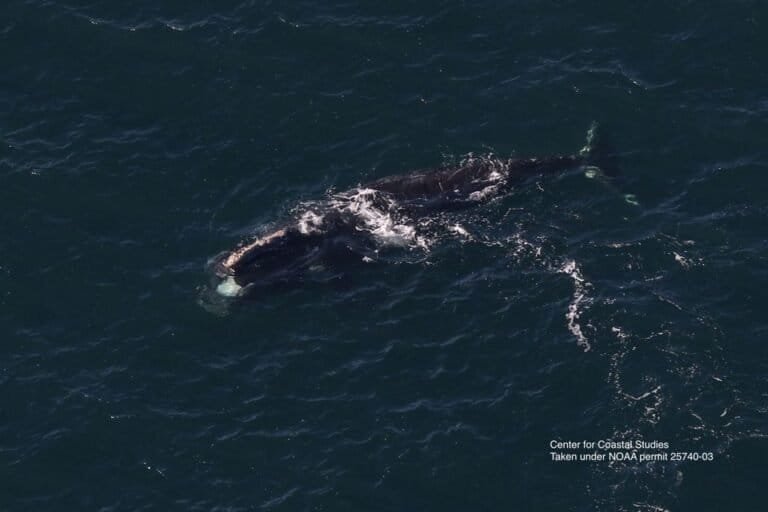


A Historic First Sighting in European Waters (Image Credits: Imgs.mongabay.com)
A critically endangered North Atlantic right whale completed an unprecedented journey across the Atlantic Ocean, traveling from Irish waters to the coast near Boston in a path that has captivated scientists and conservationists alike.
A Historic First Sighting in European Waters
The saga began in the summer of 2024 when researchers documented a North Atlantic right whale in Donegal Bay off Ireland’s coast. This marked the first confirmed sighting of the species in those waters in over a century, surprising experts who had long believed the whales’ range was confined primarily to the western Atlantic. The individual, a mature female, appeared healthy and unaccompanied, prompting immediate efforts to catalog her unique markings for identification.
Photographs captured during the encounter revealed the distinctive white calluses on her head and the broad, arched mouth typical of right whales. Marine biologists noted the rarity of such an event, as the species had not been reliably observed in European waters since the early 20th century. This discovery highlighted potential shifts in oceanic conditions that could be drawing these giants eastward.
The Astonishing 3,000-Mile Journey to Boston
Months later, on November 19, 2025, aerial surveys off the Massachusetts coast spotted the same whale near Boston, confirming her extraordinary migration. Covering approximately 3,000 miles, this east-to-west crossing represented the first documented case of a right whale originating from European sighting records before appearing in U.S. waters. Teams from the Center for Coastal Studies and the New England Aquarium matched her photos with the Irish images, solidifying the identification.
The whale’s path likely followed shifting currents and prey distributions, navigating challenges like shipping lanes and fishing gear that threaten her kind. Scientists expressed amazement at her resilience, given the species’ critically endangered status with fewer than 400 individuals remaining worldwide. This movement underscores the interconnectedness of Atlantic ecosystems and the need for international conservation strategies.
Climate Change and Shifting Whale Habitats
Experts suggest that warming ocean temperatures and altered prey patterns due to climate change may be influencing these unusual migrations. As zooplankton and copepods – the primary food source for right whales – shift northward, the whales could be following suit, expanding into previously underutilized areas like Irish coastal waters. This whale’s journey provides valuable data on how environmental pressures are reshaping marine life distributions.
While the sighting offers a glimmer of hope by indicating possible new foraging grounds, it also raises alarms about broader vulnerabilities. Entanglements in fishing gear and vessel strikes remain leading causes of death, exacerbated by changing sea lanes. Researchers emphasized that protecting these transient routes requires coordinated global efforts to mitigate human impacts.
Implications for Conservation Efforts
The identification of this whale has galvanized renewed focus on right whale recovery programs. Organizations monitoring the species now incorporate transatlantic data into their models, potentially improving predictions of population movements. For instance, enhanced satellite tagging and acoustic monitoring could track future wanderers, informing policy on marine protected areas.
- International collaboration between U.S. and European agencies to share sighting databases.
- Increased funding for gear modifications to reduce entanglements in expanding habitats.
- Public awareness campaigns to promote responsible ocean use and support for whale-friendly regulations.
- Research into climate-resilient prey sources to bolster food security for the population.
- Seasonal restrictions on shipping in key migration corridors.
These steps aim to address the dual threats of habitat alteration and direct human interference, ensuring the species’ survival in a changing world.
Key Takeaways
- This migration marks the first documented east-to-west Atlantic crossing for a North Atlantic right whale.
- Climate-driven ocean changes may be expanding the species’ range, offering both opportunities and risks.
- With under 400 individuals left, urgent conservation is essential to prevent extinction.
As this lone whale’s odyssey demonstrates the ocean’s enduring mysteries and the fragility of its inhabitants, it serves as a call to action for safeguarding marine biodiversity. What steps can we take to protect these majestic creatures in the face of environmental change? Share your thoughts in the comments below.
Jan loves Wildlife and Animals and is one of the founders of Animals Around The Globe. He holds an MSc in Finance & Economics and is a passionate PADI Open Water Diver. His favorite animals are Mountain Gorillas, Tigers, and Great White Sharks. He lived in South Africa, Germany, the USA, Ireland, Italy, China, and Australia. Before AATG, Jan worked for Google, Axel Springer, BMW and others.


