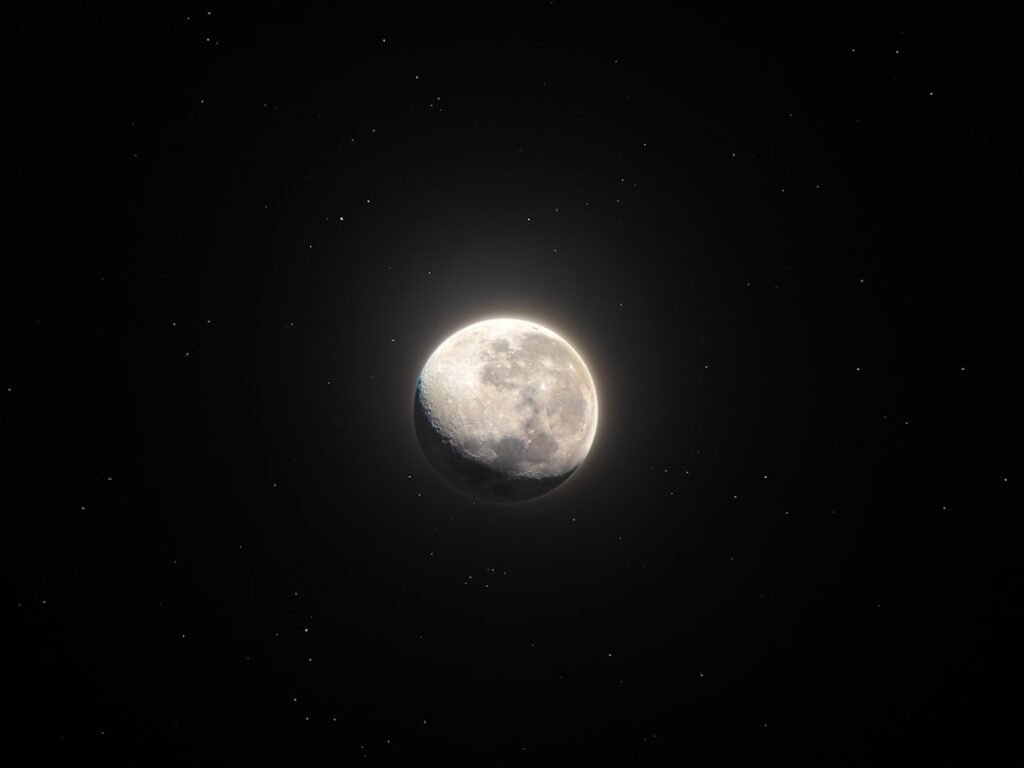

The Enchanting Phenomenon of Earthshine (Image Credits: Unsplash)
A delicate crescent moon graces the evening sky this week, its dark side faintly aglow with light reflected from Earth. This striking display, known as earthshine, peaks around the recent new moon and offers skywatchers a rare view of the lunar surface’s subtle features. Visible worldwide shortly after sunset, the event coincides with clear views of brilliant Venus nearby, enhancing the celestial scene.
The Enchanting Phenomenon of Earthshine
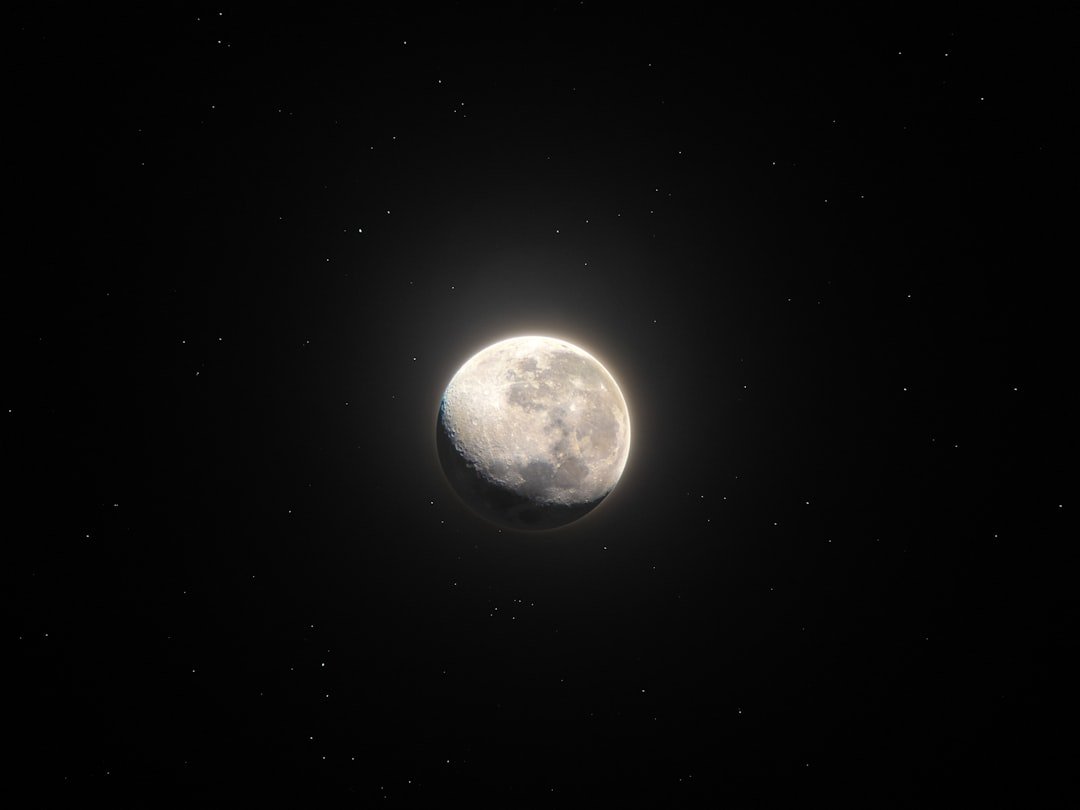
Earthshine occurs when sunlight strikes our planet and bounces onto the moon’s night side, creating a soft illumination on the shadowed portion of a crescent moon. This gentle glow, sometimes called the “old moon in the new moon’s arms,” reveals faint outlines of lunar maria and craters that would otherwise remain invisible.[1][2]
Historically noted by artists and astronomers alike, the effect provides a poetic reminder of our interconnected place in the solar system. Observers often describe it as ethereal, with the contrast between the bright crescent and dim earthlit region captivating even casual viewers. The brightness varies with Earth’s cloud cover and phase, making clear evenings ideal.
Timing Your Observation This March
The new moon arrived on March 18 at 9:23 p.m. EDT, setting the stage for waxing crescents ideal for earthshine from March 19 through 21.[3][4] On March 20, the moon appears as a razor-thin crescent, about 2% illuminated, hovering low in the west. Sunset viewers should scan the horizon 30 to 60 minutes after local sundown, before the moon dips too low.
Conditions improve in the days following, as the crescent thickens slightly while retaining strong earthshine. Northern Hemisphere observers note the moon’s position near Venus, while southern viewers see a similar low arc. Patience pays off, as twilight deepens to reveal the full effect.
Step-by-Step Guide to Spotting the Glow
Locate a site with an unobstructed western view, away from city lights if possible. No telescope required – naked eyes suffice under decent skies. Begin watching right after sunset, when the moon emerges as a pale sliver against the fading blue.
Follow these essential steps for success:
- Check local sunset time and add 20-45 minutes for optimal twilight.
- Face due west; the moon sits low, perhaps 10-15 degrees above the horizon.
- Allow eyes to dark-adapt by avoiding bright screens or lights.
- Scan for the crescent’s tips enclosing a broader, ghostly disk.
- Use binoculars for sharper lunar details once located.
- Photograph with a tripod for steady long exposures.
Urban dwellers can still catch it from rooftops or parks. Clear weather forecasts boost chances across most regions this week.
Companion Wonders in the Evening Sky
Venus blazes nearby as the evening’s brightest starlike object, forming a striking pair with the moon on March 19 and 20. Jupiter gleams higher overhead, while faint Uranus lingers toward the Pleiades cluster.[5] This lineup transforms a simple earthshine view into a broader sky tour.
Zodiacal light may arch upward in dark sites, adding a milky pyramid from the sun’s dust. The scene evokes ancient stargazing traditions, connecting modern viewers to timeless skies. Such alignments occur monthly but shine brightest post-new moon.
Maximizing Your Earthshine Experience
Pollution dims the effect, so rural spots outperform cities. Atmospheric clarity, influenced by recent weather, plays a key role – post-front passages often yield pristine views. Children and beginners find it accessible, sparking interest in astronomy.
Apps like Stellarium or SkySafari pinpoint the moon’s position precisely. Record notes on visibility to track variations over cycles. Though fleeting, each sighting deepens appreciation for subtle cosmic reflections.
Key Takeaways:
- Look west 30-60 minutes after sunset March 19-21 for the best earthshine.
- Pair with Venus for an easy, memorable sky duo.
- No equipment needed; clear horizons make all the difference.
Earthshine serves as a bridge between Earth and moon, a no-cost wonder reminding us of sunlight’s far-reaching journey. Step outside this evening – what hidden lunar secrets will you uncover? Share your sightings in the comments below.