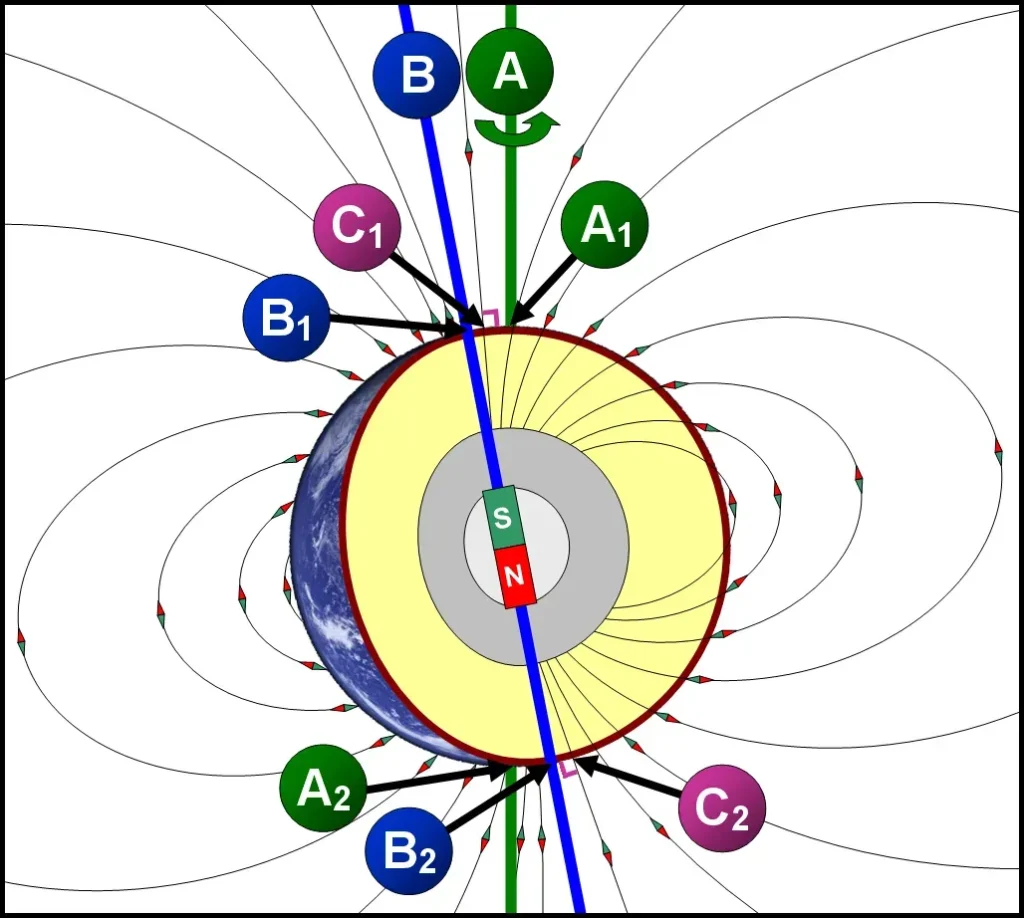

There’s something happening miles beneath your feet right now, completely invisible and almost completely silent, that has the potential to reshape every navigation system on the planet, expose orbiting satellites to damage, and maybe, just maybe, hint at one of the most dramatic events in Earth’s geological history. You probably haven’t thought about it today. Honestly, most people haven’t. Yet scientists around the world are watching it with growing intensity, trying to decode something that keeps surprising them at every turn.
Earth’s magnetic field is not the stable, predictable force most of us assume it to be. It’s restless. It shifts, weakens, accelerates, and slows down in ways that defy even the most sophisticated models available to researchers in 2026. The closer scientists look, the more complex and humbling the picture becomes. So let’s get started – because what’s unfolding beneath the surface of our planet is far stranger than anything you might expect.
The Invisible Shield You Can’t Live Without
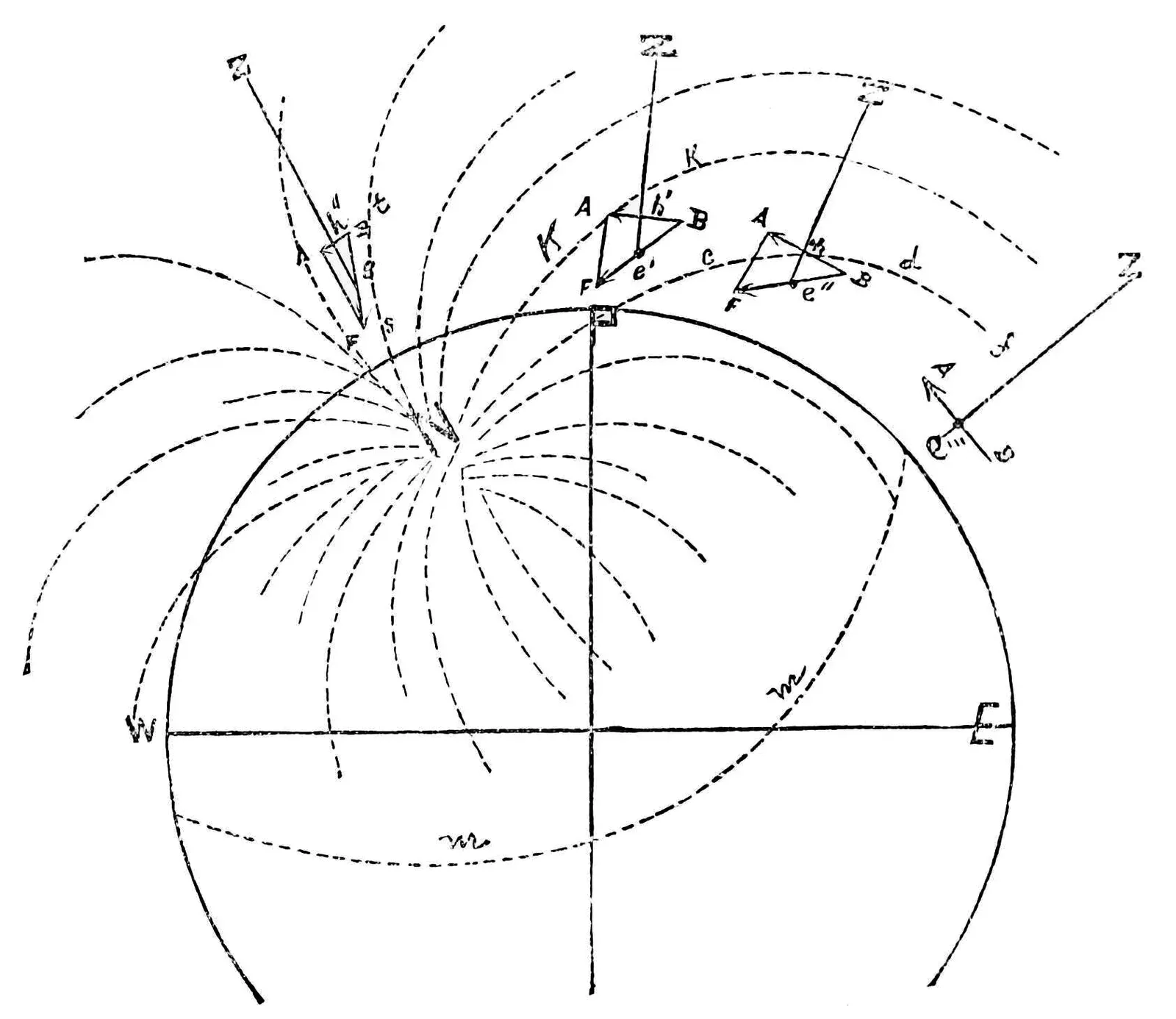
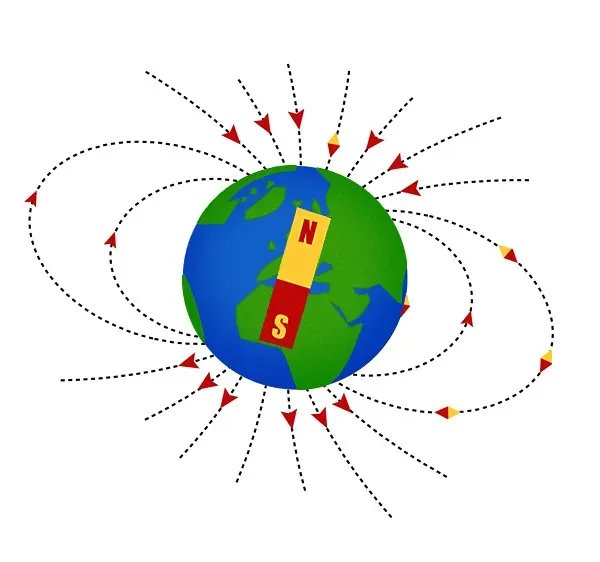
Think of Earth’s magnetic field as a force field in the most literal sense – a planetary-scale protective bubble that has been quietly doing its job for billions of years. Your magnetosphere shields you from erosion of the atmosphere by the solar wind, erosion and particle radiation from coronal mass ejections, and cosmic rays from deep space. Without it, your world would look very different – and much less hospitable.
Here’s a sobering comparison: Mars once had a global magnetic field, and when it switched off billions of years ago, the solar wind gradually stripped away its atmosphere. Earth’s magnetic field is vital for keeping the atmosphere in place, and when scientists compared oxygen loss from Earth versus Mars during the same solar wind event, the increase in atmospheric loss from Mars was ten times greater than Earth’s. That’s how much your magnetic shield truly matters – it’s the reason you can breathe at all.
The Engine Buried 3,000 Kilometers Below You
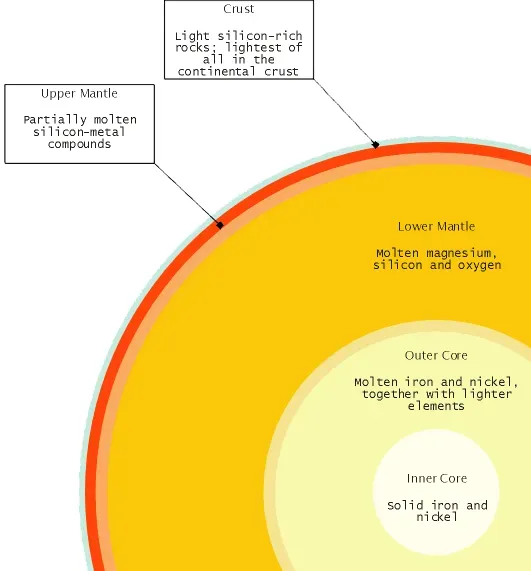
Earth’s magnetic field is largely generated by a global ocean of molten, swirling liquid iron that makes up the outer core around 3,000 kilometers beneath your feet. Acting like a spinning conductor in a bicycle dynamo, it creates electrical currents, which in turn generate the continuously changing electromagnetic field – but in reality, the processes that generate the field are far more complex. Scientists have a broad understanding of the mechanism, but the details remain maddeningly elusive.
The magnetosphere is generated by the churning molten metals in Earth’s core, and because the convective sloshing at Earth’s core never stops, the magnetosphere is never static. As a result, its northernmost point is always on the move. Picture a pot of thick, metallic soup on the world’s most powerful stove, constantly bubbling and churning in complex patterns – that’s essentially what’s driving the field that keeps your GPS working and your atmosphere intact.
The Wandering North Pole Nobody Can Fully Explain
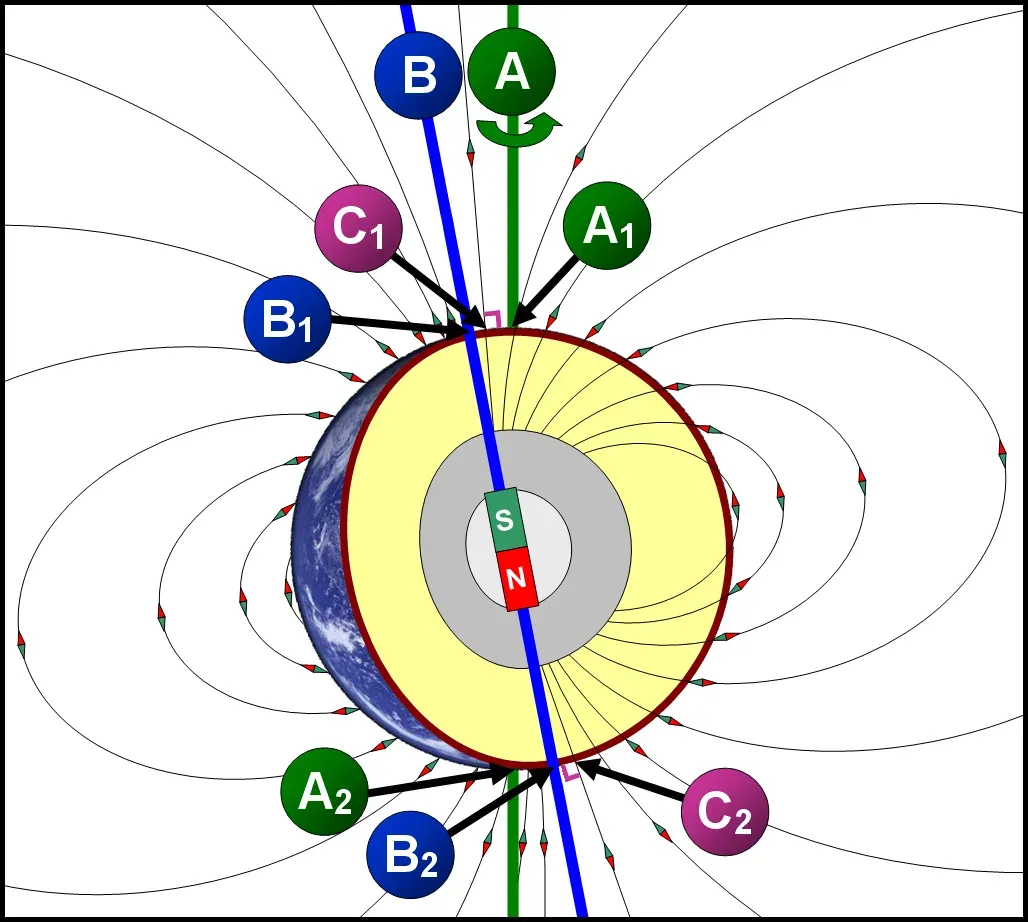
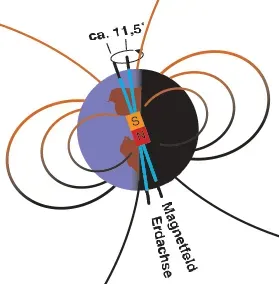
Here’s something that might genuinely surprise you. The magnetic North Pole differs from the geographic North Pole, which remains fixed. The geographic North Pole marks the Earth’s rotational axis, while the magnetic North Pole is where the planet’s magnetic field lines converge perpendicularly into the ground. One stays put, the other roams – and it’s been roaming faster and faster in recent decades.
In the 1990s, the magnetic north pole began racing at an unprecedented speed of 50 to 60 kilometers per year, leaving scientists scrambling to keep up. Over the past few decades, magnetic north’s movement has been unprecedented – it dramatically sped up, then in a more recent twist rapidly slowed – though scientists cannot explain the underlying cause behind the magnetic field’s unusual behavior. It’s the kind of pattern that keeps geophysicists awake at night, because there’s simply no consensus on what’s driving it.
The South Atlantic Anomaly – Earth’s Magnetic Weak Spot Is Growing
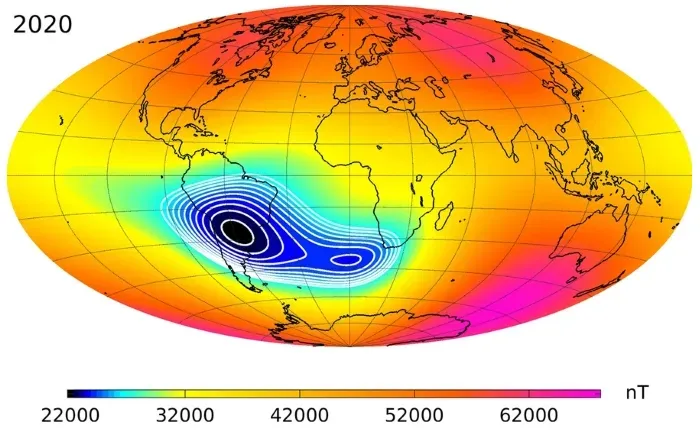
If you’ve ever wondered whether there’s a specific place on Earth where the magnetic shield is dangerously thin, the answer is yes – and it’s getting bigger. Using 11 years of magnetic field measurements from the European Space Agency’s Swarm satellite constellation, scientists discovered that the weak region in Earth’s magnetic field over the South Atlantic – known as the South Atlantic Anomaly – has expanded by an area nearly half the size of continental Europe since 2014. That’s not a minor fluctuation. That’s a significant, ongoing change.
According to scientists behind recent studies, there are “strange patterns” in the region between Earth’s molten outer core and its rocky mantle, and beneath the South Atlantic Anomaly, unexpected areas exist where the magnetic field, instead of coming out of the core, goes back into the core. Particle radiation in the South Atlantic Anomaly region can knock out onboard computers and interfere with the data collection of satellites that pass through it, though the SAA creates no visible impacts on daily life on the surface. Think of it as a cosmic pothole that your phone doesn’t notice but a satellite certainly does.
When Satellites Break and Computers Crash in Space
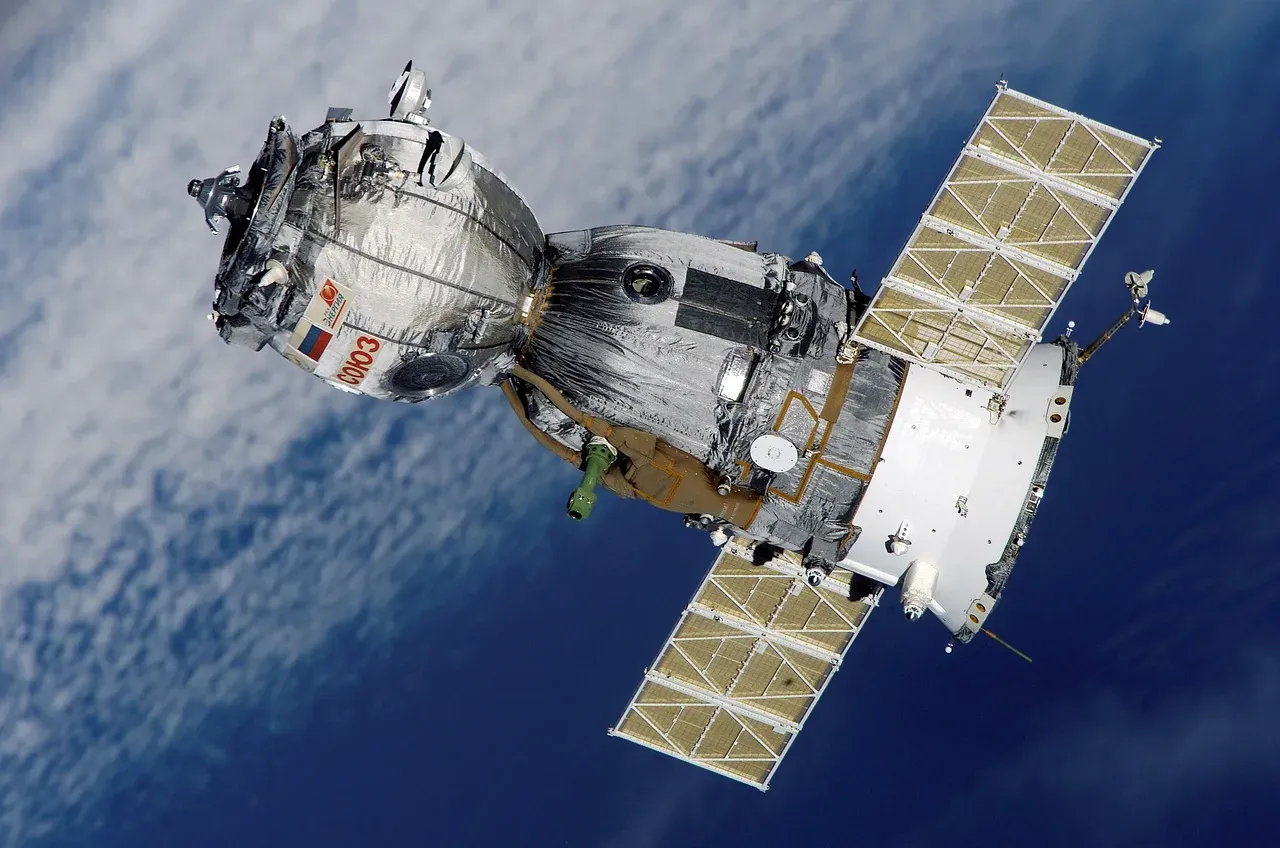
The real-world consequences of the South Atlantic Anomaly are not theoretical – they’re already happening, and they’re more dramatic than most people realize. The South Atlantic Anomaly is of great significance to astronomical satellites and other spacecraft that orbit Earth at several hundred kilometers altitude, as these orbits take satellites through the anomaly periodically, exposing them to several minutes of strong ionizing radiation. Even a few minutes inside that magnetic pothole can cause serious hardware damage.
The examples are genuinely remarkable. The Hubble Space Telescope does not take observations with its sensitive UV detectors while passing through the South Atlantic Anomaly. The anomaly is believed to have started a series of events leading to the destruction of Hitomi, Japan’s most powerful X-ray observatory, transiently disabling a direction-finding mechanism that caused the satellite to spin out of control and lose its solar panels. These are not minor glitches – these are multi-million dollar catastrophes linked directly to a shifting magnetic field.
Pole Reversals – The Most Dramatic Event You’ve Never Heard Of
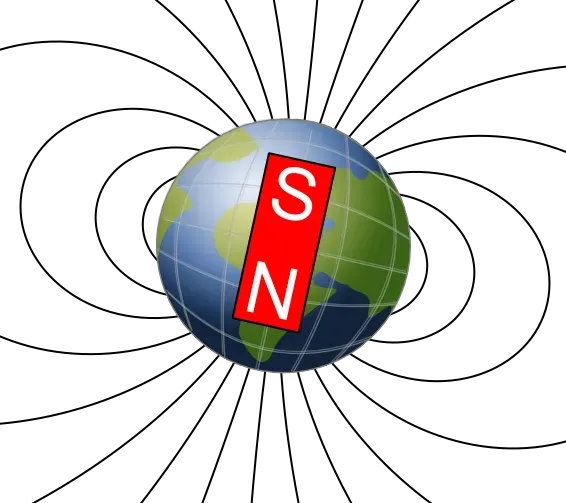
I know it sounds almost science fiction, but Earth’s magnetic poles have completely flipped – north becoming south and south becoming north – hundreds of times throughout geological history. There have been at least 183 reversals over the last 83 million years, occurring on average roughly once every 450,000 years. The last full reversal took place around 780,000 years ago, meaning we are technically overdue by geological standards.
What might a reversal actually look like in practice? During a transition, the magnetic field will not vanish completely, but many poles might form chaotically in different places during reversal, until it stabilizes again. New work from University of Wisconsin-Madison geologist Brad Singer and colleagues finds that the most recent field reversal, some 770,000 years ago, took at least 22,000 years to complete. That’s both reassuring and unsettling at the same time – it means the process is gradual, but it also means there’s a long, chaotic transition period that humanity has never actually lived through at a technological level.
What This Means for Your Navigation, Technology, and Daily Life
You might think all of this is abstract planetary science with no bearing on your daily routine. It’s actually the opposite. Compasses are influenced by Earth’s magnetic field, requiring up-to-date models to ensure navigational instruments provide correct readings for systems used by the U.S. Federal Aviation Administration, Department of Defense, NATO, and the International Hydrographic Organization – and without proper updates, attempting to travel 5,280 miles from South Africa to the United Kingdom in a straight line using an outdated model would leave you 93 miles off course.
To stay ahead of the shifting field, scientists released a major updated tool in late 2024. The World Magnetic Model 2025 provides more precise navigational data for all military and civilian planes, ships, submarines, and GPS units, and for the first time, the release includes the World Magnetic Model High Resolution, which offers improved spatial resolution of approximately 300 kilometers at the equator compared to the standard 3,300 kilometers. Space weather can also damage large conducting systems, such as major pipelines and power grids, by overloading currents in these systems. The invisible field above you isn’t just science – it’s infrastructure.
Conclusion: The Mystery Beneath Our Feet
What you’ve just read is the story of a planetary system so dynamic, so layered in complexity, that the world’s best scientists are still piecing it together in real time. The exact reasons for the acceleration and subsequent deceleration of magnetic pole movement remain unclear, and the behavior of the magnetic field is considered “complicated” and “chaotic,” which is why the World Magnetic Model must be updated regularly. There’s no simple answer, no clean explanation sitting in a textbook somewhere waiting to be discovered.
What there is, however, is an extraordinary natural phenomenon unfolding beneath your feet every single day – one that protects life on this planet, shapes the technology you depend on, and occasionally reminds humanity just how much it doesn’t yet understand. Scientists did not find any sign of an impending magnetic field reversal in the most recent studies, and it’s known from paleomagnetic records that Earth’s magnetic field has weakened many times in the past, displaying weak field regions like the South Atlantic Anomaly, without reversing. So perhaps the most honest thing science can say right now is this: the field is changing, it has always been changing, and the full story is still being written – deep in the turbulent iron heart of the Earth.
What do you think – does living on a planet with a constantly shifting magnetic shield change the way you see the ground beneath you? Let us know in the comments.
Hi, I’m Andrew, and I come from India. Experienced content specialist with a passion for writing. My forte includes health and wellness, Travel, Animals, and Nature. A nature nomad, I am obsessed with mountains and love high-altitude trekking. I have been on several Himalayan treks in India including the Everest Base Camp in Nepal, a profound experience.