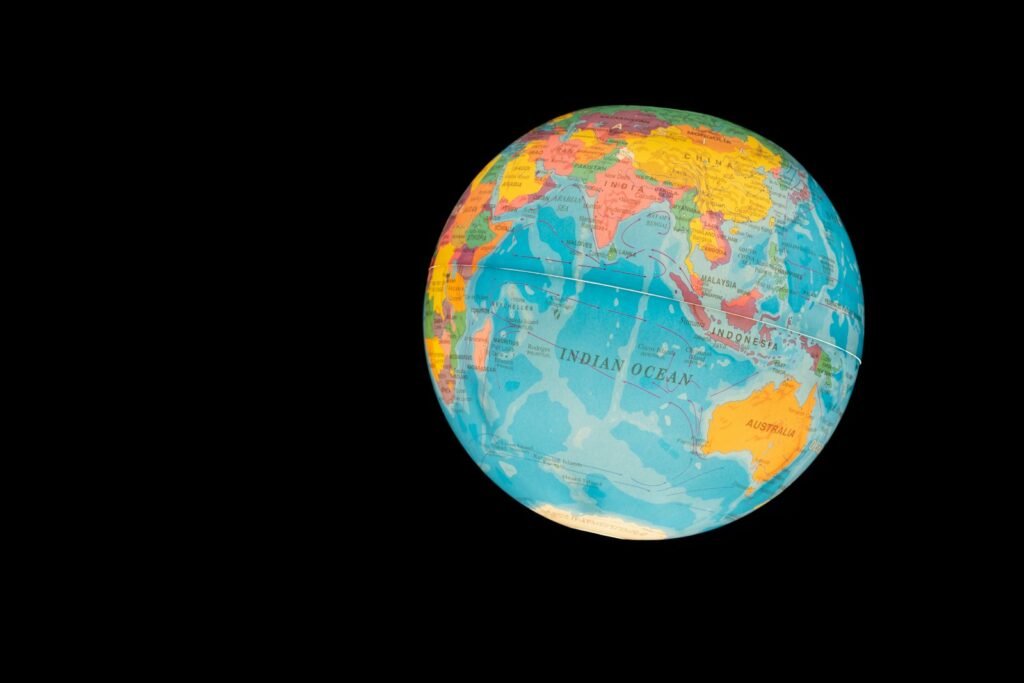

Buried thousands of miles beneath your feet, a ball of metal the size of the Moon is quietly rewriting the story of how Earth came to be. For most of the twentieth century, geologists treated the core like a black box: essential, mysterious, but fundamentally out of reach. Over the last few decades, though, a flurry of seismic measurements, lab experiments, and bold new models has turned that black box into something closer to a time capsule from the solar system’s violent youth. This article explores how the core formed, what it is made of, and how tiny changes deep underground are forcing scientists to rethink the planet’s earliest chapters. The stakes are high, because when we misread that inner archive, we misunderstand not just Earth’s past, but its long-term habitability and future.
Frozen Echoes of a Violent Beginning
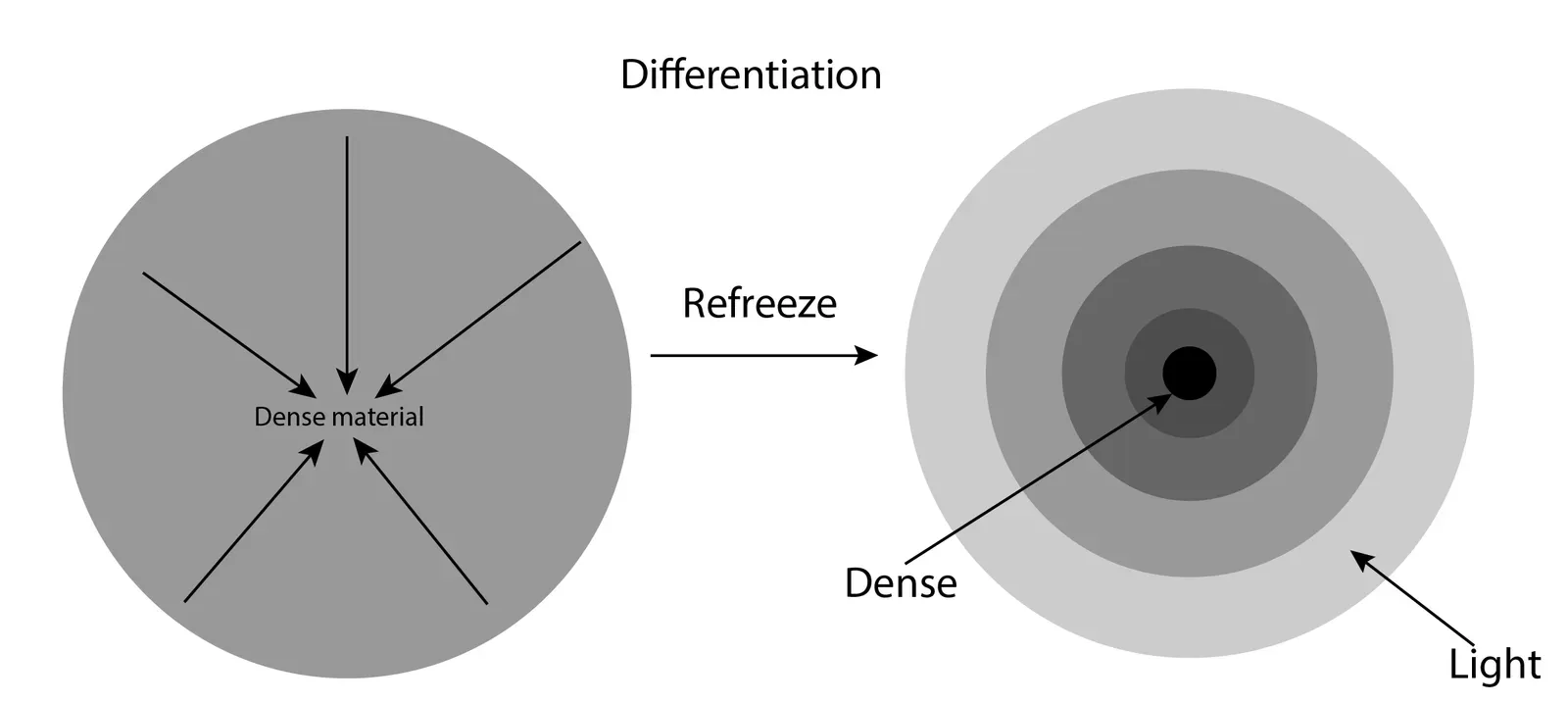
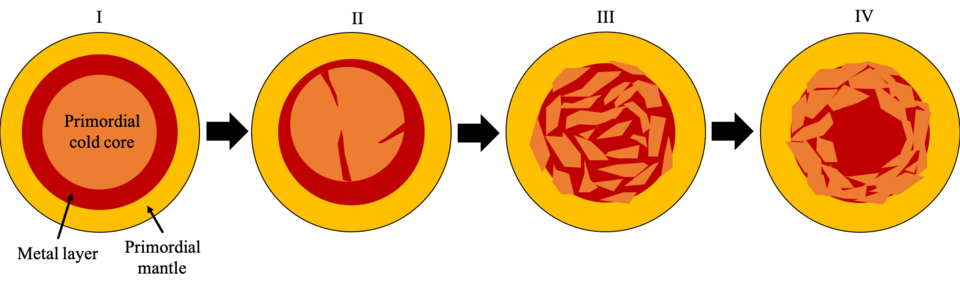
The idea of the core as a time capsule starts with how it formed in the first place: through catastrophic violence, not quiet settling. Around four and a half billion years ago, Earth was a molten, churning sphere, hammered by impacts large enough to vaporize oceans and melt rock to depths that make today’s volcanoes look tame. In that chaos, iron and other heavy elements sank inward like metallic rain, while lighter silicates floated up to form the mantle and crust. The core that emerged from this metal storm locked in a chemical fingerprint of those early conditions, including what kind of material hit Earth and how hot and mixed the young planet really was.
Unlike the crust, which is constantly recycled by plate tectonics, the deep core preserves aspects of that original differentiation that have never been fully erased. Its composition still carries traces of ancient collisions, of the Sun’s early radiation, and of the timing of when the planet stopped being a global magma ocean and began to cool. When seismologists and geochemists argue over the details, they are really arguing about the opening scenes of Earth’s biography. The core’s very existence is proof that our planet was once so hot and fluid that metal could flow like water, then freeze into a permanent record of that brief, extreme phase.
Listening for Messages in Earthquake Waves
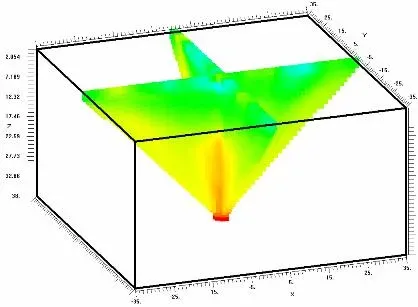
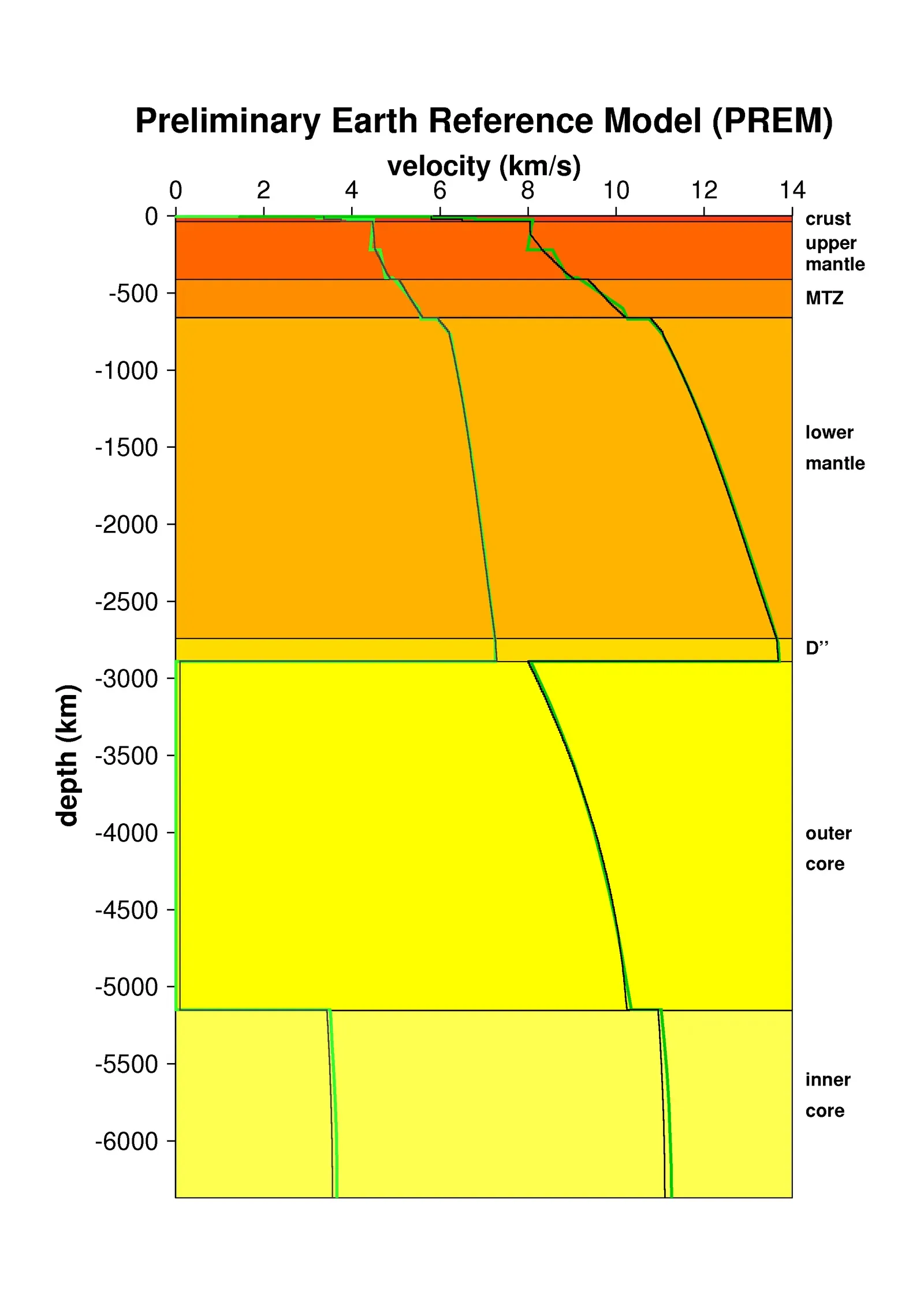
We cannot drill anywhere close to the core, so scientists “listen” to it instead, using earthquakes as improvised CT scans. Each large quake sends seismic waves rippling through the planet, changing speed and direction as they cross different layers. Instruments detect how long those waves take to arrive on the far side of the globe, and subtle delays or speed-ups reveal what they passed through. Over many decades, by comparing thousands of quakes, researchers have sketched out a surprisingly detailed map of the core’s size, density, and even texture.
One of the most striking finds is that the inner core, once thought to be a simple solid sphere of iron, is anything but uniform. Seismic waves travel faster along some directions than others, a kind of directional stiffness that hints at aligned crystals or layered growth. Some studies suggest an “innermost inner core,” a distinct central region only a few hundred miles across, with different seismic behavior from the rest. That nested structure is exactly the kind of feature you’d expect if the inner core has been growing over billions of years, freezing from the outer core like rings in a tree that record the changing conditions of solidification.
Light Elements, Heavy Clues
At first glance, the core sounds simple: mostly iron, with some nickel. But its exact density tells a more complicated story. Measurements of Earth’s gravity show that even the deep core is slightly too light to be pure iron-nickel metal. That mismatch implies the presence of so-called light elements – candidates include sulfur, oxygen, silicon, carbon, and hydrogen – dissolved into the iron alloy. Those impurities are not minor details; they are smoking guns for the composition of the stuff that originally built our planet.
Different light elements would have been delivered in different amounts by meteorites, icy bodies, and planetesimals in the early solar system. That means the core’s chemistry effectively encodes where in the disk of dust and gas Earth assembled and how much material it traded with its neighbors. High-pressure experiments that squeeze and heat metal mixtures to conditions near those of the core are starting to bracket which combinations best match the observed density. Every constraint narrows the range of possible birth environments for Earth and helps explain why our planet, unlike many rocky worlds we observe elsewhere, ended up with a persistent magnetic field and long-lived plate tectonics.
Inner Core Growth Rings and Planetary Timekeeping
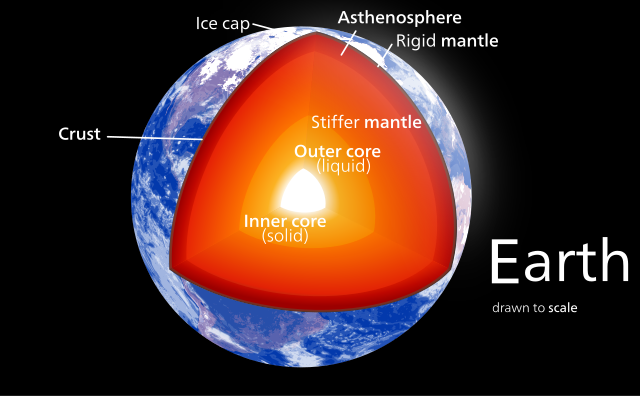
When the inner core began to crystallize is one of the most contested questions in geophysics, because that timing shapes everything from the field that shields your phone to the air you breathe. The inner core grows as the planet cools, with liquid metal in the outer core freezing onto the solid interior. As it does, it releases both heat and lighter elements, which drive the churning motion that powers Earth’s magnetic dynamo. If the inner core is relatively young – forming perhaps within the last one billion years – it implies that the geodynamo spent much of Earth’s history running on a different energy source, likely the slow settling of denser elements and residual heat from formation.
Seismic clues about anisotropy, layering, and possible changes in growth rate have led some researchers to propose that the inner core’s history includes distinct phases. There may have been a shift from a sluggish, uneven early solidification to a more organized, faster-growing regime, analogous to a tree shifting from thin rings in a harsh climate to thicker ones in better conditions. That shift lines up intriguingly with indications from rocks at the surface that the magnetic field strengthened or became more stable in the last billion years or so. In that sense, the inner core’s “growth rings” serve as a kind of internal clock, linking deep metal crystallization to the evolution of surface environments and even the long-term survival of complex life.
A Shifting Heartbeat: Inner Core Slowdown and Reversal
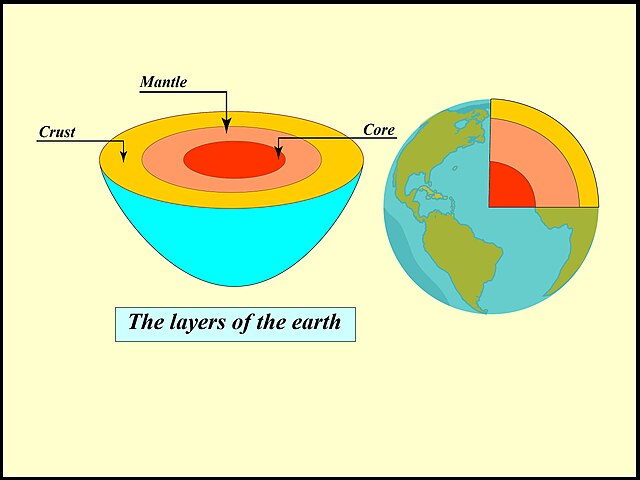
In recent years, studies comparing seismic data from similar earthquakes decades apart have suggested that the inner core’s rotation relative to the mantle is not constant. For a while, it appeared to be rotating slightly faster than the rest of the planet, drifting ahead by fractions of a degree each year. More recent analyses point to a slowdown, and possibly a reversal, with the inner core now lagging behind the mantle instead of racing ahead. This is not a Hollywood-style sudden flip, but a subtle change that unfolds over years to decades, detectable only with careful cross-checking of wave arrival times.
The fact that the inner core can speed up and slow down tells us that it is not rigidly locked to the overlying rock but coupled through the liquid outer core and the planet’s magnetic field. Changes in that coupling likely reflect shifts in how the geodynamo is working, perhaps tied to evolving patterns of heat flow at the core–mantle boundary. Some scientists argue that these changes could ripple outward, subtly altering the behavior of the magnetic field over human timescales. While your compass will not suddenly spin wildly, this hidden “heartbeat” deep inside Earth is another reminder that the core is not a static relic. It is an active archive, recording and responding to forces that tie together the deepest interior and the space environment around the planet.
From Black Box to Archive: What the Core Really Tells Us
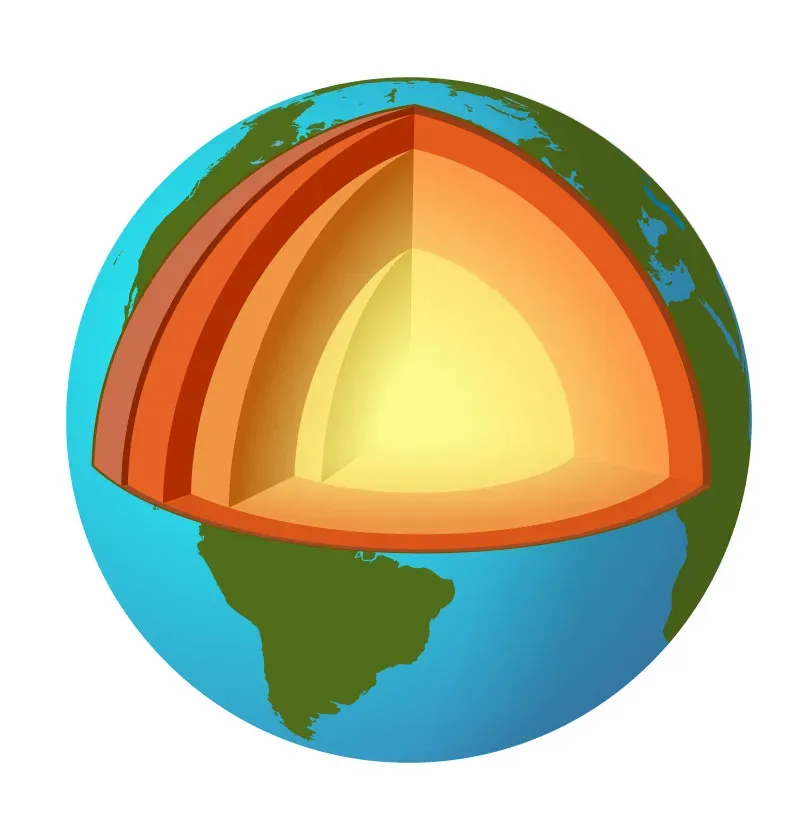
The deeper significance of all this is that the core has transformed from a vague conceptual necessity into a highly structured archive of planetary processes. Early textbooks treated it mainly as a dense ball that explained Earth’s bulk properties and magnetic field. Modern research shows it is far more like a layered library, with each region preserving information about a different chapter: initial accretion, metal–silicate separation, early heat loss, and long-term dynamo evolution. By reading those layers, scientists can test big-picture ideas about how rocky planets form and change over billions of years.
This shift in understanding also highlights how much of Earth science is indirect, almost forensic. No one has held a piece of the core, but we can still rule out entire classes of formation scenarios because they would have produced different densities, different seismic speeds, or a different magnetic history. Compared with older views that imagined relatively smooth, monotonic cooling, the emerging picture is more dynamic and punctuated: phases of rapid change, internal reorganizations, and feedbacks between deep metal, flowing rock, and the atmosphere at the surface. Seeing the core as a time capsule drives home a broader lesson: the quiet stability we experience on human timescales rests on a long history of upheaval buried out of sight.
Open Questions in the Planet’s Hidden Interior
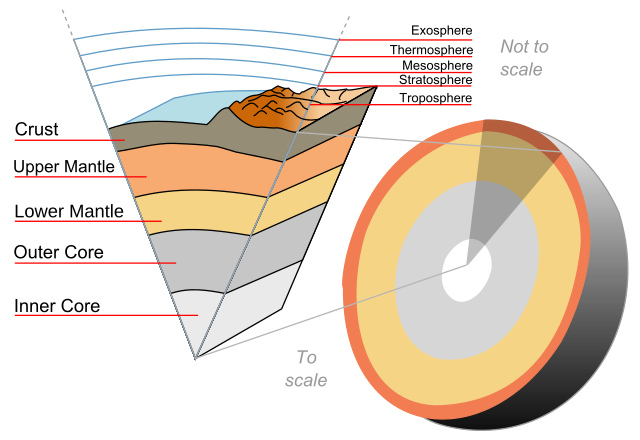
For all the progress, some of the most important details about the core remain wide open. Scientists still debate which light elements are actually present in significant amounts and how they are distributed between the inner and outer core. The precise age of the inner core is uncertain within hundreds of millions of years, a huge margin when you are trying to match it to major events in Earth’s surface history. Even the possible existence and nature of an “innermost inner core” is under active scrutiny, as different seismic methods do not always agree on its properties.
There are also puzzles about why the inner core appears asymmetrical, with seismic waves traveling differently along paths that cross its eastern and western hemispheres. That could hint at uneven growth, directional crystallization, or subtle heat-flow differences at the core–mantle boundary that we barely understand. Each of these unknowns matters because they affect how long the geodynamo can keep running and how the magnetic field might behave in the deep future. Rather than abstract curiosities, these are questions with implications for radiation exposure, satellite reliability, and the conditions that future generations will inherit on a geologically active world.
Why the Core’s Story Matters for Life at the Surface
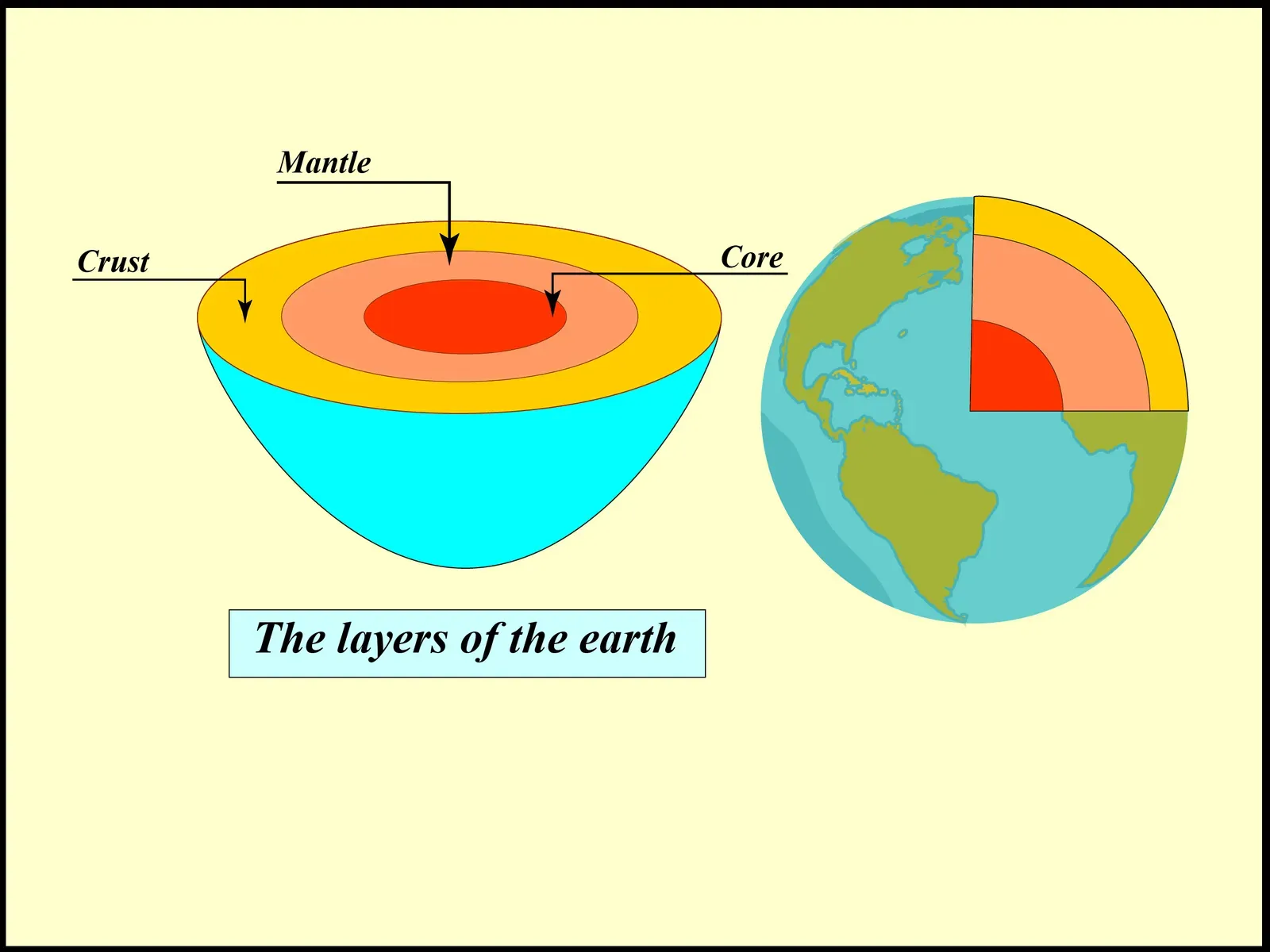
It is easy to think of the core as something separate from daily life, but its influence is literally all around you. The magnetic field generated by fluid motions above the inner core deflects charged particles streaming from the Sun and from distant astrophysical explosions. Without that shield, Earth’s upper atmosphere would be stripped more aggressively, and radiation doses at the surface and in orbit would rise dramatically. Over hundreds of millions of years, those effects could erode oceans and thin the air, as appears to have happened on Mars after its own dynamo faded.
The core also controls how quickly the planet cools, which indirectly shapes mantle convection and plate tectonics. Those processes build mountains, recycle carbon, and stabilize climate over the long term. In that sense, Earth’s metallic time capsule is not just a record of the past but an engine of the present. Understanding how it formed, how it is changing, and how long it can keep working is part of understanding why this planet has remained habitable for so long. The next time you see an aurora photo or glance at a navigation app, you are seeing, in a roundabout way, the distant consequences of a restless metal heart thousands of miles below your feet.
How Curious Minds Can Follow Earth’s Hidden Heart
You do not need a seismology lab to stay connected to this unfolding story from the deep. Many modern earthquake catalogs and visualization tools are freely available online, letting you watch in near real time as seismic waves crisscross the planet. Popular science outlets and university press releases regularly report on new findings about the core’s composition, inner structure, or rotation, often with animations that make the invisible more concrete. If you enjoy a hands-on approach, simple experiments with magnets, spinning bicycle wheels, or heated fluids can echo, at tabletop scale, the principles that drive Earth’s dynamo and internal convection.
Supporting basic research through public funding, science education, and attention to credible sources helps ensure that the next generation of instruments and models can sharpen this planetary portrait. Classroom discussions, museum visits, and even casual conversations that treat Earth as an evolving system, not a static stage, also shift how we see our place in the universe. The core may be unreachable, but the story it tells is not; it threads through geology, climate, space weather, and the technologies we rely on every day. In the end, recognizing the core as a time capsule is an invitation to look down, not up, when we wonder how our world began.
Suhail Ahmed is a passionate digital professional and nature enthusiast with over 8 years of experience in content strategy, SEO, web development, and digital operations. Alongside his freelance journey, Suhail actively contributes to nature and wildlife platforms like Discover Wildlife, where he channels his curiosity for the planet into engaging, educational storytelling.
With a strong background in managing digital ecosystems — from ecommerce stores and WordPress websites to social media and automation — Suhail merges technical precision with creative insight. His content reflects a rare balance: SEO-friendly yet deeply human, data-informed yet emotionally resonant.
Driven by a love for discovery and storytelling, Suhail believes in using digital platforms to amplify causes that matter — especially those protecting Earth’s biodiversity and inspiring sustainable living. Whether he’s managing online projects or crafting wildlife content, his goal remains the same: to inform, inspire, and leave a positive digital footprint.