
Something happened on early Earth about 2.4 billion years ago that changed everything. A surge of oxygen transformed a planet that was essentially unbreathable into the cradle of complex life we know today. Scientists have long called this event the Great Oxidation Event, and for decades, researchers assumed they had a pretty solid understanding of when and how it unfolded.
Turns out, they may have been wrong. New research is rewriting that timeline in a way that’s genuinely jaw-dropping, pointing to an oxygen-enriched atmosphere that appeared far earlier than anyone had seriously considered. Let’s dive in.
The Great Oxidation Event Is Getting a Major Rethink
Here’s the thing about scientific consensus: it shifts. Sometimes slowly, sometimes all at once. The widely accepted view held that Earth’s atmosphere became significantly oxygen-rich roughly 2.4 billion years ago, triggered largely by photosynthetic microbes called cyanobacteria pumping out oxygen as a byproduct.
New research challenges that assumption in a striking way. Evidence now suggests that meaningful oxygen enrichment in Earth’s atmosphere may have begun far earlier, potentially pushing back the timeline by hundreds of millions of years. That’s not a minor revision. That’s a complete overhaul of how we understand the early history of life and the planet itself.
What Scientists Actually Found in the Ancient Rock Record
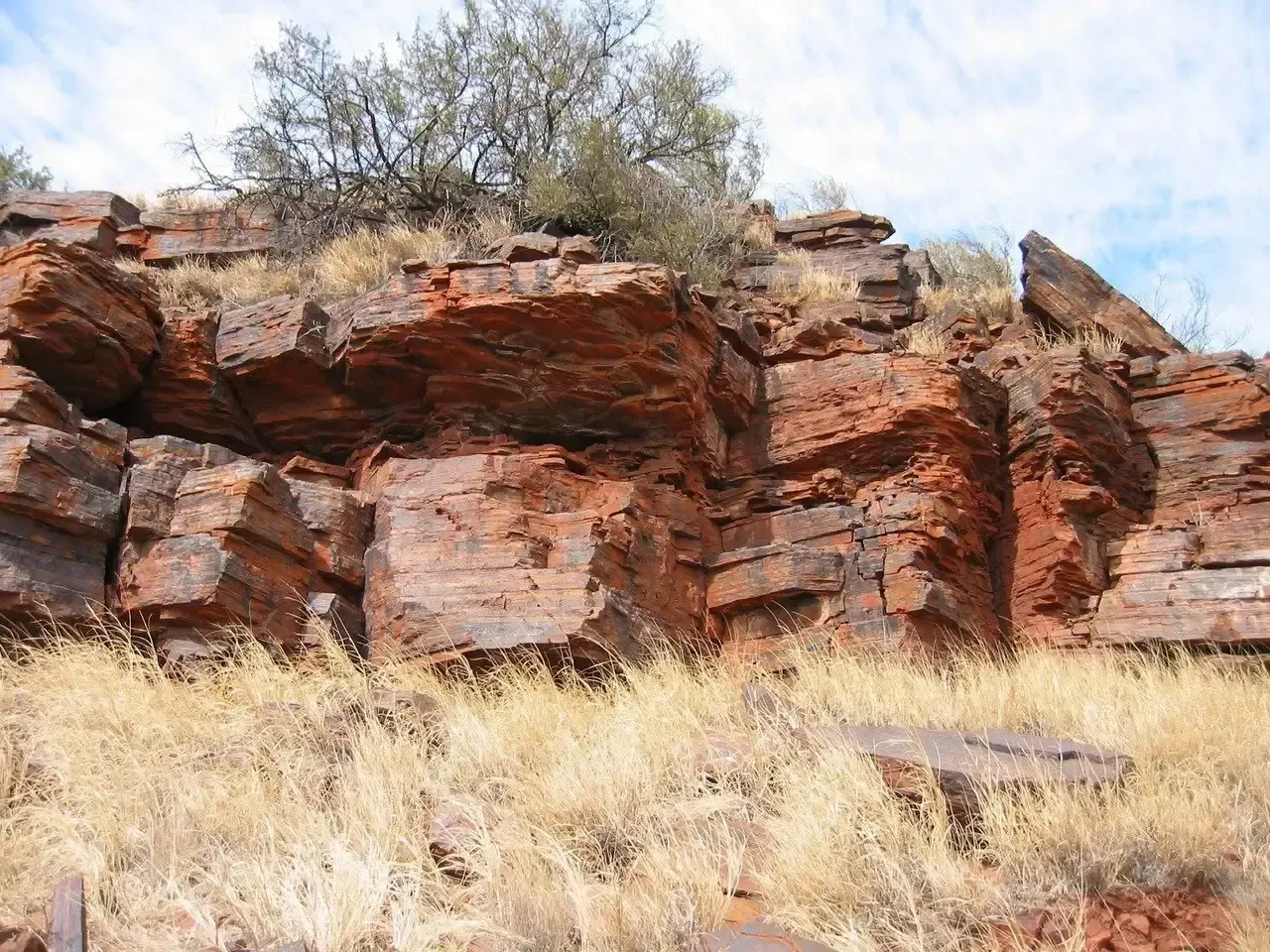
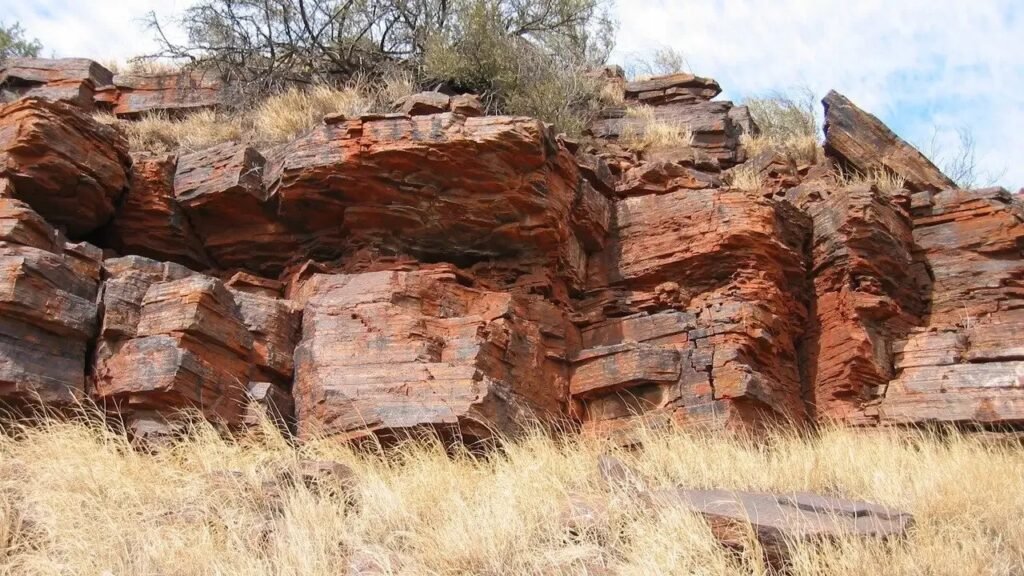
To understand early atmospheric conditions, researchers turn to something called the geochemical record. Essentially, ancient rocks act like a diary. Certain chemical signatures preserved in sedimentary formations can tell scientists what the atmosphere looked like when those rocks were being deposited billions of years ago.
The new findings rely on isotopic analysis of ancient minerals, particularly sulfur isotopes, which are extraordinarily sensitive indicators of oxygen levels. When oxygen is absent, sulfur behaves in distinct, measurable ways. When even small amounts of oxygen enter the picture, that behavior changes. Detecting those changes in rocks that are well over 2.4 billion years old strongly implies that oxygen was present and active in the atmosphere much sooner than the textbook timeline suggests.
Cyanobacteria Might Be Even Older Than We Realized
Cyanobacteria are the unsung heroes of Earth’s biological history. These microscopic organisms were essentially the planet’s original oxygen factories, and for a long time, scientists believed they evolved and proliferated right around the time of the Great Oxidation Event. The new evidence complicates that picture considerably.
If oxygen was accumulating earlier, it implies that oxygen-producing life forms were already active and presumably thriving long before the “official” start date of global oxygenation. This raises a fascinating and somewhat unsettling question: just how early did photosynthetic life actually arise on Earth? Honestly, the more researchers dig into this, the more it seems like life on Earth found a way to get going with almost alarming speed relative to the planet’s formation.
Why the Timing of Oxygen Matters So Much
Let’s be real. At first glance, debating whether oxygen showed up 2.4 billion years ago versus, say, 2.7 or even 3 billion years ago sounds like a question only a geologist could love. The implications, though, are enormous. Oxygen in the atmosphere didn’t just make breathing possible. It fundamentally restructured the planet’s chemistry, its climate, and the evolutionary possibilities available to life.
Oxygen reacts with almost everything. It transformed iron minerals in ancient oceans, altered how rocks weathered, and created the ozone layer that later shielded life on land from deadly ultraviolet radiation. Understanding when this cascade of effects actually began is critical to understanding the full arc of Earth’s history. Think of it like figuring out when the first domino fell in a chain that ultimately led to every complex organism that has ever lived, including us.
The Puzzle of “Whiffs” of Oxygen Before the Big Event
Scientists had already suspected that oxygen didn’t simply appear out of nowhere at 2.4 billion years ago. For years, there’s been evidence of what researchers call “whiffs” of oxygen, transient episodes where oxygen briefly accumulated in the atmosphere before being consumed or suppressed by geological and biological processes.
The new research appears to significantly strengthen the case that these whiffs were more substantial and more sustained than previously thought. It’s a bit like discovering that what you thought was a campfire spark was actually a series of small bonfires. The oxygen wasn’t just flickering in and out. It was building in ways that left a measurable imprint on the planet’s chemistry over extended periods of time.
How This Changes the Search for Life on Other Planets
This is where things get genuinely exciting. One of the primary ways astrobiologists search for life on other worlds is by looking for biosignatures, chemical signals in a planet’s atmosphere that suggest biological activity. Oxygen is widely considered one of the most compelling biosignatures possible.
If Earth’s own history shows that oxygen can accumulate in an atmosphere much earlier in a planet’s development than previously assumed, that dramatically changes how scientists interpret observations of exoplanet atmospheres. It suggests that the window of time during which life might produce a detectable oxygen signal could be far wider than current models assume. In other words, this research doesn’t just rewrite Earth’s past. It potentially reshapes how humanity searches for life across the entire universe.
What Comes Next in Early Earth Research
The scientific community is unlikely to simply accept these new findings without further scrutiny, and that’s exactly how good science should work. Researchers will now look to replicate and expand on these results by examining rock formations from other ancient geological sites around the world, including sites in Canada, Australia, and South Africa, where some of the oldest preserved sedimentary records on Earth exist.
Advances in analytical technology are making this kind of research increasingly precise, with isotopic measurements reaching levels of sensitivity that simply weren’t possible even a decade ago. I think we’re entering a genuinely golden era for understanding early Earth, and discoveries like this one suggest that the planet’s biography is far richer and more surprising than anyone had previously imagined. What’s certain is that the more closely scientists look at those ancient rocks, the more Earth reveals about just how extraordinary its early chapters truly were.
A Look Back That Changes Everything Looking Forward
It’s remarkable, isn’t it, that rocks billions of years old are still capable of surprising us? The evidence for earlier-than-expected oxygen enrichment in Earth’s atmosphere is more than a scientific footnote. It’s a reminder that our understanding of deep time is always provisional, always subject to revision as new methods and new minds tackle old questions.
For anyone who has ever looked up at the sky and taken a breath, there’s something almost poetic about learning that the air we depend on has roots stretching back even further than we knew. The story of Earth’s oxygen isn’t just geology. It’s the beginning of every life story that has ever been told on this planet. What would you have guessed about when Earth first started breathing?