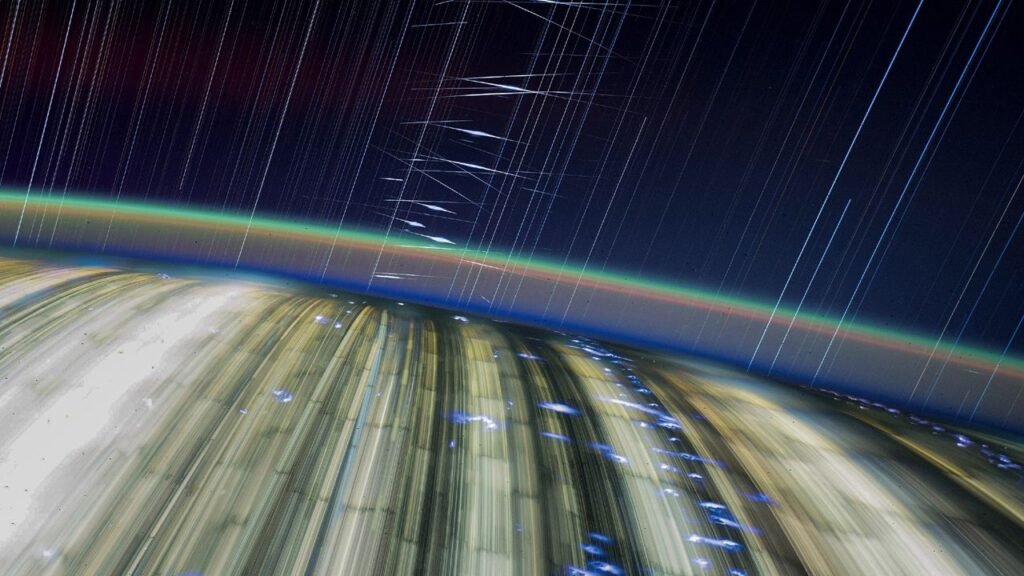

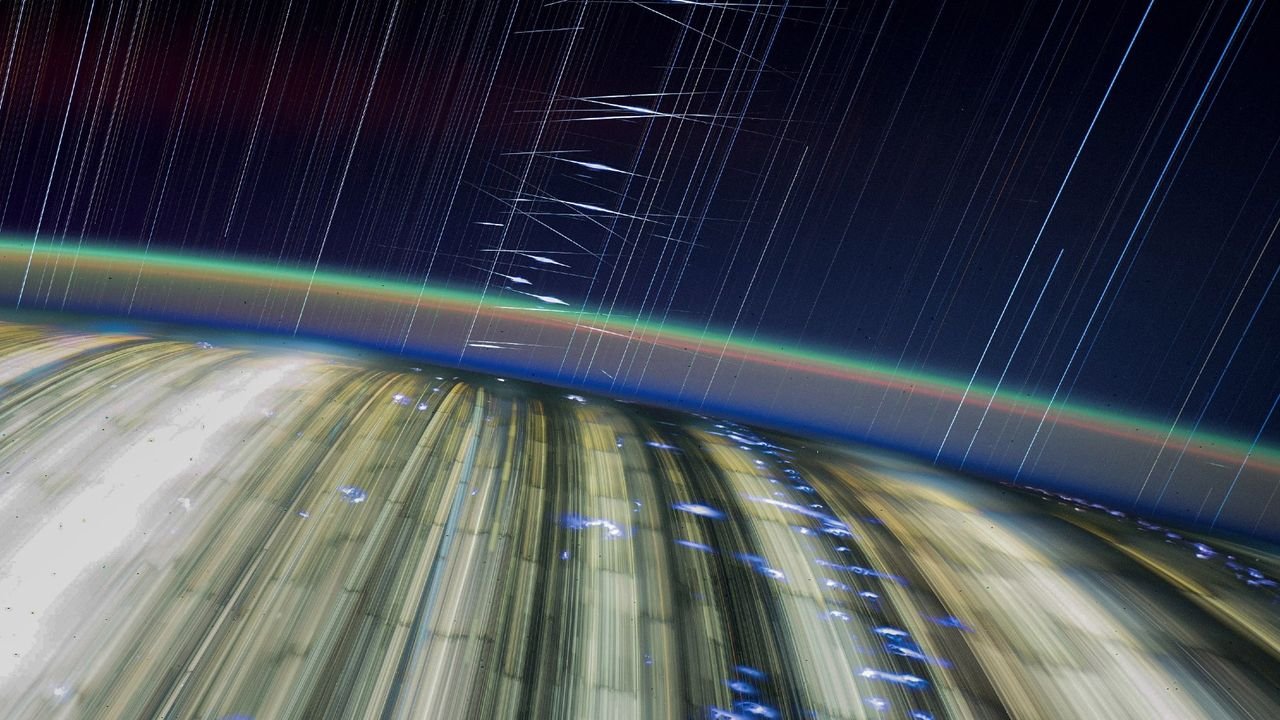
40% Collective Risk Emerges from Satellite Swarms (Image Credits: Cdn.mos.cms.futurecdn.net)
Researchers have issued a stark warning about the expanding fleets of satellites crowding Earth’s orbit and the hazards posed by their eventual fiery returns to the planet.
40% Collective Risk Emerges from Satellite Swarms
A team of Canadian scientists calculated a 40% collective probability of casualties on the ground stemming from eleven megaconstellations, assuming the spacecraft fail to disintegrate completely during atmospheric reentry.[1] The study, published in the Journal Space Policy on February 6, scrutinized the “minimum lethal amount” of debris that could survive reentry intact.[1]
Current international guidelines focus on single satellites, overlooking the compounded dangers from thousands launching and plummeting back en masse, lead author Wright noted.[1] Uncontrolled reentries scatter remnants unpredictably across vast swaths of Earth, heightening threats to populations below.
Why Some Debris Defies Destruction
Satellites encounter extreme heat and drag upon reentry, causing most to fragment and ablate into harmless particles. However, certain components endure. Materials like aluminum tend to melt away fully, but tougher alloys pose problems. Stainless steel, beryllium, titanium, tungsten, and silicon carbide – common in fuel tanks and reaction wheels – often persist as hazardous chunks.[1]
- Stainless steel: High melting point resists ablation.
- Titanium: Retains structural integrity longer.
- Tungsten: Extremely heat-resistant.
- Silicon carbide: Used in high-stress parts, survives descent.
- Beryllium: Lightweight yet durable under thermal stress.
These survivors could injure people on the surface, damage aircraft, or disrupt infrastructure, the analysis warned.
Cumulative Threats Demand Fresh Scrutiny
Existing standards inadequately address megaconstellation-scale operations. “Many existing standards and guidelines only consider individual satellites, and don’t consider the cumulative effect of launching and reentering thousands at once,” Wright explained.[1]
The researchers advocated for fewer, more robust satellites with extended lifespans. “It is possible to design constellations made up of fewer, higher capacity, higher quality satellites with longer operational lives. This, in turn, would reduce the risk to people on the ground and any damage to the atmosphere,” they concluded.[1]
Regulators should mandate independent checks on “demisability” claims – ensuring full burn-up – and shift toward controlled reentries as the norm.
Toward Safer Orbital Highways
The findings underscore a pivotal question: Do we need so many satellites?[1] Proliferating constellations promise global connectivity, yet they amplify reentry perils without updated oversight. Nations must collaborate on equitable rules to verify risks constellation-wide and curb uncontrolled descents.
Key Takeaways
- 40% casualty risk across eleven megaconstellations if full burn-up fails.
- Tough materials like titanium and tungsten boost surviving debris threats.
- Push for fewer, durable satellites and controlled reentries to protect Earth.
With megaconstellations set to dominate low-Earth orbit, balancing innovation and safety grows urgent. What steps should regulators take next? Share your thoughts in the comments.