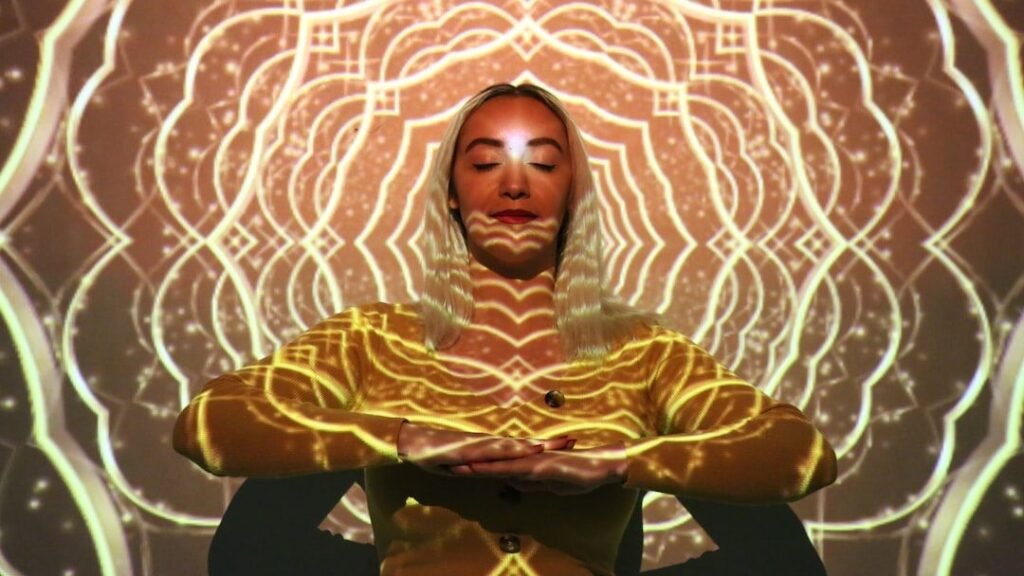
Classical Physics and the Illusion of Control (Image Credits: Cdn.mos.cms.futurecdn.net)
The intersection of physics and human agency continues to spark intense debate among scientists, as recent discussions highlight how cosmic laws might influence our sense of autonomy.
Classical Physics and the Illusion of Control
Astrophysicists have long grappled with the idea that the universe operates like a vast, predictable machine. In classical mechanics, every event traces back to prior causes, leaving little room for spontaneous decisions. This deterministic view, rooted in Newtonian principles, suggests that if one knew the position and momentum of every particle, the future could unfold with absolute certainty.
Early astronomers applied these ideas to celestial bodies, predicting planetary orbits with remarkable precision. Yet, this framework extended to human behavior implied that choices merely followed from unbreakable chains of cause and effect. Such perspectives dominated scientific thought for centuries, painting free will as an comforting but flawed notion. Still, as observations of the cosmos grew more complex, cracks in this rigid model began to appear.
Quantum Uncertainty Enters the Fray
Quantum mechanics introduced profound unpredictability into the equation, challenging the deterministic foundations of physics. At the subatomic level, particles exhibit behaviors that defy classical prediction, with outcomes governed by probabilities rather than certainties. This inherent randomness raises questions about whether the universe truly dictates every action or allows for genuine choice.
In astronomical contexts, quantum effects manifest in phenomena like black hole evaporation or the early universe’s fluctuations. These elements suggest that chaos and uncertainty permeate even the grandest scales. Physicists now debate whether this indeterminacy provides space for free will or merely shifts the illusion to a probabilistic realm. For instance, the Heisenberg uncertainty principle underscores that precise knowledge of a system’s state remains elusive, mirroring the ambiguities in human decision-making.
Astrophysicists Debate the Human Element
Prominent figures in astrophysics have taken up the free will question directly, exploring its ties to cosmic cause and effect. In a notable exchange, Neil deGrasse Tyson and Charles Liu examined how uncertainty and chaos in the universe might factor into personal agency. They questioned whether acknowledging a lack of free will could reshape society, emphasizing the illusion’s role in moral and ethical frameworks.
Liu and others argue that while physics describes the mechanics of reality, it does not fully encompass consciousness or volition. A society without the concept of free will, they posited, might prioritize rehabilitation over punishment in justice systems. These discussions reveal a tension: astronomy’s vast scales highlight humanity’s smallness, yet also underscore the unique emergence of complex life amid cosmic disorder.
To illustrate key arguments in this debate, consider the following points raised by experts:
- Determinism in classical physics views the universe as a clockwork mechanism, where human actions follow inevitable paths.
- Quantum randomness introduces genuine unpredictability, potentially carving out room for choice.
- Chaos theory, evident in stellar dynamics, amplifies small uncertainties into large-scale variations.
- Emergent properties in complex systems, like brains, may transcend basic physical laws.
- The illusion of free will remains vital for social cohesion, regardless of underlying physics.
Free Will Beyond the Laws of Physics
Some scholars contend that free will operates outside physics altogether, emerging from biological and philosophical realms. Philip Ball, in his analysis, asserted that human agency does not stem from physical processes alone but from higher-level interactions. This view posits that while the brain’s neurons follow physical rules, the mind’s decisions arise from integrated, non-reducible wholes.
Marcelo Gleiser echoed this by noting that the mind defies the strict determinism of solar systems or particle paths. Astronomy’s focus on immense structures reinforces this: galaxies form through probabilistic interactions, yet life evolves with apparent purpose. Recent articles, such as one from Space.com, explore how initial impressions of physics forbidding free will overlook these nuances. Ultimately, the debate invites a broader synthesis of science and philosophy.
Key Takeaways
- Physics provides tools to describe reality but falls short of explaining subjective experience.
- Quantum and chaotic elements in the cosmos suggest the universe is not fully predictable.
- Astrophysical insights encourage viewing free will as compatible with scientific understanding.
As physics evolves, the free will debate reminds us that human choices may weave through the fabric of an unpredictable universe, blending cosmic inevitability with personal possibility. What implications does this hold for how we navigate ethics and responsibility? Share your thoughts in the comments below.