
Walk into a physics department and ask whether free will is real, and you will not get a simple yes or no. You will get nervous laughter, references to quantum mechanics, and sometimes an uncomfortable silence when the conversation drifts toward responsibility and blame. For more than a century, modern physics has chipped away at our common-sense picture of ourselves as little captains steering our lives from inside our skulls. At the same time, new ideas in quantum theory, chaos, and information science have opened up a more nuanced picture than the old “everything is predetermined” caricature. This article walks through how today’s physicists actually think about free will, why they argue so fiercely about it, and what it might mean for the choices you make after you put this piece down.
Clockwork Universe: Why Classical Physics Looked Fatalistic
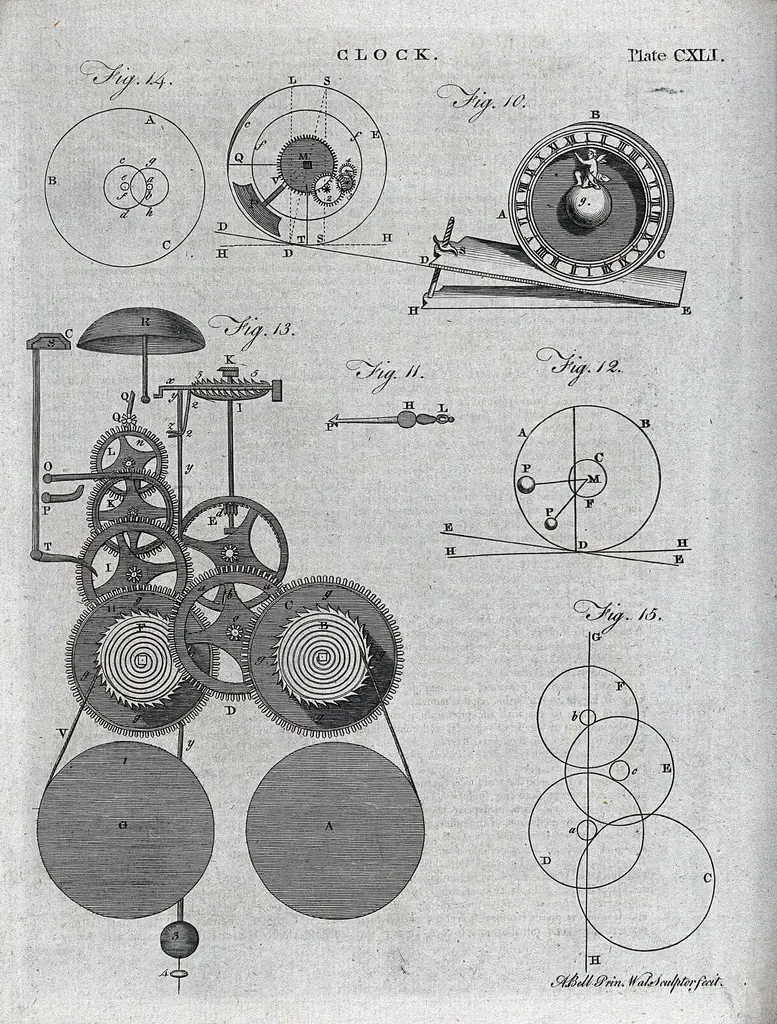
For a long stretch of scientific history, physics seemed to leave no room at all for free will. In the classical picture shaped by Isaac Newton, if you knew the exact positions and velocities of every particle in the universe at one moment, the laws of motion would fix the entire future and the entire past. That idea hardened into the image of a perfectly predictable “clockwork universe,” where every action you take today was already encoded in the state of the universe billions of years ago. Philosophers called this kind of picture determinism, and many took it to mean that free will is just an illusion our brains generate after the fact.
Some nineteenth‑century thinkers even imagined an ideal super‑intelligence that could, in principle, compute the future from the present with perfect accuracy. If such an intelligence is possible even in theory, they argued, your feeling of “I could have done otherwise” cannot mark a real difference in the world. In this view, physics does not just describe the motion of planets and pendulums; it writes the script of your life in advance. The unsettling implication is that regret, moral praise, and personal responsibility start to look like elaborate window dressing on a story whose ending was fixed from the start.
Quantum Indeterminism: Does Randomness Rescue Free Will?
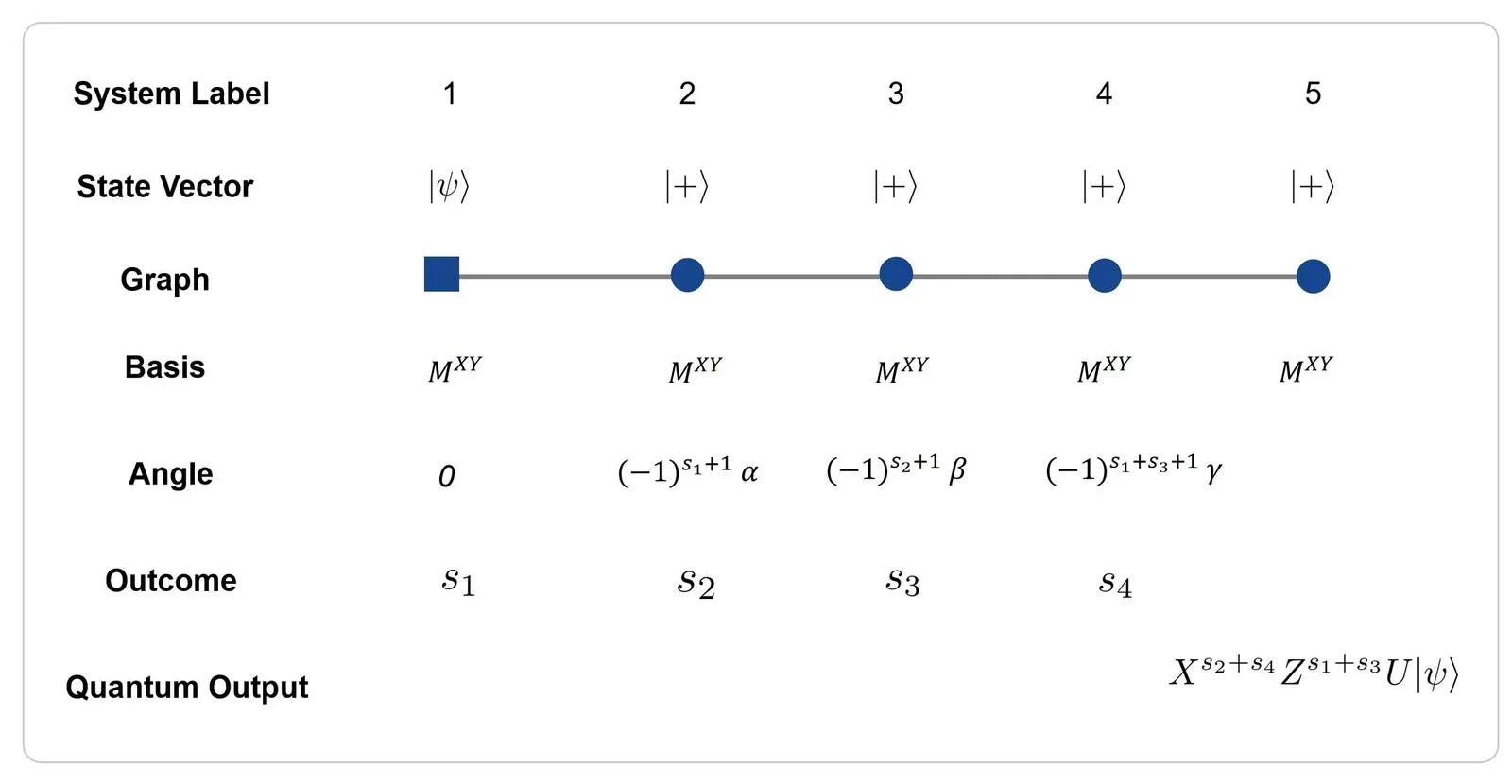
The arrival of quantum mechanics in the early twentieth century cracked that clockwork vision in a dramatic way. At the level of atoms and electrons, quantum theory tells us we can no longer predict precisely what will happen, only the probabilities of different outcomes. An electron does not have a definite position until it is measured, and which value shows up in an experiment is not fixed even in principle, only constrained by the wavefunction and its probabilities. To many people encountering this for the first time, it sounds like physics has finally left a back door open for free will.
But when you look closer, quantum randomness is a very strange kind of hope. If your decisions were literally determined by random quantum jumps, that would not feel like freedom, it would feel like being at the mercy of a cosmic dice roll. What most physicists will tell you is that indeterminism, by itself, does not give you meaningful agency; it just replaces inevitability with chance. The deeper question becomes whether the brain can harness quantum effects in a structured way, so that your choices are neither inevitable nor purely random, but emerge from a complex, lawful process that still leaves room for something like “you.”
Hidden Variables, Many Worlds, and How Much Is Really Fixed
Even within physics, there is no single agreed‑upon picture of what quantum mechanics means for reality, and those disagreements matter for free will. In hidden‑variable theories, like the one proposed in the twentieth century by David Bohm, the world is actually deterministic underneath; the apparent randomness comes from our ignorance of deeper variables guiding each particle. If that view is correct, the universe may be just as fixed as the old Newtonian one, only with more complicated plumbing behind the scenes.
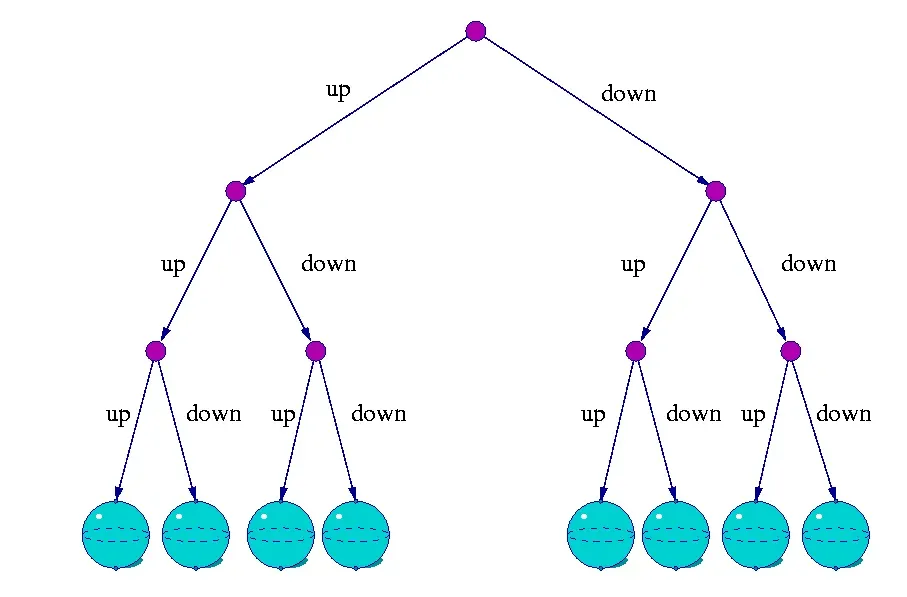
In the many‑worlds interpretation, on the other hand, every possible outcome of a quantum event happens in a branching multiverse, and what we call a “random” result is simply the version of you that finds itself in one branch rather than countless others. Here, the phrase “you could have done otherwise” is almost inverted: on this view, there is literally a branch where you did do otherwise, but this particular copy of you never had the power to jump tracks. Each interpretation preserves the successful equations of quantum mechanics yet paints a very different metaphysical backdrop, and physicists’ attitudes to free will often quietly track their favorite interpretation, even when they insist they are “just following the math.”
Bell’s Theorem and the Strange Choice at the Foundations of Physics
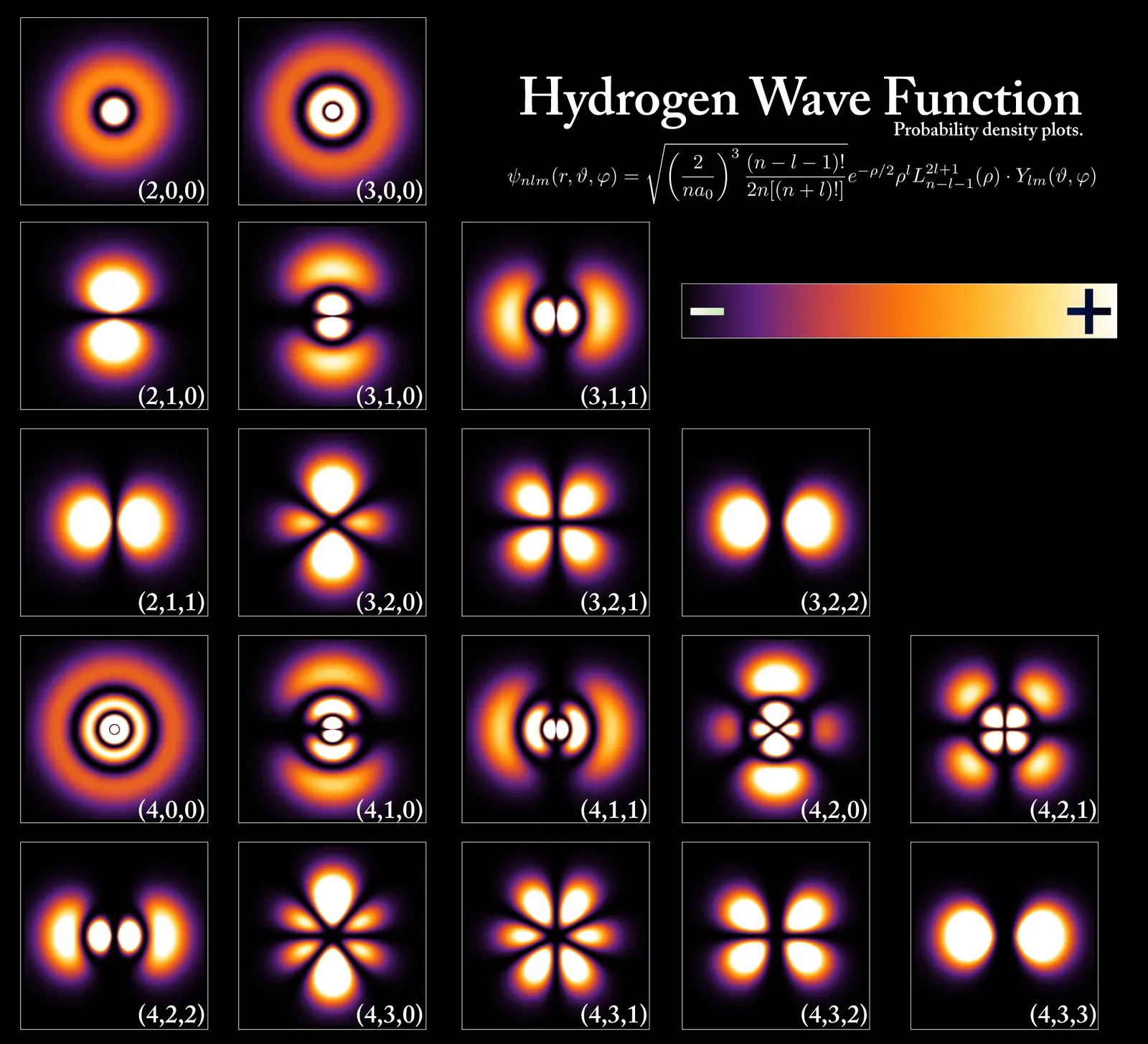
One of the most surprising twists comes from Bell’s theorem, a result from the 1960s that probed whether quantum randomness could be explained by hidden causes that respect the usual rules of space and time. Experiments inspired by this theorem, repeated and refined many times, have shown that if quantum mechanics is right, then no local hidden‑variable theory can reproduce its predictions. What is less widely known is that these arguments quietly assume something like “free choice” in the way experimenters select their measurement settings. In other words, the math presumes that the knob settings on a detector are not secretly correlated with the hidden variables of the particles they are measuring.
If you drop that assumption, you get so‑called superdeterministic models where everything, including your decision of how to set the apparatus, is choreographed from the beginning of the universe. A small number of physicists seriously explore such theories, in part because they offer a way to keep a fully deterministic cosmos while matching quantum predictions. Critics counter that this move feels like giving up on the idea that science can test hypotheses, because it implies that every “choice” of experiment was already constrained to give the required outcome. In that sense, the debate around Bell’s theorem is not just abstract math; it cuts to whether physics itself relies on some minimal notion of free choice at its core.
Brains, Chaos, and the Physics of Unpredictable Minds
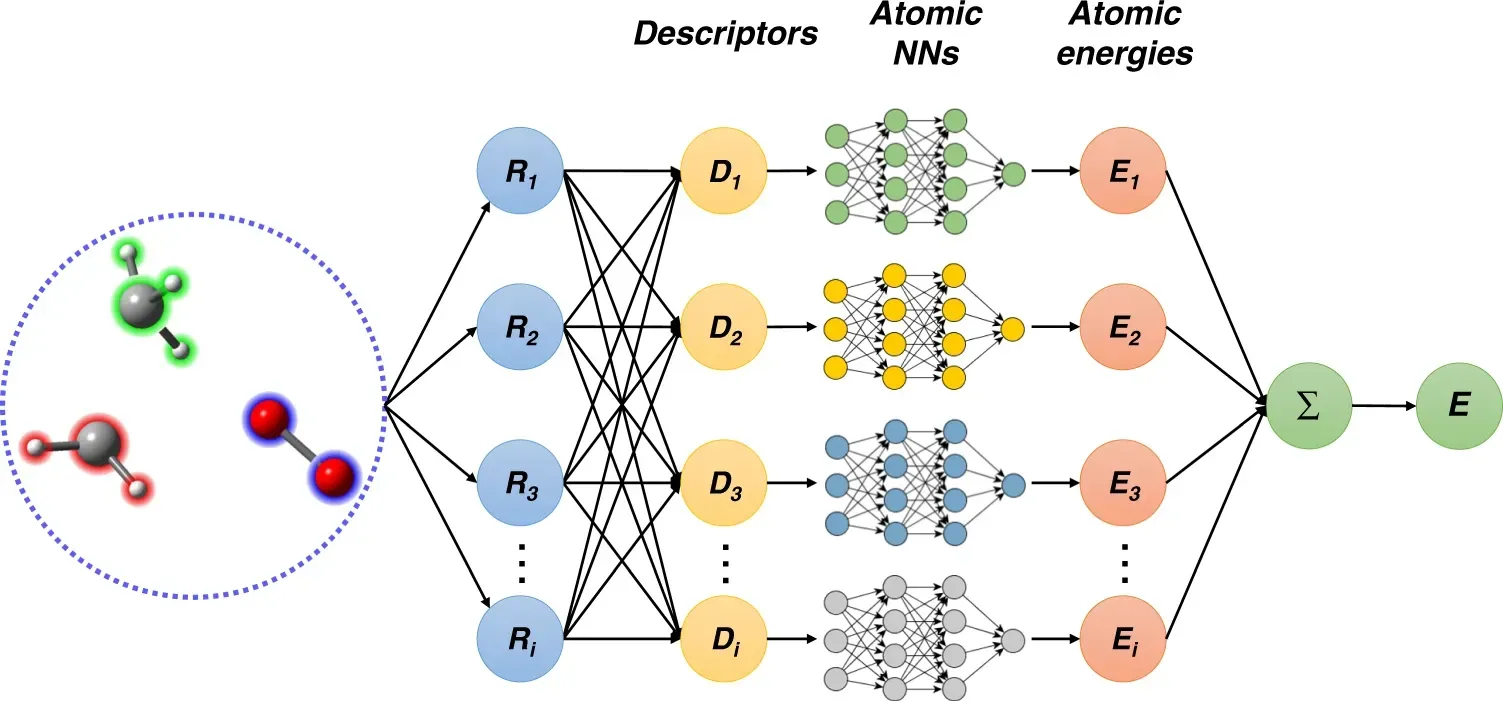
Even if the underlying laws are deterministic, that does not mean complex systems behave in a simple, predictable way, and the human brain is as complex as they come. Chaos theory showed that many physical systems are exquisitely sensitive to initial conditions, so that tiny differences grow rapidly into huge divergences over time. Weather is the textbook example: governed by deterministic equations, yet practically unpredictable more than a couple of weeks out. The brain shares some of that character, with billions of neurons interacting in loops that amplify and dampen signals in ways we are only beginning to map.
From this perspective, your mental life might be lawful and deterministic at the microscopic level, but effectively unpredictable even with enormous computational power. Some philosophers call this kind of view compatibilism: the idea that you can have meaningful agency and responsibility even in a deterministic universe, as long as your actions reflect your internal states, reasons, and character rather than external coercion. In that story, the physics does not have to “break” for you to be free; you are free when your richly structured brain dynamics, shaped by genes, experiences, and culture, produce actions that are recognizably yours. It is less about metaphysical magic and more about whether the system that acts is the same system that understands why it acted.
Information, Causality, and What “Could Have Happened” Really Means
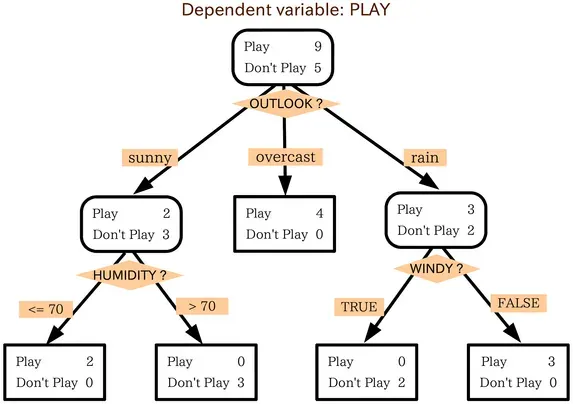
In the last few decades, physics has increasingly been recast in the language of information, and that shift has reshaped how some researchers talk about free will. Instead of focusing only on particles and forces, they look at what can be known, transmitted, or influenced, and how those patterns of information flow through time. Ideas from thermodynamics, computation, and complexity theory suggest that not all futures are equally accessible from a given present; constraints like energy, noise, and limited memory narrow the range of realistic possibilities. Rather than a single inevitable future or a wild explosion of arbitrary options, the universe looks more like a branching network of paths, some thick and some thin.
Under this lens, a statement like “you could have done otherwise” becomes a claim about nearby paths in this network that were physically available to you, given your body, knowledge, and environment. When you decide to change careers or apologize instead of doubling down in an argument, you are effectively moving along one of those paths rather than another that was also open within the laws of physics. Some physicists and philosophers argue that this local, information‑theoretic sense of alternatives is all the free will we need for ethics and everyday life. We do not need a ghost outside the machine; we just need a machine whose internal informational structure allows it to evaluate options and steer itself among them.
Why the Physics Debate Over Free Will Actually Matters
It can be tempting to treat these arguments as esoteric, but the stakes leak out into law, medicine, and everyday moral judgment. If we adopt a hard, unforgiving determinism where people are just puppets of physics with no meaningful control, ideas of blame and desert start to look deeply unstable. That does not automatically mean we should abandon accountability, but it does push us toward systems that focus more on prevention, rehabilitation, and public safety than on pure retribution. Courts already wrestle with versions of this when they weigh brain injuries, mental illness, or developmental history in sentencing decisions.
On the flip side, an overly romantic view of free will that ignores biology and physics can fuel cruelty and unrealistic expectations, as if everyone always could have simply chosen differently regardless of trauma, addiction, or deprivation. Many scientists and philosophers now argue for a middle path where we recognize how deeply shaped we are by factors beyond our control while still holding on to a practical notion of agency. In that picture, physics undercuts the fantasy of absolute, uncaused freedom but leaves intact a grounded, embodied version of choice that is enough to build ethics and policy on. The way we, as a culture, land on these questions will quietly shape everything from school discipline to how we talk to our kids about mistakes.
Unfinished Business: Open Questions at the Edge of Physics and Mind
Despite all the confident opinions you can find online, the honest state of the field is that no consensus exists on what physics ultimately says about free will. We still do not fully understand how consciousness arises from neural activity, which makes it hard to say exactly what it would mean for a conscious state to influence the physical world. Some researchers investigate whether quantum effects play a meaningful role in brain function, while others argue that warm, wet neural tissue probably washes out delicate quantum coherence before it can matter for thought. At the same time, new work on complex systems and neural dynamics keeps revealing how rich, layered, and surprising brain behavior can be, even when modeled with classical physics.
There are also unresolved tensions at the foundations of quantum theory itself, from competing interpretations to ongoing experiments that push Bell tests to ever larger scales and more exotic setups. As those puzzles evolve, the stories physicists tell about determinism, randomness, and causality may shift as well. For now, most working physicists carry on their research without needing a daily answer to the free will question, and they often bracket it as a philosophical overlay rather than a direct output of the equations. Still, in quieter moments, many will admit that how you read the physics and how you live your life are harder to separate than the textbooks suggest.
Living With Uncertainty: How Readers Can Engage With the Question

As someone who has spent years talking to physicists about this, I have found that the most helpful stance is neither cynical resignation nor mystical certainty. Instead, it is an honest curiosity about how much of your life is shaped by forces outside you, and how much room you still have to nudge your trajectory within those constraints. You do not need a PhD or a particle accelerator to engage with this; you can start by noticing, in your own decisions, how habits, environment, and biology lean on you, and where deliberate reflection seems to redirect your path. Reading broadly across physics, neuroscience, and philosophy can help you resist simplistic slogans and appreciate just how subtle the problem really is.
At a more practical level, supporting science education, backing public research funding, and being open to revising your views in light of evidence are all ways to participate in this long, messy conversation. The question of free will is not going away, and neither is the physics that complicates it. Between the extremes of “everything is fated” and “I am an uncaused cause,” there is a wide landscape where your choices matter, even if they are not magical. How you move through that landscape is, in a very down‑to‑earth sense, still up to you.
Suhail Ahmed is a passionate digital professional and nature enthusiast with over 8 years of experience in content strategy, SEO, web development, and digital operations. Alongside his freelance journey, Suhail actively contributes to nature and wildlife platforms like Discover Wildlife, where he channels his curiosity for the planet into engaging, educational storytelling.
With a strong background in managing digital ecosystems — from ecommerce stores and WordPress websites to social media and automation — Suhail merges technical precision with creative insight. His content reflects a rare balance: SEO-friendly yet deeply human, data-informed yet emotionally resonant.
Driven by a love for discovery and storytelling, Suhail believes in using digital platforms to amplify causes that matter — especially those protecting Earth’s biodiversity and inspiring sustainable living. Whether he’s managing online projects or crafting wildlife content, his goal remains the same: to inform, inspire, and leave a positive digital footprint.