

Spotting the Elusive Mid-Sized Worlds (Image Credits: Unsplash)
Astronomers have long puzzled over the abundance of exoplanets that straddle the size gap between Earth and Neptune, worlds that circle distant stars but remain absent from our own solar system.
Spotting the Elusive Mid-Sized Worlds
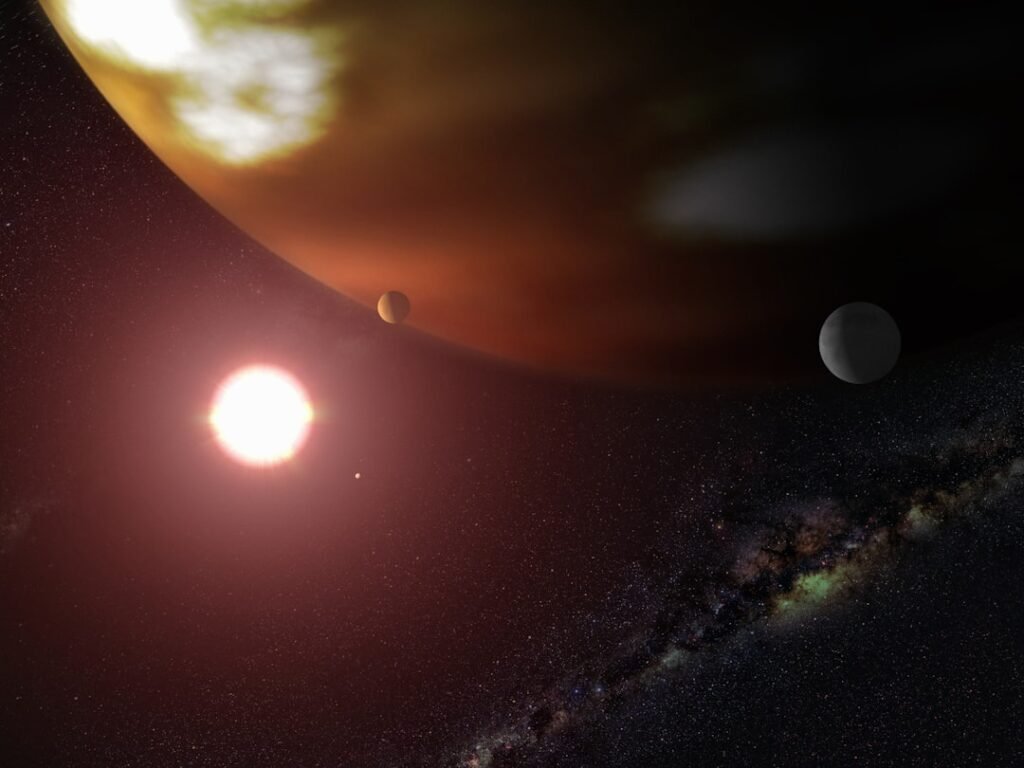
Recent observations of a young star system have provided a rare glimpse into the early stages of planetary development. Scientists identified four nascent planets, each larger than Earth yet smaller than Neptune, orbiting a star just a few million years old. These discoveries, made possible by advanced telescopes, mark a breakthrough in understanding how such planets assemble from cosmic dust and gas.
The planets, dubbed super-puffs due to their unusually low densities, offer clues to a formation process that differs from the giants in our solar system. Unlike Jupiter, which grew massive envelopes of hydrogen and helium, these smaller worlds appear to have formed closer to their host star, where intense radiation influences their growth. Researchers noted that the system’s configuration suggests a rapid buildup of material, followed by atmospheric retention that keeps densities low.
This finding challenges earlier models that predicted fewer mid-sized planets in close orbits. Instead, it supports the idea that these worlds emerge in the habitable zones of many stars, potentially fostering conditions for liquid water on their surfaces.
The Building Blocks of Super-Earths and Sub-Neptunes
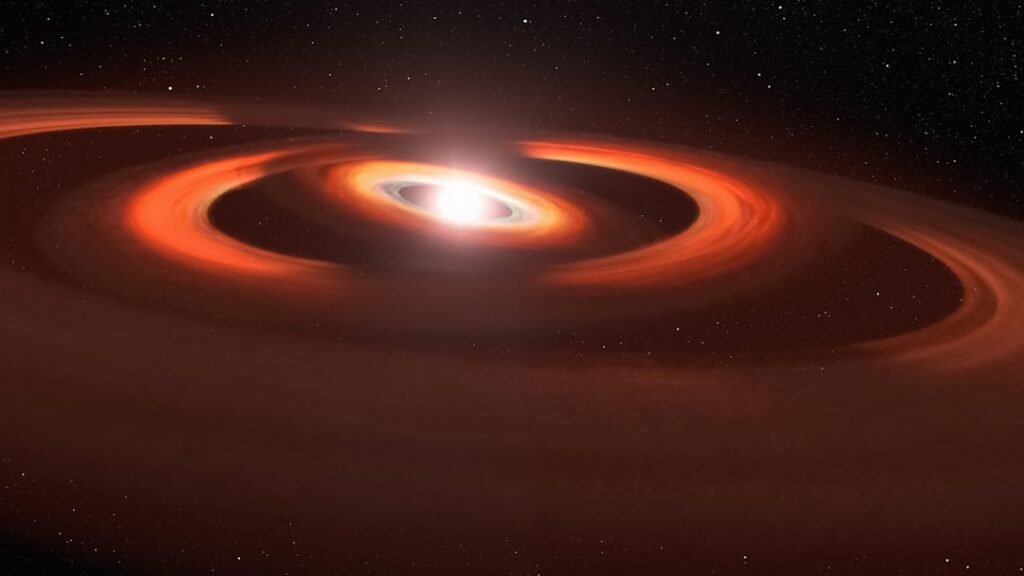
Planetary formation begins in protoplanetary disks, vast rings of gas and dust encircling newborn stars. In this environment, particles collide and coalesce into planetesimals, which eventually form rocky cores. For super-Earths – planets up to about 1.5 times Earth’s radius – the process halts at a rocky composition, while sub-Neptunes, reaching up to four Earth radii, acquire thick gaseous atmospheres.
The four baby planets in question demonstrate a transitional phase. Observations revealed that their low densities result from puffed-up atmospheres held by weak gravity, a stage that may evolve into denser worlds over time. Scientists explained that stellar radiation plays a key role, stripping away lighter elements and leaving behind heavier ones in some cases.
Key factors in this differentiation include the distance from the star and the disk’s temperature profile. Closer-in planets face higher heat, promoting the escape of hydrogen, whereas those farther out retain more gas.
Why Our Solar System Missed Out
Earth’s neighborhood hosts rocky inner planets and gas giants beyond, but no intermediates. This absence puzzled experts until recent data highlighted migration patterns during formation. In our system, Jupiter’s early migration may have disrupted the disk, preventing mid-sized planets from stabilizing.
Contrast this with the observed young system, where planets formed in a stable disk without such interference. The super-puffs there suggest that without a dominant giant like Jupiter, smaller worlds can thrive in diverse sizes. This insight explains why surveys detect thousands of these planets around other stars – they represent the most common outcome in the galaxy.
Future missions aim to refine these models by tracking atmospheric compositions. Telescopes like the James Webb Space Telescope will probe these atmospheres for signs of water vapor or methane, further illuminating evolutionary paths.
Implications for the Search for Life
Mid-sized exoplanets often lie in temperate zones, raising hopes for habitability. Their varied compositions – from rocky super-Earths to gaseous sub-Neptunes – mean some could harbor oceans beneath cloudy skies. The new formation insights suggest that many such worlds retain enough volatiles to support liquid water.
However, challenges remain. Intense stellar activity in young systems can erode atmospheres, potentially sterilizing early planets. As these baby worlds mature, their fates will depend on balancing accretion and loss.
- Super-Earths: Rocky cores with thin atmospheres, ideal for geological activity.
- Sub-Neptunes: Gas-enveloped worlds with possible deep oceans.
- Super-Puffs: Transitional low-density planets evolving toward stability.
- Mini-Neptunes: Smaller versions of Neptune, rich in ice and volatiles.
- Ocean Worlds: Hypothetical hybrids with subsurface seas.
Key Takeaways
- Four baby planets around a young star reveal a puffing-up process driven by radiation.
- Most stars host mid-sized exoplanets, unlike our Jupiter-dominated system.
- These worlds offer prime targets for habitability studies in the coming decade.
As astronomers decode the recipes for these cosmic middleweights, the universe feels a little less lonely. What might the next discovery reveal about planets like ours? Share your thoughts in the comments.