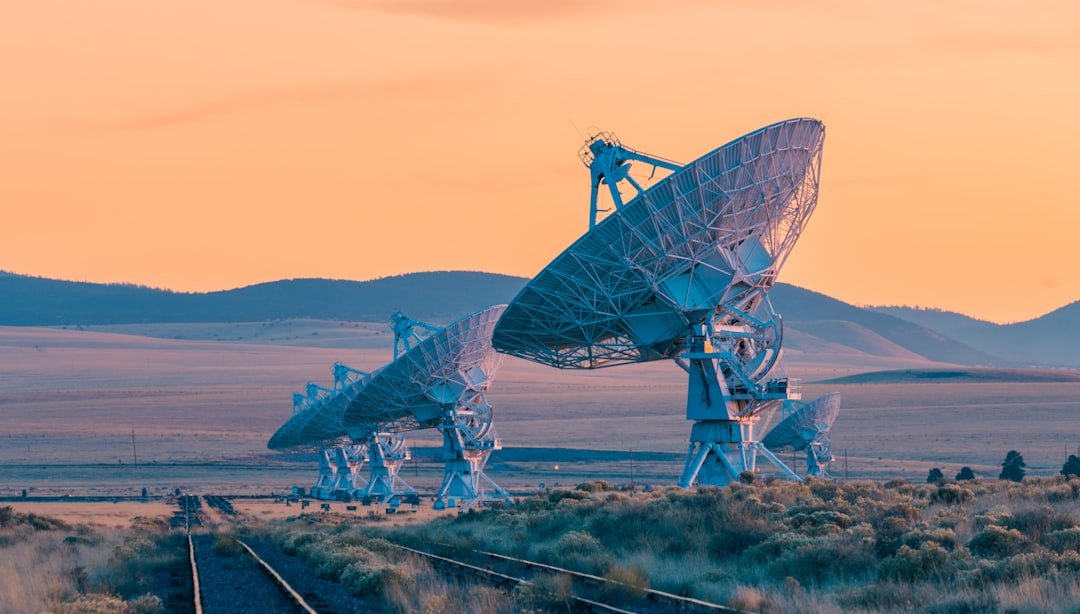
Decades of Searching Yield No Confirmed Signs (Image Credits: Unsplash)
Berlin, Germany – Scientists pondering the silence from space now question whether fleeting extraterrestrial signals have crossed Earth’s path unnoticed over decades of observation.
Decades of Searching Yield No Confirmed Signs
Astronomers initiated systematic hunts for technosignatures more than 60 years ago, targeting artificial radio waves, laser pulses, and surplus infrared heat that might betray advanced galactic civilizations.[1][2]
Surveys spanned radio, optical, and infrared spectra, yet no unambiguous evidence emerged. Experts typically pointed to the minuscule portion of the Milky Way examined so far as the primary culprit. Still, optimism persisted through the notion that signals could have arrived too faintly or briefly to register with prior instruments.
That perspective fueled expectations: improved telescopes might soon capture ongoing emissions. A recent analysis, however, rigorously tested this hypothesis.
Grimaldi’s Model Redefines Contact and Detection
Claudio Grimaldi, a physicist at EPFL’s Laboratory of Statistical Biophysics, crafted a framework distinguishing mere passage from verifiable pickup.[1]
His study modeled technosignatures as light-speed emissions from distant technologies or relics, enduring anywhere from days to millennia. Earth registers a “contact” whenever such a wavefront sweeps its locale. Detection demands the origin lie close enough for the signal to overpower noise with current or imminent gear.[2]
A Bayesian approach intertwined three factors:
- The tally of prior Earth contacts.
- Average technosignature longevity.
- Observable distances for SETI tools.
This encompassed diffuse broadcasts like waste heat alongside pinpointed lasers or beacons.
Nearby Detections Demand Implausible Histories
Grimaldi’s calculations revealed stark hurdles for optimistic forecasts. High odds of spotting signals within hundreds to thousands of light-years today necessitated vast numbers of overlooked past passages since 1960.[3]
In numerous cases, required contacts surpassed estimates of habitable worlds in those zones, rendering such setups improbable. Short-lived or feeble emissions amplified this mismatch, as transient events evaded sporadic scans.
Focused signals fared no better under scrutiny; their narrow beams rarely aligned perfectly during observations.
Galactic Vistas Offer Slimmer Prospects
Prospects brightened marginally for enduring technosignatures traversing immense expanses. Detections grew feasible several thousand light-years out, where persistent signals accumulated probability over time.
Even so, the model forecasted scant active emitters galaxy-wide at any moment. Rare, remote, or marathon-duration technologies aligned best with non-detection records.[1]
| Scenario | Implied Past Contacts | Detection Range |
|---|---|---|
| Short-lived, nearby | Implausibly high | Hundreds ly |
| Long-lived, galactic | Moderate | Thousands ly |
Key Takeaways for Technosignature Hunters
- Past misses do not herald nearby breakthroughs; they suggest scarcity or distance.
- Broad, deep Milky Way surveys trump narrow nearby probes.
- SETI demands statistical patience over quick wins.
Grimaldi’s work underscores a marathon mindset. The galaxy’s quiet does not preclude life but urges expanded vigilance across wavelengths and volumes. What implications do these findings hold for humanity’s cosmic outreach? Share your views in the comments.