Somewhere far below your feet, past the soil, rock, and deepest mines, our planet is doing things that border on science fiction. Metal is flowing like a liquid, crystals are growing that are larger than cities, and temperatures rival the surface of the Sun. We live our whole lives on Earth’s thin outer skin while the real show happens thousands of kilometers down, almost completely hidden from view.
For most of human history, the deep Earth was pure guesswork, the realm of myth and imagination. Now, with seismic waves, diamond-borne minerals, and supercomputers, scientists are starting to pull back the curtain. The wild part? The more we learn, the stranger Earth’s interior becomes. Let’s dive into seven of the biggest, most mind-bending secrets we’re just starting to understand.
The Core: A Hidden Metal World Shaping Our Every Day
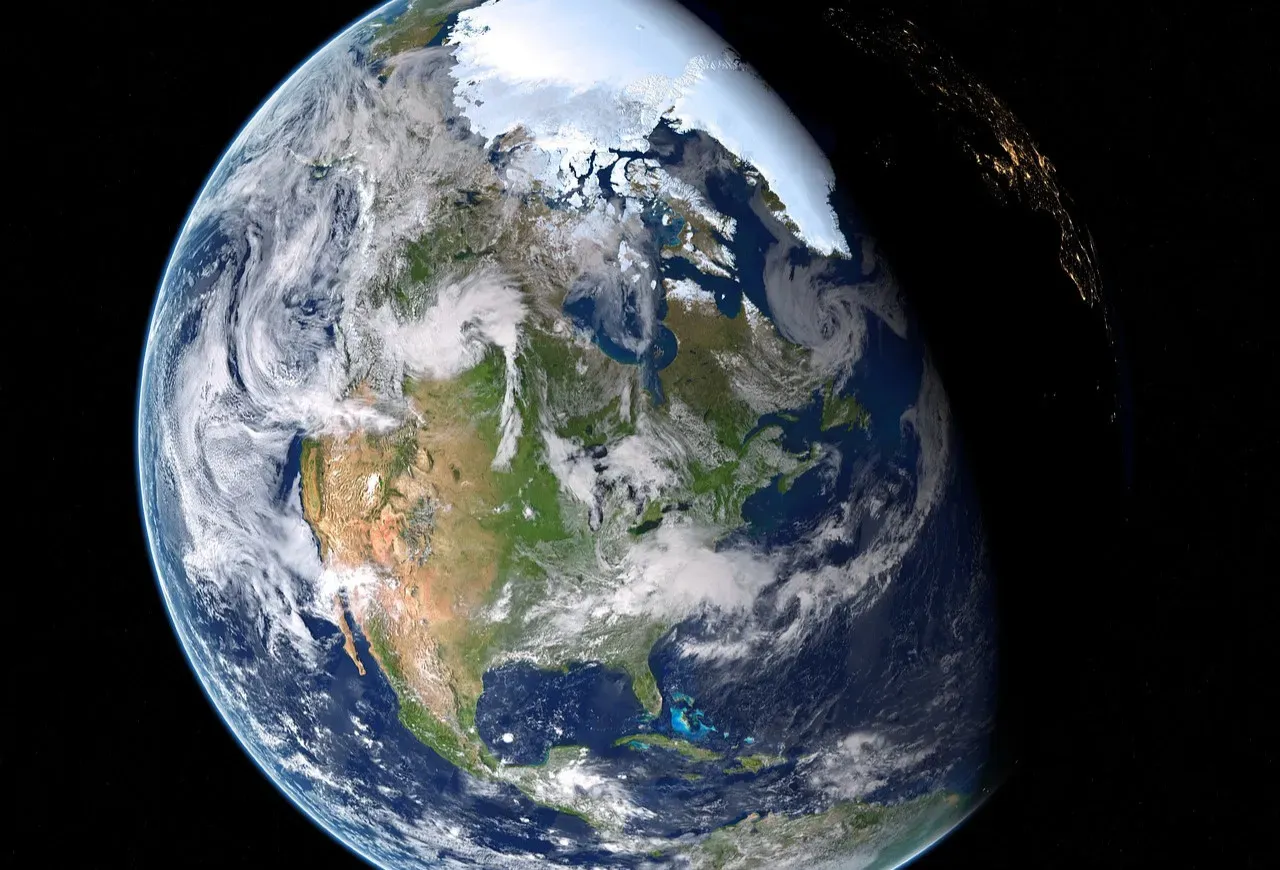
Imagine a planet-sized metal ball, hotter than an industrial furnace and squeezed under pressures so intense that iron behaves more like an exotic material from another universe. That is Earth’s core, a region we’ll never visit, yet it quietly controls things we rely on every day, like compass directions, power grids, and even satellite communications. The outer core is liquid iron and nickel, swirling like a slow-motion ocean of metal, and inside that sits the inner core, a solid sphere roughly the size of the Moon.
Those slow, churning motions in the liquid outer core generate Earth’s magnetic field, a shield that deflects much of the Sun’s high‑energy radiation. Without it, the atmosphere would be stripped away over time and life at the surface would be brutally exposed. What’s surprising is how dynamic this region is: the magnetic poles wander, sometimes dramatically, and have flipped many times in the past. We tend to think of the ground beneath us as permanent and stable, but deep below, a restless metal engine is constantly reshaping the invisible force field that makes our world livable.
A Solid Inner Core That Might Be Spinning Out Of Sync
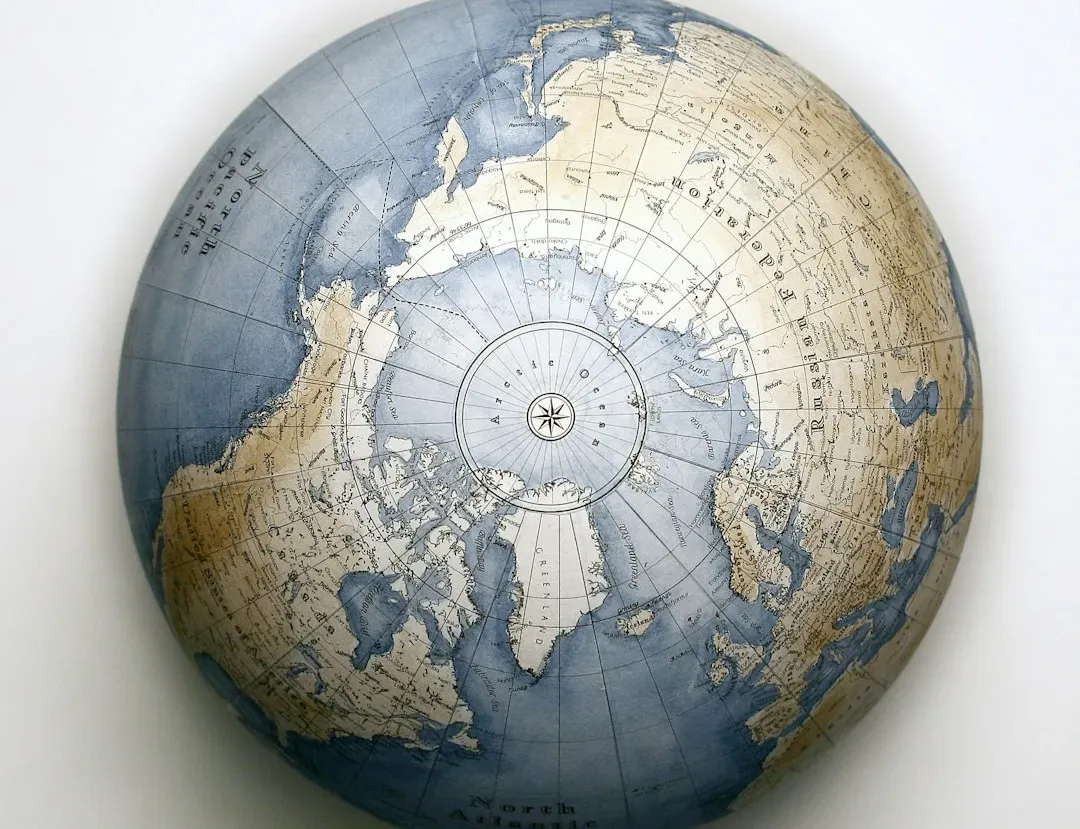
One of the most unsettling ideas to emerge in recent years is that Earth’s inner core might not be perfectly in step with the rest of the planet. By studying how seismic waves travel through Earth during earthquakes, some researchers see hints that the inner core’s rotation changes over time, sometimes speeding up or slowing down relative to the mantle and crust. It’s like having a heavy flywheel inside a machine that doesn’t always turn at the same rate as the outer casing.
If that’s true, it suggests the inner core is more than just a static lump of metal; it’s an active player in Earth’s story. Changes in its rotation could influence the behavior of the magnetic field or even leave subtle fingerprints on climate patterns over very long timescales. The catch is that the signals are faint and difficult to interpret, and not all scientists agree on what they’re seeing. Still, the simple possibility that a giant iron heart at the center of Earth might drift in and out of sync with the rest of the planet adds an eerie, almost sci‑fi twist to our picture of home.
The Mantle: A Slow-Motion Ocean Of Rock
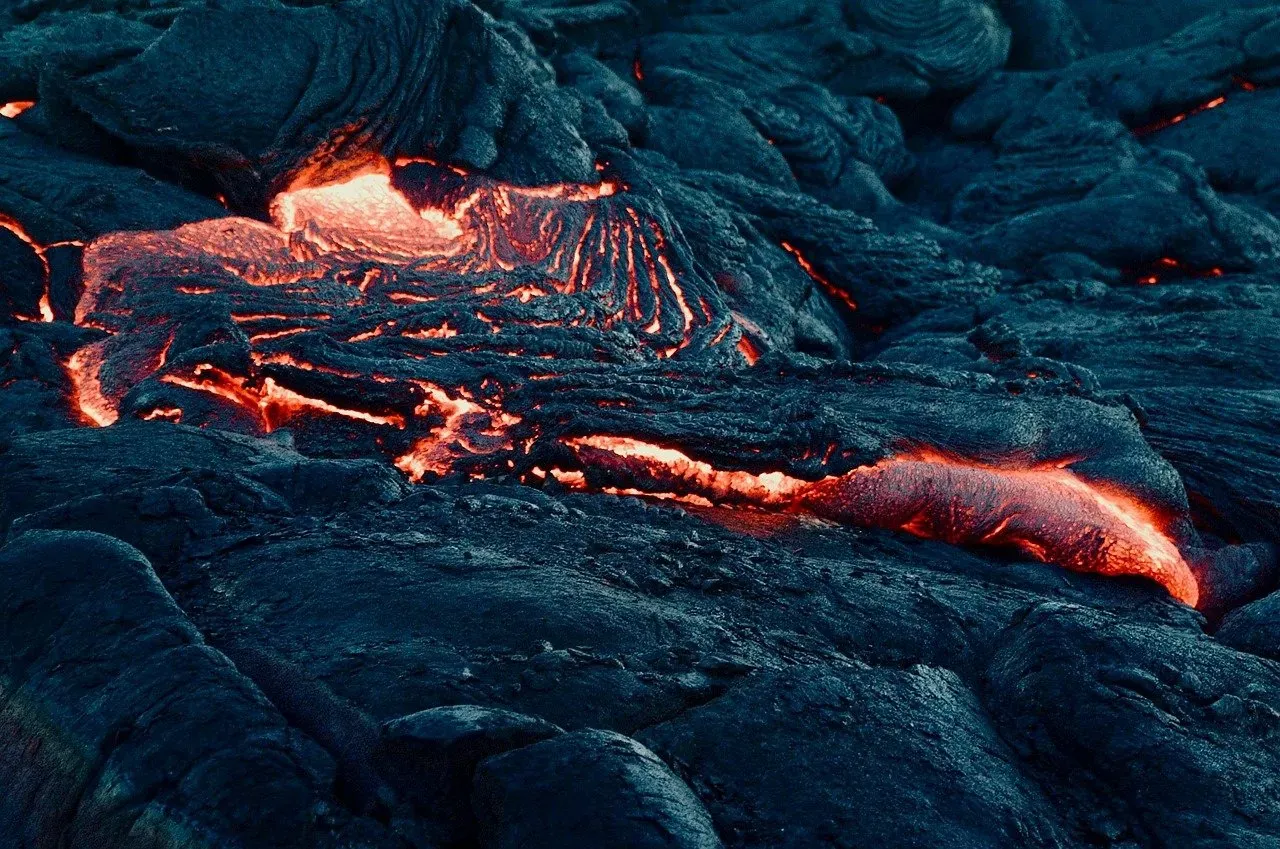
Just above the core lies the mantle, which makes up the majority of Earth’s volume. At first glance it sounds boring: a huge mass of solid rock. But “solid” is misleading here. Over long enough timescales, mantle rock flows, bends, and circulates like an extremely thick fluid. I once heard it compared to cold honey left in the fridge: it looks rigid, but give it time and it slumps and spreads. That glacial‑slow motion, driven by heat rising from the core and radioactive decay, is what powers plate tectonics.
Gigantic convection cells within the mantle drag the rigid plates of the crust around, creating continents, mountains, earthquakes, and volcanoes. When you see a volcanic eruption on the news or read about a major earthquake, you’re really seeing the surface expression of deep mantle currents that have been moving for tens of millions of years. It’s wild to think that the shape of the oceans, the rise and fall of mountain ranges, and even where we build our cities are all tied to a slow internal circulation system that most of us never think about.
Mysterious Deep Mantle Blobs The Size Of Continents
In the last couple of decades, scientists have found something downright bizarre lurking at the base of the mantle: two gigantic “blobs” of unusually dense material sitting above the core, one beneath Africa and one beneath the Pacific. We can’t see them directly, but seismic waves slow down and speed up in patterns that reveal their outlines, like medical scans revealing structures inside a body. Each of these structures is larger than a continent and stretches hundreds of kilometers high.
Nobody fully agrees on what they are. Some think they might be ancient slabs of ocean floor that sank and piled up over billions of years, others see them as reservoirs of chemically distinct material left over from the earliest days of Earth’s formation. They might even be linked to powerful, long‑lived volcanic hotspots at the surface. Whatever the answer, these deep mantle “beasts” break the nice, simple picture of a smoothly mixed interior. Hidden far below, they may be orchestrating where supervolcanoes form and how continents drift, like stage managers we never see but whose choices shape the entire performance.
Diamonds As Time Capsules From The Deep

For all our technology, some of the best clues about deep Earth arrive in the most old‑fashioned way possible: rocks carried up by volcanoes. Diamonds, in particular, are like glass bottles with messages from depths we’ll never reach. Many form over a hundred kilometers down, under pressures and temperatures that would destroy most minerals. As they grow, they trap tiny bits of surrounding material inside them, perfectly preserving minerals and fluids from their birthplace.
When these diamonds are blasted to the surface in violent eruptions, scientists can slice them open and analyze those microscopic inclusions. Inside, they’ve found surprising signs of water, carbon, and even minerals that only exist at enormous pressures, meaning they formed deep in the mantle. Some inclusions hint that pieces of Earth’s ancient ocean floor are being dragged down and recycled into the deep interior. It’s a bit like finding a seashell in the middle of a mountain range; suddenly, you realize the story is bigger and stranger than it looked at first glance.
An Underground Ocean Hidden In The Rocks

One of the most mind‑bending discoveries of recent years is that Earth may hold as much water locked inside deep mantle rocks as all the surface oceans combined. This doesn’t mean there’s a giant cavernous sea sloshing beneath us. Instead, water is stored at the atomic level inside minerals, particularly in a zone a few hundred kilometers down. Certain diamonds and high‑pressure experiments have revealed minerals that only form in the presence of water at those depths, pointing to a hidden, rock‑bound reservoir.
This deep water cycle changes how we think about our planet’s history. Instead of a one‑way trip where water arrives at the surface from comets or volcanic gases and stays there, it appears water is constantly being dragged down on subducting plates and then slowly released back up through volcanic activity. That hidden circulation could have helped stabilize Earth’s oceans over billions of years, giving life a relatively steady stage to evolve on. The idea that every drop of seawater might have taken multiple round trips through the planet’s interior makes that glass of water on your desk feel a lot less ordinary.
Heat, Life, And The Limits Of The Deep Biosphere
As we go deeper underground, temperatures climb rapidly and pressure intensifies, but life is far more stubborn than anyone expected. Bacteria and other microorganisms have been found kilometers below the surface, in deep mines and boreholes, clinging to tiny cracks in rocks and surviving on chemical energy rather than sunlight. In some places, these deep‑dwelling communities appear to have been cut off from the surface world for astonishingly long periods, evolving in slow motion while empires rose and fell overhead.
At some depth, the heat and pressure truly do become unbearable, and there’s a limit beyond which life as we know it cannot survive. But we haven’t mapped that boundary very well yet. The fact that Earth hosts a “deep biosphere” at all has reshaped how scientists think about life on other planets and moons. If microbes can persist in hot, dark rock kilometers down, then perhaps similar hidden ecosystems could exist on Mars, or beneath the icy crusts of worlds like Europa. The secrets buried beneath our own feet might be the key to recognizing life far beyond Earth.
A Planet We Barely Know From The Inside Out
For all our satellites, maps, and models, we’ve barely scratched the surface of understanding what really happens inside our planet. The core’s shifting behavior, the flowing mantle, the colossal deep‑Earth blobs, and the hidden water and life beneath us all point to a world that’s far more dynamic and layered than the simple textbook cutaway most of us grew up with. In a strange way, we know more about distant galaxies than we do about the rocks a few thousand kilometers down.
What makes this so compelling is that these deep processes are not just abstract curiosities; they shape our climate, our landscapes, our technology, and even the long‑term survival of life on Earth. Every new earthquake recorded, every unusual diamond studied, and every improved simulation chips away at the darkness hiding Earth’s interior. The real question now is not whether there are more secrets down there, but how many are left, and which one will overturn our assumptions next.