
Several kilometers below the ocean’s surface, in crushing darkness and freezing water, there are places where the seafloor literally cracks open and the Earth breathes. From those cracks pour hot, chemical-rich fluids that should be utterly hostile to life. Instead, they’re surrounded by thriving, alien-looking communities that defy almost everything we thought we knew about what it takes to survive.
I still remember the first time I saw footage from a deep-sea submersible: white tube worms taller than a person, ghostly crabs crawling over smoking chimneys, shimmering water that looked like a mirage underwater. It felt less like Earth and more like a science fiction movie. And yet, those vents are very real, and they may hold some of the most important clues to both our planet’s past and humanity’s future.
Life Without Sunlight: A World Powered By Chemistry
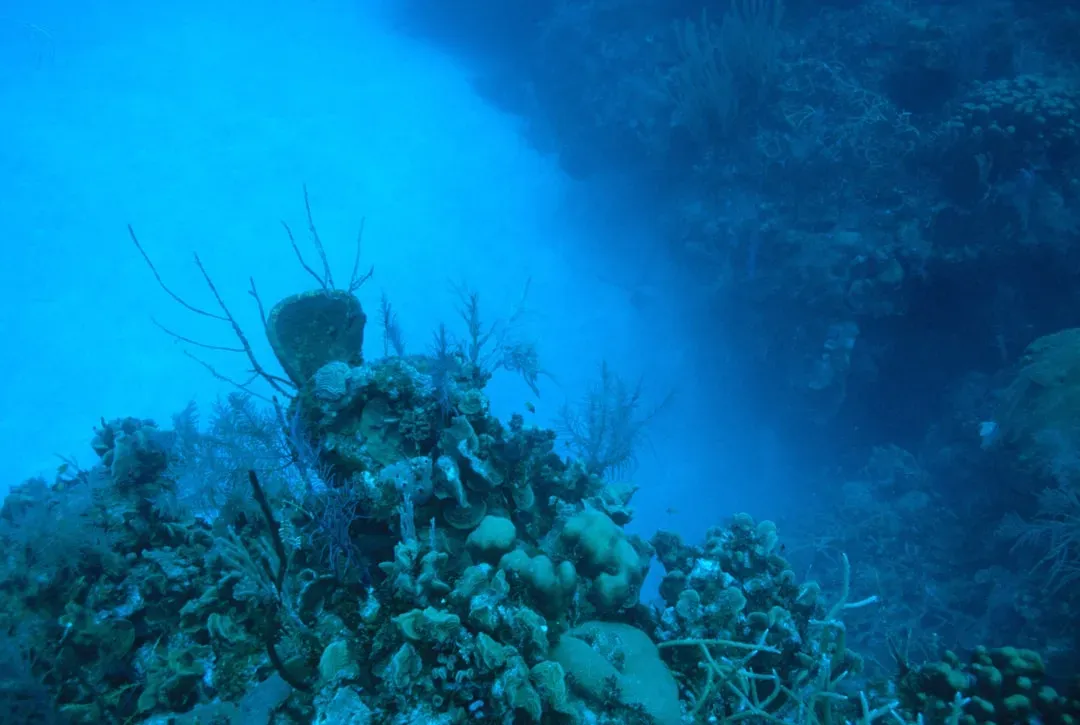
Imagine an ecosystem that has never seen sunlight, where photosynthesis means nothing and green plants simply don’t exist. That’s what you find at deep ocean vents, often more than two or three kilometers below the surface, where sunlight can’t penetrate at all. Instead of drawing energy from light, the organisms there use a process called chemosynthesis, powering life through chemical reactions between vent fluids and seawater.
This is a complete reversal of the food chain we know on land, where nearly everything ultimately depends on plants capturing sunlight. At vents, the base of the food web is made up of bacteria and archaea that feed on chemicals like hydrogen sulfide, methane, and hydrogen, turning them into organic matter. In a way, it’s like discovering a second kind of “battery” for life on Earth: not solar powered, but powered by geology itself.
Boiling Hot And Freezing Cold At The Same Time
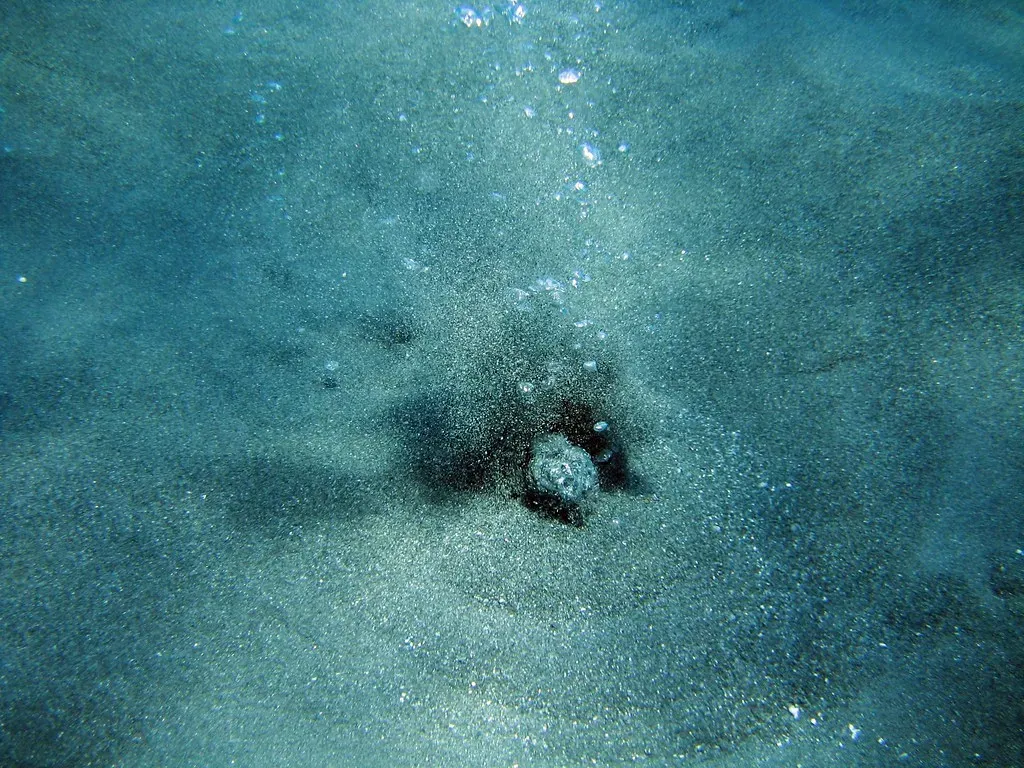
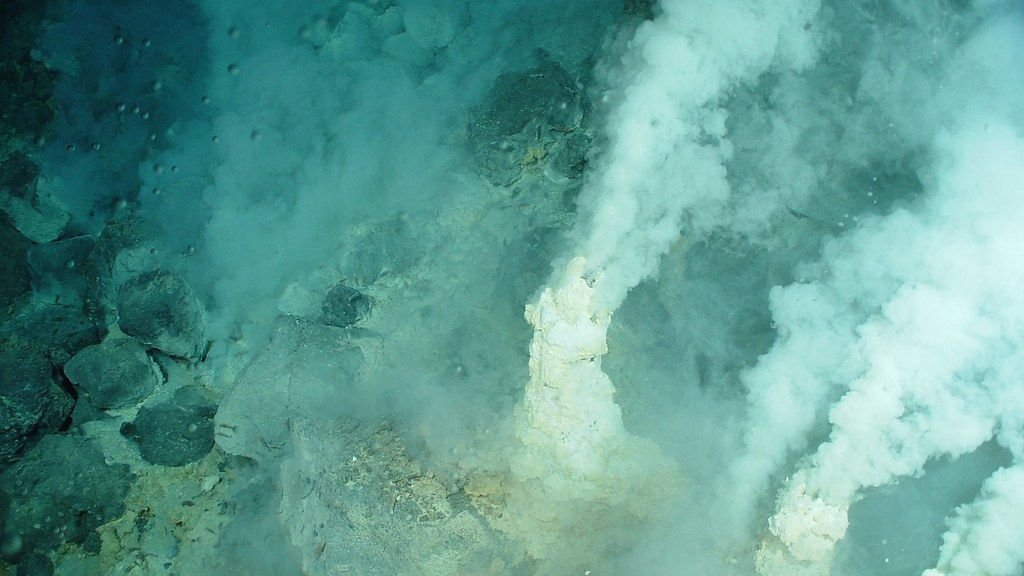
The physical conditions at hydrothermal vents are totally wild compared to anything we experience on land. Vent fluids can reach temperatures well over the boiling point of water at the surface, yet at those depths the immense pressure keeps the water in a liquid state. Surrounding that scalding flow is near-freezing deep ocean water, so you have extreme temperature gradients over just a few centimeters.
For the organisms that live there, this means a constant balancing act between too hot and too cold. Some bacteria and archaea, known as hyperthermophiles, actually prefer temperatures that would destroy most life, thriving around conditions similar to a kitchen kettle that never stops boiling. Others perch right on the edge of survivable zones, living where the hot vent fluids mix just enough with the icy seawater to create a narrow band of “just right” conditions. On land, we don’t really have an equivalent to this razor-thin life zone around scalding underwater chimneys.
Alien-Looking Animals You Won’t See On Any Beach
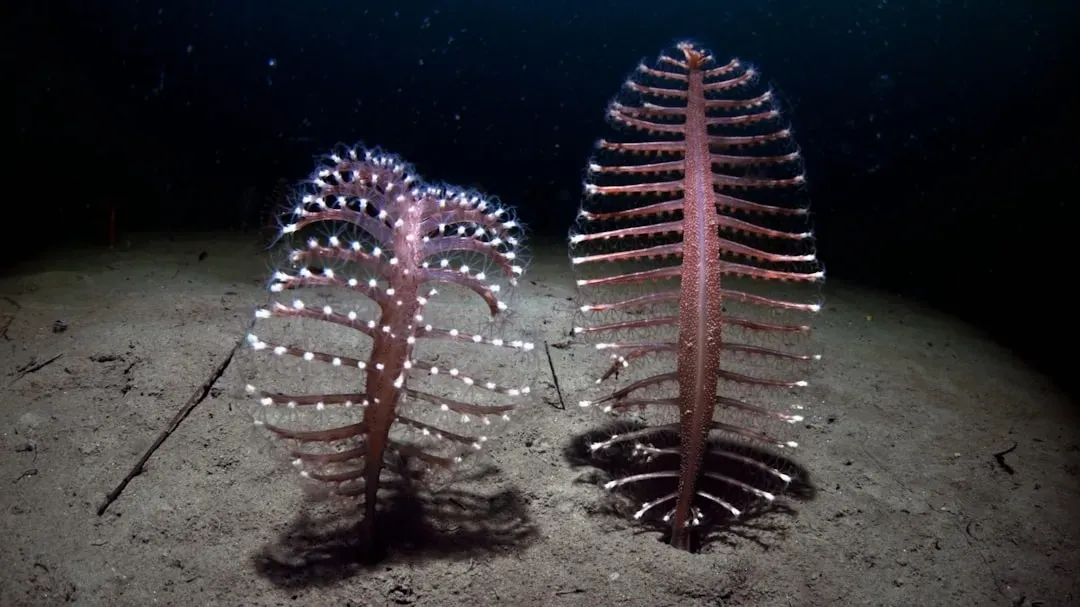
The animals that make their home around deep ocean vents look like they come from a completely different planet. There are giant tube worms in the Pacific that can grow taller than most people and have bright red plumes like underwater flags. They anchor themselves to the vent structures and never move far from their chemical lifeline. In some regions, black-shelled snails have iron sulfide scales on their feet, like tiny knights wearing armor forged by the Earth itself.
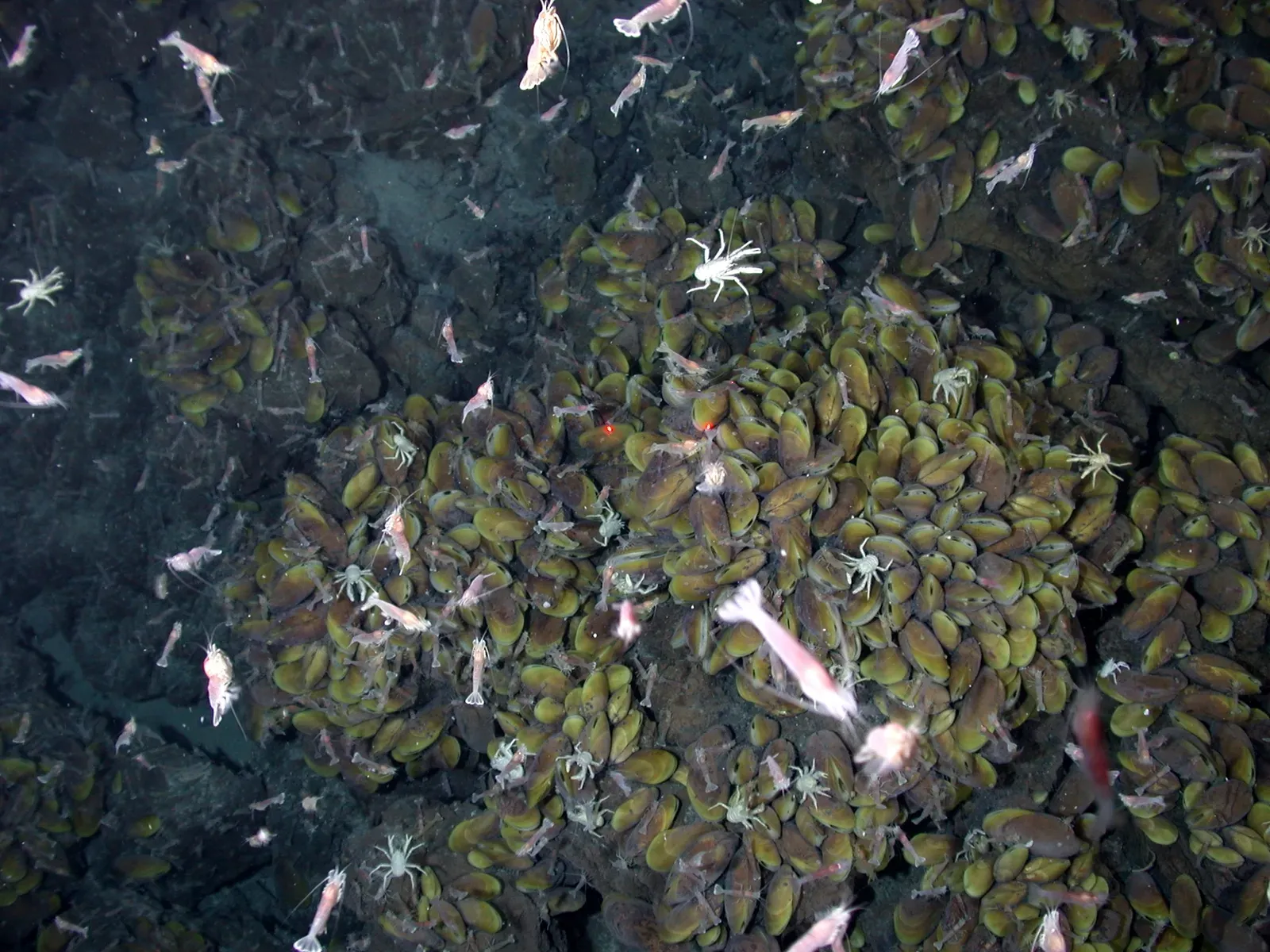
Instead of clear blue water and coral reefs, vent communities are often built around dark, mineral-rich chimneys that spew black or white “smoke,” which is really a cloud of tiny particles precipitating from the hot fluids. Shrimp with strange, light-sensing organs on their backs crowd around openings in the vents, while pale crabs scuttle through water that would cook a typical surface-dwelling fish. If you showed someone a photograph of these places without context, they might guess you’d taken it on a distant moon rather than on our own planet.
Symbiosis: Animals Living Off Microbial Power Plants
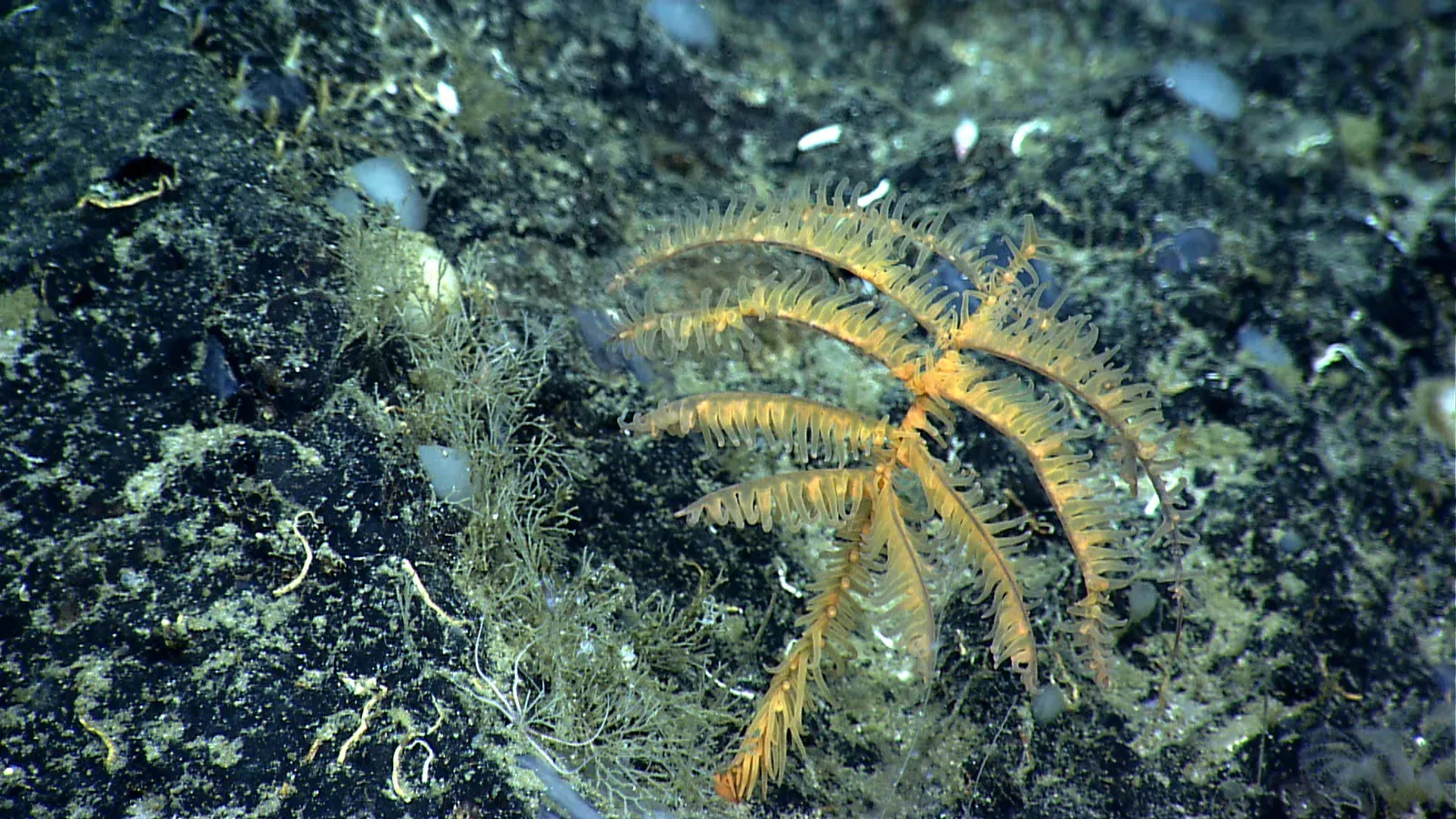
One of the strangest things about vent animals is how utterly dependent many of them are on microbes living inside their bodies. Those towering tube worms, for example, have no mouth or digestive system as adults. Instead, they’re packed with symbiotic bacteria that perform chemosynthesis, turning toxic vent chemicals into usable nourishment. The worm provides a safe home and a constant supply of chemicals; the bacteria provide food. It’s like carrying your own internal farm wherever you go.
Similar partnerships show up in vent mussels, clams, and some shrimp, all of which host chemosynthetic bacteria in their tissues. On land, we’re used to the idea that animals eat plants or other animals to survive. At vents, some animals effectively skip the need to “eat” in the traditional sense at all, because the energy conversion happens directly inside their cells. That kind of tight, built-in cooperation between microbes and animals is much more extreme and widespread at vents than in most surface ecosystems.
Life Thriving On What Would Kill Most Organisms
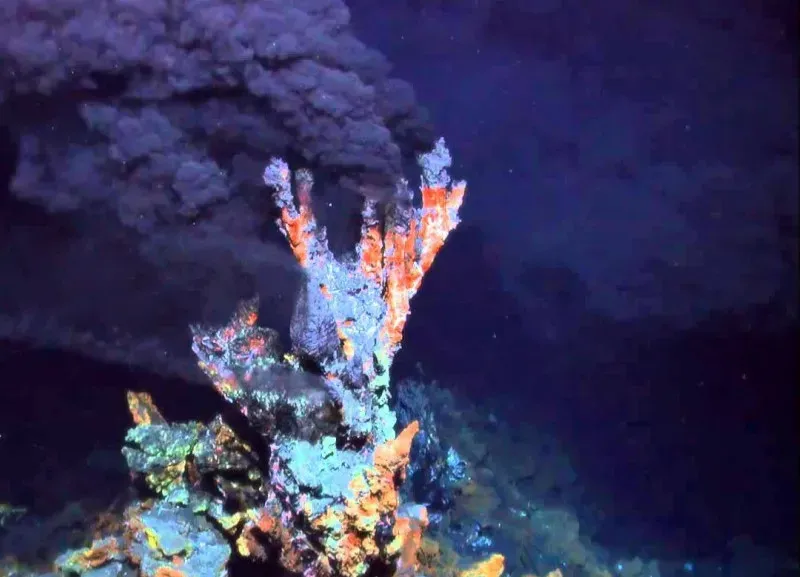
The same chemicals that fuel vent life are extremely toxic to most familiar organisms. Hydrogen sulfide, one of the main energy sources at many vents, is deadly to humans in relatively small amounts and can shut down our ability to use oxygen. Yet for vent microbes, that compound is not a poison but a meal, something they can oxidize to gain energy. Some species handle metal concentrations and acidic conditions that would wipe out typical marine life very quickly.
These vent communities also cope with crushing pressures that are hundreds of times higher than at the surface and with rapid environmental changes when vent flows pulse, shift, or shut off. The adaptations that make this possible include specialized enzymes, pressure-resistant cell structures, and membranes that remain stable in heat and chemical stress. Compared with most land-based life, vent organisms are like extreme endurance athletes operating in an environment that would feel like a lethal mix of volcano, toxic waste site, and deep freeze to anything else.
Independent From The Surface World’s Ups And Downs
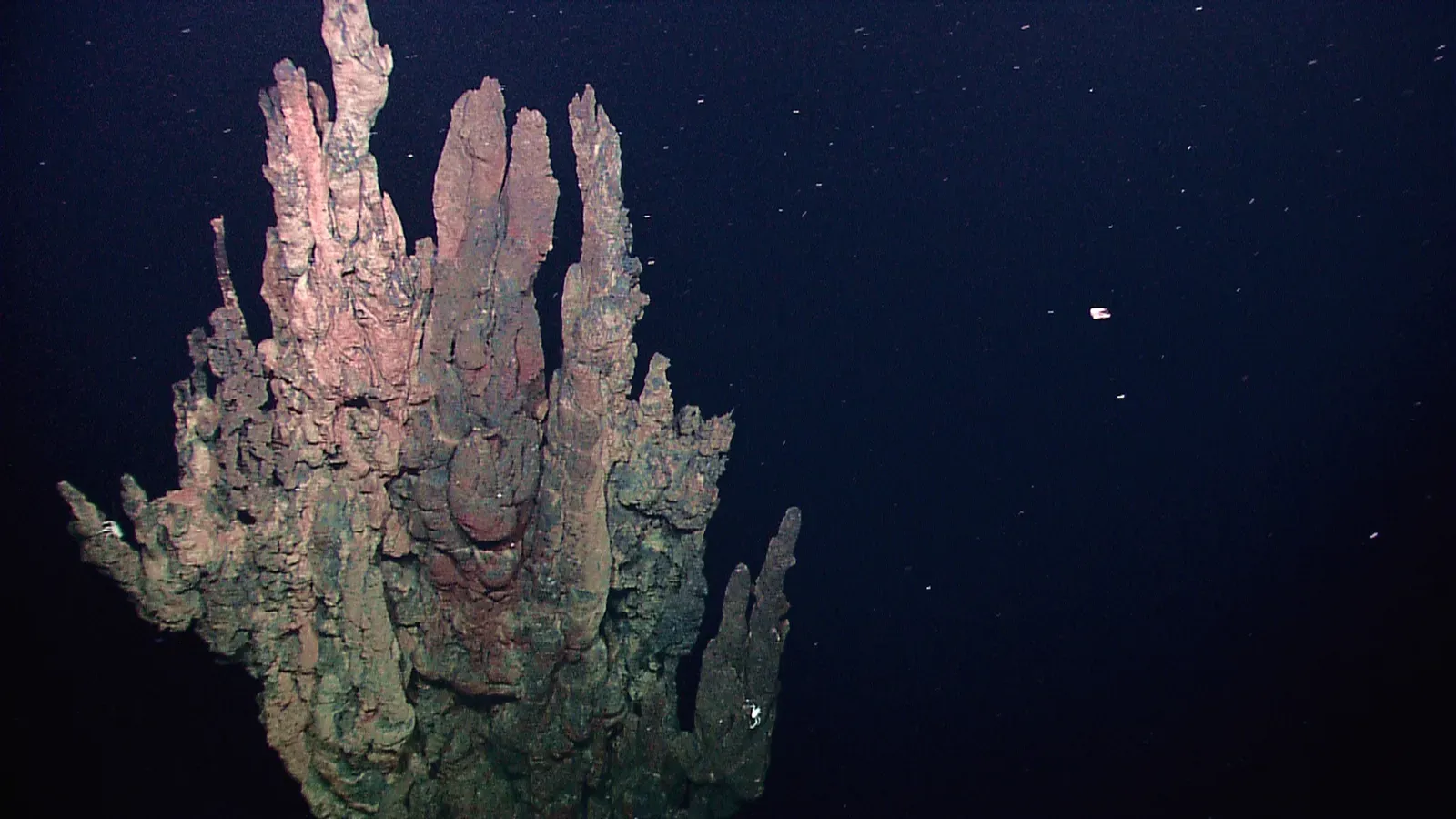
On land, and even in sunlit parts of the ocean, ecosystems are deeply connected to the planet’s climate and day-night cycles. Droughts, storms, and seasonal changes can reshape entire landscapes and the communities living there. Deep ocean vents, in contrast, operate in almost complete isolation from sunlight-driven surface patterns. Their primary energy comes from geological activity deep within the Earth, often connected to tectonic plate boundaries and magma movement rather than weather or seasons.
This independence gives vent communities a different rhythm. They may be stable for years or decades while a vent is active, then collapse when the vent weakens or stops, only to reappear at a new crack in the seafloor. The “seasons” of a vent are driven by underground forces, not by the tilt of the Earth. It’s a reminder that our familiar, sunlit world is just one skin of a much larger, more complex system, and that life can hitch its survival to very different kinds of engines.
Clues To The Origins Of Life On Earth
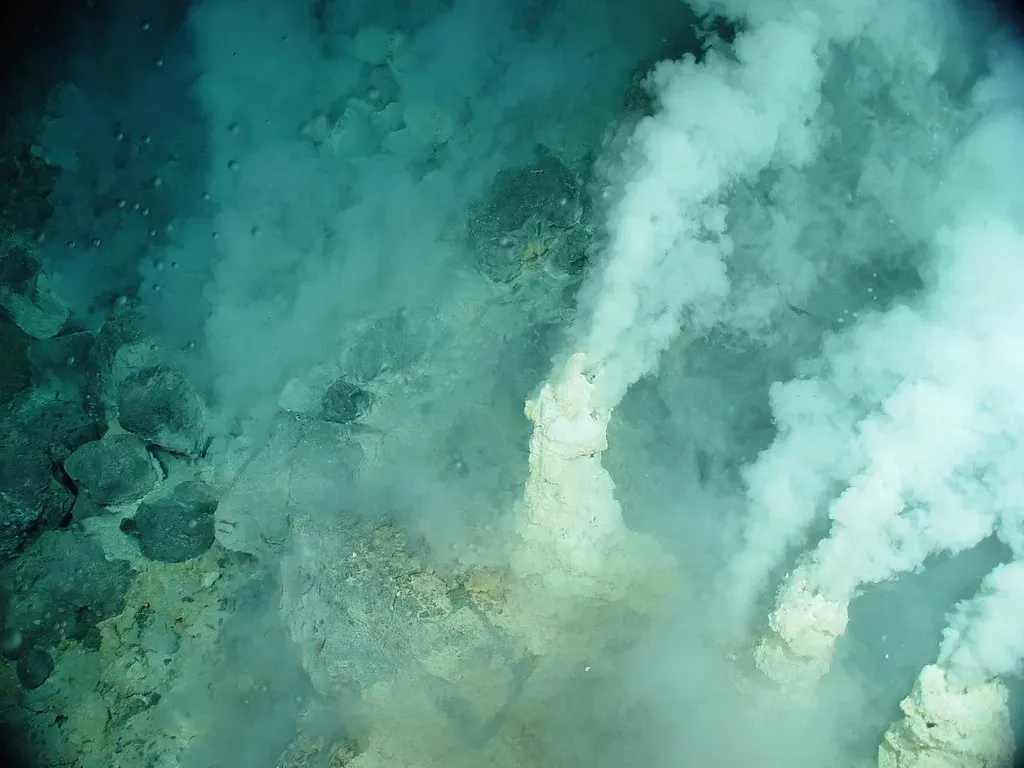
For years, scientists debated whether life first emerged in warm little pools on the Earth’s surface or in the dark depths of the ocean. In recent decades, hydrothermal vents have become one of the strongest candidates for the birthplace of life itself. The mixture of heat, minerals, and steep chemical gradients at certain kinds of vents could have provided just the right conditions for simple organic molecules to form and start organizing into something more complex.
Some types of vents, especially alkaline vents with porous, chimney-like structures, naturally create micro-sized compartments where reactions can take place. These tiny pockets may have helped early molecules concentrate, interact, and evolve toward living systems, much like a natural laboratory built into the seafloor. The idea that life might have begun in something that looks more like a smoking chimney than a peaceful pond is a dramatic shift in our mental picture of our own origins.
Blueprints For Life On Other Worlds
Because vent ecosystems don’t depend on sunlight, they’ve exploded our assumptions about where life could exist in the universe. If living things can thrive in total darkness using only chemical energy from rock and water reactions, then similar habitats on other worlds suddenly look a lot more promising. Icy moons in our solar system like Europa and Enceladus are prime examples, since there are signs of subsurface oceans and possible hydrothermal activity beneath their frozen crusts.
Space missions have detected plumes of water vapor and hints of complex organic molecules coming from these moons, suggesting that their interiors are not just cold, dead oceans but potentially active, chemically rich environments. If Earth’s vents can support dense communities of microbes and animals, it’s at least plausible that something simpler could arise in alien vent systems too. In a sense, every new discovery at Earth’s seafloor vents doubles as a test case for what might be hiding under distant ice-covered seas we’ll never see directly.
Human Curiosity, Deep-Sea Mining, And A Fragile Frontier
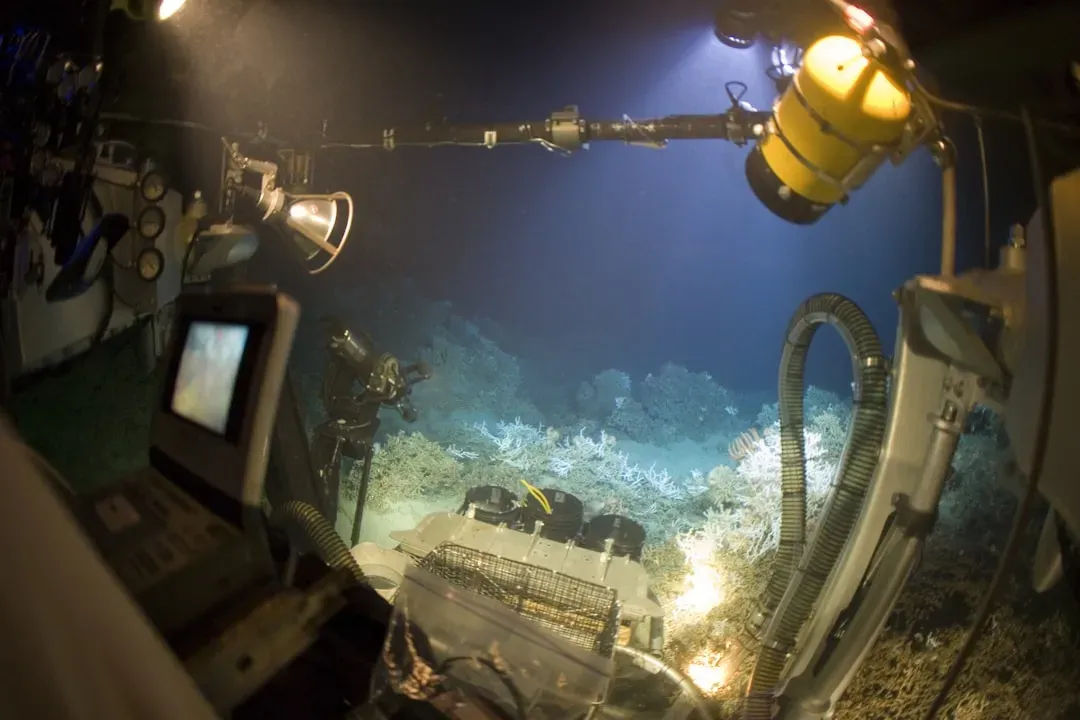
As technology improves, humans are visiting deep-sea vents more often, both for exploration and for resources. Research submersibles and remotely operated vehicles have given us breathtaking views and allowed us to sample organisms that would otherwise be forever out of reach. At the same time, commercial interest is growing in the metals and minerals that often accumulate near vent systems, including valuable elements used in electronics and renewable energy technologies.
This creates a real tension between curiosity, conservation, and economic pressure. Vent communities are highly specialized and can be slow to recover when disturbed, because they depend on very specific geologic conditions. Disturbing or destroying a vent field for short-term mineral gain could mean wiping out unique species before we even know they exist or understand their role in the ecosystem. It raises hard questions about how far we’re willing to go into this last, largely untouched wilderness and how carefully we’ll tread once we get there.
Why Deep Ocean Vents Change How We See Life Itself
Deep ocean vents force us to rewrite some of the most basic assumptions we hold about what life needs and where it can exist. They show that sunlight is not the only viable energy source, that extreme conditions can be a cradle rather than a grave, and that the boundary between geology and biology is far blurrier than we once thought. For me, that’s both unsettling and strangely comforting, because it means life is not as fragile or narrowly tuned as it might seem from a stroll through a forest or a walk on a beach.
When you picture those towering chimneys, bathed in darkness and wreathed in shimmering hot water, surrounded by creatures that would look bizarre in any aquarium, you’re seeing one of Earth’s great secrets laid bare. These vents remind us that our planet still holds realms we barely understand and that some of the most important stories about life are written in places we almost never see. It makes you wonder what else is out there, both in our own oceans and far beyond, quietly thriving in the dark.