A Surprising Twist in Atomic Motion (Image Credits: Pexels)
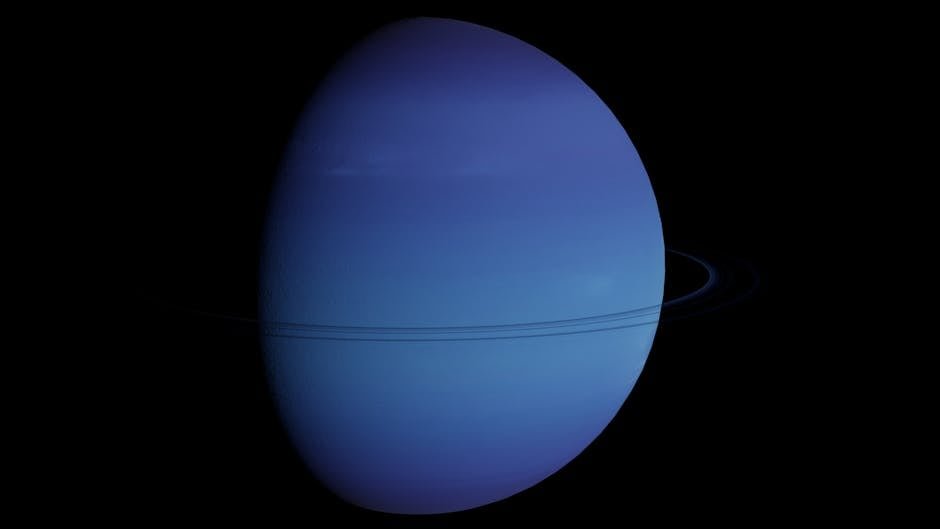
Deep within the ice giants Uranus and Neptune, extreme pressures and scorching temperatures transform everyday elements into something extraordinary. Researchers have simulated conditions mimicking these planetary depths and discovered hydrogen atoms channeling along spiral paths in a structured carbon framework. This quasi-one-dimensional superionic state challenges long-held assumptions about the interiors of these distant worlds.[1][2]
A Surprising Twist in Atomic Motion
Picture hydrogen atoms, typically free to roam in all directions, confined to tight helical routes like cars on a multi-lane spiral ramp. Scientists at the Carnegie Institution for Science ran quantum simulations that revealed this behavior in carbon hydride under pressures of 500 to 3,000 gigapascals – millions of times Earth’s atmosphere – and temperatures reaching 6,000 Kelvin. These conditions prevail in the intermediate layers between the planets’ hydrogen-helium envelopes and rocky cores.
The team employed high-performance computing and machine learning to model carbon hydride, or CH, at these extremes. Their work predicted an ordered hexagonal lattice where carbon atoms form a stable scaffold. Hydrogen, by contrast, flows preferentially along well-defined spiral pathways, creating a hybrid solid-fluid phase unlike any observed before.[1]
Unpacking the Superionic Phenomenon
Superionic materials straddle the line between solids and liquids: one element stays fixed in a crystal while another mobilizes. Here, the state proves quasi-one-dimensional, with hydrogen’s motion restricted to one primary direction. This directionality sets it apart from more isotropic superionic phases seen in water ice experiments.
“This newly predicted carbon–hydrogen phase is particularly striking because the atomic motion is not fully three-dimensional,” stated Ronald Cohen of the Carnegie Institution. “Instead, hydrogen moves preferentially along well-defined helical pathways embedded within an ordered carbon structure.”[2] The simulations traced phase transitions as temperatures rose: hydrogen first loosens, then channels into spirals, and finally disperses more freely as the carbon frame weakens.
- Carbon forms outer spiral chains in a hexagonal array.
- Hydrogen threads inner helical paths, enabling directed flow.
- The structure emerges thermally under giant-planet pressures.
- Transport properties show anisotropy, favoring certain directions for heat and charge.
Reshaping Views of Ice Giant Mysteries
Uranus and Neptune harbor layers of “hot ices” – water, methane, and ammonia – compressed into exotic forms. Carbon hydride’s superionic state likely occupies transition zones here, influencing energy flow and electrical conductivity. Such uneven conduction could generate the planets’ peculiar magnetic fields, tilted far from their rotation axes.
Neptune’s field tilts 47 degrees off-center; Uranus manages nearly 60. Conventional models struggled to explain these quirks, assuming uniform dynamo action in deep oceans. A channeled superionic layer offers a better fit, channeling currents asymmetrically. “Carbon and hydrogen are among the most abundant elements in planetary materials, yet their combined behavior at giant-planet conditions remains far from fully understood,” noted lead researcher Cong Liu.[1]
Lessons Beyond the Ice Giants
The findings extend to materials science, highlighting how simple compounds yield complex behaviors under duress. Anisotropic transport in this phase could inspire new conductors or energy devices on Earth. For exoplanet studies, similar states might govern other hybrid worlds.
Details appear in a Nature Communications paper published March 16, 2026, by Liu, Cohen, and Jian Sun.[1]
Key Takeaways
- A quasi-1D superionic carbon hydride features hydrogen’s spiral motion in a carbon lattice.
- Simulated at 500–3,000 GPa and 4,000–6,000 K, matching ice giant depths.
- Directional flow may clarify tilted magnetic fields and internal heat patterns.
This discovery peels back another layer of the cosmos, reminding us that the universe thrives on the unexpected. As missions to these enigmas remain distant, simulations bridge the gap, promising deeper insights into our solar system’s oddballs. What implications do you see for future planetary exploration? Share your thoughts in the comments.