
The oldest light in the universe has been washing over Earth for nearly as long as time itself, yet for most of human history we had no idea it was there. Today, astronomers treat that faint glow as a kind of forensic record, a message written in radiation instead of ink. It is helping them confront some of the strangest questions in science: Why does the cosmos look the way it does, and what happened in the very first instants after the Big Bang? With each new satellite and telescope, what once seemed like static noise is turning into a detailed story about our origins. The mystery now is not whether the universe is speaking, but whether we’re finally learning to listen properly.
The First Light We Can Never See Directly
Imagine a baby picture taken when the universe was only a few hundred thousand years old, long before stars or galaxies existed. That is essentially what scientists are studying when they talk about the universe’s oldest light, known as the cosmic microwave background. This light has been stretched by roughly about a thousand times as the universe expanded, cooling from a white-hot glare to a faint, microwave glow. To our eyes, the sky still looks dark at night, but sensitive instruments reveal that it is actually filled with this ghostly afterglow in every direction. In that glow are tiny variations in temperature and density, differences that seeded everything from galaxy clusters to the space between your atoms today.
What makes this so remarkable is the timing. The light we now detect was released when the universe cooled enough for electrons and protons to form neutral atoms, suddenly allowing photons to travel freely instead of constantly colliding with matter. Astronomers call this the “last scattering surface,” a kind of fog bank we can never see beyond with light itself. Before that moment, the cosmos was opaque, a glowing plasma where information was trapped. So the oldest light is not just a pretty picture; it is the earliest clear snapshot the universe will ever allow us to take.
The Hidden Clues in a Nearly Uniform Glow
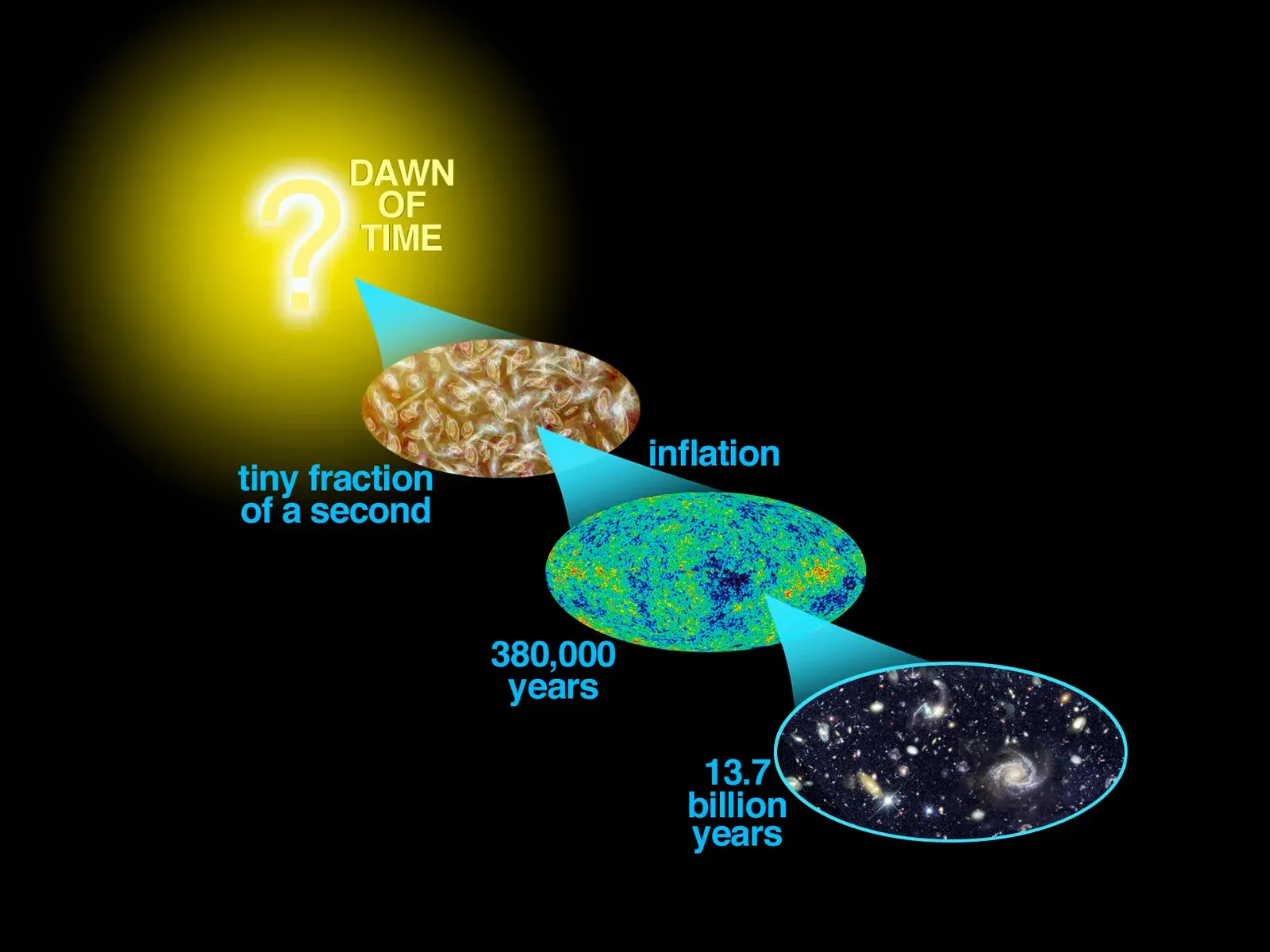
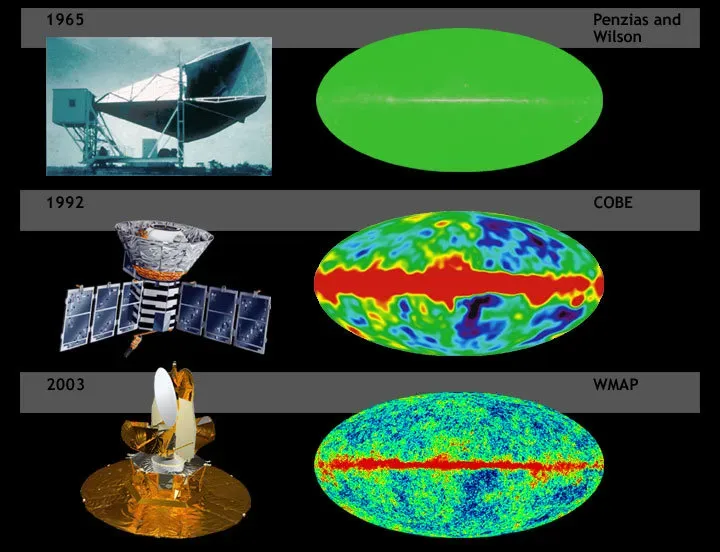
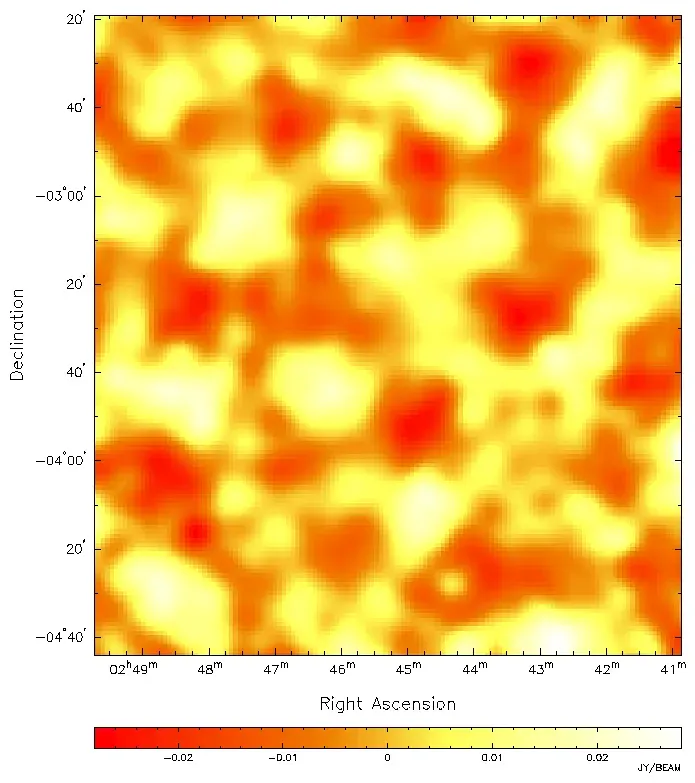
At first glance, the universe’s oldest light looks almost boringly smooth, with nearly the same temperature in every direction in the sky. The drama lies in the details: tiny fluctuations of only a few millionths of a degree mark places that were ever so slightly denser or hotter than their surroundings. Those slight wrinkles, mapped in exquisite detail by satellites like COBE, WMAP, and Planck, act like fingerprints of the early universe. They tell scientists about how matter and energy were distributed, how fast the universe was expanding, and even how much dark matter and dark energy existed at that time. The fact that such microscopic differences grew into vast structures is one of the most mind-bending aspects of modern cosmology.
These subtle patterns also serve as a testing ground for ideas that would otherwise be impossible to probe. Models of cosmic inflation, for example, predict specific kinds of statistical patterns in these temperature variations, including how they cluster across the sky. By comparing theory to the actual sky maps, researchers can rule out entire families of models, fine-tuning what might have happened in the first split second after the Big Bang. In a sense, the hidden clues in this old light work like the grooves in a vinyl record: if you know how to read them, they play back the story of the early universe with surprising fidelity.
From Ancient Tools to Modern Cosmic Forensics
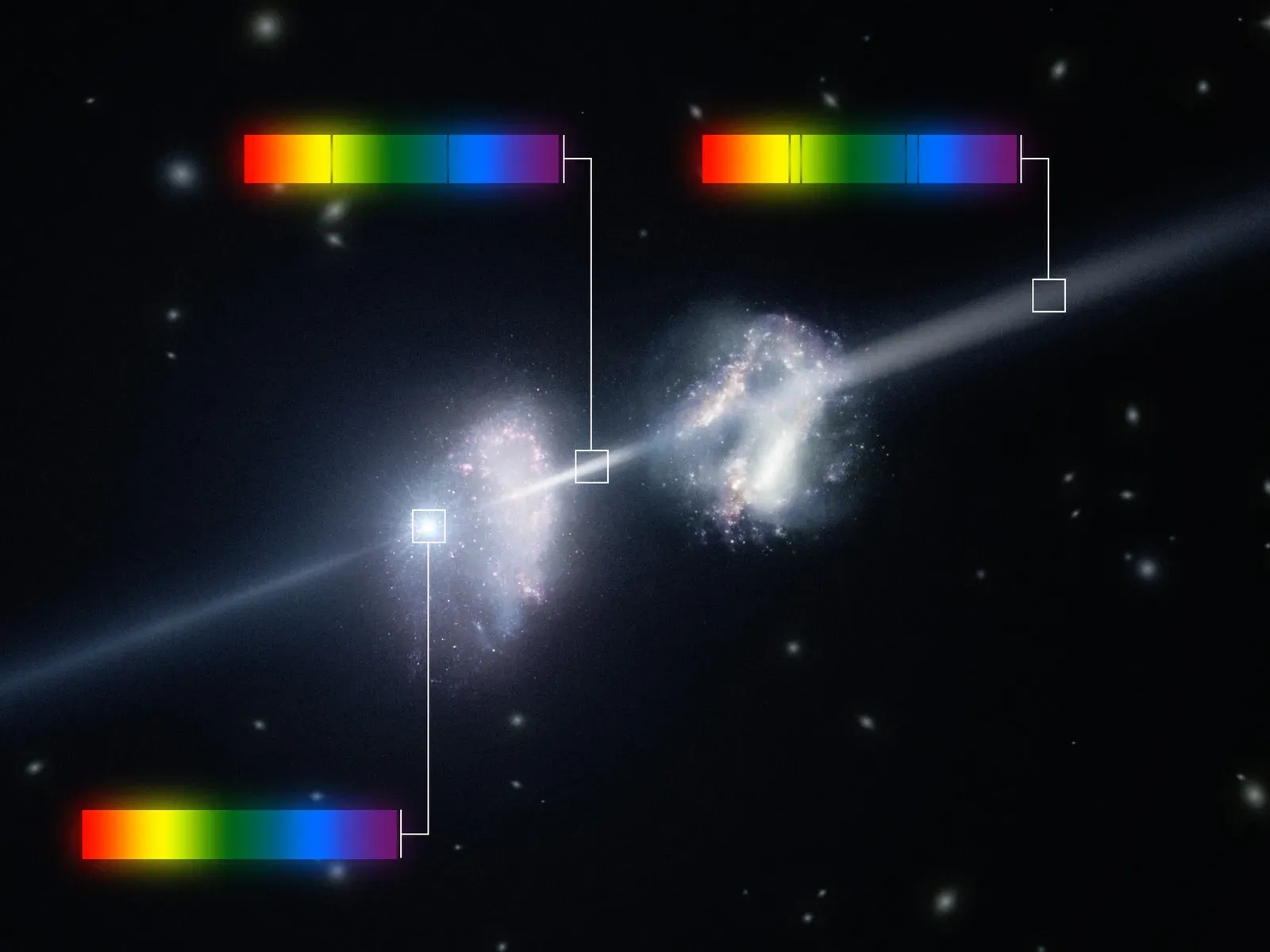
Human curiosity about the sky started with naked-eye stargazing, long before anyone guessed that invisible radiation filled the cosmos. Early astronomers charted planets and comets with paper and ink, treating light as a guide to celestial motion rather than a message about deep time. The turning point came in the twentieth century, when radio antennas and microwave detectors expanded our sensory reach far beyond visible wavelengths. In 1965, two engineers using a radio antenna stumbled onto a strange background hiss that turned out to be the universe’s oldest light, though they initially thought it might be pigeon droppings in their equipment. That accidental discovery transformed cosmology from a largely speculative field into a precision science.
Since then, the tools have grown astonishingly sophisticated. Satellites such as WMAP and Planck have mapped the sky with resolutions that early cosmologists could barely dream of, measuring temperature differences across the cosmic microwave background with extreme accuracy. Ground-based telescopes at the South Pole and in the Atacama Desert are now chasing even fainter signatures, like the delicate polarization patterns that could hint at primordial gravitational waves. Each new instrument acts like a better forensic kit, turning static noise into data that can be weighed, mapped, and modeled. Our progression from simple telescopes to multi-billion-dollar observatories is really a story of learning to read more and more of the universe’s subtle handwriting.
When the Universe Stopped Being a Fog
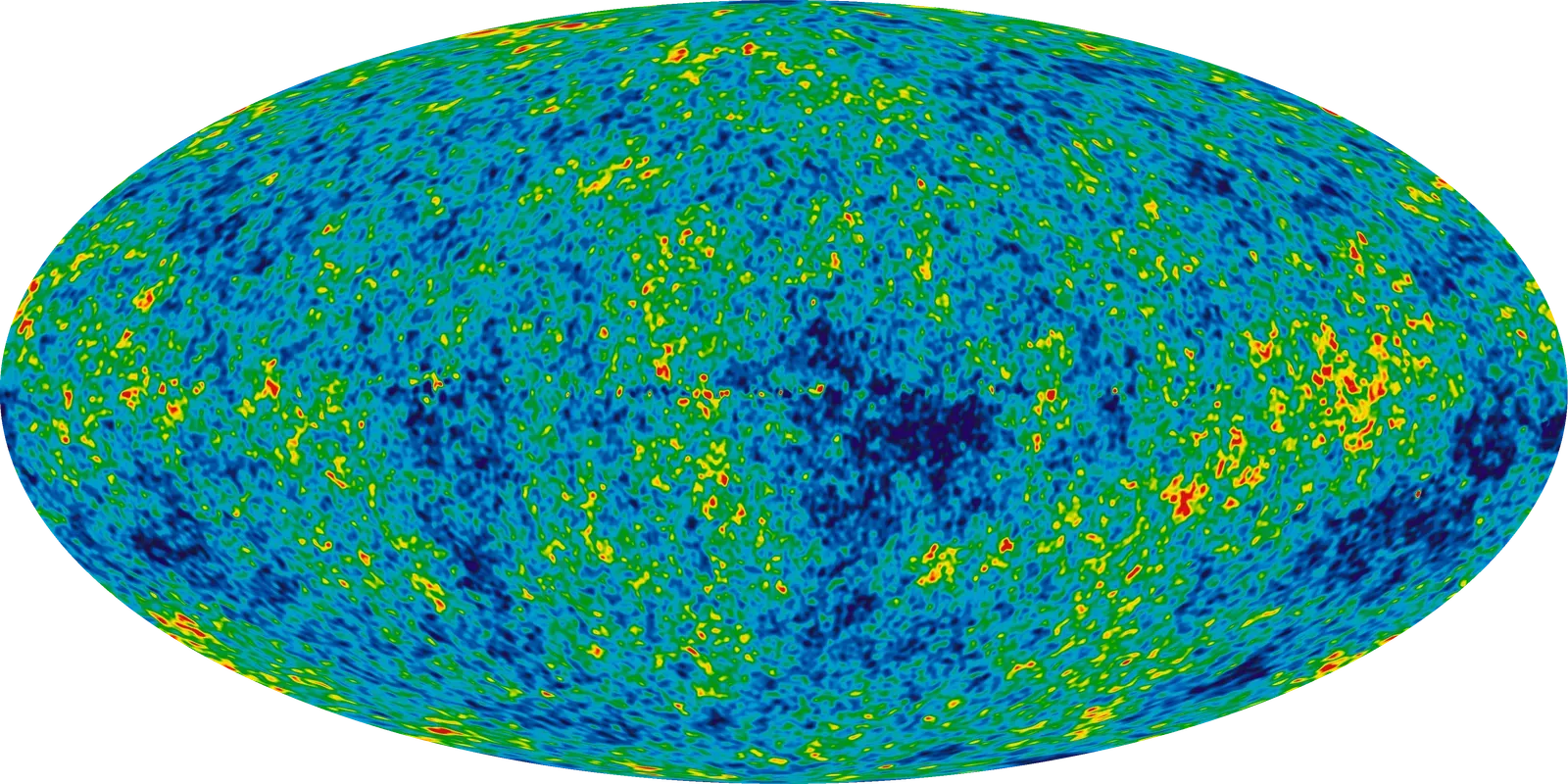
The oldest light arrives from a time when the universe was undergoing a critical transformation, shifting from chaos to clarity. For hundreds of thousands of years after the Big Bang, everything was so hot and dense that particles slammed into each other constantly, keeping light locked in a glowing soup. As expansion and cooling continued, conditions finally allowed electrons to team up with protons and form the first stable hydrogen atoms. That seemingly simple step turned the cosmos from opaque to transparent, releasing a flood of photons that began their long journey through space. The light we detect today is a direct echo of that cosmic moment of freedom.
This transition era is crucial because it sets the stage for everything that came after. The density variations imprinted in the cosmic microwave background became gravitational seeds where matter slowly collected, eventually forming stars, galaxies, and clusters. Without that finely tuned balance between expansion, gravity, and radiation, the universe might have collapsed back on itself or thinned into a featureless haze. Studying this phase lets scientists test fundamental physics under conditions no laboratory can reproduce. When cosmologists analyze that early fog lifting, they are essentially replaying the origin story of every structure we now see in the night sky.
What Early Light Reveals About Invisible Ingredients
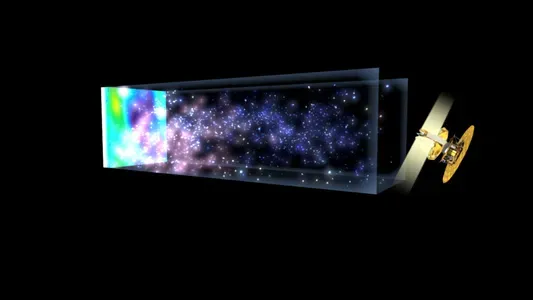
One of the strangest lessons from the universe’s oldest light is how little of the cosmos is made from the stuff we know. By carefully analyzing the patterns in the cosmic microwave background, researchers have inferred that only a small slice of the universe’s total content is ordinary matter like atoms. A larger share appears to be dark matter, an unseen substance that tugs on galaxies with gravity but does not emit or absorb light. An even bigger portion seems to be dark energy, a mysterious form of energy driving the accelerated expansion of space itself. The early light acts like an audit, allowing scientists to tally these components with surprising precision.
This cosmic inventory has real numerical bite. The data suggest that roughly about one twentieth of the universe is normal matter, while something like a quarter behaves like dark matter and more than two thirds shows up as dark energy in the equations. Those ratios are not just academic; they constrain how galaxies form, how fast cosmic expansion changes, and even what the far future of the universe might look like. Without the microwave background maps, dark matter and dark energy might still be fringe ideas rather than central pillars of cosmology. In that sense, the universe’s oldest light is not just a messenger about the past, but a whistleblower about hidden ingredients still shaping the present.
Why It Matters for More Than Just Cosmologists
It might be tempting to treat all this as abstract trivia, far removed from daily life on Earth. Yet the story written in the universe’s earliest light is really about our place in a much larger whole. Knowing how the cosmos began, what it is made of, and how it evolves helps anchor our sense of belonging in a universe that can otherwise feel indifferent and vast. When scientists talk about atoms in our bodies forged in stars and seeded by early density fluctuations, they are tracing a direct line from that ancient glow to us. The idea that your existence depends on microscopic ripples in a newborn universe is both unsettling and deeply grounding.
This line of research also shapes how we do science more broadly. Techniques developed for cosmic microwave background studies, such as handling enormous data sets and teasing out faint signals from noisy backgrounds, spill over into fields from climate research to medical imaging. The international collaborations needed to build and operate these observatories foster a kind of scientific diplomacy that keeps communication open even when politics turn sour. Personally, the first time I saw a map of the microwave background, I was struck less by its technical sophistication and more by its quiet intimacy; it felt like looking at an ultrasound image of the universe before it was fully formed. That emotional jolt is part of why this subject matters: it connects cold equations with warm, human wonder.
The Future Landscape of Listening to Ancient Light
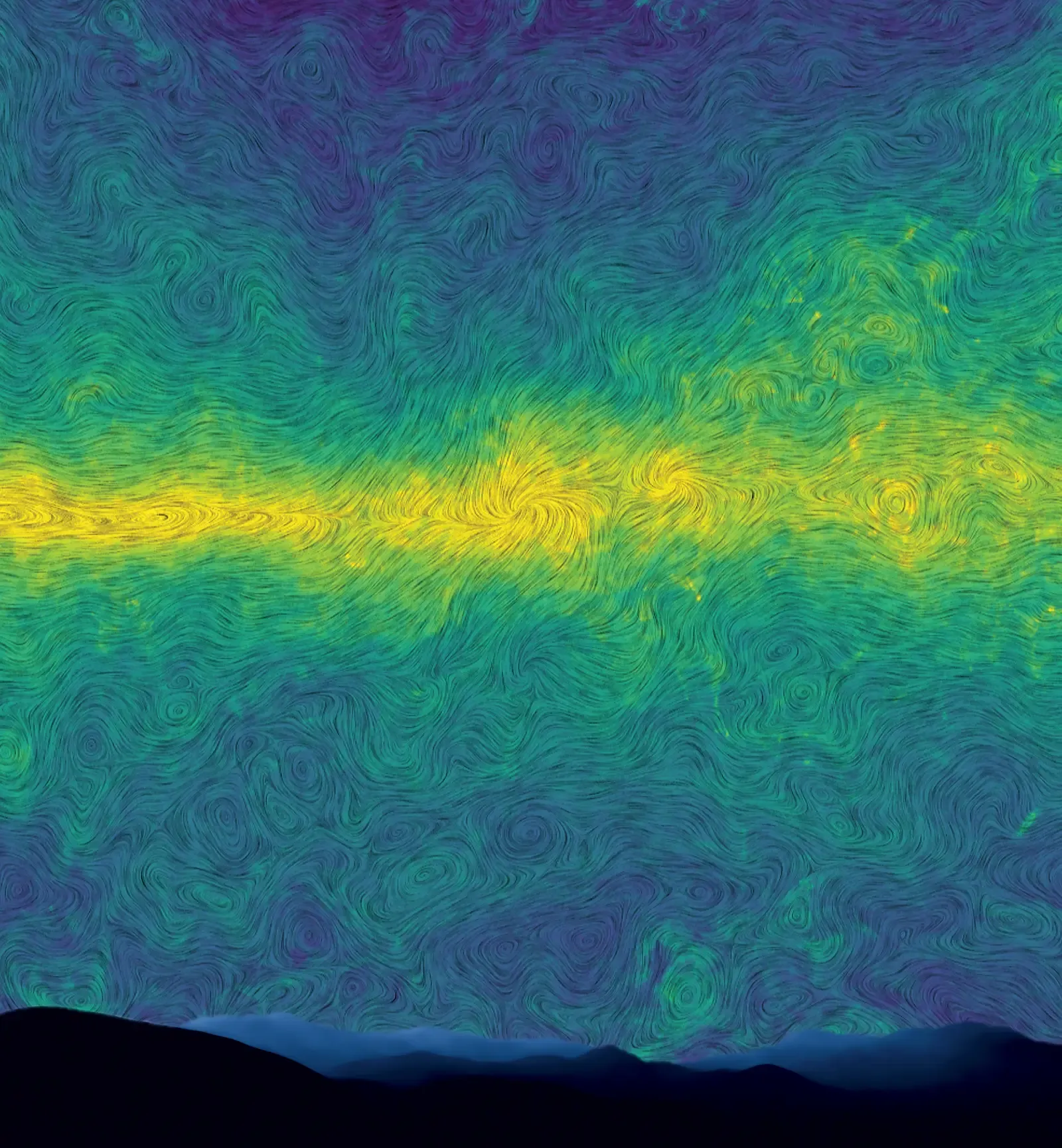
The cosmic microwave background has already given us a treasure trove of information, but researchers are far from done mining it. Next-generation experiments are targeting the polarization of this ancient light with unprecedented sensitivity, hoping to detect subtle patterns that could reveal gravitational waves from the first moments after the Big Bang. Detecting such a signal would offer rare evidence for inflation, the idea that the universe underwent a brief, explosive expansion in its earliest instant. At the same time, new space telescopes and radio arrays are probing the era just after the microwave background was released, when the first stars and galaxies flickered on. Together, these efforts aim to stitch a continuous narrative from the universe’s foggy childhood to its luminous adolescence.
The future also brings significant challenges. Extracting such delicate signals requires controlling for every possible source of contamination, from dust in our own galaxy to interference from human technology. Massive data volumes demand new algorithms, high-performance computing, and in some cases machine-learning tools to spot patterns humans might miss. There is also the risk that future results could unsettle cherished models, forcing cosmologists back to the drawing board. But that uncertainty is part of the appeal: each new instrument is a fresh chance for the universe to surprise us, perhaps by hinting at new physics or dimensions that current theories cannot fully explain.
How You Can Stay Connected to the Universe’s Oldest Messages

Engaging with this cosmic story does not require a PhD or access to a mountaintop observatory. Many of the most important sky maps and datasets from missions like WMAP and Planck are freely available online, along with visualizations that turn raw numbers into stunning false-color portraits of the early universe. Public talks, planetarium shows, and online lectures can help unpack the jargon and connect the science to everyday questions about origins and fate. Supporting science journalism, museums, and educational programs is another way to keep these discoveries in the public conversation rather than confined to specialized journals. Even simple habits, like stepping outside to look up at a dark sky, can turn abstract ideas into something you feel rather than just read about.
If you want to help push this frontier forward, there are practical avenues too. You can advocate for funding of space missions and ground-based telescopes, contact representatives about the importance of basic research, or donate to organizations that promote astronomy education for underrepresented communities. Citizen-science platforms sometimes invite volunteers to classify data or hunt for subtle signals in telescope images, turning curiosity into direct participation. And perhaps most importantly, you can share the story: explain to a friend or a child that the darkness between the stars is not empty, but filled with the universe’s oldest messages. The more people who learn to listen for that ancient whisper in the sky, the richer our shared understanding of where we come from becomes.
Suhail Ahmed is a passionate digital professional and nature enthusiast with over 8 years of experience in content strategy, SEO, web development, and digital operations. Alongside his freelance journey, Suhail actively contributes to nature and wildlife platforms like Discover Wildlife, where he channels his curiosity for the planet into engaging, educational storytelling.
With a strong background in managing digital ecosystems — from ecommerce stores and WordPress websites to social media and automation — Suhail merges technical precision with creative insight. His content reflects a rare balance: SEO-friendly yet deeply human, data-informed yet emotionally resonant.
Driven by a love for discovery and storytelling, Suhail believes in using digital platforms to amplify causes that matter — especially those protecting Earth’s biodiversity and inspiring sustainable living. Whether he’s managing online projects or crafting wildlife content, his goal remains the same: to inform, inspire, and leave a positive digital footprint.