
JWST Reveals Unexpected Early Universe Features (Image Credits: Upload.wikimedia.org)
Recent observations from the James Webb Space Telescope have challenged long-held views of the early universe, prompting researchers to revive the theory of dark stars as a unifying solution.
JWST Reveals Unexpected Early Universe Features
A team of astronomers identified three distinct anomalies in data from cosmic dawn, the period shortly after the Big Bang when the first stars and galaxies formed. These findings emerged from high-redshift observations that peered back over 13 billion years. Blue monster galaxies stood out first. These objects appeared extraordinarily bright and compact, with little dust, defying predictions from standard models of galaxy formation.[1][2]
Researchers also noted galaxies hosting supermassive black holes far too massive for their age, such as UHZ1, observed when the universe was just 3 percent of its current age. Compact little red dots added another layer of intrigue. These dust-free sources emitted minimal X-ray radiation, unlike expected active black holes.
What Makes Dark Stars Unique
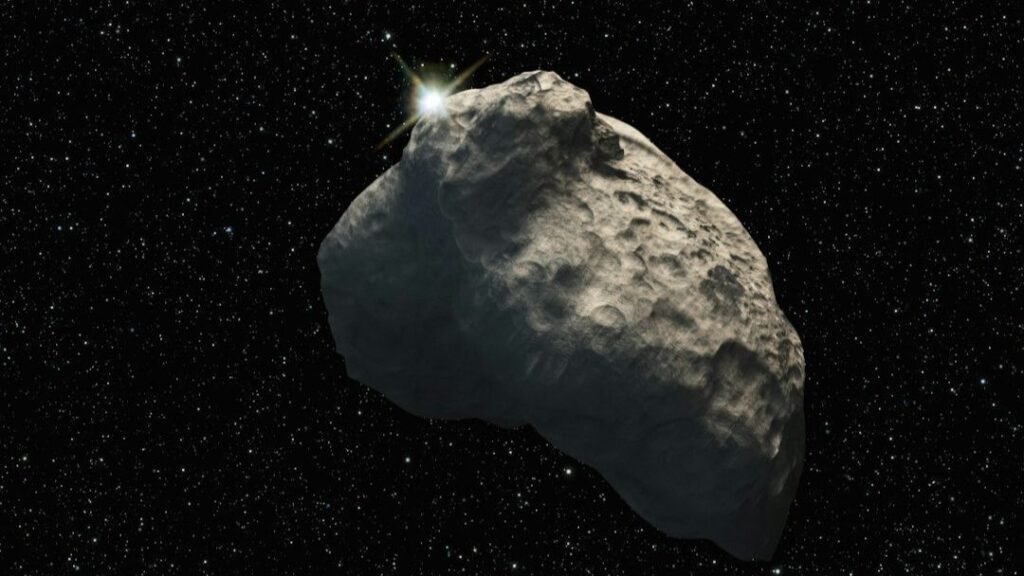
Dark stars form in dense dark matter environments within tiny halos a few hundred million years after the Big Bang. Unlike typical stars fueled by nuclear fusion, they draw energy from dark matter particle annihilation.
This process allows them to grow massive, up to millions of solar masses, while remaining cool and puffy. Upon exhausting their dark matter fuel, they collapse, potentially seeding supermassive black holes.[3]
The concept builds on earlier predictions and ties directly to dark matter models, offering a bridge between cosmology and particle physics.
Linking Dark Stars to JWST’s Puzzles
A study led by Colgate University’s Cosmin Ilie, alongside Jillian Paulin from the University of Pennsylvania, Andreea Petric of the Space Telescope Science Institute, and Katherine Freese of the University of Texas at Austin, connected dark stars to the anomalies. Published in the journal Universe, the work showed how these objects match the observed properties.
- Blue monsters align with dark stars’ brightness and dust-free nature, as their low temperatures prevent dust formation and their nebular glow mimics galaxy-like emission.
- Overmassive black holes find explanation in dark star collapses, providing heavy seeds that grow rapidly to match UHZ1’s scale.
- Little red dots resemble dark star remnants shrouded in gas envelopes, which absorb X-rays and UV light, producing the compact, red-shifted signatures seen.
“Some of the most significant mysteries posed by the JWST’s cosmic dawn data are in fact features of the dark star theory,” Ilie stated.
Signs of Dark Stars in Spectra
Spectroscopic analysis of sources like JADES-GS-13-0 and JADES-GS-14-0 revealed helium absorption lines consistent with dark star models. These features, detected at signal-to-noise ratios of 2 to 4.5, suggest massive dark matter-powered objects rather than conventional stars.
Future JWST observations could confirm this through deeper surveys and targeted programs. Confirmation would constrain dark matter properties and reshape understanding of the universe’s first luminous era.[4]
Key Takeaways
- Dark stars power up via dark matter, growing huge without dust or supernovae.
- Their collapse seeds the supermassive black holes puzzling astronomers.
- Helium signatures in JWST spectra offer tentative evidence for their existence.
Dark stars present a elegant framework that turns JWST’s challenges into predictions of new physics. As telescopes probe deeper, this theory could illuminate the shadowy beginnings of cosmic structure. What do you think about dark stars reshaping early universe models? Tell us in the comments.