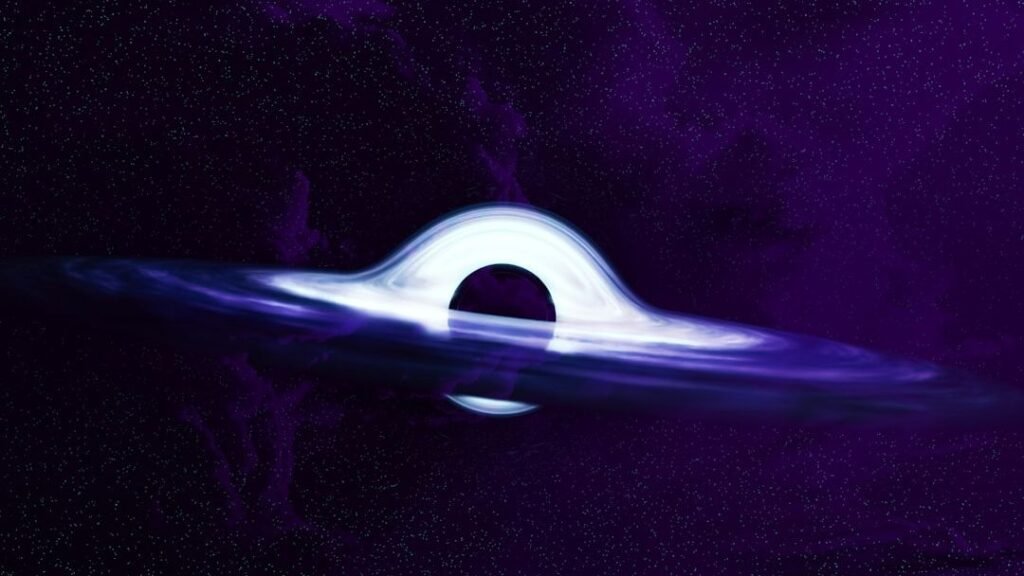

Scientists might have been looking at something completely different than they thought when observing what appeared to be supermassive black holes in the early universe. New research suggests that mysterious objects called dark stars could be mimicking the signatures we typically associate with black holes, challenging our understanding of cosmic evolution. These hypothetical celestial bodies, powered by dark matter rather than nuclear fusion, could explain some puzzling observations that have left astronomers scratching their heads.
The implications are staggering when you consider how much of our cosmic timeline might need rewriting. If dark stars really exist and have been misidentified all this time, it means we’ve potentially overlooked an entirely new type of astronomical object. Let’s be real, the universe has a habit of surprising us just when we think we’ve got things figured out. So let’s dive in.
What Exactly Are Dark Stars?
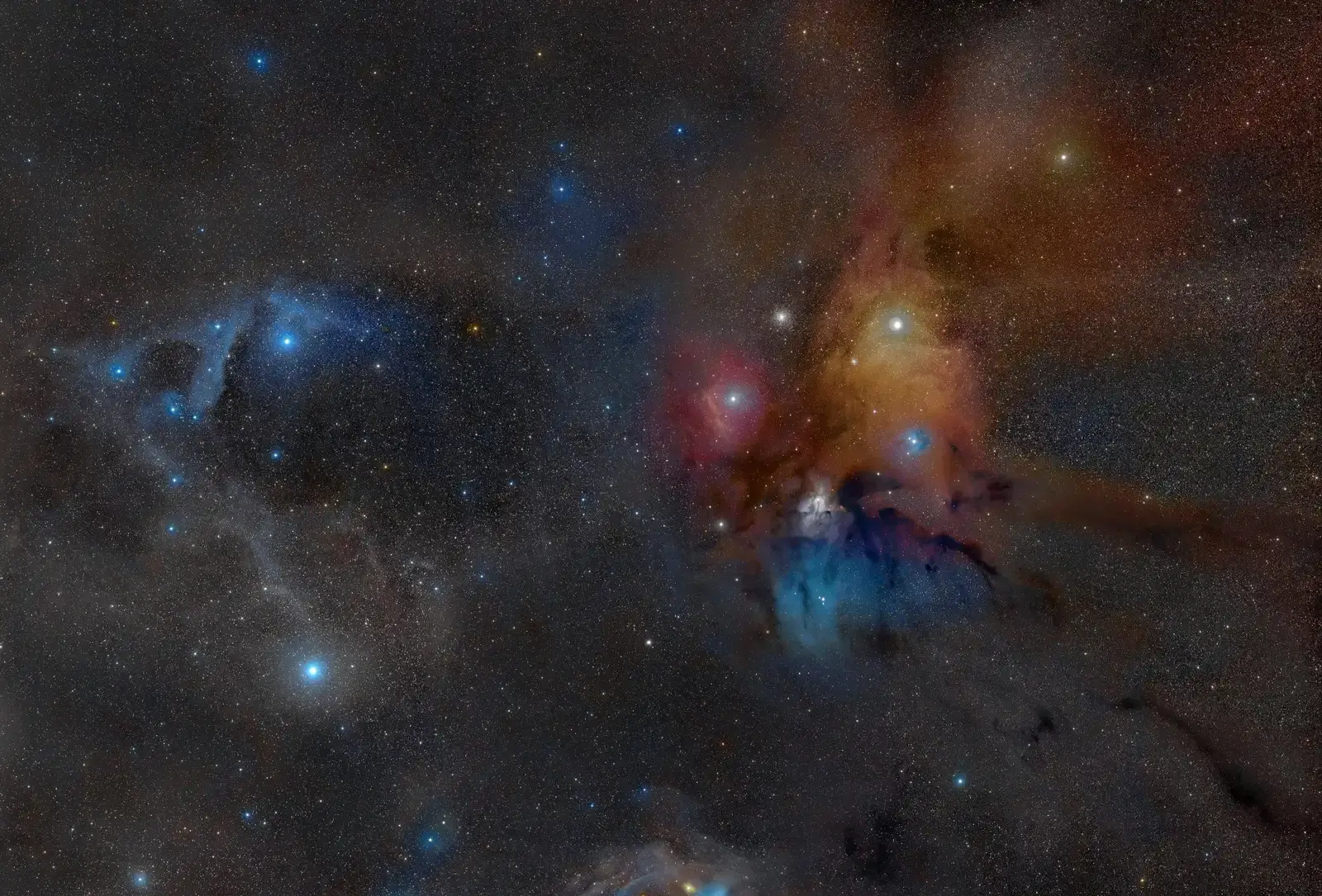
Dark stars represent a theoretical type of celestial object that would have formed in the early universe, powered not by the hydrogen fusion we see in regular stars, but by dark matter annihilation. When dark matter particles collide and destroy each other, they release enormous amounts of energy that could theoretically sustain a star-like object. These objects would be vastly different from anything we currently observe in our night sky.
The concept sounds like science fiction, but it’s grounded in serious physics. Researchers propose that dark stars could have grown to incredible sizes, potentially reaching millions of times the mass of our Sun. Unlike regular stars that burn hot and bright, dark stars would emit a cooler, redder light while maintaining their structure through an entirely different mechanism. It’s hard to say for sure, but this alternative power source could have allowed them to exist far longer than conventional stars.
The Black Hole Confusion Problem
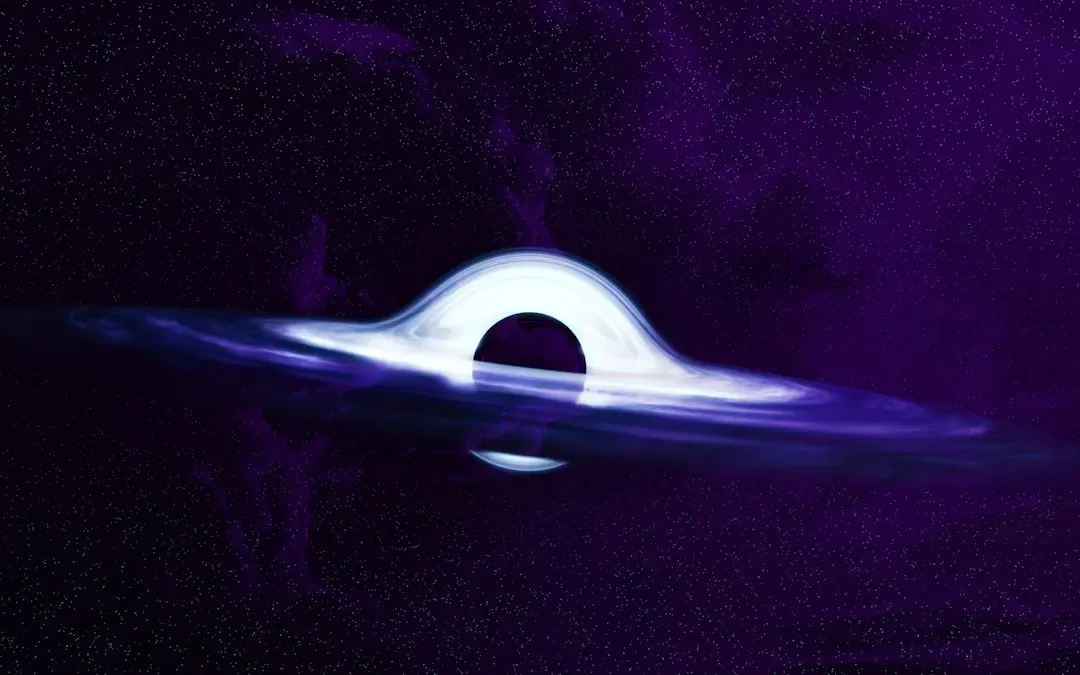
Here’s where things get interesting. When astronomers observe distant, early galaxies, they often detect extremely bright objects that they interpret as supermassive black holes. These black holes appear to have grown impossibly large in a relatively short cosmic timeframe, creating what scientists call the “supermassive black hole problem.” The math simply doesn’t add up for how these behemoths could have formed so quickly after the Big Bang.
Dark stars could provide an elegant solution to this puzzle. Their observational signatures, particularly the way they emit light across different wavelengths, might closely resemble those of accreting black holes. If we’ve been misidentifying some of these objects, it would explain why the early universe seems to contain so many supermassive black holes that shouldn’t theoretically exist yet. The equipment we use to peer into deep space might not be sophisticated enough to distinguish between the two phenomena.
How Detection Methods Could Be Fooling Us
Current astronomical instruments rely heavily on analyzing the light spectrum and brightness patterns of distant objects. Both dark stars and black holes with accretion disks can produce similar spectral signatures, making differentiation extremely challenging. The redshift measurements and luminosity calculations that work perfectly for nearby objects become much less reliable when we’re looking billions of light-years away.
The problem compounds when you factor in cosmic dust, gravitational lensing, and the inherent limitations of our telescopes. We’re essentially trying to identify objects based on fuzzy, distorted images and indirect measurements. It’s like trying to identify someone in a blurry photograph taken through frosted glass. Scientists are now suggesting that some observations attributed to black holes might actually be capturing dark stars in action, which would fundamentally alter our understanding of early cosmic structure formation.
The Dark Matter Connection
Dark matter remains one of the biggest mysteries in modern physics, making up roughly about five-sixths of all matter in the universe yet remaining invisible to our instruments. We know it exists because of its gravitational effects, but we’ve never directly detected a dark matter particle. Dark stars would provide a visible manifestation of dark matter’s influence, offering a potential avenue for studying this elusive substance.
If dark stars did exist in the early universe, they would have served as cosmic laboratories where dark matter particles constantly annihilated each other. This process would have converted dark matter into energy at an extraordinary rate, possibly leaving observable traces we could detect today. The existence of dark stars would validate certain theoretical models about dark matter’s properties and behavior during the universe’s infancy.
Implications for Early Universe Formation
The presence of dark stars in the early cosmos would dramatically change our timeline of how the first celestial structures formed. Traditional models suggest that the first stars were massive, short-lived, and composed purely of hydrogen and helium. Dark stars would have coexisted with these primordial stars, potentially playing a crucial role in galaxy formation that we’ve completely overlooked.
These objects could have acted as seeds for galaxy formation, their immense gravity pulling in surrounding matter and eventually collapsing into the supermassive black holes we observe today. This would solve the timing problem that has plagued cosmologists for years. Instead of black holes mysteriously growing to enormous sizes in impossibly short periods, they could have inherited their mass directly from collapsed dark stars. Let’s be real, this would tie up several loose ends in our cosmic origin story rather neatly.
How Future Observations Might Settle the Debate
Distinguishing between dark stars and black holes will require more sophisticated observation techniques and potentially new instruments. The James Webb Space Telescope and future observatories might be able to detect subtle differences in the light signatures that would definitively identify dark stars. Scientists are developing specific markers to look for, such as particular wavelength patterns that would only appear if dark matter annihilation was occurring.
The next generation of gravitational wave detectors could also play a role in solving this mystery. If dark stars eventually collapse into black holes, that transformation would produce distinctive gravitational wave signatures different from standard black hole mergers. Within the next decade or so, we might have definitive answers about whether dark stars are real or just an interesting theoretical dead end.
Why This Discovery Matters Beyond Astronomy
Here’s the thing: if dark stars exist, it would represent one of the most significant discoveries in physics this century. It would provide direct observational evidence of dark matter’s behavior, finally giving us a window into this invisible component of our universe. Particle physicists, cosmologists, and astronomers would all gain valuable data for refining their theories. The discovery would also humble us in an important way, showing that our most confident identifications of cosmic objects might have been wrong for decades. Science progresses through exactly these kinds of paradigm shifts, where what we thought we understood gets turned on its head. The universe clearly still has plenty of secrets left to reveal, and dark stars might be one of the biggest ones hiding in plain sight.
The possibility that dark stars have been masquerading as black holes challenges everything we thought we knew about the early universe. If confirmed, this discovery would solve persistent problems in cosmology while opening up entirely new fields of research into dark matter and stellar evolution. Honestly, it’s moments like these that remind us how much we still have to learn about the cosmos. Whether dark stars turn out to be real or remain theoretical constructs, the search itself pushes the boundaries of our technology and understanding. The coming years will likely provide definitive answers as our observational capabilities improve. What do you think about it? Could we have been misidentifying cosmic objects this whole time? Tell us in the comments.