
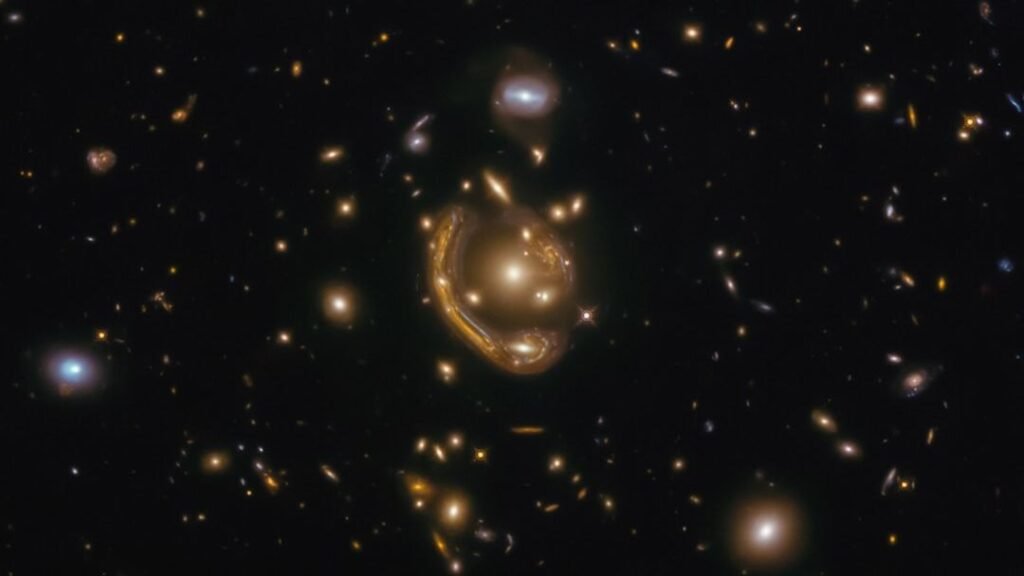

Imagine looking up at the night sky and realizing that almost everything you see – every star, planet, and glowing nebula – is just a tiny fraction of what’s really out there. That’s the unsettling truth scientists have uncovered about our universe. The cosmos we can see and touch is like the tip of an enormous iceberg, while the rest lurks in the dark, silent and invisible, yet overwhelmingly powerful.
This hidden majority is what we call dark matter, and it doesn’t behave like anything we’re familiar with. It doesn’t shine, it doesn’t absorb light, and it doesn’t interact with us in any obvious way. But somehow, it’s the scaffolding that holds entire galaxies together. Once you really let that sink in, it’s hard not to feel a strange mix of wonder and discomfort: we live in a universe mostly made of stuff we can’t see and don’t fully understand.
The Shocking Realization: Most of the Universe Is Missing
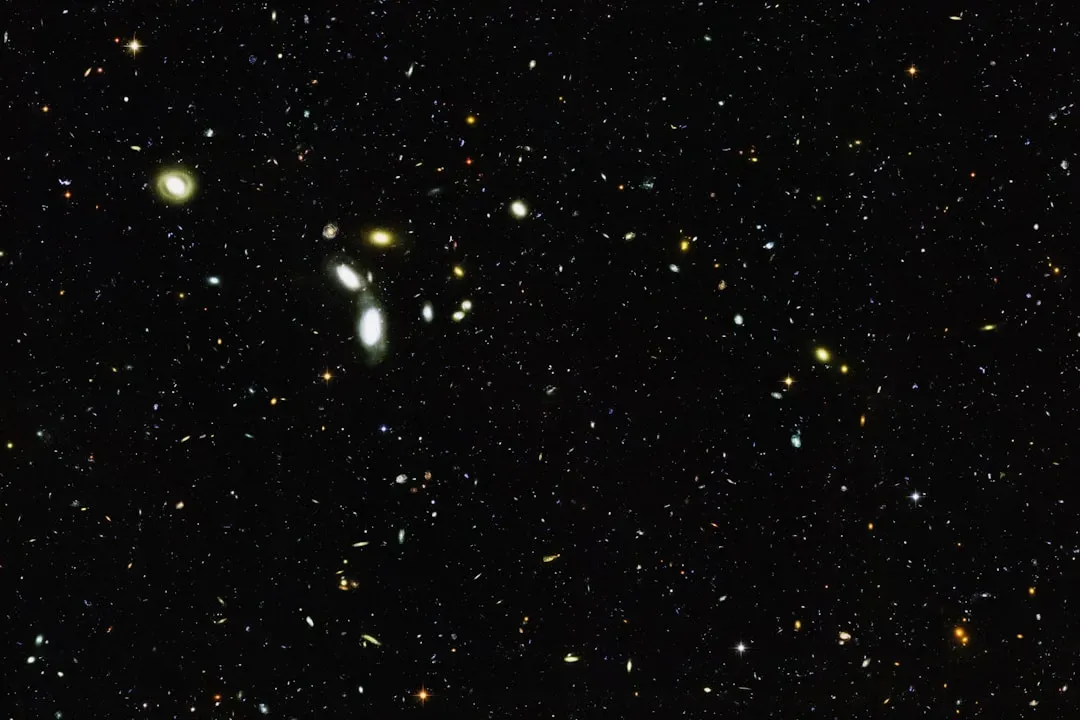
Here’s the startling part: all the stars, gas, dust, planets, and people – everything made of ordinary matter – seem to make up only about one sixth of the total matter in the universe. The rest appears to be dark matter, an unseen component that gives space its hidden weight. Astronomers didn’t stumble on this overnight; it took decades of puzzling numbers that just didn’t add up before the picture became impossible to ignore.
When scientists added up all the visible matter in galaxies and galaxy clusters, the gravity from that matter wasn’t nearly enough to explain how fast those galaxies were moving and how strongly they were bound together. It was as if someone handed you a backpack that looked light, but when you tried to lift it, it felt packed with bricks. That mismatch between what we see and what gravity demands is what first shouted: something massive and invisible is out there.
Galaxy Rotation Curves: The First Big Clue
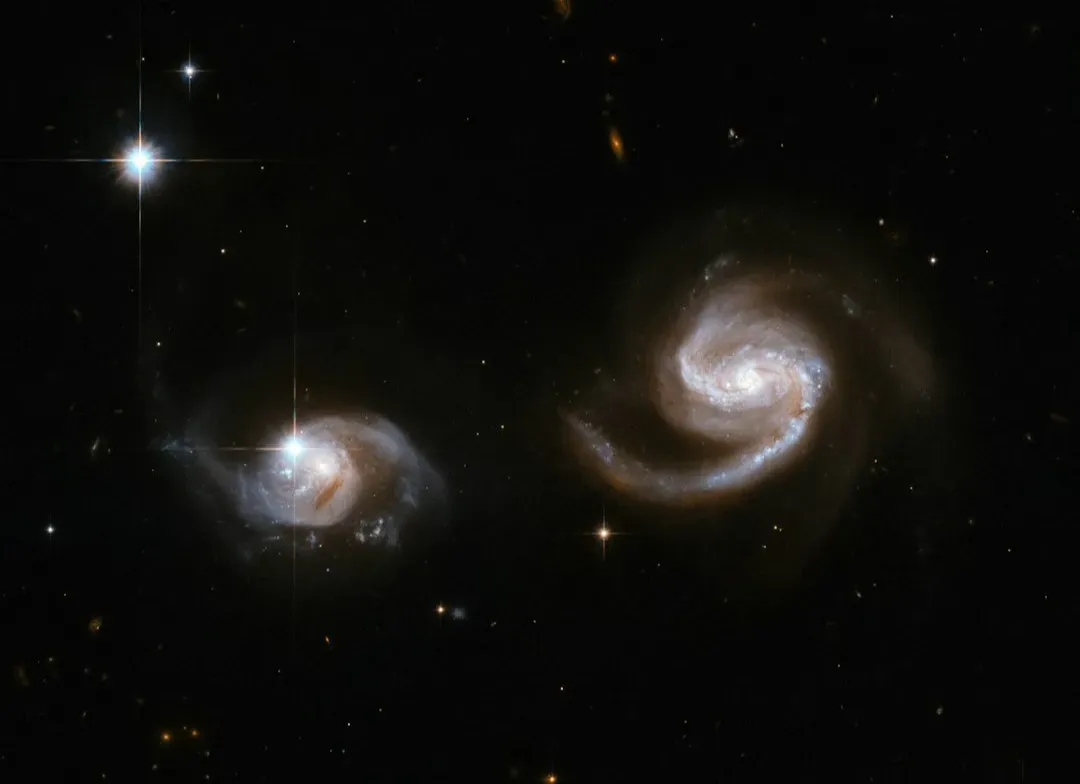
One of the most convincing early clues for dark matter came from the way galaxies spin. You’d expect stars on the outer edges of a galaxy to move more slowly than those near the center, kind of like how planets farther from the Sun take longer to orbit. But when astronomers like Vera Rubin measured these speeds, they found something shocking: the outer stars were moving almost as fast as the inner ones, and sometimes just as fast.
If only the visible matter were there, these rapidly orbiting outer stars should have flown off into space long ago, tearing galaxies apart. Instead, galaxies were holding together firmly, almost as if they were embedded in huge cocoons of extra hidden mass. The only way to make the equations work was to assume a lot more matter than the eye could see, stretching well beyond the glowing disk of stars. That invisible halo is what we now call a dark matter halo, and today it’s part of the standard picture for how galaxies exist at all.
Gravitational Lensing: Seeing the Unseen by Warped Light
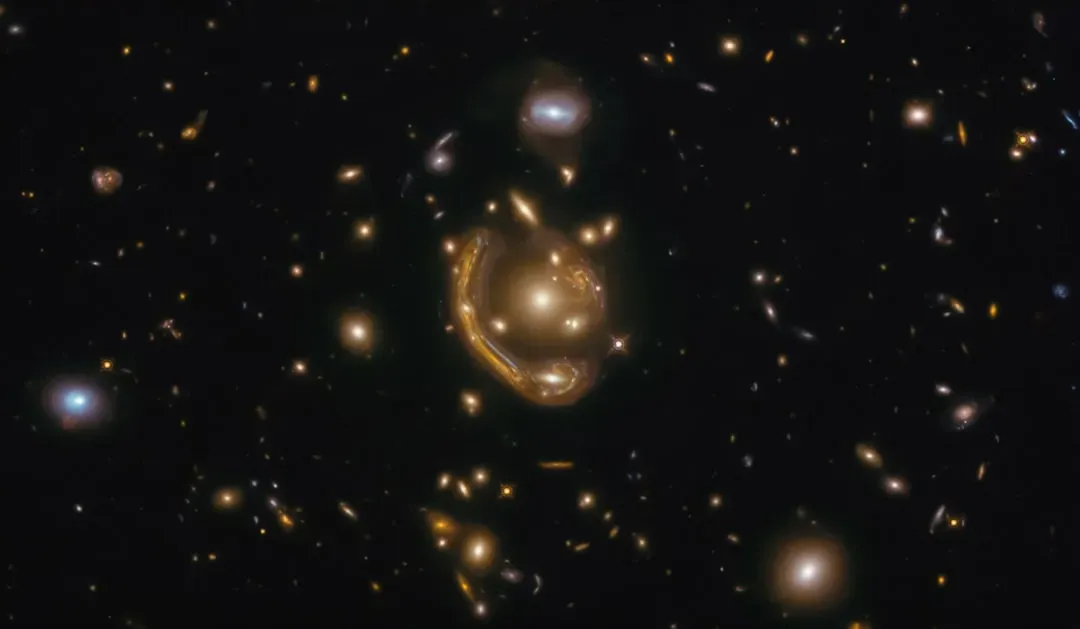
Another powerful piece of evidence for dark matter comes from a phenomenon called gravitational lensing, where gravity bends light like a cosmic magnifying glass. According to general relativity, mass warps space, and that warped space bends the path of light passing by. When astronomers look at distant galaxies behind massive clusters of galaxies, the background galaxies appear stretched, smeared, and sometimes even multiplied into arcs and rings.
By carefully measuring how much the light is distorted, scientists can work backwards to figure out how much mass is doing the bending. Over and over, those mass measurements come out much larger than what you’d expect if you only counted visible stars and gas. You get these ghostly maps showing clumps and filaments of mass where almost nothing is seen in normal light. It’s like tracing the shape of a person standing behind a curtain just by how the fabric sags and folds.
The Bullet Cluster: A Cosmic Smash-Up That Changed Minds
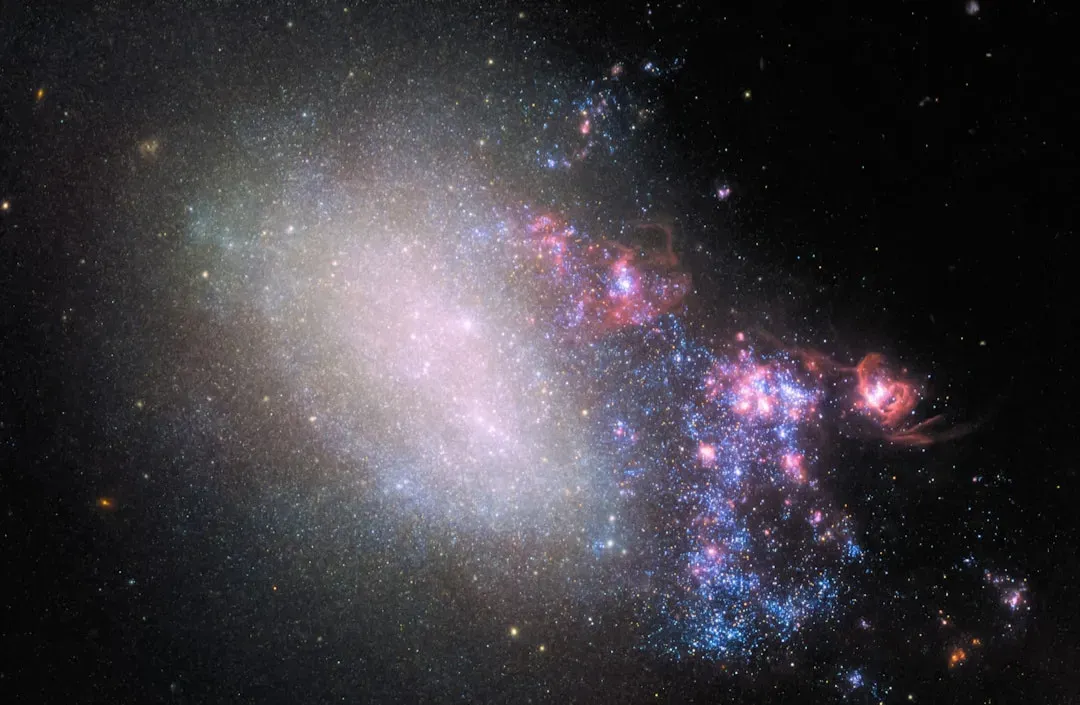
If there’s one image that has convinced many skeptics that dark matter is real, it’s the Bullet Cluster – a pair of galaxy clusters that collided in a kind of slow-motion cosmic crash. In this system, telescopes see hot gas (ordinary matter) glowing in X-rays stuck in the middle where the collision happened. But when scientists map where the gravity is strongest using gravitational lensing, the peak mass doesn’t line up with the gas. Instead, the main mass has glided past with the galaxies to either side.
This offset is a big deal. It suggests that most of the matter didn’t smash and slow down like the ordinary gas did. Instead, it seems to have passed through relatively unbothered, because it doesn’t interact much, except through gravity. That’s exactly what you’d expect for dark matter. The Bullet Cluster has become a kind of showpiece: a real-world demonstration that there’s mass out there that isn’t just normal stuff behaving in a tricky way.
How Dark Matter Shapes Galaxies and the Cosmic Web
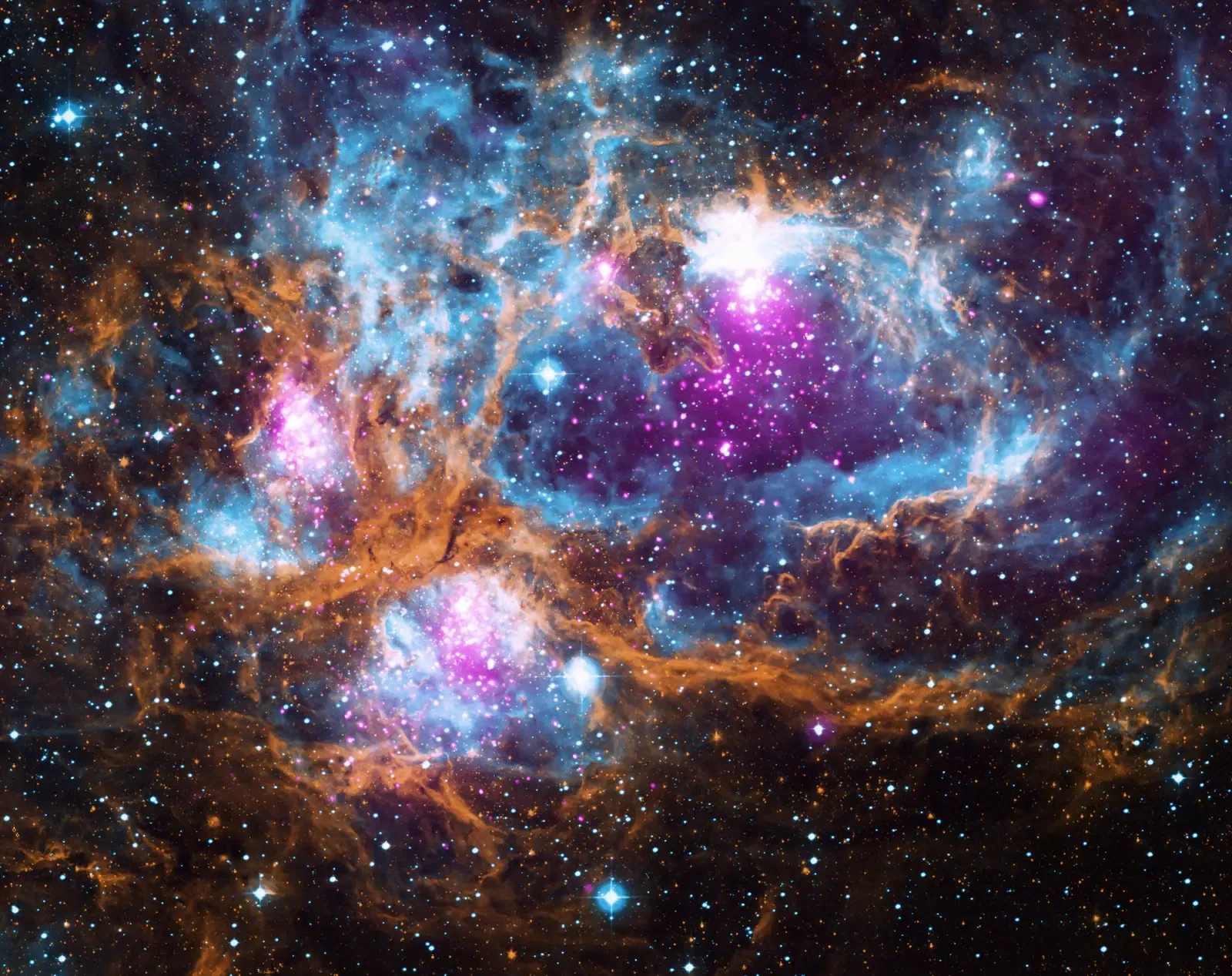
Dark matter isn’t just a weird add-on to our models; it’s the backbone of how structure forms in the universe. In the early universe, tiny clumps of dark matter started pulling in more dark matter under gravity, creating growing knots and filaments. Ordinary matter then fell into these pre-existing dark matter wells, cooled, and eventually formed stars and galaxies. Without dark matter to get things started quickly, the universe today might be far more empty and featureless.
Computer simulations that include dark matter create a striking “cosmic web,” a vast network of filaments and nodes spanning billions of light-years. When we map the real universe, using galaxy surveys and radio telescopes, the large-scale structure looks astonishingly similar to those simulations. In a way, dark matter is like the hidden steel framework of a skyscraper: you might only see the glass, lights, and furniture, but it’s the unseen beams that dictate the building’s shape and stability.
What Could Dark Matter Actually Be?
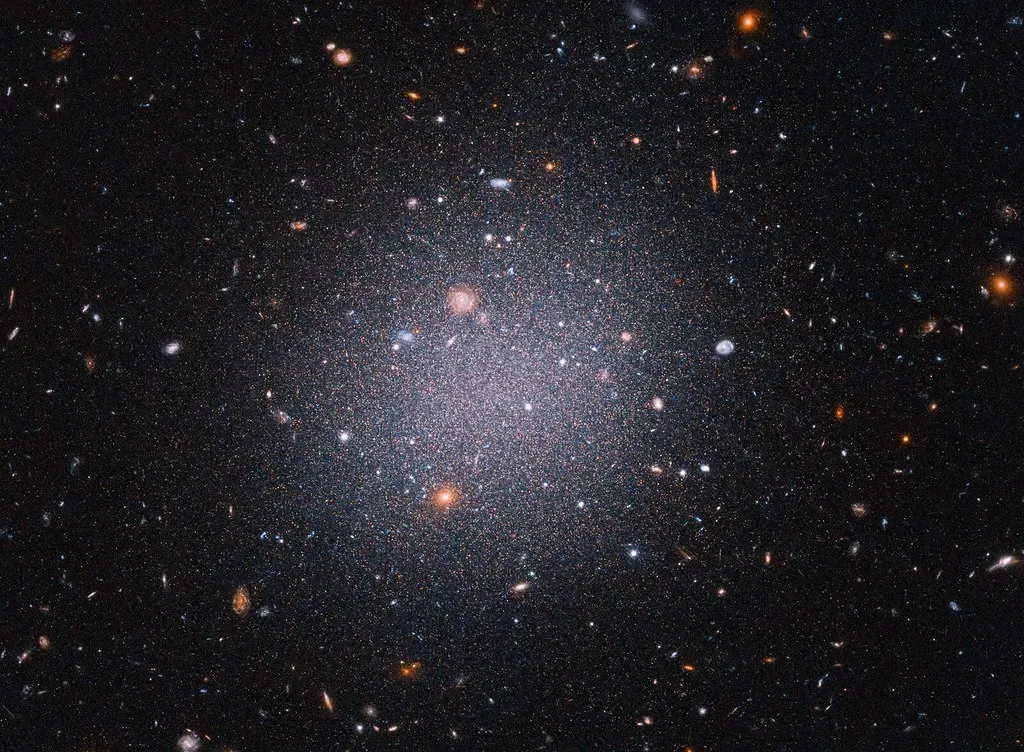
Here’s the frustrating part: even though we see dark matter’s fingerprints everywhere, we still don’t know what it is made of. It doesn’t seem to be ordinary atoms, because that would mess up measurements from the early universe, especially the precise patterns in the cosmic microwave background. Instead, most physicists suspect it’s some new kind of particle beyond the ones in the standard model of particle physics, like a ghostly partner quietly swarming through space.
Over the past decades, researchers have gone hunting for possible candidates, from weakly interacting massive particles (WIMPs) to lighter possibilities like axions. Huge underground detectors filled with ultra-pure liquids wait for rare collisions, while particle colliders try to create dark matter in high-energy smash-ups. So far, nature has been maddeningly quiet. That lack of detection has forced theorists to get more creative, but it hasn’t erased the need for dark matter itself, because the astronomical evidence is still stubbornly strong.
Could We Be Wrong? Modified Gravity and Alternative Ideas

Not everyone is satisfied with adding an invisible component to the universe just because equations don’t match. Some physicists have explored a very different approach: maybe gravity itself works differently on large scales. These ideas, grouped loosely as modified gravity theories, try to tweak the laws of gravity so that the observed motions of stars and galaxies make sense without needing large amounts of unseen matter.
Some versions of modified gravity can explain certain galaxy rotation curves reasonably well, but they often struggle with other observations, like the Bullet Cluster or detailed maps of the cosmic microwave background. Each time an alternative theory is extended to fit one set of data, it tends to run into trouble with another. Right now, the dark matter picture – invisible particles plus normal gravity – fits the widest range of evidence more neatly, but the fact that serious alternatives exist keeps the discussion alive and honest.
Why Dark Matter Matters for Us
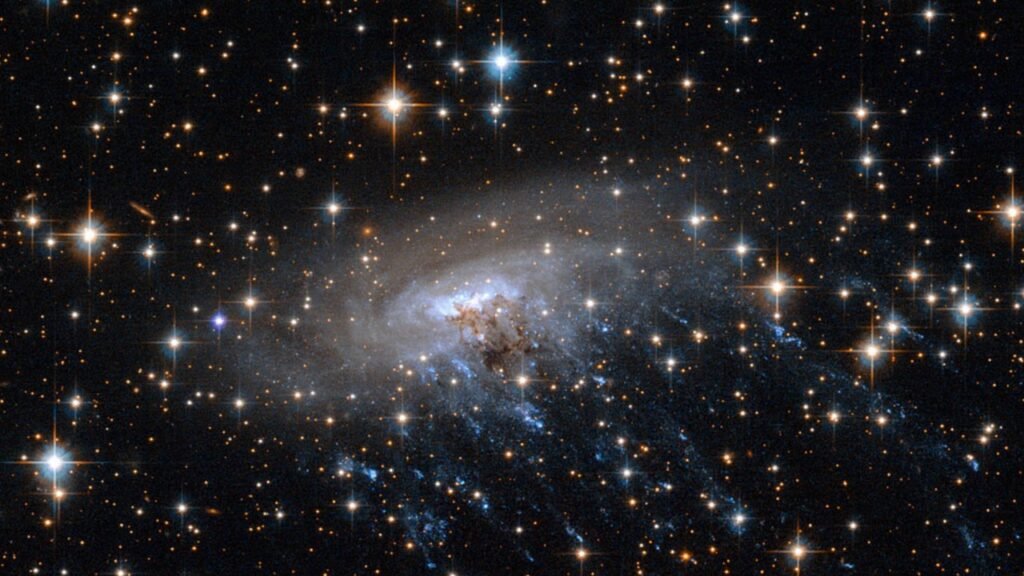
It’s tempting to think of dark matter as something distant and abstract, a curiosity for cosmologists with giant telescopes. But if dark matter really makes up most of the matter in the universe, then every galaxy, including our own Milky Way, is embedded in a dark matter halo. That means there’s dark matter streaming through the room you’re in right now, passing through your body and the Earth almost all the time, silently and without leaving a trace we can feel.
Understanding dark matter is more than a trivia question about outer space; it’s about understanding what reality is made of at the most basic level. If we eventually figure out what dark matter is, it could reshape physics the way discovering atoms or electrons once did. It might even unlock new technologies or ways of thinking we can’t yet imagine. For now, it stands as a reminder that, despite all our progress, we still live in a universe where the majority of its content remains literally in the dark.


