
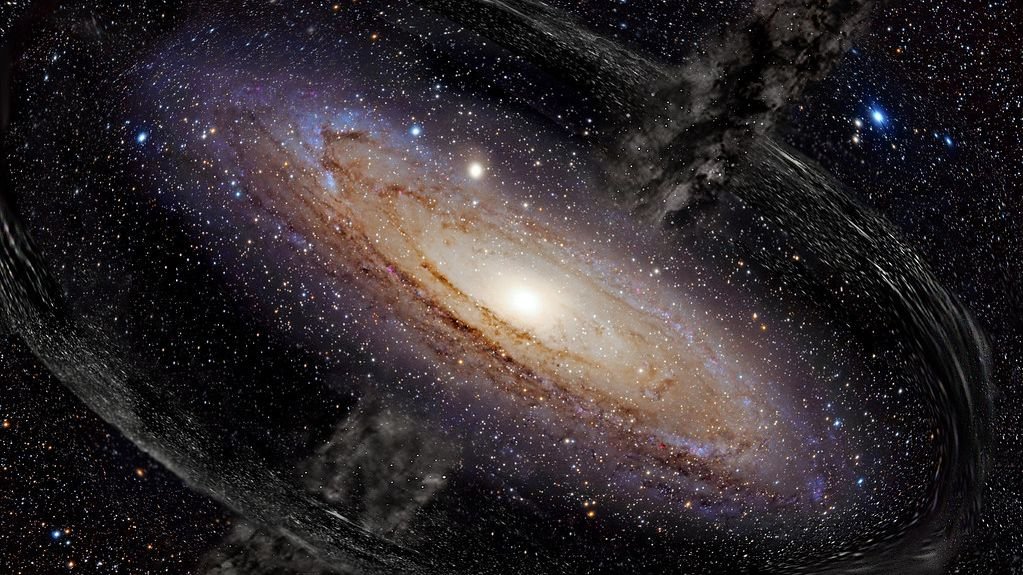

Imagine standing under a clear night sky, staring at thousands of stars, and knowing that almost everything you see is just the tip of the cosmic iceberg. The universe we can actually observe with our eyes and telescopes is only a tiny fraction of what’s really out there. Hidden in the darkness, silently pulling the strings, is something we can’t see, touch, or shine a light on, yet it decides how galaxies form, how they move, and possibly how the universe will end.
That something is dark matter, and it’s one of the strangest ideas science has ever taken seriously. We call it “dark” not because it’s evil or mysterious in a sci‑fi way, but because it doesn’t interact with light the way normal matter does. Still, its gravitational fingerprints are everywhere. Once you see the clues, it becomes very hard to shake the feeling that we’re living in a universe whose real structure is mostly hidden, like a city built on an invisible skeleton.
Why Physicists Are Obsessed With Something They Can’t See
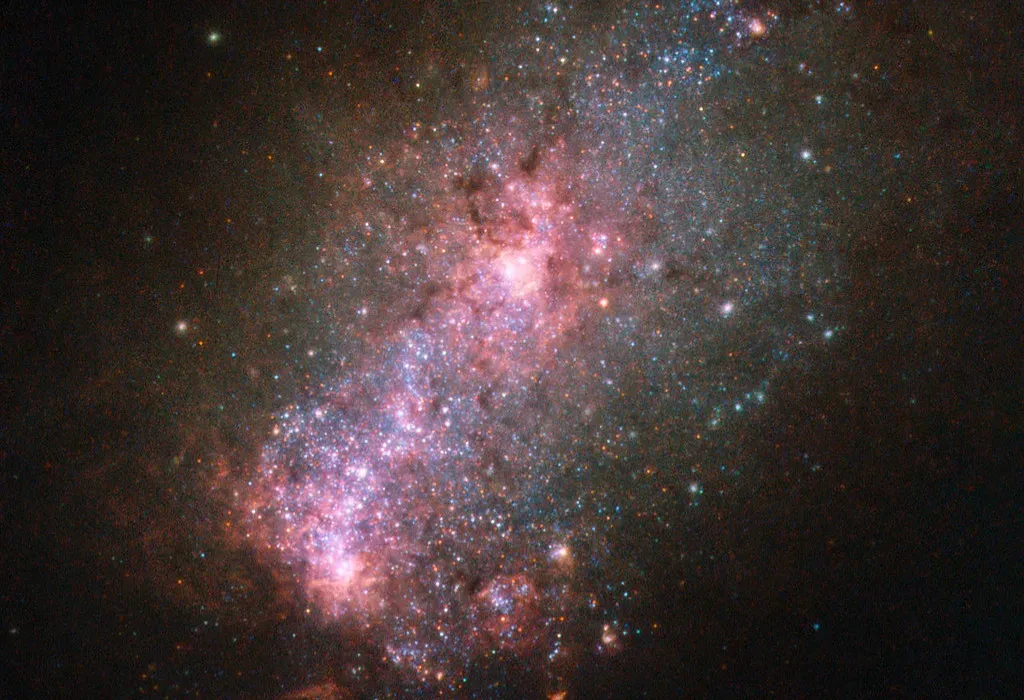
It sounds almost ridiculous: some of the most brilliant people alive have spent decades studying a substance no one has ever directly detected. Yet dark matter isn’t a wild guess; it’s more like the missing piece in a puzzle we keep bumping into. When astronomers measure how fast stars orbit around the centers of galaxies, the speeds simply don’t add up if we only count visible matter like stars, gas, and dust.
In many galaxies, stars far from the center are moving so fast they should fling out into space, like a stone whipped from a slingshot. But they don’t. Something unseen provides extra gravity, holding everything together. Over and over again, in galaxy after galaxy, cluster after cluster, the same pattern appears. Dark matter is the simplest, most consistent explanation, which is why physicists keep chasing it, even if the chase sometimes feels like hunting a ghost.
How We First Realized the Universe Was “Too Heavy”
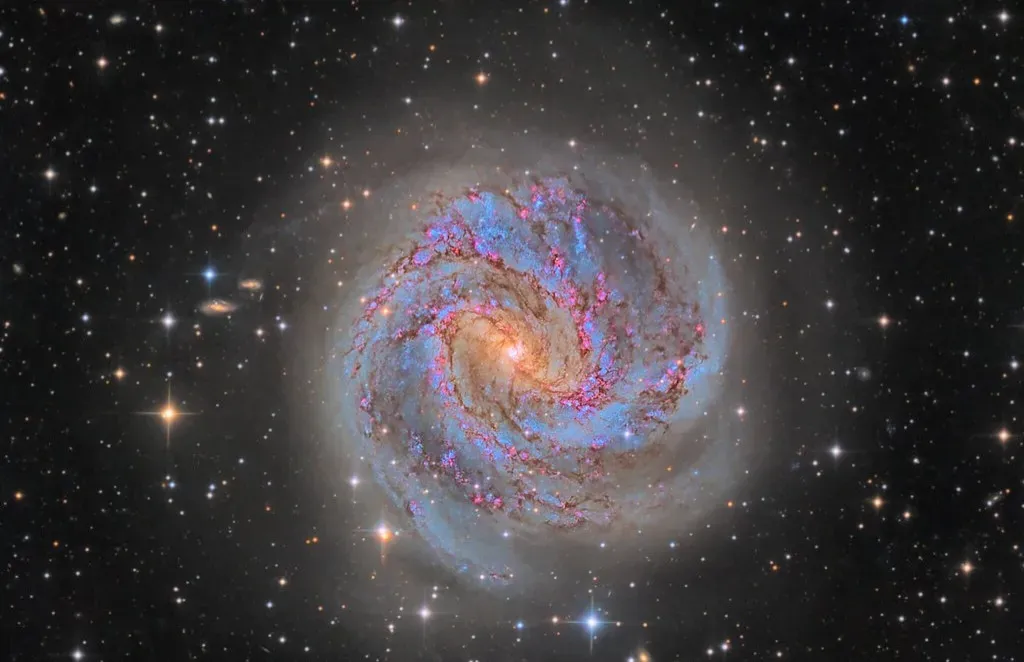
The idea that something invisible was adding extra mass to the universe started creeping in during the twentieth century. Astronomers measuring galaxy clusters noticed that the galaxies inside them moved as if there were far more mass present than the visible stuff alone could explain. The clusters were like giant cosmic beehives whose bees were flying around way too fast to be held by the honey they could see.
Later, when detailed measurements of individual galaxies became possible, the story only got stranger. The outer regions of spiral galaxies, where you’d expect gravity to weaken, were spinning almost as fast as the inner regions. It was as if each galaxy was embedded in a massive, invisible halo of extra material. Slowly and reluctantly, the scientific community had to accept that the numbers just didn’t work without adding this unseen component.
What “Dark” Really Means (And What It Doesn’t)
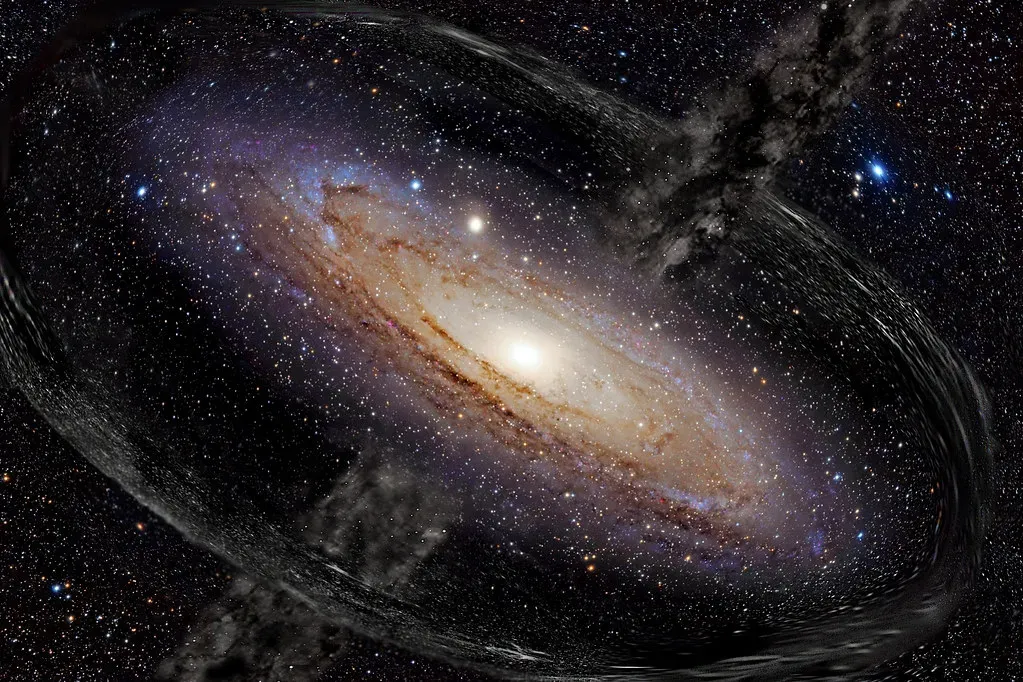
Dark matter is called “dark” because it doesn’t emit, absorb, or reflect light in any measurable way. That means it doesn’t glow, doesn’t block starlight, and doesn’t show up in ordinary telescopes. It’s not just invisible in the everyday sense; it’s transparent even to the most sensitive instruments that rely on electromagnetic radiation, from radio waves to gamma rays.
But “dark” doesn’t mean magical or completely unknowable. Dark matter does seem to interact through gravity, which is how we infer its presence in the first place. It shapes orbits, bends light through gravitational lensing, and influences how structures grow. So in a sense, dark matter isn’t completely hidden; it’s just visible in a different language, the language of gravity instead of light.
The Cosmic Web: Dark Matter as the Universe’s Skeleton
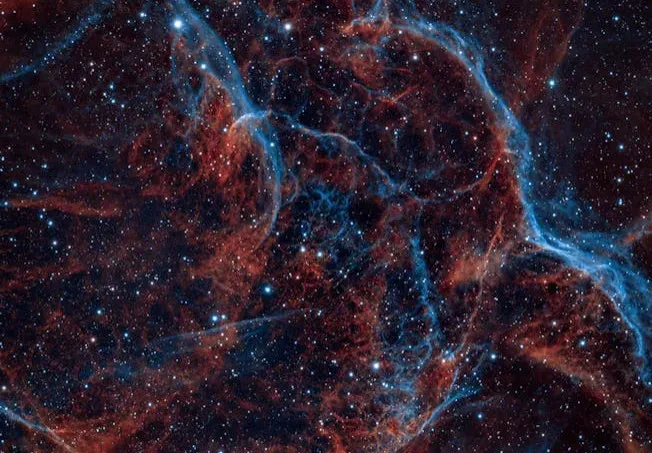
If you could somehow turn off the stars and only see dark matter, the universe would look like a vast three‑dimensional spiderweb. Simulations of cosmic evolution show long filaments of dark matter stretching across hundreds of millions of light‑years, with dense knots where the threads cross. Those knots are where galaxies and clusters of galaxies are most likely to form.
In this picture, normal matter – atoms, gas, dust, stars – is more like fog settling into the invisible framework of dark matter. Gravity draws ordinary matter into the densest regions of the dark matter web, where it cools, collapses, and ignites as stars. So when we admire a beautiful spiral galaxy in a telescope image, we’re really seeing the bright frosting on top of a dark, massive structure that quietly dictated where that galaxy would be born.
Galaxies That Should Fall Apart But Don’t
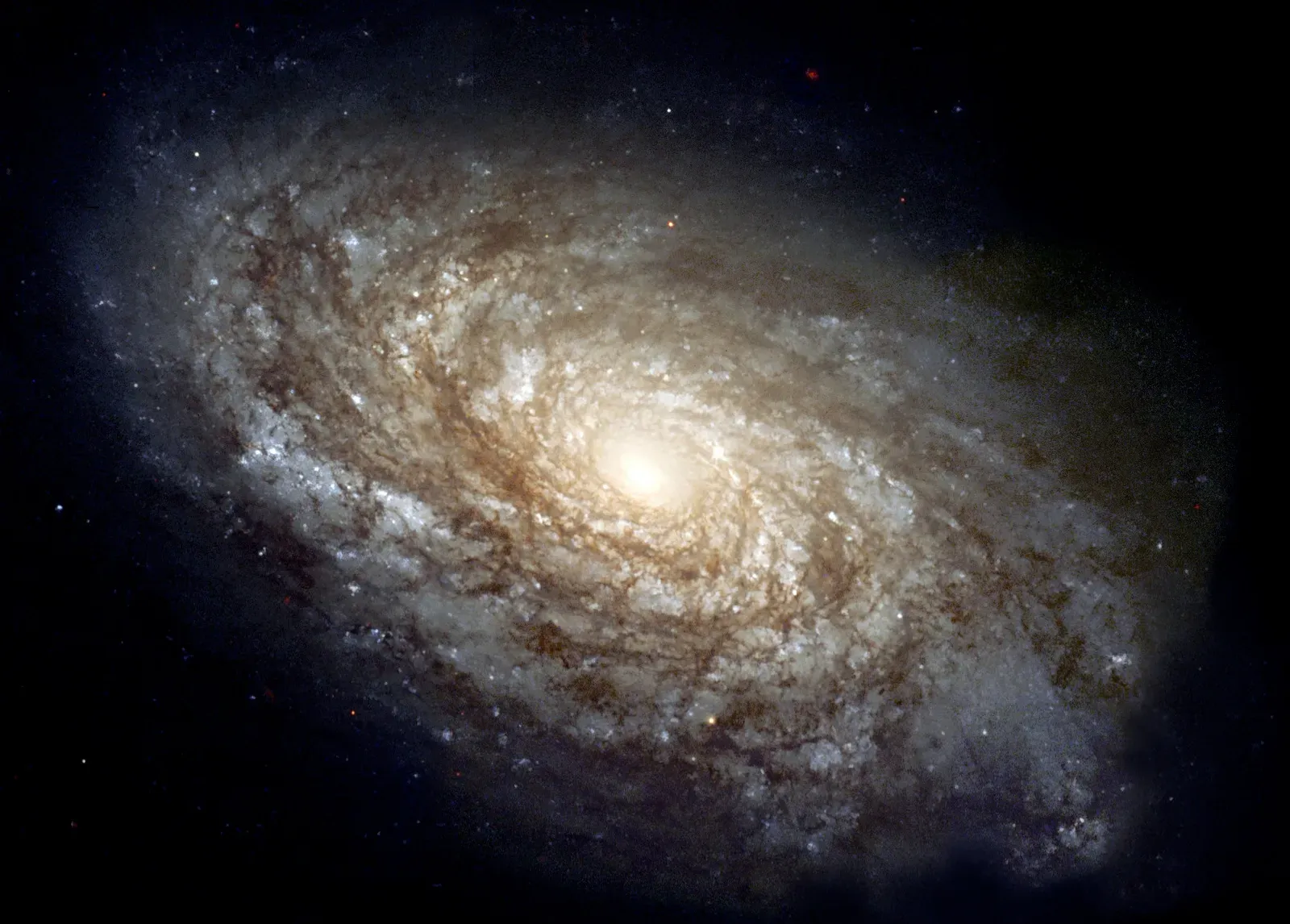
One of the most persuasive arguments for dark matter comes from how galaxies rotate. If only visible matter existed, stars on the outskirts of a galaxy would orbit more slowly, just as planets far from the Sun move more slowly than planets close in. Observations, however, show that stars far from the center often move just as fast as stars near the center.
This creates a big problem: without some extra gravitational glue, those fast‑moving outer stars should have been flung into intergalactic space long ago. The fact that they’re still bound suggests that each galaxy is immersed in a massive halo of dark matter extending far beyond the visible disk. You can think of a galaxy not as a lone island of stars but as a bright coin floating in the middle of a much larger, invisible sphere.
Gravitational Lensing: Seeing the Invisible by Bending Light
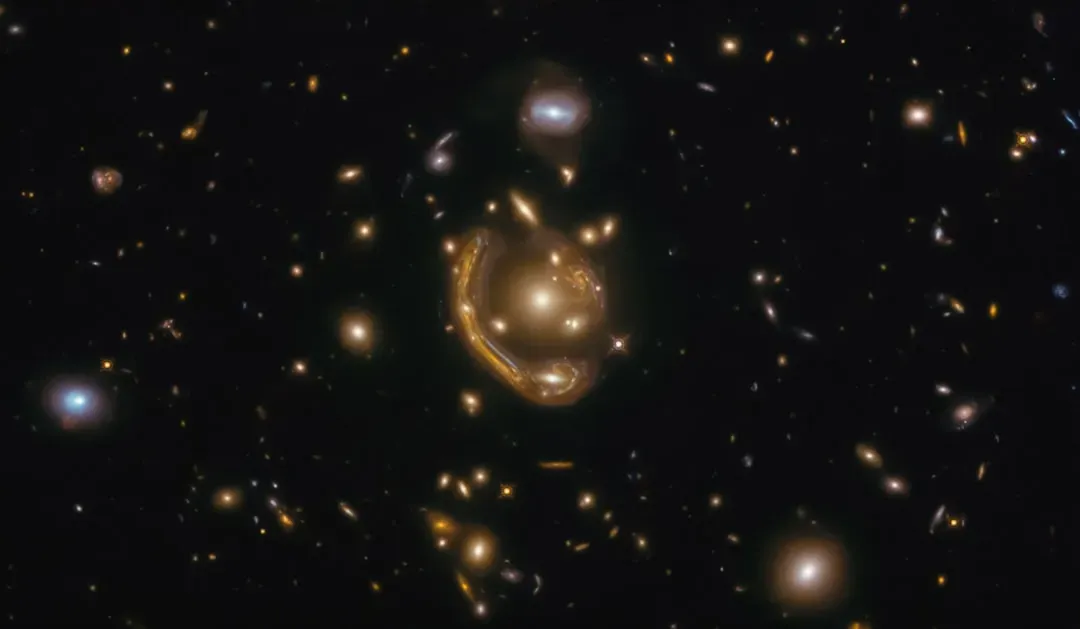
There’s another, almost eerie way we “see” dark matter: by the way it warps light. When light from a distant galaxy passes near a massive object on its way to us, gravity bends the light’s path, acting like a natural telescope. This effect, called gravitational lensing, lets astronomers map out how mass is distributed, even when that mass doesn’t shine.
In some famous galaxy clusters, the lensing patterns reveal far more mass than the visible galaxies and gas can account for. The distorted arcs and smeared images of background galaxies trace out invisible clumps and halos. When scientists reconstruct the mass distribution from these distortions, dark matter shows up as the dominant player, like a hidden hand rearranging the scenery behind a funhouse mirror.
What Dark Matter Is Probably Not
Before inventing new particles, scientists tried to see if boring explanations could do the job. Maybe the missing mass was just made of faint stars, cold gas, or black holes that were too dim to see directly. These possibilities were taken seriously and tested with careful observations of how much ordinary matter exists in different forms across the cosmos.
Over time, those ideas came up short. The total amount of normal matter seems to fall well below what’s needed to explain all the gravitational effects we see. There simply aren’t enough hidden planets, dead stars, or rogue black holes to make up the difference. Whatever dark matter is, it almost certainly isn’t just an overlooked pile of regular stuff hiding in the corners of the universe.
Strange New Particles: WIMPs, Axions, and Other Candidates

Because ordinary matter can’t fill the gap, theorists have turned to more exotic possibilities. One of the long‑favorite candidates has been WIMPs, short for weakly interacting massive particles. These hypothetical particles would be heavy enough to provide lots of mass but would interact so feebly with normal matter that they pass through almost everything without a trace, like ghostly bowling balls drifting through the Earth.
Another intriguing idea is axions, ultra‑light particles that could behave more like a background field spread across the universe than like individual particles. There are also more radical proposals involving entire families of particles, sometimes called a “dark sector,” that might have their own forces and interactions. The uncomfortable truth is that we still don’t know which, if any, of these ideas is right, but they give experimenters concrete targets to look for.
The Hunt Underground, Under Ice, and in Space
Trying to catch dark matter in the act has led to some of the most ambitious experiments on (and under) Earth. Deep underground, in old mines and mountain tunnels, detectors filled with ultra‑pure materials like liquid xenon wait for the faintest possible nudge from a passing dark matter particle. The rock overhead shields them from cosmic rays and other noise, like pulling a blanket over your head to hear the quietest sounds.
Elsewhere, arrays of sensors buried in Antarctic ice, telescopes in orbit, and sensitive detectors on high‑altitude balloons all search for subtle signals that might betray the presence of dark matter. So far, no conclusive detection has emerged, although there have been puzzling hints that later evaporated under scrutiny. It’s frustrating, but also oddly inspiring: it means the universe is still keeping big secrets from us, and the game is very much still on.
Dark Matter and the Fate of the Universe
Dark matter doesn’t just shape individual galaxies; it helps set the overall tempo of cosmic evolution. The amount and distribution of dark matter affect how fast structures like galaxies and clusters form over billions of years. In a sense, it determines how quickly the universe goes from smooth and almost featureless after the Big Bang to the richly structured cosmos we see today.
The balance between dark matter, dark energy, and normal matter will also influence the long‑term future of the universe. While dark energy appears to be driving an accelerated expansion, dark matter’s gravity tries to pull things together. Right now, dark energy seems to be winning, but the detailed interplay between these components will decide whether the universe thins out into a cold, lonely void or leaves behind dense pockets where matter and maybe life can persist. When you zoom out far enough, our cosmic destiny really does depend on something we’ve never actually seen.
What Dark Matter Tells Us About Our Place in the Cosmos
For me, the most humbling part of dark matter isn’t that we don’t know what it is – it’s that it reminds us how little of reality we naturally notice. Our senses evolved to handle things like falling rocks and hungry predators, not invisible cosmic scaffolding. We built telescopes and equations and entire scientific traditions, and still, for a long time, we missed the fact that most of the universe is made of something completely different from us.
At the same time, there’s something oddly comforting in that. We’re tiny creatures on a small planet, yet we’ve managed to infer the existence of an unseen component that outweighs everything we can directly observe by several times over. Dark matter may be invisible, but its effects are not, and our ability to detect those effects is a quiet kind of triumph. In a universe where the majority of matter is hidden in the dark, what else might we still be blind to?


