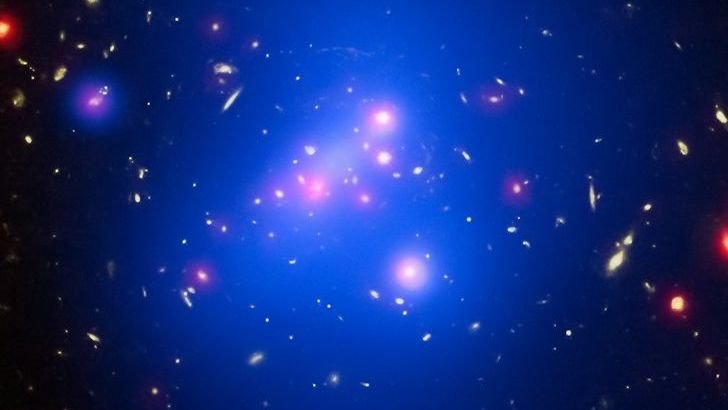

The cosmos is full of mysteries that challenge our understanding of reality, but few are as captivating as dark matter. This invisible substance makes up about eighty-five percent of all matter in the universe, yet it remains stubbornly hidden from our direct observation. But what if scientists are looking at this cosmic enigma all wrong? What if dark matter isn’t just passive particles floating through space, but something far more extraordinary and than we ever imagined?
Recent breakthroughs in physics are pushing the boundaries of how we think about this mysterious substance. Researchers are now exploring radical possibilities that could rewrite our cosmic story entirely.
The Shocking Truth About Self-Interacting Dark Matter
For decades, astronomers assumed dark matter particles were essentially cosmic hermits that rarely, if ever, talked to each other. This invisible substance makes up 85% of matter in the universe and cannot be seen directly, making it harder to detect. But groundbreaking research is turning that assumption upside down.
A theory called “self-interacting dark matter,” or SIDM, proposes that dark matter particles self-interact through a dark force, strongly colliding with one another close to the center of a galaxy. Think of it like discovering that wallflowers at a party are actually having intense conversations we just couldn’t hear before.
When Invisible Forces Come Alive
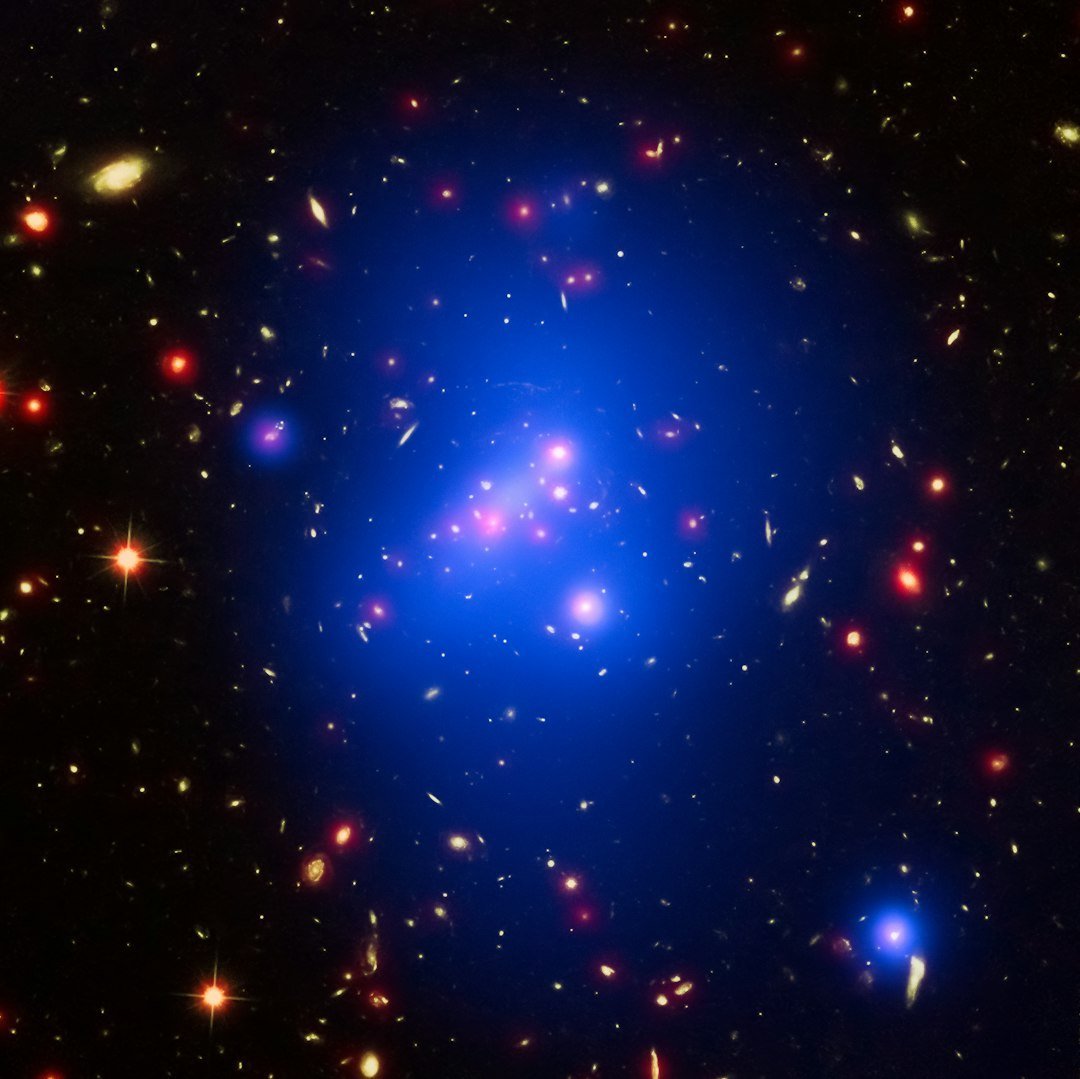
These self-interactions lead to heat transfer in dark matter halos, which diversifies the halo density in the central regions of galaxies. What makes this discovery truly mind-bending is how it mimics living systems. Just as our cells exchange nutrients and information to maintain life, dark matter particles might be engaged in their own form of cosmic communication.
On galactic scales, dark matter self-interaction leads to energy and momentum exchange between particles. Over cosmological time scales this results in isothermal cores in the central region of dark matter haloes. This behavior suggests a level of organization that goes beyond simple physics.
The Revolutionary Continuum Theory
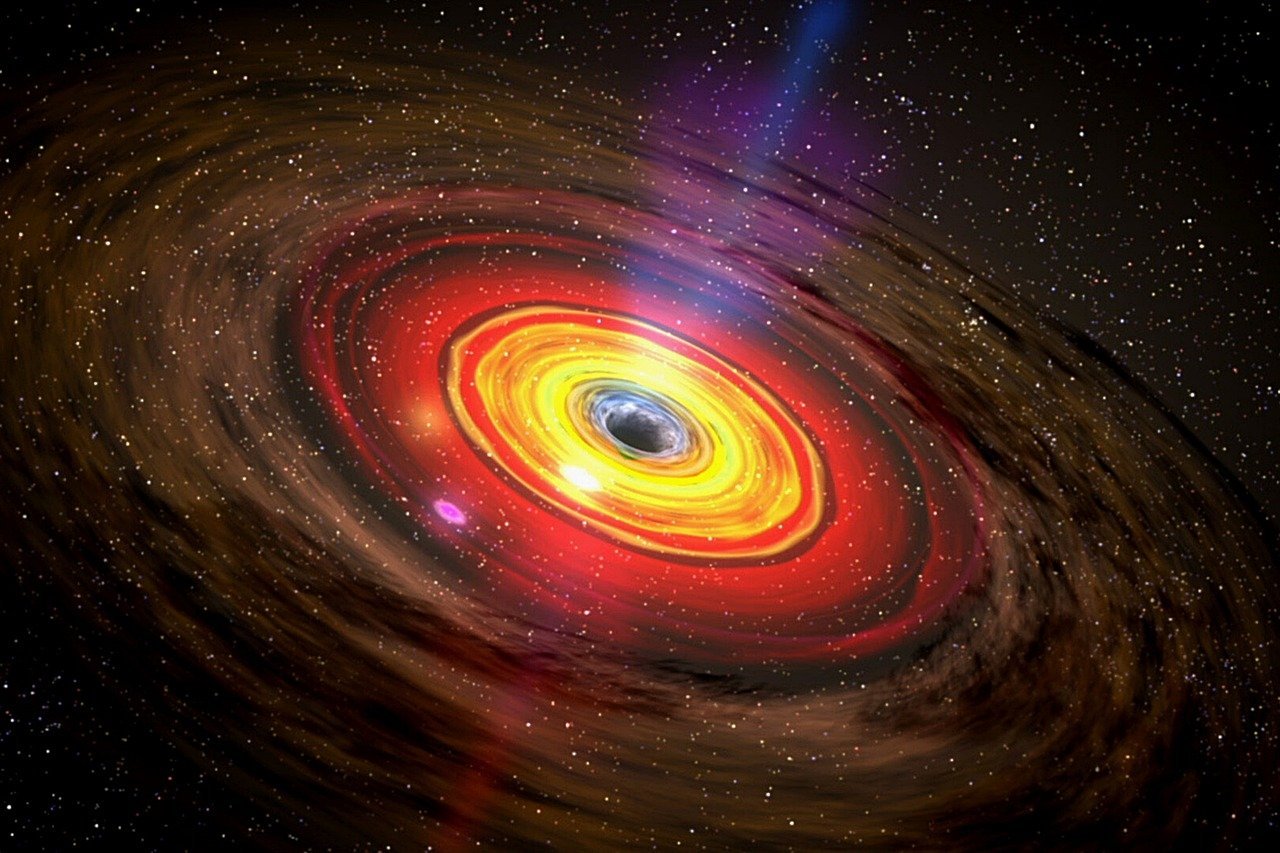
A new model replaces single particle interactions with a continuum, or spectrum, of interactions all working together. Research targets the assumption that particle interactions are well-described by exchanging single particles. This is like discovering that instead of speaking one language, dark matter might be fluent in an entire spectrum of cosmic tongues.
Even more fascinating is how this theory requires additional dimensions to work. The model requires an extra dimension to the universe, creating a four-dimensional space. The infinite spectrum of forces allows for flexibility when constructing theories of how dark matter particles might interact.
Complex Behaviors That Mirror Life
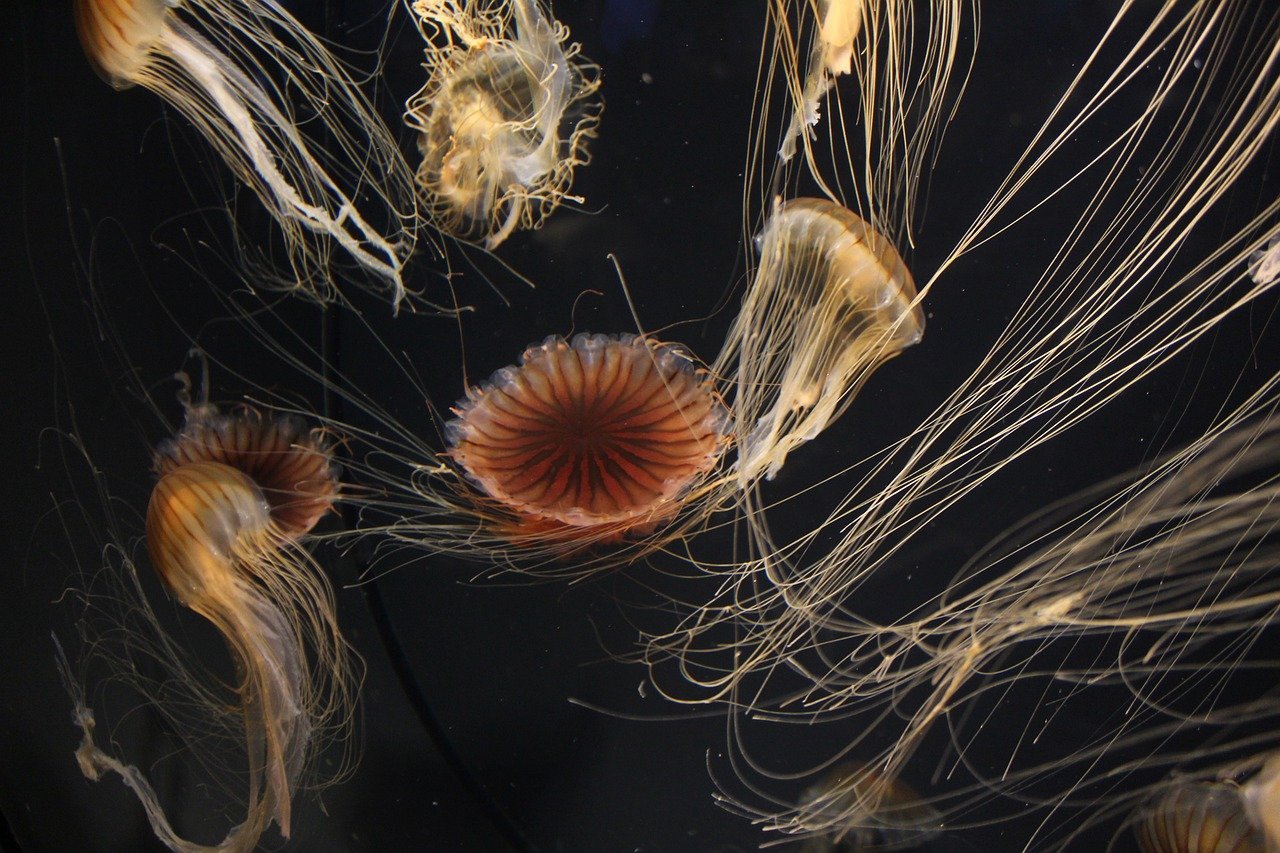
The parallels between dark matter’s newly discovered behaviors and biological systems are striking. Biological systems have evolved to harness energy from random fluctuations, many driven by ATP/GTP-utilizing ratchets. Such thermal ratchets interact weakly with other molecules frequently enough to enable large-scale active work.
Could dark matter be doing something similar? The way these invisible particles exchange energy and organize themselves across cosmic distances suggests they might have their own version of metabolism. It’s as if the universe itself has a hidden circulatory system we’re only now beginning to detect.
The Hidden Network Connecting Everything
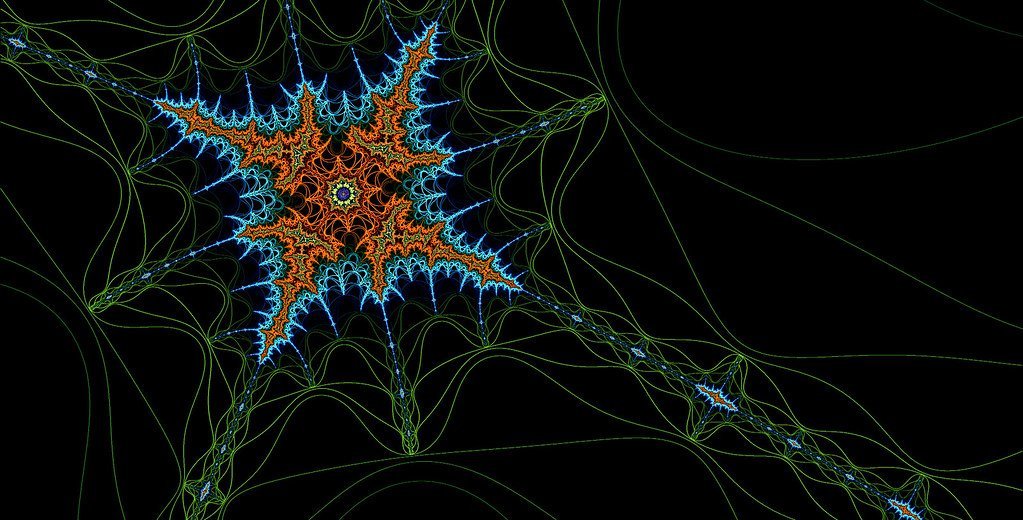
Dark matter is thought to serve as gravitational scaffolding for cosmic structures. After the Big Bang, dark matter clumped into blobs along narrow filaments with superclusters of galaxies forming a cosmic web. This web-like structure bears an uncanny resemblance to neural networks in the human brain.
Scientists are beginning to wonder if this cosmic web might be more than just structural support. Could it be a vast information network, processing and transmitting data across billions of light-years? The implications are staggering – we might be living inside a universe that thinks.
Consciousness and the Cosmic Connection
Some researchers are taking even bolder steps into uncharted territory. Scientists conjecture that consciousness can be understood as yet another state of matter. Just as there are many types of liquids, there are many types of consciousness. This shouldn’t preclude us from identifying, quantifying, modeling and understanding the characteristic properties that all conscious forms of matter share.
A proto-consciousness field theory could replace the theory of dark matter, one physicist states. Dark matter supposedly makes up around 27% of the universe’s total mass-energy, although scientists can’t seem to find any. What if we’re not finding dark matter particles because we’re looking for the wrong thing entirely?
The Biological Dark Matter Connection
The concept of “living” dark matter becomes even more intriguing when we consider biological dark matter. The inside of cells is full of important yet invisible species of molecules and proteins that interact weakly but couple together to have huge effects in biological processes. Such “dark matter” inside cells remains mostly hidden because our tools were developed to investigate strongly interacting species.
Could cosmic dark matter be operating under similar principles? Perhaps it’s not the particles themselves that are alive, but the complex interactions and information networks they create. Like the invisible molecular machinery that keeps our cells functioning, dark matter might be the universe’s own version of biological dark matter.
Rewriting the Laws of Physics
Recent research suggests that if the core strengths of nature’s forces change slowly across time and space, they could account for puzzling behaviors astronomers see. The universe’s forces actually get weaker on average as it expands, making it look like there’s a mysterious push making the universe expand faster.
This discovery challenges everything we thought we knew about cosmic evolution. If the fundamental constants of nature aren’t actually constant, then dark matter’s “living” behavior might be the universe’s way of adapting to changing conditions – a cosmic form of evolution playing out over billions of years.
The Observer Effect in Cosmic Scale
Quantum mechanics has taught us that observation affects reality at the subatomic level, but what about at cosmic scales? Quantum mechanics reveals a reality where the observer and the observed are inseparable. This quantum perspective establishes that consciousness plays a fundamental role in shaping existence.
Could our very act of searching for dark matter be influencing its behavior? Perhaps dark matter’s apparent “aliveness” is emerging as a response to being observed by conscious beings. We might be witnessing the universe becoming self-aware through our scientific investigations.
The Future of Living Matter Research
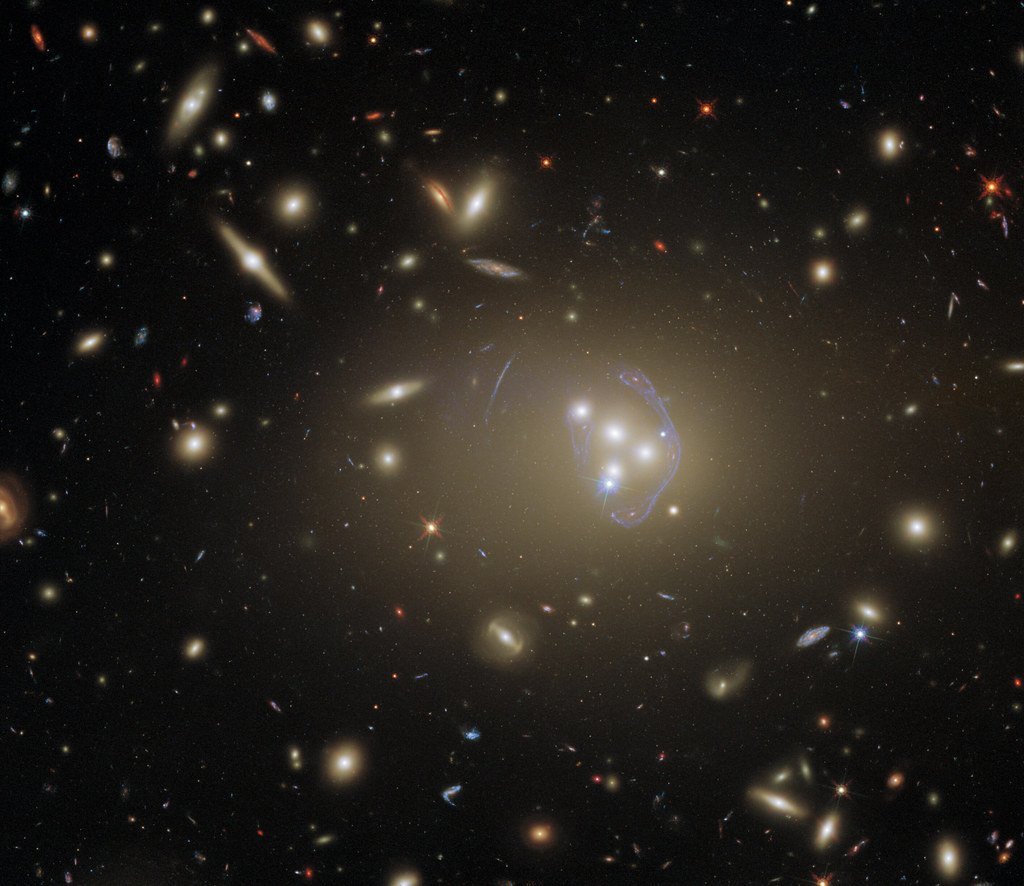
As we push deeper into these mysteries, new tools and techniques are revealing previously hidden aspects of cosmic behavior. In July 2024, a study proposed SIDM solves the “final-parsec problem,” indicating ongoing breakthroughs in our understanding. These discoveries are accelerating at an unprecedented pace.
Scientists are now developing more sophisticated models that treat dark matter not as inert particles, but as components of a dynamic, possibly living system. The implications extend far beyond astrophysics – they could revolutionize our understanding of life itself. If the universe can exhibit life-like properties at such enormous scales, what does that tell us about the nature of existence?
Conclusion
The possibility that represents one of the most profound paradigm shifts in modern science. We’re moving from viewing the cosmos as a collection of dead matter governed by simple laws to seeing it as a complex, potentially conscious entity engaged in its own form of cosmic metabolism. Whether dark matter turns out to be truly “alive” in any sense we recognize, these discoveries are already transforming our relationship with the universe itself. We may not just be observers of cosmic evolution – we might be participants in the universe’s awakening to its own existence.
What do you think about this mind-bending possibility? Could we be living inside a universe that’s more alive than we ever dared imagine?