
Dark matter used to sound like pure science fiction: some invisible stuff, floating in the universe, silently pulling on galaxies like a ghost with gravity. For decades, astronomers were convinced it existed, but they couldn’t see it, touch it, or catch it in a detector. It was like trying to understand a city by only looking at its streetlights from a distance and guessing where the people must be.
Now, in 2026, the picture is finally changing. Scientists still can’t scoop dark matter into a jar, but they are starting to map it, model it, and even narrow down what it might be made of. What once sounded like a mystical cosmic placeholder is slowly turning into something much more concrete: a real, structured component of the universe that we’re beginning to trace in surprising detail.
The Shocking Truth: We’re Mostly Made of “Nothing”
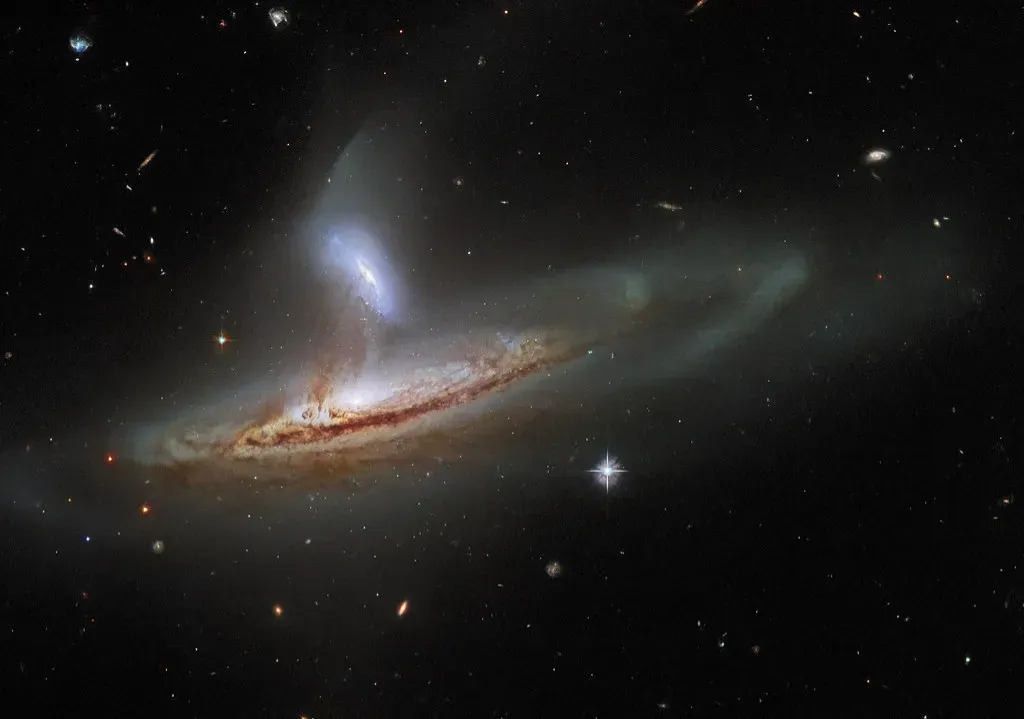
Here’s the first punch in the gut: everything you’ve ever seen – stars, planets, oceans, people, your phone, your coffee – is just a tiny fraction of what’s really out there. Astronomers now estimate that ordinary matter, the stuff made of atoms, makes up only roughly about one sixth of the total matter in the universe. The rest is this unseen component we call dark matter, plus an even weirder ingredient known as dark energy.
That means if the universe were a budget, almost all the “spending” would be going into categories we barely understand. It’s a bit like realizing your household finances are dominated by subscriptions you didn’t even know you were paying for. Once you see this imbalance, the quest to understand dark matter stops being an optional curiosity and becomes central to understanding why the universe looks the way it does at all.
Gravity’s Fingerprint: How We “See” the Invisible
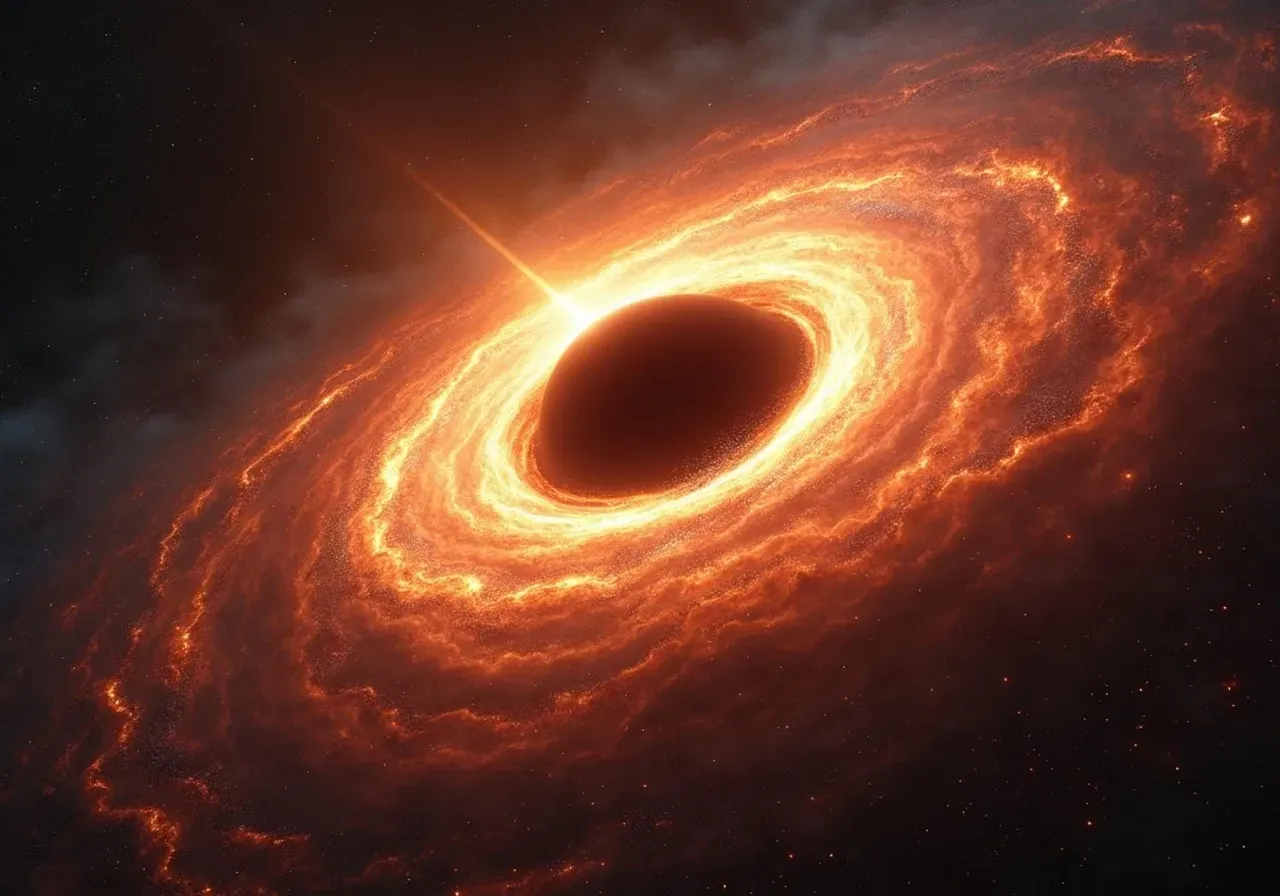
So if dark matter doesn’t shine or glow, how do we know it’s even there? The answer is gravity. Long before dark matter became a buzzword, astronomers noticed that galaxies were spinning too fast. If only the visible stars and gas were there, the galaxies should have flown apart, like a merry-go-round flinging riders into the air. Instead, they held together, implying a huge hidden mass acting like cosmic glue.
On even larger scales, galaxy clusters, hot gas, and background light all behave as if they’re sitting in massive, invisible halos. We see dark matter’s effect the way you might “see” the wind in the sway of trees or the movement of waves. It leaves fingerprints in the motion of stars, the shapes of galaxies, and the growth of cosmic structures over billions of years, even if it never lights up a single pixel on a telescope sensor.
Gravitational Lensing: Nature’s Own Dark Matter Camera
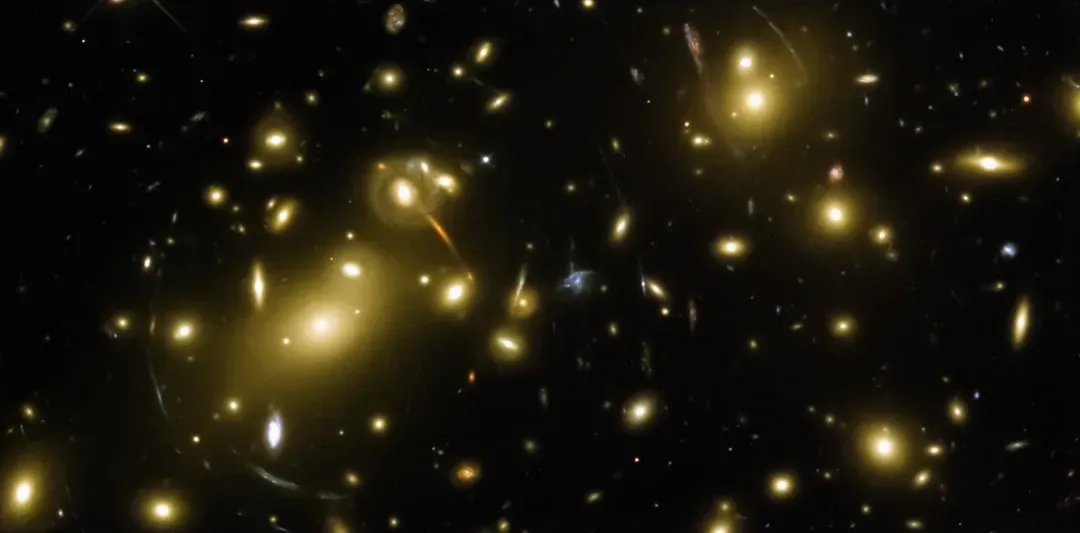
One of the most stunning tools for tracking dark matter is something Einstein predicted and astronomers now use like a cosmic X-ray: gravitational lensing. When a huge clump of mass, such as a galaxy cluster, sits between us and more distant galaxies, its gravity warps space and bends light, distorting the background images into arcs, smears, or even multiple copies. The stronger the distortion, the more mass must be there, visible or not.
By carefully measuring these small distortions across large areas of the sky, researchers can build maps of the dark matter that must be causing them. It’s like shining a flashlight through frosted glass and reconstructing the invisible bumps and patterns from the way the light spreads out. Over the past few years, those maps have gone from blurry outlines to increasingly sharp, detailed portraits of the hidden skeleton that galaxies hang from.
Cosmic Cartography: Turning Dark Matter into a 3D Map
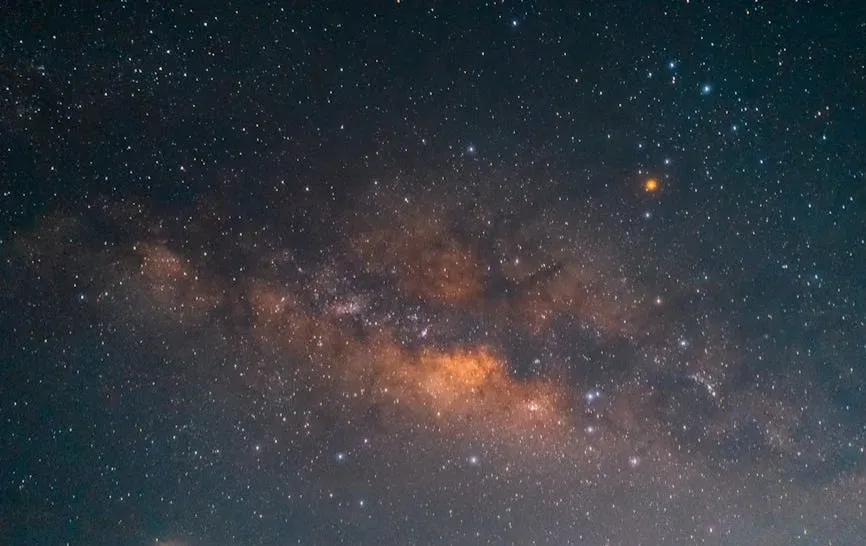
What used to be a vague idea – “there’s something dark out there” – is now becoming a 3D chart of where that darkness lives. Wide-field surveys from ground-based telescopes and space missions are slowly stitching together enormous sky maps that trace dark matter’s distribution across billions of light-years. They combine lensing, galaxy clustering, and background radiation data like overlapping transparency sheets to reveal the underlying structure.
These maps don’t just show random blobs. They reveal a striking web-like pattern known as the cosmic web: long filaments of dark matter stretching between dense nodes where galaxy clusters form, with vast empty-looking voids in between. Ordinary matter tends to fall into these dark matter filaments like rain running down the branches of a tree. Once you’ve seen these simulations and early reconstructions, it’s hard not to see the universe as a vast, ghostly scaffolding, with dark matter as the beams and joints.
New Telescopes, Clearer Vision: From Hubble to Next‑Gen Surveys
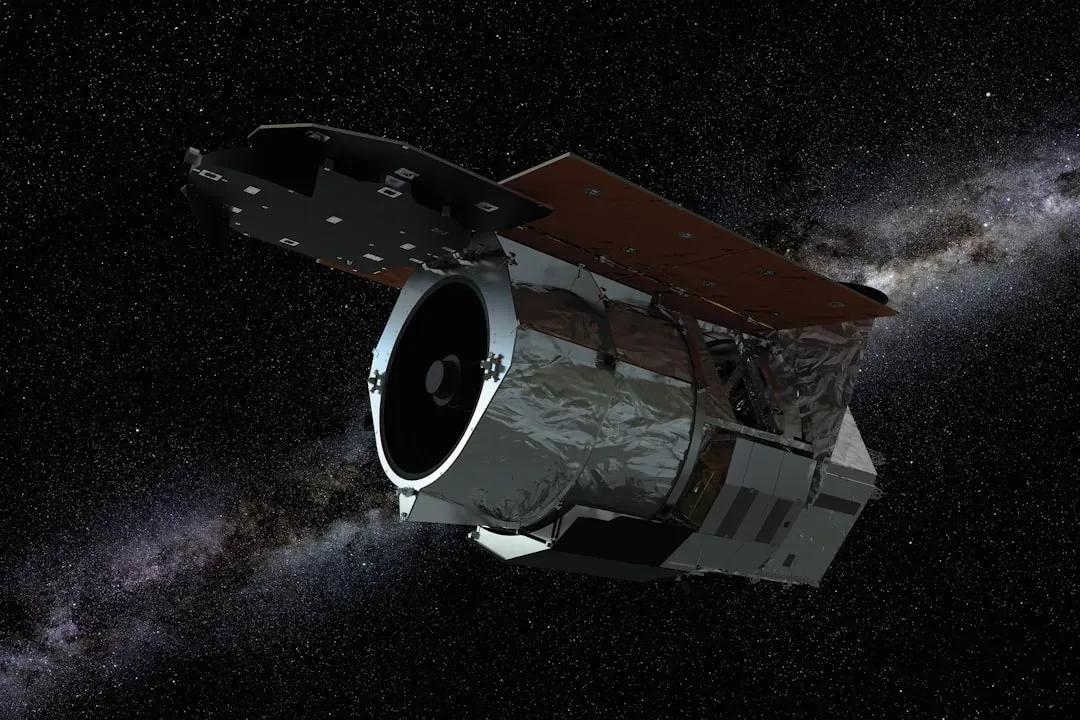
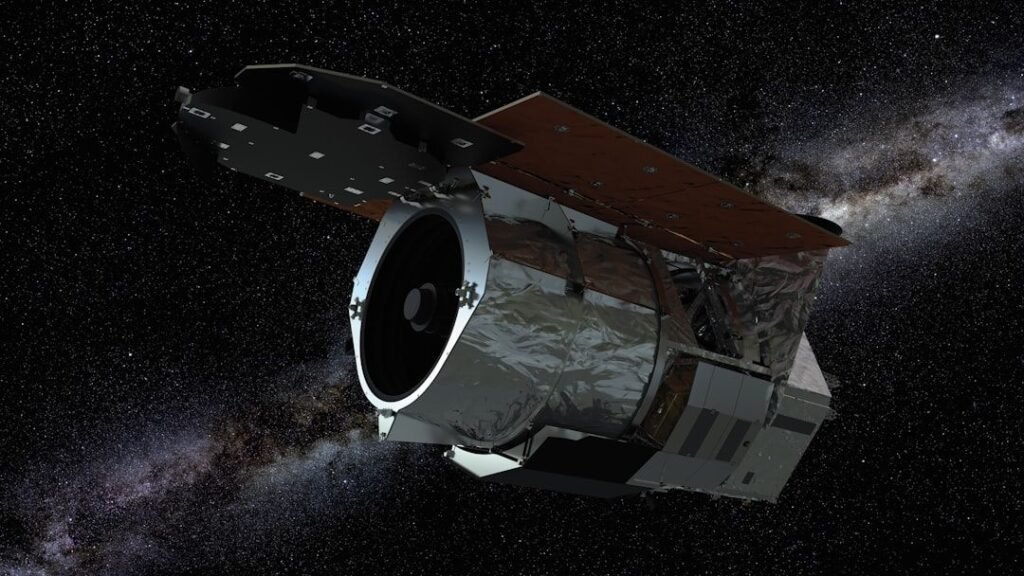
Our growing clarity about dark matter isn’t an accident; it’s the result of better instruments and a lot of patient, messy data work. Space telescopes with high-resolution cameras can measure the subtle shapes of distant galaxies warped by intervening mass, while large ground-based telescopes scan huge swaths of sky night after night. Upcoming and newly operating observatories are designed with dark matter and dark energy studies as core missions, not side projects.
What really changes the game, though, is the combination of depth, area, and time. By repeatedly imaging the same patches of sky, astronomers can watch how structures evolve, track transient events that might hint at exotic dark matter interactions, and reduce random noise. It’s like switching from a static photograph to a slow-motion video, turning rough guesses into increasingly precise measurements of how much dark matter is where, and how it’s been shaping the cosmos over billions of years.
What could Dark Matter Actually be Made of?
Knowing where dark matter is doesn’t automatically tell us what it is, and that’s where things get deliciously frustrating. For years, one of the leading ideas focused on heavy, slow-moving particles that barely interact with normal matter: weakly interacting massive particles, often shortened to WIMPs. Huge underground detectors have been built to catch the rare moment when one of these particles might bump into an ordinary atom, but so far, the results have mostly come back empty.
This has opened the door to a zoo of possibilities: lighter particles such as axions, more complex “hidden sector” particles, or even modifications to how we understand gravity on large scales. Personally, I find this phase strangely exciting, like rummaging through a box of puzzle pieces that clearly belong somewhere but don’t match the picture on the front of the box. The lack of easy answers is forcing physicists to be more creative and to test bolder, more exotic ideas without abandoning the solid evidence that dark matter’s gravitational fingerprints are very real.
Colliding Clusters and Cosmic Crashes: Dark Matter Under Stress Test
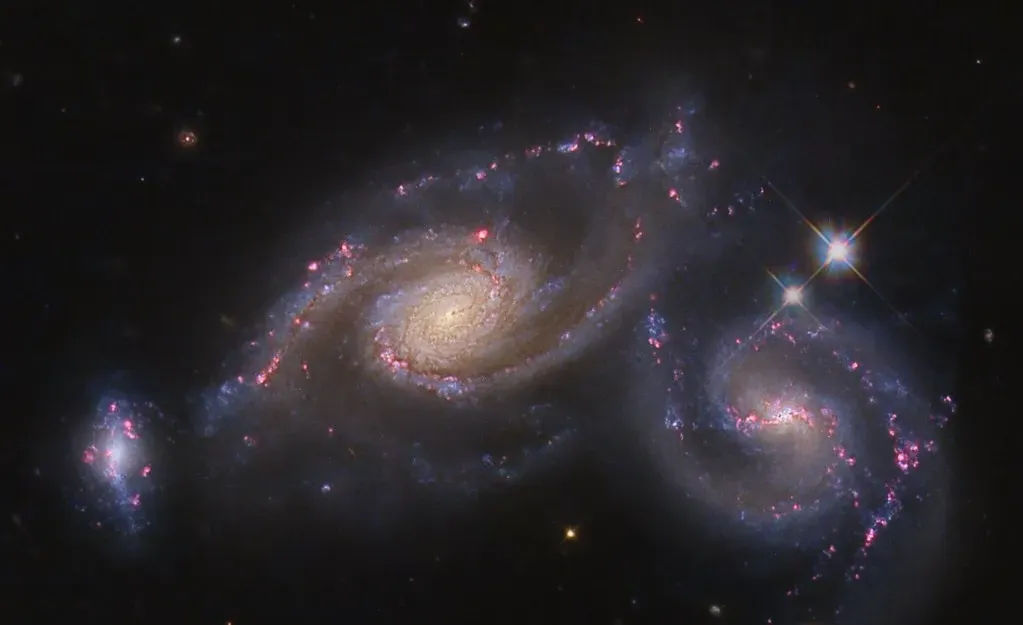
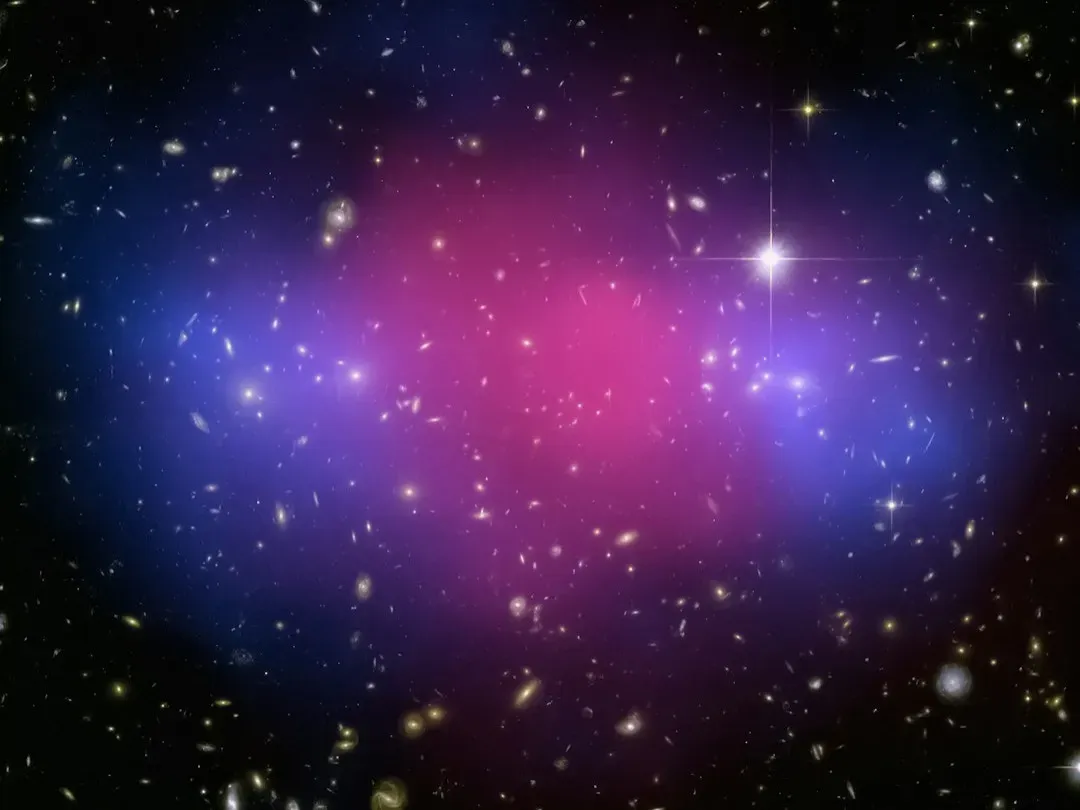
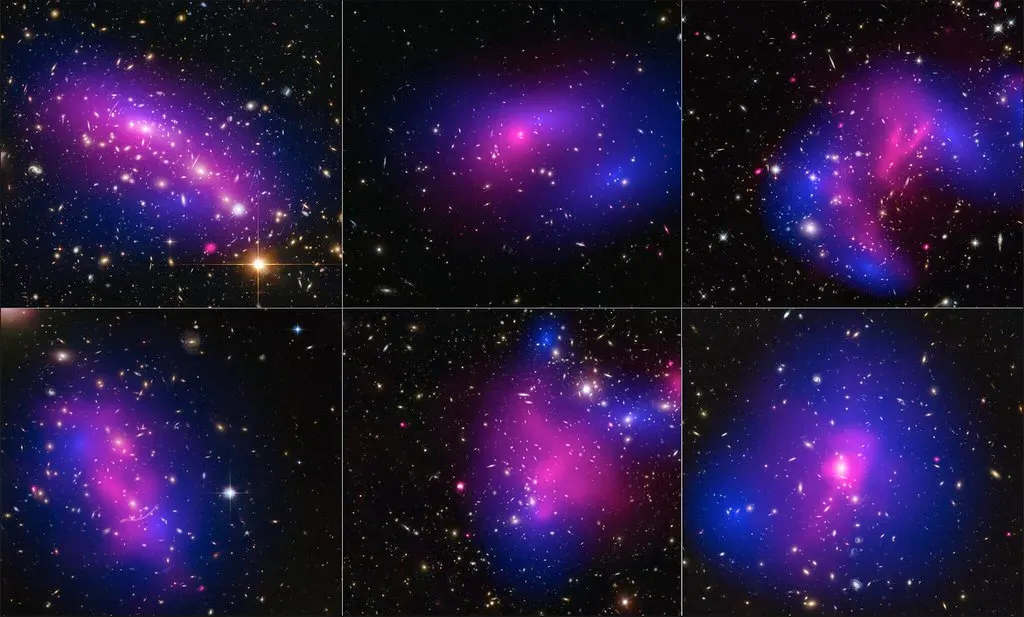
One of the most dramatic ways we’ve “seen” dark matter is through cosmic accidents: giant collisions between galaxy clusters. In some famous systems, astronomers have observed that the hot, glowing gas – which makes up much of the visible mass – gets slowed down and stripped during the crash, while the gravitating mass inferred from lensing plows ahead with far less resistance. This separation between what we see and what pulls is a powerful argument that dark matter behaves like a different kind of stuff than ordinary matter.
By studying more of these cosmic train wrecks, researchers can test whether dark matter particles bump into each other, or if they mostly pass through everything, even themselves, almost without interaction. The emerging picture suggests that dark matter is surprisingly well behaved, clumping under gravity but otherwise staying aloof. Every new collision system adds another clue to the story, stress-testing our models in conditions too extreme to ever recreate on Earth.
Why Seeing the Dark Matters for Our Own Place in the Universe
It might be tempting to file dark matter away as an abstract curiosity, something for cosmologists to argue about while the rest of us get on with life. But the shape of the dark matter distribution is directly tied to why galaxies formed the way they did, how the first stars were born, and ultimately how a galaxy like the Milky Way became a place where planets and people could exist. If dark matter had different properties, the entire history of cosmic structure formation would be rewritten.
There’s also a humbling psychological twist here: we like to imagine we understand our surroundings, yet we’re only now starting to trace the scaffolding that underpins almost everything on the largest scales. The fact that we can map something we can’t see, infer its presence from tiny distortions and motions, and then test those in simulations is a quiet triumph of human curiosity. The universe turned out to be built mostly from an invisible ingredient, and step by step, we’re finally learning to see it for what it is.