
GW190521: A Signal That Defies Easy Explanation (Image Credits: Pixabay)
Berlin, Germany – A European research team has challenged conventional views of cosmic collisions by suggesting that some gravitational wave signals arise from dark matter boson stars masquerading as black holes.[1][2]
GW190521: A Signal That Defies Easy Explanation
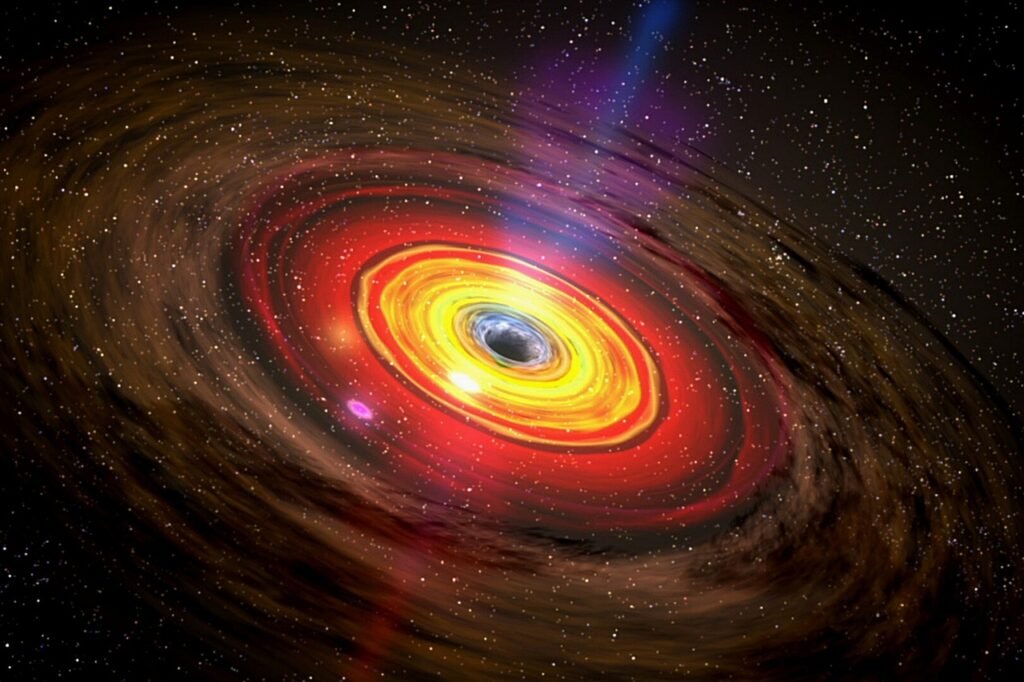
Gravitational wave detectors registered the GW190521 event in 2019, capturing ripples from what appeared to be two black holes, each dozens of times the sun’s mass, slamming together billions of light-years away. That interpretation marked it as a landmark discovery, but subtle discrepancies in the waveform prompted fresh scrutiny. Researchers now posit that boson star mergers could produce a closer match to the observed pattern.[1]
The LIGO-Virgo-KAGRA observatories, spanning the United States, Italy, and Japan, have cataloged over 150 black hole mergers since 2015. The latest O4 run, from May 2023 to November 2025, yielded around 250 candidates still under analysis. Amid this data surge, anomalies like GW190521 stand out as potential gateways to exotic physics.
Unpacking Boson Stars and Their Dark Matter Core
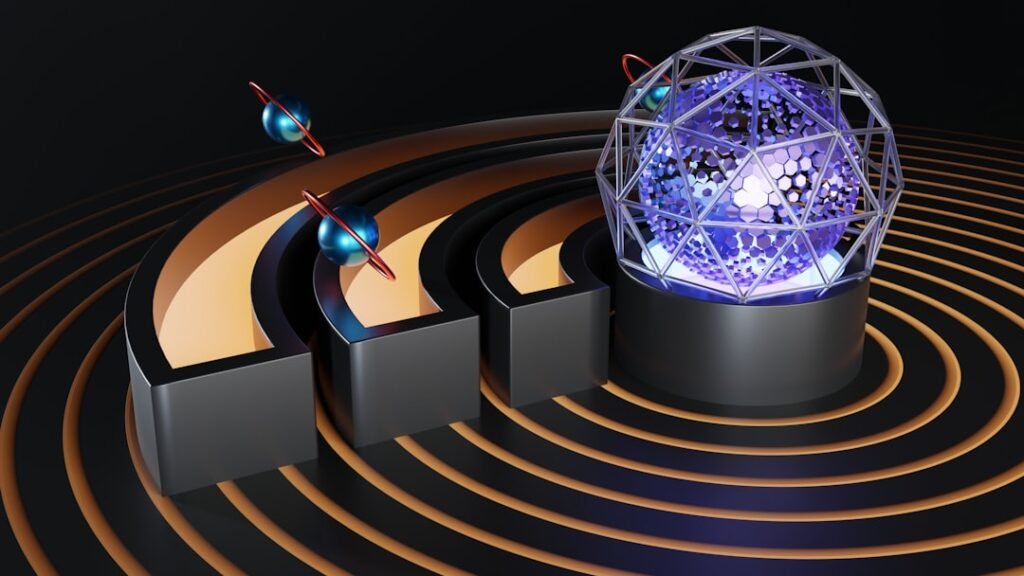
These hypothetical objects consist of ultralight bosons, such as axions – subatomic particles trillions of times lighter than electrons – that clump under their own gravity into ultra-compact forms. From afar, a boson star mirrors a black hole in mass and silhouette, yet it lacks an event horizon, presenting a fuzzy exterior packed with dark matter instead.[3]
A typical boson star might squeeze solar mass into a planet-sized volume, defying ordinary stellar evolution. Collisions between them would ripple spacetime much like black hole unions, but with telltale waveform quirks detectable by advanced instruments. “Were two of them to collide, they would produce a gravitational wave signal that fits that particular signal slightly better than two black holes,” noted physicist Carlos Herdeiro.[2]
NewFunFiCO: Probing the Frontiers of Compact Objects
Led by Herdeiro at the University of Aveiro in Portugal and co-led by Nico Sanchis-Gual at the University of Valencia in Spain, the NewFunFiCO project unites experts from Europe, Mexico, Brazil, and China. Funded by the EU’s Marie Skłodowska-Curie Actions through 2026, it sifts LIGO-Virgo-KAGRA data against theoretical models of unconventional objects.[1]
Beyond boson stars, the initiative examines mixed neutron stars harboring dark matter cores and gravastars, which ape black hole exteriors without central singularities or horizons. Each candidate imprints unique signatures on gravitational waves, enabling systematic hunts for deviations from black hole norms.
- Boson stars: Pure dark matter solitons, fuzzy and horizon-free.
- Mixed stars: Neutron remnants infused with dark matter.
- Gravastars: Shell-like structures mimicking black holes superficially.
Implications for Dark Matter and Beyond
Dark matter, vastly outmassing visible matter yet evading direct sight, could manifest in these compact forms, offering the first tangible evidence of its particle nature. Confirming even one such merger would illuminate how dark matter aggregates, collapses, and drives cosmic structure. Technologies honed for wave detection – laser interferometry, vibration isolation, precision optics – already bolster fields like medical imaging and navigation.[3]
“It’s mind-blowing,” Sanchis-Gual remarked on contemplating planet-scale objects with stellar heft.[2] The project fosters global ties, blending science with cultural exchange. For more, visit the NewFunFiCO site.
- Boson stars could explain odd gravitational signals like GW190521 more precisely than black holes.
- Ongoing data analysis from 250+ O4 events may reveal exotic dark matter signatures.
- Discoveries here promise breakthroughs in understanding dark matter’s elusive properties.
Gravitational waves usher in an era where invisible dark matter contenders vie with black holes, potentially upending astrophysics. What signals will the next detection runs unveil? Share your thoughts in the comments.