
Every now and then, a quiet moment hits you: maybe you’re staring at the night sky, or zoning out on the bus, and a strange thought slips in – what if everything I take for granted about the world is wrong? Not just a little wrong, like misremembering a detail from yesterday, but fundamentally, deeply off. That unsettling feeling, that tiny crack in the “obviousness” of everyday life, is where the question of reality really begins.
I remember lying awake as a kid, trying to imagine what would happen if I could zoom out of the universe forever, like pinching a map on a phone. Would I just keep zooming? Would I hit a wall? Or would I find out that my whole life was some kind of simulation or dream? Those late-night spirals never gave me an answer, but they did leave me with a stubborn suspicion: understanding reality might be a lot harder than just memorizing what’s in a science textbook.
The Strange Gap Between Our Senses and the World
Here’s a slightly shocking idea: your brain has never actually touched the outside world. All it ever gets are electrical signals traveling along nerves – patterns of spikes that it learns to interpret as color, sound, pain, warmth, or the smell of coffee. When you see a red apple, you’re not directly seeing “redness”; you’re experiencing your brain’s internal way of encoding certain wavelengths of light. It’s like judging an entire concert by watching the equalizer bars bounce on a screen.
This doesn’t mean the world outside is fake, but it does mean what we experience is always filtered, translated, and edited. Vision cuts off most wavelengths, hearing drops almost all frequencies, and your brain happily fills in gaps and ignores what seems “unnecessary.” Reality, for us, is more like a user interface than raw code – simple icons instead of terrifying complexity. So before we even ask if we can fully understand reality, we have to admit something humbling: what we live in every day is already a highly curated version of it.
Physics: Our Best Map of Reality – Or Just Another Story?
Modern physics has pulled back the curtain on reality in ways that would have sounded like fantasy a hundred years ago. Matter turns out to be mostly empty space, particles behave like waves, and time itself can stretch and bend depending on how fast you’re moving or how close you are to a massive object. In quantum mechanics, particles don’t seem to have definite properties until they’re measured; before that, they live in a strange cloud of possibilities. If that doesn’t feel weird, you probably haven’t let it sink in yet.
And yet, despite all this strangeness, physics is incredibly good at predicting what happens. Particle accelerators, GPS satellites, lasers, microchips – they all rely on theories that, bizarre as they are, keep passing experimental tests. But there’s a philosophical catch here: a theory that predicts outcomes isn’t automatically the same thing as a full description of what reality “really is.” Our equations may be like a map that works super well for navigating, but no map ever feels exactly like standing in a forest at night. The question is whether our best physical theories are approaching the forest itself, or just giving us better and better maps.
Is Reality Fundamental or Just an Emergent Illusion?

One of the most mind-bending ideas floating around in physics and philosophy today is that what we think of as solid, fundamental reality might actually be something like a high-level effect – a pattern that emerges when many tiny ingredients interact. Temperature is a classic example: no individual molecule has a “temperature,” but the average motion of billions of them does. In the same way, some researchers think space, time, and maybe even matter might be emergent, not basic.
There are speculative theories suggesting that spacetime itself could “emerge” from more primitive relationships, sometimes modeled with networks or information-like structures. If that’s right, then asking “what is reality really made of?” is a bit like asking “what is a wave really made of?” when you’re watching an ocean. You can describe the wave, measure it, surf it, but in the end, it’s a pattern in something deeper. The twist is that we might never directly access that deeper layer – only the patterns it produces.
The Simulation Hypothesis and the Fear of Fake Worlds
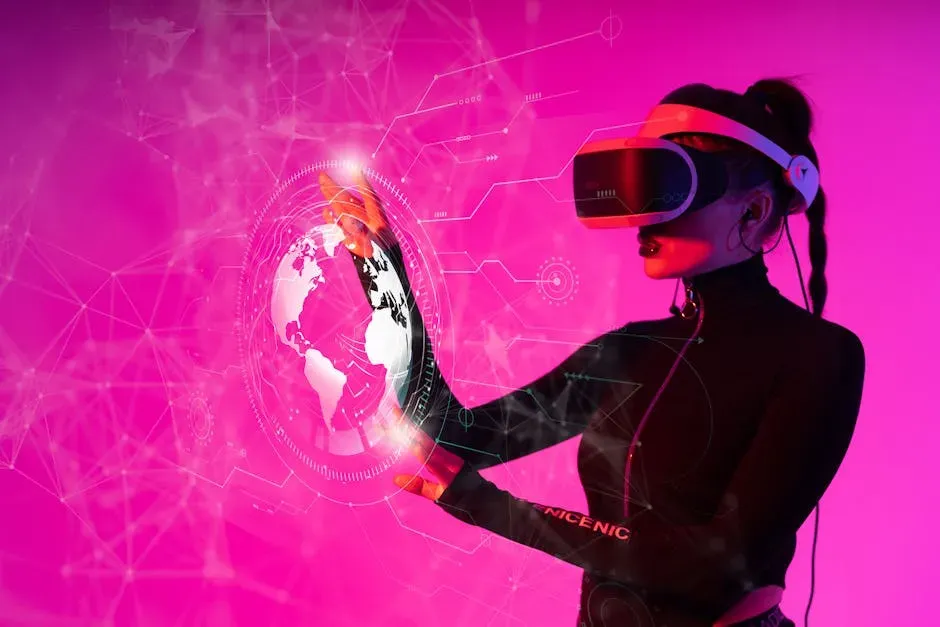
The idea that our reality might be a simulation sounds like science fiction, but it has become a serious philosophical position some people actually debate. The rough version goes like this: if advanced civilizations can run incredibly detailed simulations of conscious beings, and they have reasons to run many of them, then there might exist far more simulated worlds than “base” real ones. If that’s true, the odds we’re in the one original world start to look pretty small.
Even if you don’t buy the argument, it forces a weird question: how would we know? If a simulation were detailed enough, every experiment we do could be perfectly reproduced by the simulator. Some people hunt for glitches or strange patterns in physics, hoping for “evidence,” but so far nothing like that has held up. Personally, I find the simulation idea less interesting as a literal claim and more powerful as a metaphor: it highlights how easily our sense of reality could be generated by rules we never see, and how limited our perspective might be, no matter how clever we get.
Consciousness: The Awkward Hole in Every Theory
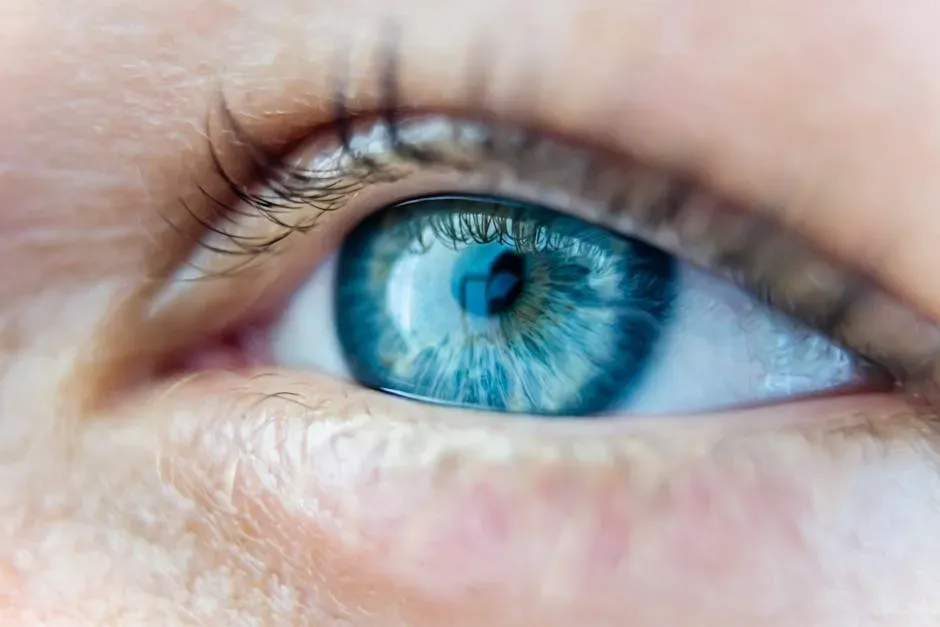
There’s a stubborn, uncomfortable fact sitting at the center of this whole conversation: everything you know about reality passes through your own consciousness. You don’t experience quarks or spacetime directly; you experience feelings, perceptions, and thoughts. Strangely, we still have no widely accepted scientific explanation for how brain activity – which looks like chemistry and electricity from the outside – becomes the vivid inner life you know from the inside.
Some researchers propose that consciousness is a basic feature of reality, woven into the fabric of the universe the way mass and charge are. Others argue it must somehow emerge when physical systems reach a certain kind of complexity. There are also people who think consciousness might be more like a kind of modeling process the brain runs on itself. But none of these ideas has nailed it in a way that convinces everyone. As long as we don’t fully understand what consciousness is, it’s hard to say we fully understand reality, because reality for us is always experienced through that mysterious lens.
The Limits of Human Brains – And Why That Might Matter
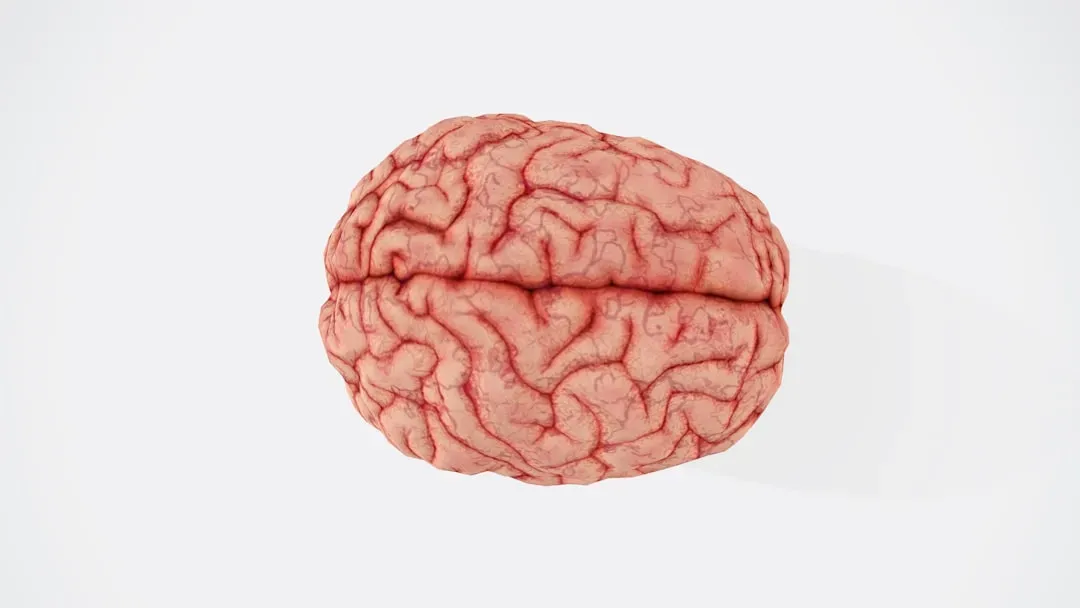
We like to think of ourselves as rational, objective creatures who can figure out anything given enough time. But evolution didn’t design our minds to understand the nature of reality; it shaped them to help us survive long enough to pass on our genes. That meant noticing predators, finding food, reading social cues – not grasping quantum fields or the origins of the universe. Our brains are more like clever hacks than perfect instruments of truth.
On top of that, we’re loaded with cognitive biases. We see patterns where none exist, cling to beliefs we like, and get overwhelmed by complexity. Even our language pushes us into certain ways of carving up the world – nouns, verbs, causes, effects – that might not match how reality is structured at deep levels. It’s like trying to describe a symphony with only three notes. This doesn’t mean we’re doomed to ignorance, but it does suggest that complete understanding, in some absolute sense, might be beyond a species that evolved to throw rocks and gossip.
Can Tools, AI, and Collaboration Push Us Past Our Limits?
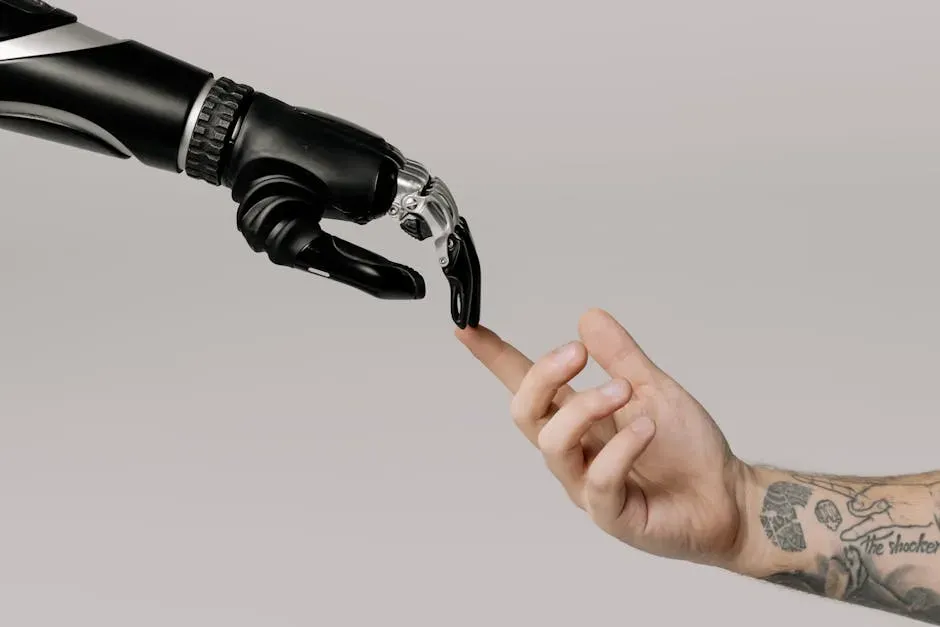
Of course, humans are sneaky: we compensate for our limitations by building tools. Telescopes, microscopes, particle colliders, and gravitational wave detectors have all stretched what we can perceive. Now we’re adding artificial intelligence into the mix – systems that can chew through mountains of data, spot patterns we’d miss, and help generate new scientific hypotheses. It’s not crazy to imagine that many of our deepest future insights about reality will come from collaborations between human intuition and machine analysis.
But even if our tools grow wildly powerful, there’s a deeper question: will they be extending our understanding, or simply extending our ability to predict and control? It’s possible we’ll reach a point where AI-driven science hands us extraordinarily accurate models that work, while the “why” behind them stays opaque, even to the people who built the systems. In that scenario, reality would become more navigable but not necessarily more intelligible. We’d be flying an incredibly advanced plane without ever fully knowing how the engine works in a humanly satisfying way.
Maybe “Truly Understanding” Reality Is the Wrong Goal
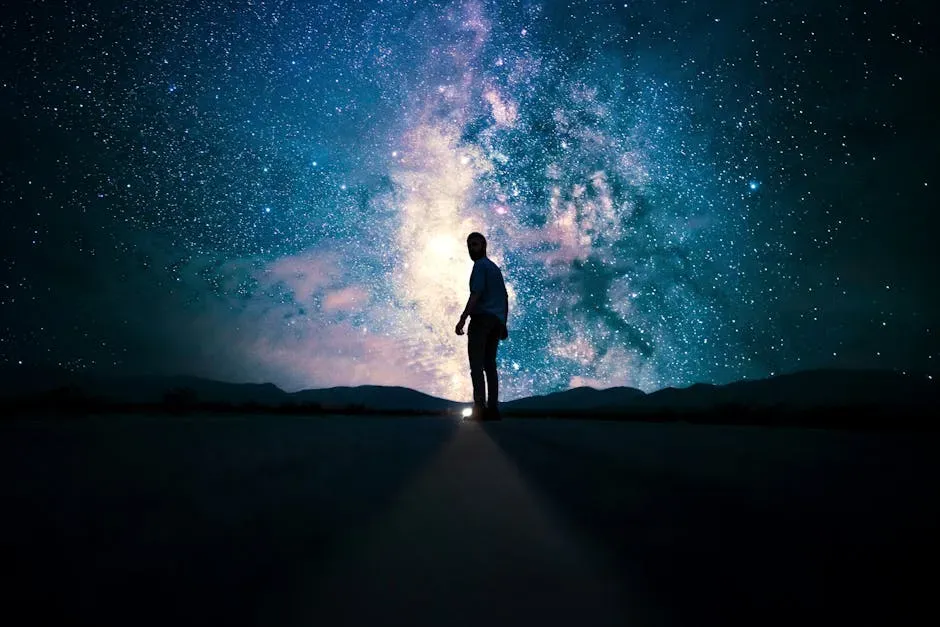
At some point, you have to ask what “truly understand” even means. Does it mean having a final, complete theory that can’t be improved? Having an intuitive picture that feels satisfying? Or just being able to predict everything that could ever happen? Each of those standards pulls us in a different direction, and each one might be unrealistic. Reality could be infinite in detail, endlessly layered, or structured in a way that no finite mind can compress into one neat story.
There’s another possibility: understanding might always be partial, but still meaningful. Maybe we never get the whole book, but we can keep reading more chapters and revising the earlier ones as we go. In a way, the mystery itself becomes part of reality – not just something to be solved, but something that shapes how we live, how humble we are, and how curious we stay. When you think about it like that, the question quietly shifts from “Can we ever fully understand reality?” to “How deeply can we go, and what kind of people do we become while we’re trying?”
Conclusion: Living Honestly With an Unfinished Picture

If there’s one thread running through all of this, it’s that reality is stranger, slipperier, and more layered than our everyday experience suggests. Our senses give us a simplified interface, physics reveals a world that doesn’t match common sense, consciousness sits there as an unsolved riddle, and our brains themselves come with built‑in limits and shortcuts. In the middle of all that, it’s hard to claim we’re on track to a final, complete understanding of everything.
Still, that doesn’t make the search pointless; it makes it honest. Instead of pretending we’re one step away from the ultimate answer, we can treat our theories as evolving maps, our tools as imperfect extensions, and our own minds as works in progress. Maybe we’ll never grasp the full nature of reality in some absolute way, but we can keep carving out clearer, deeper insights – enough to navigate, to wonder, and to be changed by what we learn. How far into the mystery do you think we’re really able to go?