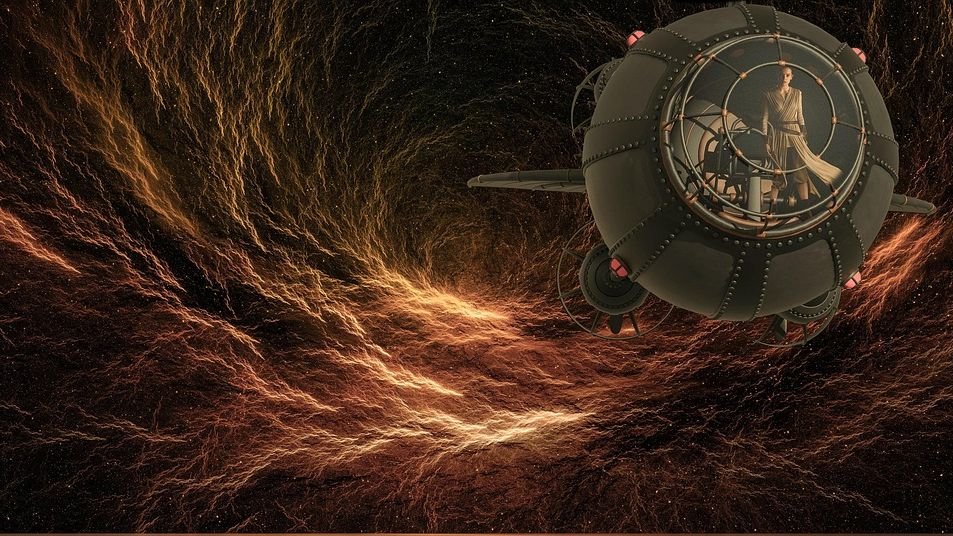

We’ve all fantasized about it at some point. Stepping into a sleek machine, flipping a few switches, and suddenly finding ourselves face to face with dinosaurs or witnessing humanity’s distant future. Time travel has captured imaginations for over a century, from H.G. Wells’ pioneering novel to countless blockbuster films. It sounds like pure fantasy, the stuff of science fiction writers desperate for a good plot twist.
Here’s the thing, though. The physics underlying time travel isn’t quite as impossible as you might think. Sure, we’re not building time machines in our garages anytime soon, but the math checks out in ways that would’ve made Newton’s head spin. The universe, it turns out, has some pretty peculiar loopholes built into its very fabric.
Einstein’s Game Changer: Time Isn’t What You Think
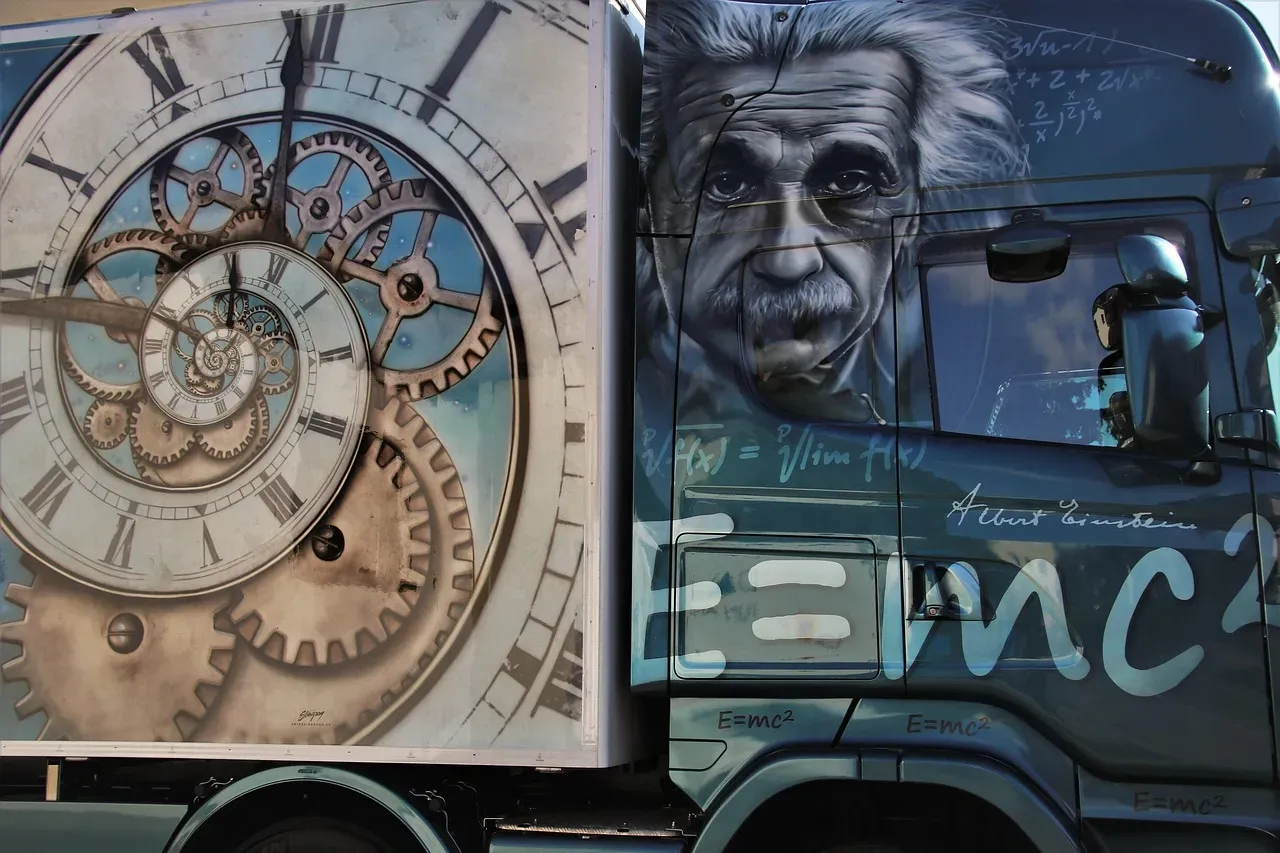
Over a century ago, Albert Einstein revolutionized our understanding with his theory of relativity, showing that time and space are fundamentally linked together. This wasn’t just some abstract mathematical curiosity. Einstein basically told us that time doesn’t tick at the same rate everywhere in the universe, which honestly sounds bonkers until you see the evidence.
According to special relativity, time’s flow depends on how fast you’re moving, with the quicker you travel, the slower seconds pass. Scientists have actually tested this with atomic clocks on airplanes. When compared to clocks on the ground after flying around the world, the airborne clock was slightly behind. We’re talking fractions of a second, nothing dramatic, but it proves the point. Time is flexible.
Gravity also affects clocks according to general relativity, with more forceful gravity causing time to slow down. Your head is literally aging faster than your feet right now because it’s slightly farther from Earth’s gravitational pull. Mind boggling, right? This effect becomes much more pronounced near massive objects like black holes.
Forward Time Travel: Already Happening
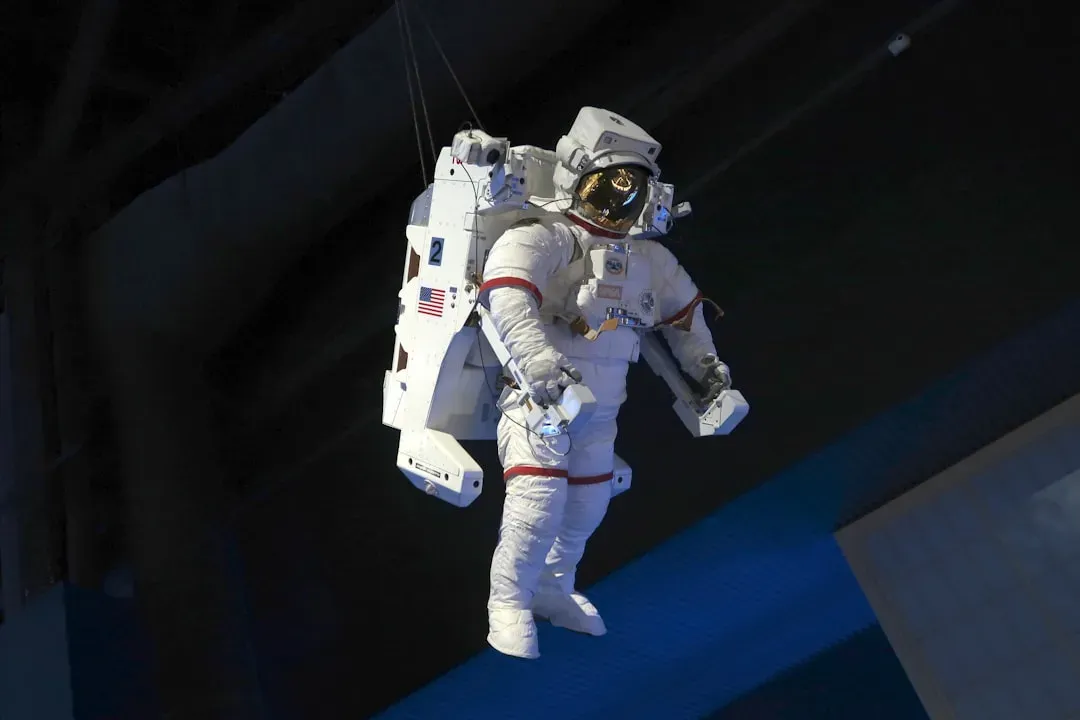
Let’s be real, forward time travel is not just possible. It’s happening constantly. Our current understanding of physics tells us that traveling into the distant future is definitely possible using the time dilation effect of special relativity. Astronauts on the International Space Station experience this firsthand.
Astronauts aboard the ISS age approximately .007 seconds less than people on Earth after six months, thanks to their increased velocity and decreased gravity. That might not sound impressive, but scale it up. A round trip to the center of our galaxy at near light speed could be completed in just over 40 years of ship time, while 60,000 years would pass on Earth.
The traveler would step off their spacecraft into a world that had moved on millennia without them. They’d be a relic from the ancient past, yet they’d have experienced only a human lifetime. This isn’t science fiction anymore. It’s just really, really impractical with our current technology. Such a trip would require energy greater than a planetary mass, but nothing in the known laws of physics would prevent it from occurring.
The Wormhole Wildcard: Shortcuts Through Spacetime
Backward time travel is where things get genuinely weird. Wormholes are theoretical tunnels through the fabric of spacetime that could connect different moments or locations in reality, also known as Einstein-Rosen bridges. Picture spacetime as a sheet of paper. Normally, you’d have to draw a line from one point to another. A wormhole would let you fold the paper so those two points touch.
Wormholes are consistent with general relativity, but whether they actually exist is unknown. Nobody has ever spotted one in nature. No one thinks we’re going to find a wormhole anytime soon, according to theoretical physicist Stephen Hsu. Even if we did stumble across one, there’s a massive problem.
Wormholes described by general relativity equations are dismayingly unstable, pinching closed so rapidly that neither material objects nor light beam messages can pass across. To keep one open, you’d need something called exotic matter with negative energy. Wormholes require exotic matter with negative energy to remain stable, and while quantum mechanics suggests such states might exist, generating sufficient quantities remains speculative. Think of it as antigravity in a bottle. We have no idea how to produce it in meaningful amounts.
Closed Timelike Curves: When Spacetime Loops Back
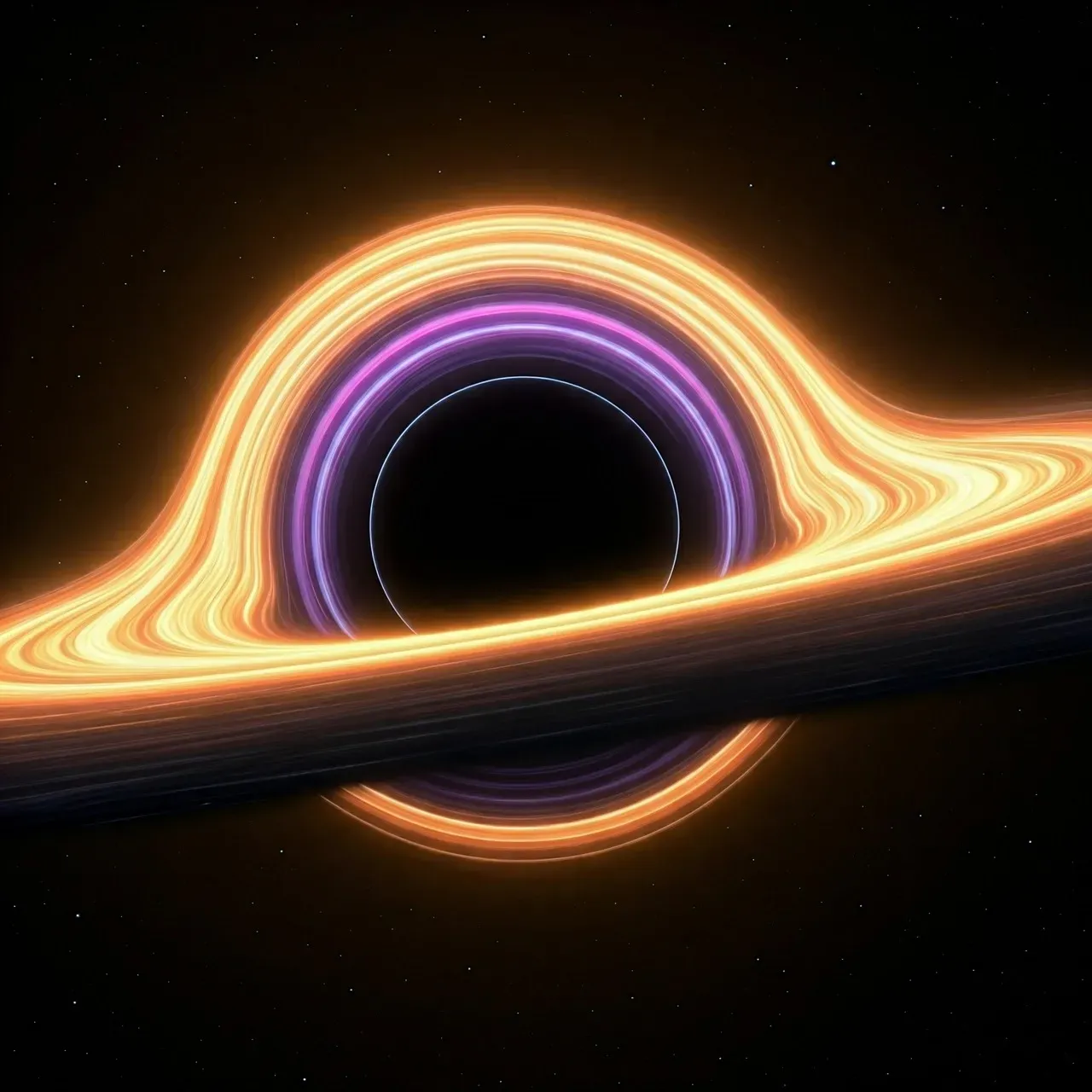
Here’s where physics starts reading like a fever dream. Closed timelike curves describe the trajectory of a hypothetical observer who, while always traveling forward in time from their own perspective, eventually finds themselves at the same place and time where they started. Your path through spacetime literally loops back on itself.
There are spacetime geometries with curves that loop back on themselves, and traveling along such a curve one would never exceed the speed of light, yet after a certain amount of proper time would return to a previously visited point in spacetime. General relativity doesn’t just allow these curves theoretically. Multiple solutions to Einstein’s equations predict them.
An early solution involved a massive long cylinder that spun fast, twisting spacetime along with it, proposed back in the 1920s. Kurt Gödel, Einstein’s neighbor at Princeton, discovered another solution. Gödel found a new solution to Einstein’s equations which allowed for time travel, much to Einstein’s discomfort. The catch? If the Big Bang was rotating, then time travel would be possible throughout the universe, but the universe does not rotate.
The Grandfather Paradox: Time Travel’s Biggest Headache

You knew this was coming. The grandfather paradox is a common objection to time travel, commonly described with a person who travels to the past and kills their own grandfather, prevents the existence of their parents, and therefore their own existence. If you cease to exist, you can’t go back to kill your grandfather. It’s a logical pretzel that has tormented physicists for decades.
Honestly, it sounds like it should close the book on time travel entirely. How does the universe handle such blatant contradictions? Interestingly, there are multiple proposed solutions, and they’re all fascinating in different ways.
Some philosophers argue that backward time travel might be possible but it would be impossible to actually change the past, an idea similar to the Novikov self-consistency principle, which states that any actions taken by a time traveler were part of history all along. Under this view, if you tried to shoot your grandfather, your gun would jam, or you’d slip at the crucial moment. The universe conspires to maintain consistency. The Novikov principle states that you can only engage in time travel loops that are self-consistent, with the universe not permitting contradictions through improbable chains of events preventing them.
Quantum Mechanics to the Rescue?
Recent research suggests quantum mechanics might resolve these paradoxes in unexpected ways. David Deutsch postulated quantum self-consistency, where a particle emitted with a probability of one half would enter a closed timelike curve and emerge to flip a switch with one half probability, imbuing itself at birth with a probability escaping the causative loop and the paradox. Translation? Quantum uncertainty creates wiggle room for time travel.
Ralph and his student Martin Ringbauer led a team that experimentally simulated Deutsch’s model for the first time, testing how the model deals with the grandfather paradox, with findings published in Nature Communications. The simulation used photons rather than people, obviously, but the results were intriguing. The quantum approach essentially allows multiple probabilistic outcomes that preserve consistency.
A recent study combining general relativity, quantum mechanics, and thermodynamics demonstrates that time travel might be feasible without leading to logical contradictions. Research showed that thermodynamics fundamentally changes on a closed timelike curve, with quantum fluctuations arising that can erase entropy, potentially having dramatic effects on a time traveler. Your memories might vanish, aging could reverse. Wild stuff.
Why We’re Not Swimming in Time Travelers
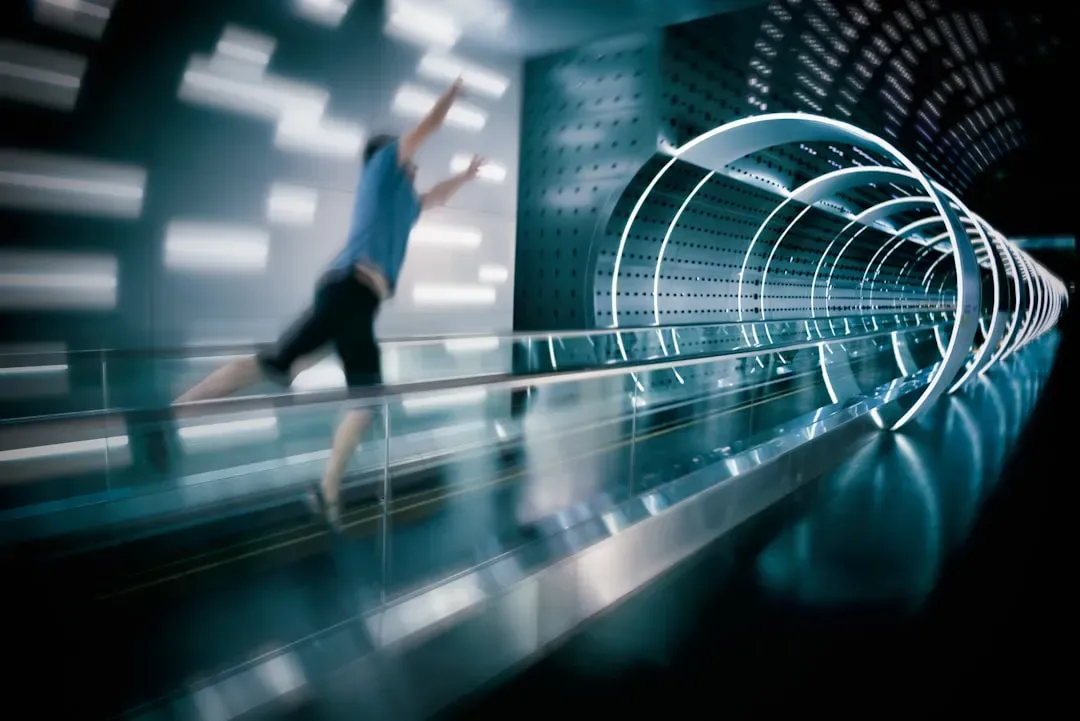
If time travel is possible according to physics, where are all the visitors from the future? The simplest answer is that time travel cannot be possible because if it was, we would already be doing it, or it is forbidden by the laws of physics like thermodynamics or relativity. This argument has a certain elegant simplicity to it.
Stephen Hawking proposed the chronology protection conjecture that the universe doesn’t allow time travel because it doesn’t allow alterations to the past, making the universe safe for historians. Hawking threw a party for time travelers in 2009, sending invitations only after the event concluded. Everyone was invited but no one showed up, as Hawking had expected, using it as a tongue in cheek experiment to reinforce his conjecture that travel into the past is effectively impossible.
Stephen Hawking proved a theorem showing that building a certain type of time machine is impossible in regions satisfying the weak energy condition, meaning regions with no negative energy density, requiring negative energy to build a finite time machine. The universe might have built-in safeguards against causality violations. Perhaps the laws of physics themselves conspire to prevent the paradoxes that would tear reality apart.
Time travel remains one of physics’ most tantalizing puzzles. The mathematics suggests it might be possible under extraordinarily specific conditions, yet every pathway seems blocked by insurmountable practical obstacles or theoretical paradoxes. We can send astronauts slightly into the future, but backward journeys remain firmly in speculation territory.
I think what’s most remarkable is that this question sits at the intersection of our deepest theories. Relativity, quantum mechanics, thermodynamics – they all have something to say about whether you could shake hands with your younger self. Whether time travel will ever move from theoretical possibility to engineered reality remains one of science’s great open questions. For now, we’re stuck moving through time the old fashioned way, one second per second, always forward.
What’s your take on it? Do you think we’ll crack the time travel puzzle someday, or are some doors meant to stay closed?