In the deep desert of Peru, a series of geometric stone corridors at Machu Picchu seem to align with solstices so precisely that some researchers joke they look like “time machines in stone.” Thousands of miles away, in the American Southwest, spiral rock carvings appear to track solar and lunar cycles over centuries, as if someone long ago wanted to pin time itself to the canyon walls. Today, physicists trying to bend time do not carve spirals into sandstone – they cool atoms to nearly absolute zero and fire particles through quantum circuits. Yet the question behind both efforts feels eerily similar: can humans somehow step outside the steady march of time? As new quantum experiments flirt with effects that look suspiciously like rewinding microscopic events, the old fantasies around time travel are starting to sound less like fantasy – and more like a hard scientific question.
The Hidden Clues in Ancient Stone
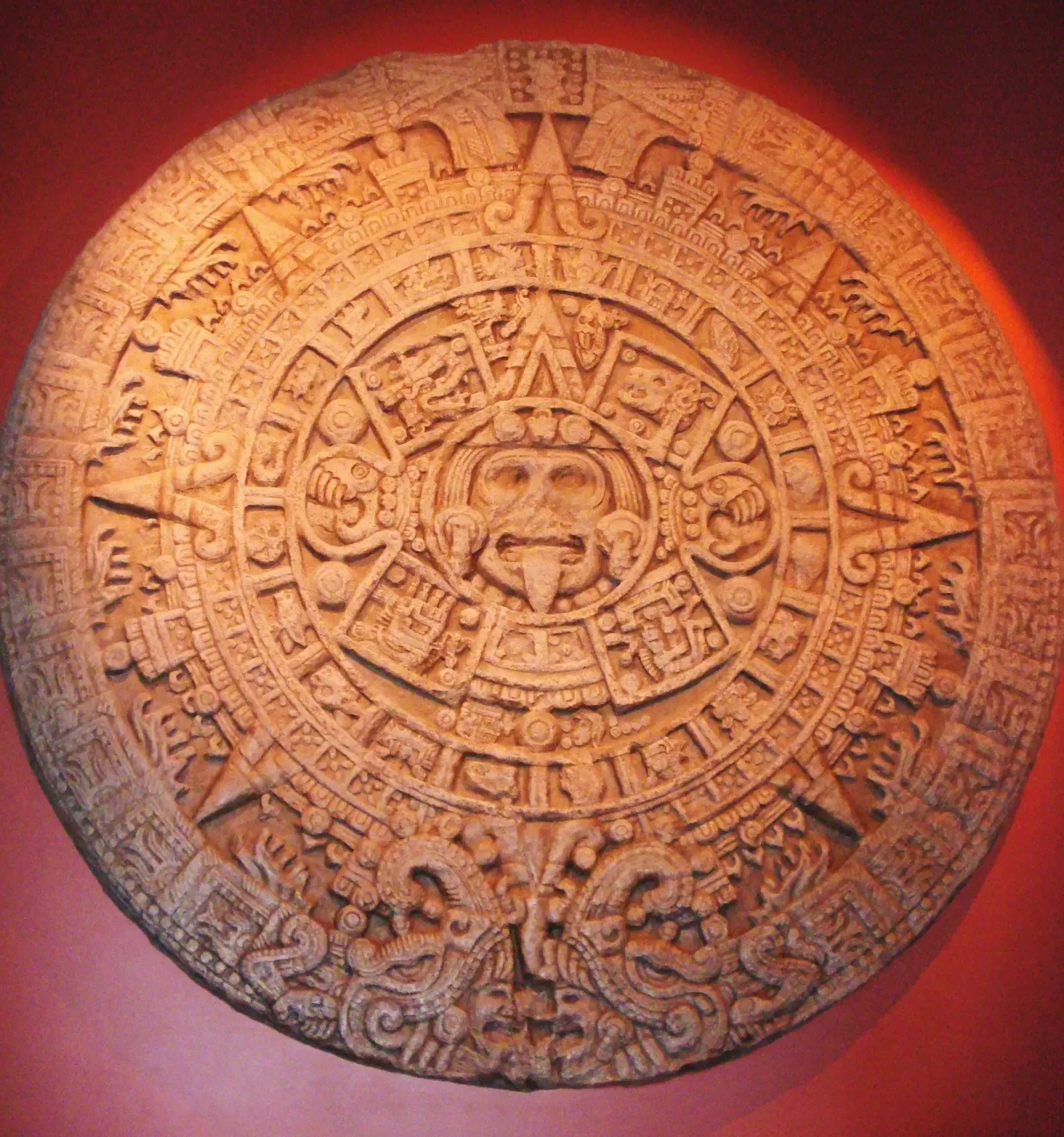
Walk into Chaco Canyon in New Mexico at dawn and it is hard not to feel that time itself is layered in the rock. The massive great houses – some with hundreds of rooms, built between roughly the ninth and twelfth centuries – line up with cardinal directions and key solar events so precisely that archaeologists now see them as gigantic timekeeping tools. In certain alcoves, a shaft of light crosses spiral petroglyphs exactly at solstices and equinoxes, turning natural rock faces into celestial clocks. To stand there is to realize that ancient engineers were not just marking seasons for farming; they were trying to anchor human life to cosmic cycles that stretched far beyond any single lifetime.
We see similar obsessions further south at sites like Teotihuacan in central Mexico, where the Avenue of the Dead appears to encode planetary alignments, and at Machu Picchu, where windows and stone pillars frame the rising sun with unnerving accuracy. These aren’t random coincidences; they represent centuries of observation and design, passed through generations without digital tools. In a way, these places function as “time stabilizers,” making the invisible flow of time visible and predictable on the ground. That drive – to measure, predict, and maybe tame time – is the same impulse that sends modern physicists into particle accelerators and quantum labs. We’ve traded sandstone and obsidian for lasers and superconductors, but the underlying human itch is identical: we want to know whether time is a road we simply walk, or something we might someday steer.
From Ancient Tools to Modern Quantum Experiments
Ancient cultures built solar temples and stone calendars; today, we build quantum clocks that would make those builders’ heads spin. The most advanced optical lattice clocks now lose less than a second over many billions of years, measuring time so finely that simply raising one clock a few centimeters in Earth’s gravity can make it tick at a slightly different rate. That tiny discrepancy is not a glitch – it is Einstein’s relativity in action, showing that time itself runs differently depending on where and how fast you are. When researchers talk about time travel in the scientific sense, they are usually talking about pushing these relativistic effects to extremes, for instance by moving very fast or plunging into intense gravitational fields.
Quantum physics, however, adds a twist that ancient sky-watchers could never have imagined. In recent years, experiments with quantum entanglement and so‑called quantum “rewind” protocols have shown that, under strict conditions, the state of a quantum system can be mathematically evolved backward. These are not DeLorean-style leaps, but they do hint that at the microscopic level, the fundamental equations of physics do not especially care which direction time is flowing. Unlike stone observatories, which fix our place in cosmic cycles, quantum devices let us sculpt tiny islands of reality where time behaves in unfamiliar ways. The question now is whether those islands can ever grow large enough to matter to us, the big, warm, living things stuck firmly in what we call the present.
Inside the Quantum Realm: Where Time Gets Weird
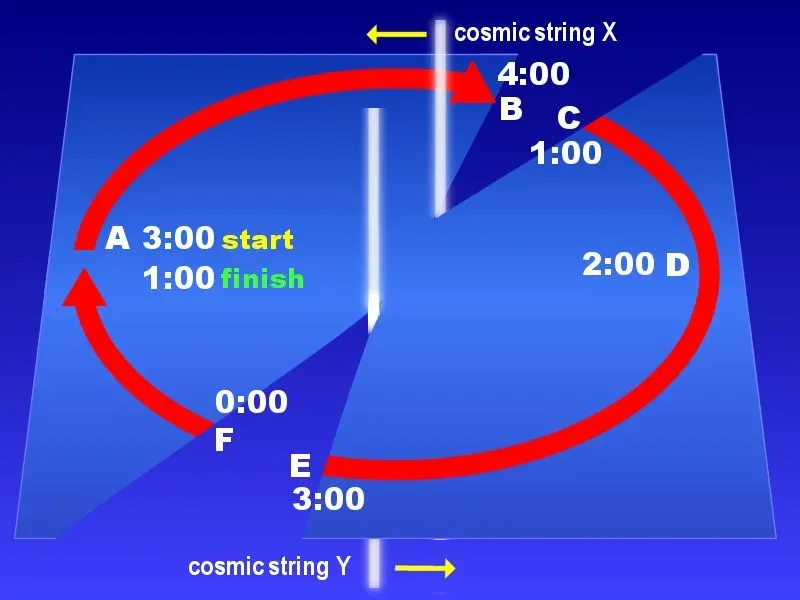
On the quantum scale, particles behave less like solid pebbles and more like smeared-out possibilities. A single electron can interfere with itself as if it traveled along multiple paths, and only when it is measured does it “decide” which path it took. For time, this is a nightmare and a playground at once, because it forces physicists to ask whether a particle’s history is fixed or only crystallizes when we look. Some theoretical models describe closed timelike curves – loops in spacetime that could, in principle, send a particle back to interact with its own past. Others try to mimic such loops using quantum circuits that let information interact with earlier versions of itself, all while carefully avoiding paradoxes.
Recent experiments do not literally send particles into the past, but they imitate some of the same logic. In certain quantum teleportation and feedback setups, researchers can set conditions so that only histories leading to self-consistent outcomes are allowed to “survive” in the final data. That sounds strangely similar to old myths of fate, where only one version of events is ultimately possible, no matter what choices are made along the way. But the more we probe these systems, the clearer the limits appear: you can nudge probabilities, you can reverse some microscopic dynamics, yet you cannot simply step into yesterday and say hello to yourself. The quantum realm bends our common-sense idea of time until it creaks, but so far it has not snapped.
Relativity, Time Dilation, and Why This Already Is Time Travel
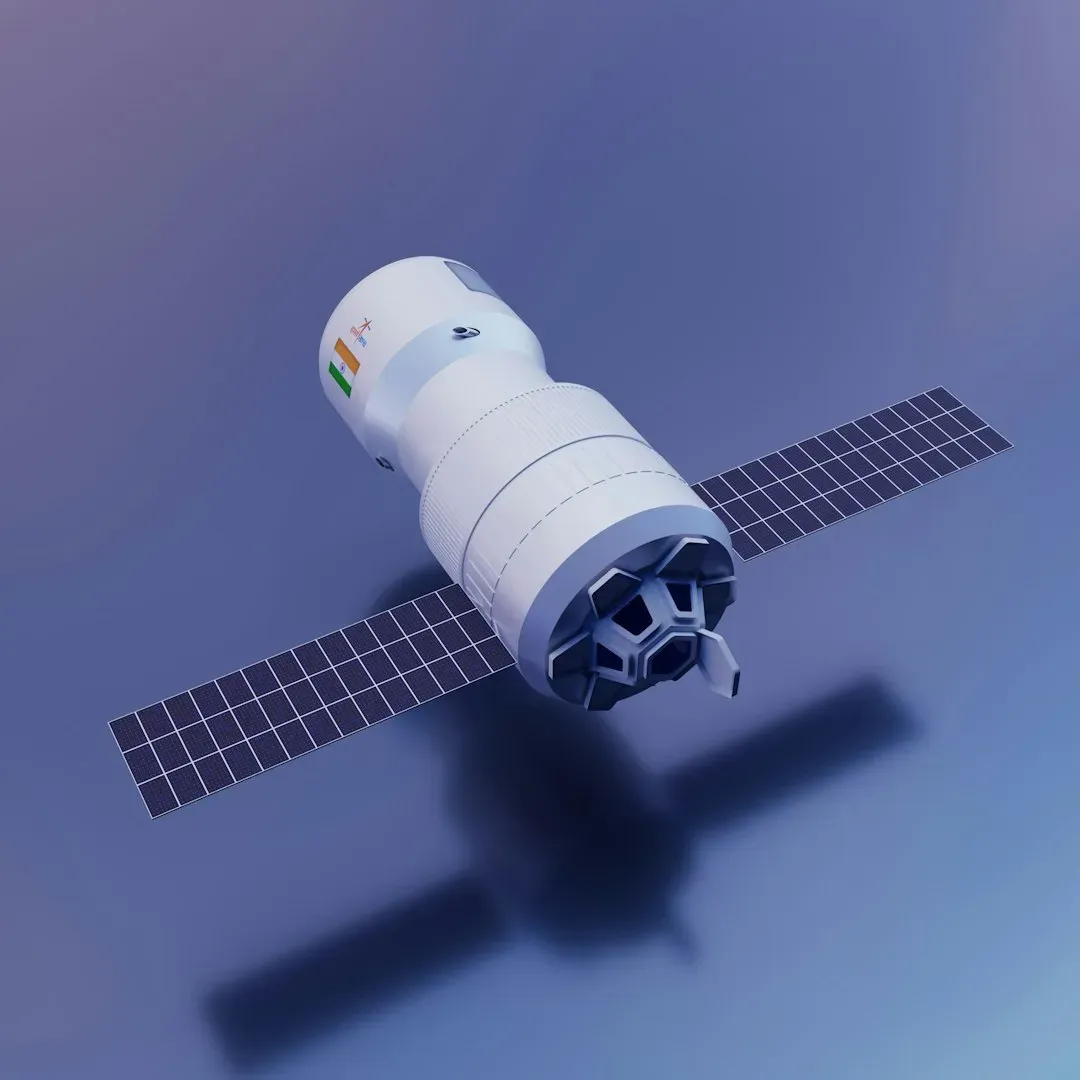
There is one slightly uncomfortable truth that rarely makes it into science fiction: some forms of time travel already exist, and we use them every day. Astronauts on the International Space Station orbit Earth at high speed, experiencing time a tiny bit differently from people on the ground. When they return, the mismatch adds up to microseconds, meaning they have effectively leapt a fraction of a second into our future. High-precision GPS satellites must constantly correct for both their speed and altitude, because otherwise their clocks would drift away from those on Earth, and your navigation app would start to lose its way.
None of this involves quantum tricks; it is pure relativity. Still, once you accept that time can stretch and warp depending on motion and gravity, the door to more extreme scenarios cracks open. Theoretically, a spaceship moving at a substantial fraction of light speed could plunge its crew far into the future relative to people left behind, a sort of one-way ticket forward in time. Popular discussions often blur this with “time travel,” but it is closer to time skipping – a ride on the natural curves built into spacetime, not a violation of them. Against that backdrop, the quantum realm becomes less about breaking time and more about whether we can learn to navigate those curves with previously unimaginable precision.
Why It Matters: Time, Identity, and the Story of Civilization
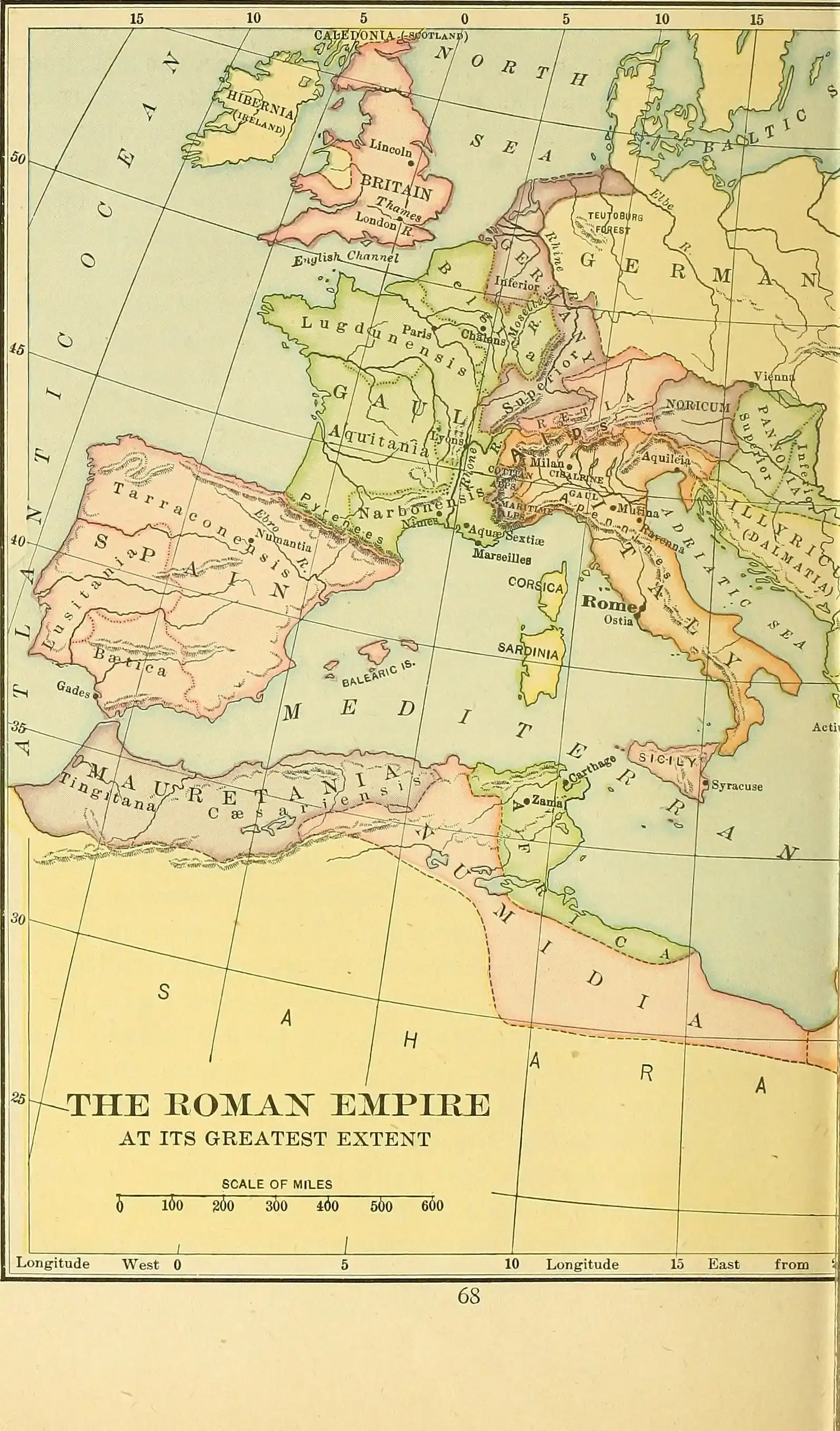
At first glance, time travel through the quantum realm sounds like pure entertainment, something to fuel movie plots rather than serious budgets. But how we think about time shapes almost everything else: how we record history, how we plan for the future, and even how we understand who we are. Ancient builders carving alignments into desert stone were not just tracking seasons; they were embedding stories of origin, destiny, and cosmic order into the landscape. Their monuments tied people to a grand narrative that stretched backward to the ancestors and forward to unborn generations.
Our modern obsession with quantum time is a different flavor of the same urge. If time turns out to be more flexible, less absolute, we could be forced to rethink ideas of cause and effect that underpin law, ethics, and memory. Consider how much weight we place on timelines – who did what, when, and in what order. A technology that could rewrite or even just ambiguously blur that order, even at the level of information, would challenge everything from courtroom evidence to how we secure financial records. In that sense, the scientific study of time is not abstract at all; it is a pressure test for the foundations of civilization itself.
Global Perspectives: Timelines From Sacred Sites to Supercolliders
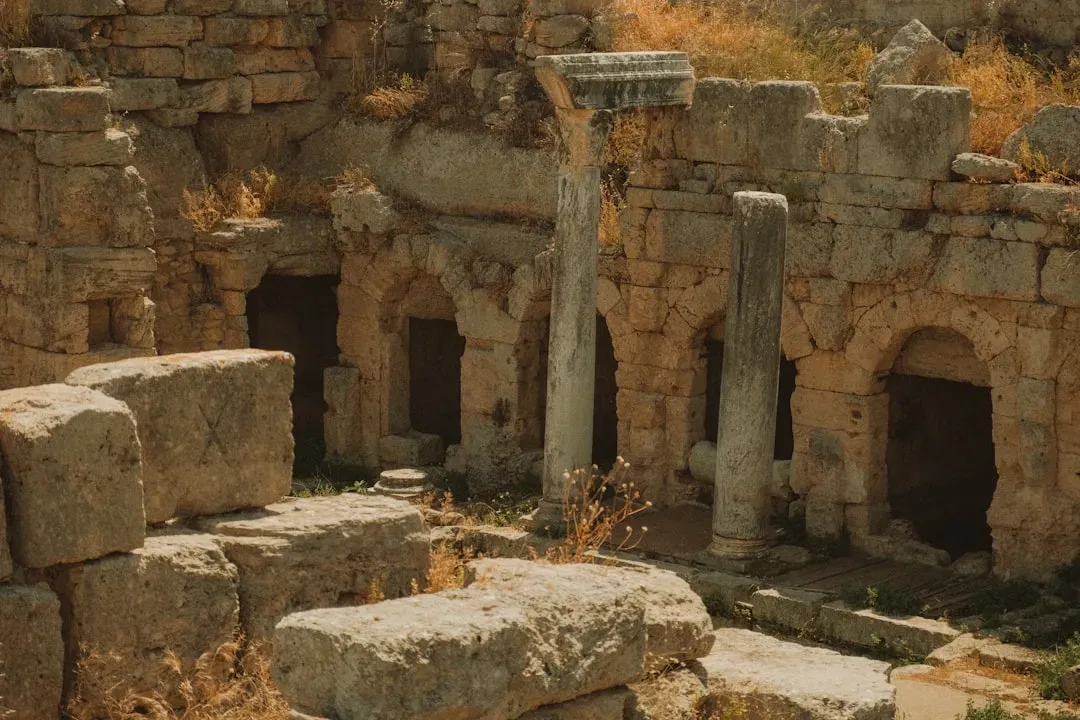
Different cultures have long held very different relationships with time, and that diversity colors how we now talk about quantum time travel. In many Indigenous American traditions, time is cyclical and layered, more like a spiral than a straight line, with ceremonies and places acting as anchors across generations. When archaeologists map ancient roads lining up with solstices or mountaintops, they are not just finding clever engineering; they are glimpsing a worldview where the past constantly loops back into the present. In contrast, the dominant modern scientific view treats time as a parameter in equations, something continuous, measurable, and endlessly divisible.
Today, those worldviews meet in curious ways. Supercolliders beneath European fields and quantum labs in Asian megacities chase effects that may reveal whether time is fundamentally smooth or grainy, while tourists stand in Central American temples watching the sun trace the same arcs it has for millennia. There is a quiet dialogue here, even if we rarely name it aloud. Ancient sites remind us that humans can live meaningfully with a sense of time that is sacred and cyclical. Modern physics suggests that, under the hood, the universe might be stranger than either our myths or our equations have admitted so far. Somewhere in between lies the question that keeps both archaeologists and quantum theorists awake at night: what, exactly, is a moment?
The Future Landscape: Quantum Technologies and the Edge of Time Control
Looking ahead, the most realistic breakthroughs will not be romantic time machines but ruthless instruments of precision. Quantum clocks and networks are on track to redefine how we keep global time, potentially syncing devices around the planet with accuracy that once seemed impossible. Researchers are exploring quantum sensors that could detect tiny fluctuations in gravity and time flow, revealing underground structures or shifts in Earth’s crust long before other instruments can. In a sense, we are building a new kind of “stone calendar” for the twenty‑first century, except this one will be wired into satellites, data centers, and autonomous systems.
There are also more speculative avenues. Ideas about using quantum entanglement to coordinate decisions across vast distances, or to secure information against tampering by effectively tying it to a particular temporal sequence, are being hammered into testable protocols. None of these will let someone step into a portal and visit an ancient temple under construction, but they might let us lock events into time with a rigidity those ancient builders would have envied. The challenges are formidable: decoherence, engineering limits, and an uneasy mix of national security interests and open science norms. Yet the global implications are clear. Whoever masters timekeeping and time‑sensitive quantum networks will hold a powerful, if subtle, lever over finance, communication, and even how we define what “now” means.
How You Can Engage With the Science of Time
For most of us, the quantum realm will never be more tangible than a glowing graphic in a documentary, but that does not mean we are locked out of the conversation. One simple starting point is to seek out public lectures, museum exhibits, or online courses on relativity and quantum physics, many of which are designed specifically for non‑experts. Visiting ancient observatories, from the American Southwest to Mesoamerican pyramids or European stone circles, is another surprisingly powerful way to feel the weight of time science in your bones. Standing where people once watched the same sun we see today can make quantum debates about time feel less abstract and more like the next chapter in a very long story.
You can also support organizations that preserve archaeological sites and fund basic physics research, both of which are under more pressure than most people realize. Even small actions – following reputable science outlets, pushing back on misleading time‑travel myths online, encouraging curiosity in kids – help build a culture that takes time seriously. After all, every society writes its values into how it measures and remembers its days. The question is whether we choose to treat time as a disposable background setting, or as a fragile, fascinating dimension worth understanding as deeply as we can.
Suhail Ahmed is a passionate digital professional and nature enthusiast with over 8 years of experience in content strategy, SEO, web development, and digital operations. Alongside his freelance journey, Suhail actively contributes to nature and wildlife platforms like Discover Wildlife, where he channels his curiosity for the planet into engaging, educational storytelling.
With a strong background in managing digital ecosystems — from ecommerce stores and WordPress websites to social media and automation — Suhail merges technical precision with creative insight. His content reflects a rare balance: SEO-friendly yet deeply human, data-informed yet emotionally resonant.
Driven by a love for discovery and storytelling, Suhail believes in using digital platforms to amplify causes that matter — especially those protecting Earth’s biodiversity and inspiring sustainable living. Whether he’s managing online projects or crafting wildlife content, his goal remains the same: to inform, inspire, and leave a positive digital footprint.