
Imagine crawling through a narrow rock tunnel, headlamp flickering, miles away from sunlight or cellphone signals. Your sense of time is already starting to warp; minutes feel like hours, or maybe the other way around. Now push that idea further: what if time itself actually ticks more slowly deep underground, not just in your mind, but in the fabric of reality?
This sounds like something straight out of a sci‑fi movie, but it touches real physics that scientists have been testing and arguing about for decades. Thanks to Einstein, atomic clocks, and some surprisingly simple ideas about gravity, we can actually ask a wild question with a serious face: in the deepest caves on Earth, are people ever so slightly younger than those on the surface?
The Strange Idea That Gravity Can Bend Time
It still feels shocking that one of the most accepted ideas in modern physics is that time doesn’t run the same everywhere. According to general relativity, gravity isn’t just a force that pulls you down; it actually curves space and time themselves. Where gravity is stronger, time runs a tiny bit slower compared with places where gravity is weaker.
It’s not just theory on a chalkboard. Scientists have tested this by putting super-precise atomic clocks at different heights. A clock at the bottom of a tall building really does tick slightly slower than one on the roof. The difference is unbelievably small, but it’s measurable. That’s the same core idea you’d need if you want to ask whether time might slow down in a deep cave.
Does Going Deeper Underground Increase Gravity Or Decrease It?
At first glance, you might think that the deeper you go into Earth, the stronger gravity gets, and therefore the more time would slow down. But nature rarely gives us the obvious answer. Inside a massive sphere like Earth, the gravitational pull actually decreases the deeper you go, because part of the mass is now above you, effectively pulling you upward.
Physicists model this using what’s called the shell theorem: the layers of rock above you sort of cancel out some of the pull from the layers below. So even though you might feel buried under miles of stone, the raw gravitational pull is actually a bit weaker than at the surface. That complicates the picture if you’re trying to say whether time below ground is slower or faster than time above ground.
So Is Time Slower Or Faster In A Deep Cave Compared To The Surface?
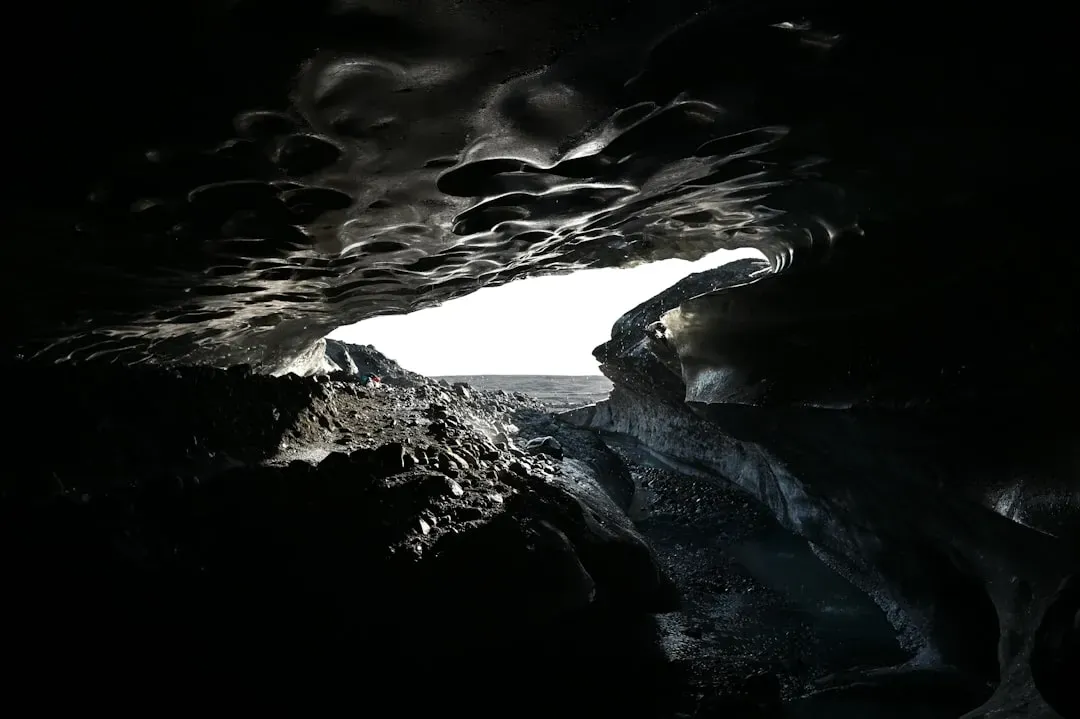
Here’s where things get delightfully counterintuitive. Time dilation from gravity depends mostly on how deep you are in Earth’s overall gravitational potential, not just on the local strength of gravity where you stand. Being closer to the center of Earth means you’re deeper in its gravitational well, which tends to slow time relative to someone farther out, even if the measured pull of gravity right there is weaker.
This means that, in principle, a person standing in a very deep cave would experience time passing ever so slightly more slowly than someone at sea level, and someone standing on top of a high mountain would have time pass slightly faster. The effect is unimaginably tiny for normal human experience, but not zero. Over a lifetime, though, the difference for a cave explorer would be far less than the blink of an eye.
What Do Atomic Clocks Tell Us About Time At Different Heights?

Physicists have run elegant experiments where they place atomic clocks just a few tens of centimeters apart in height and measure how their ticking rates differ. The higher one, sitting in slightly weaker gravity, runs a tiny bit faster than the lower one. You don’t feel this at all, but the instruments absolutely do. It’s like watching two ultra-precise metronomes ticking out of sync after a very, very long time.
In practice, clocks in satellites orbiting Earth, like those used in GPS, have to be corrected for this gravitational time dilation. Without those corrections, your phone’s location would drift wildly off target. That’s strong evidence that our understanding of gravity and time is not just abstract math; it works in real-world systems you rely on every day, even if you’re never going near a cave.
How Big Would The Effect Be In Earth’s Deepest Known Caves?
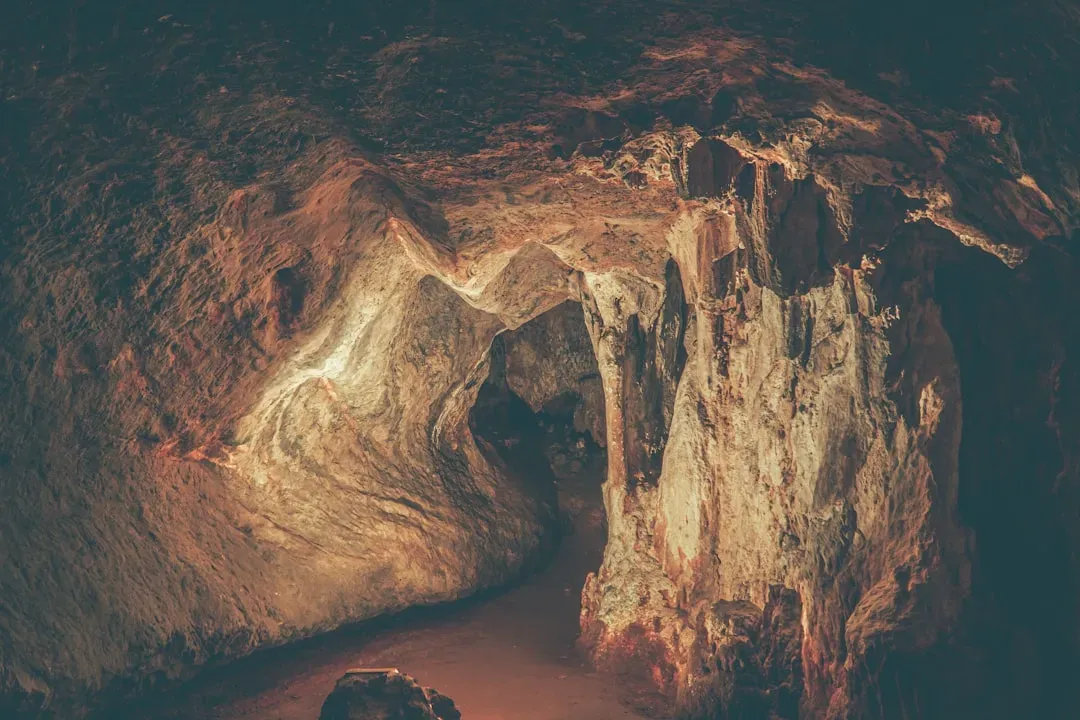
Let’s bring this back to actual caves you could visit. The world’s deepest known caves, like those in Georgia’s Caucasus region, reach depths of more than two kilometers below the surface. Compared with sea level, the time difference for a person spending a day down there versus a person on the surface would be so small that you’d need absurdly sensitive equipment to even think about measuring it.
We’re talking about a difference far smaller than the time it takes light to cross the thickness of a human hair. You’d never age noticeably slower. If you spent your entire life underground, you might gain a tiny fraction of a nanosecond compared with a lifelong mountaintop dweller. It’s a fun twist: a cave explorer really could claim to be just a unimaginably tiny bit “younger,” but in any everyday sense, it doesn’t change a thing.
Why Our Brains Think Time Slows Down Underground Anyway
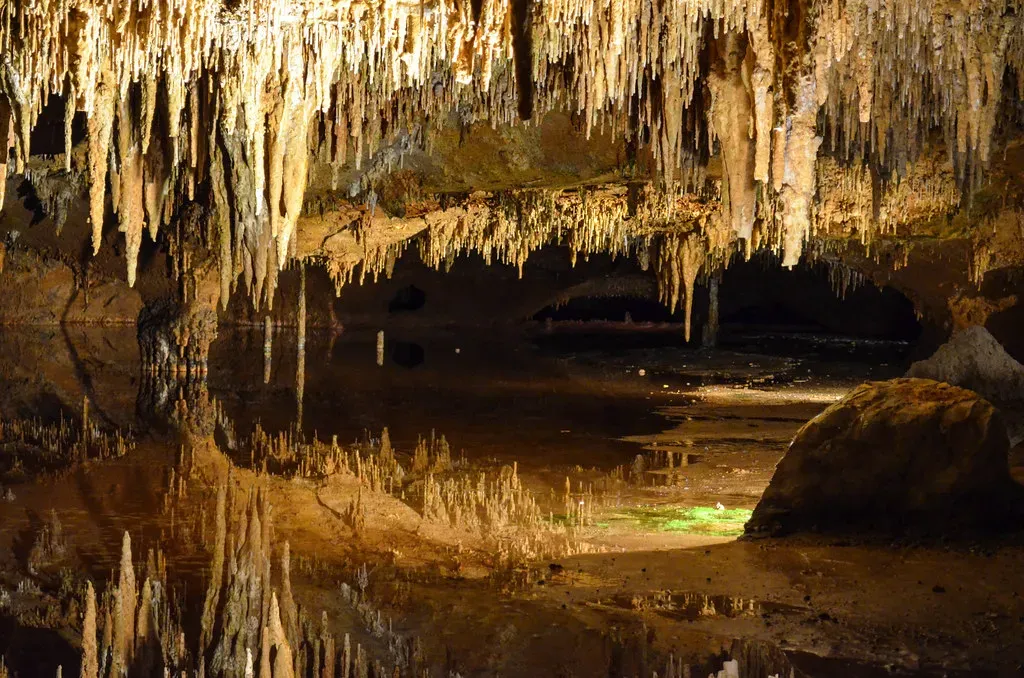
Even though physics says the effect is microscopic, anyone who’s been in a cave knows your sense of time can get weird. No sun. No sky. No changing light or weather. Your brain loses the normal cues it uses to track how long you’ve been awake or how many hours have passed, and that can make it feel like time itself is warping. In extreme isolation experiments, people have badly misjudged how long they’ve been underground.
There have even been situations where researchers living in caves lost track of day and night so much that they shifted into their own personal rhythm, sleeping and waking on cycles that didn’t match twenty-four hours. From their point of view, time really did feel slower or faster, even though the clocks back on the surface disagreed. In that sense, caves bend psychological time way more dramatically than they bend physical time.
What This Thought Experiment Really Tells Us About Time
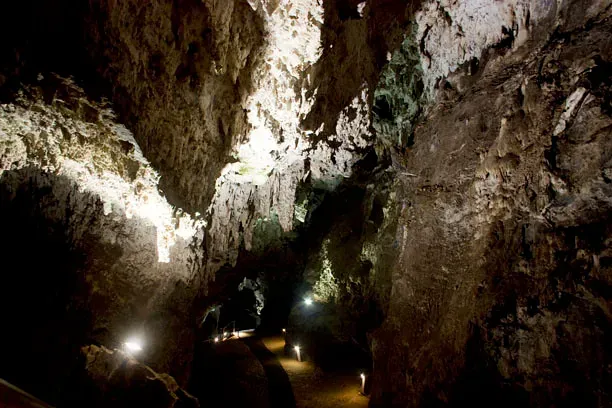
Thinking about time in deep caves forces you to accept something quietly radical: time is not the universal, rigid background we grow up imagining. It stretches and squashes depending on gravity and motion, even if those changes are usually too small for us to feel. Just the fact that going a bit higher in a building or lower into a cave changes your ticking rate, even by a hair, is a sign that reality is stranger than our instincts.
At the same time, this mix of hard science and eerie cave environments has a kind of poetic charm. The caves do not offer some magical shortcut to youth; they only remind us that our lives are played out against a universe where time is elastic and relative. Knowing that, does it make you look at your next second, wherever you are, any differently?