
Imagine if the periodic table hanging in every classroom was quietly incomplete. Not because scientists forgot something, but because nature is hiding a few secrets almost three thousand kilometers beneath our feet, in a place no human will ever visit. The idea that Earth’s core might conceal unknown elements sounds like pure science fiction, yet it touches real open questions in physics, chemistry, and geology.
We have sent probes beyond the Solar System, but when it comes to Earth’s own interior, we’re still mostly guessing from indirect clues. Pressure there crushes matter to densities that laboratories only began to approximate in the past few decades, and temperatures rival the surface of the Sun. In those conditions, even familiar atoms may behave in shockingly unfamiliar ways – and that’s exactly where the speculation about hidden elements begins.
Why We Can’t Just “Dig Down And Check”
It’s tempting to think we could simply drill deeper, grab a sample, and settle the question, but the reality is brutally simple: we can’t even scratch the outermost fraction of the planet. The deepest hole humans have ever drilled, the Kola Superdeep Borehole in Russia, reached about twelve kilometers before heat and pressure made further progress impossible. That’s less than one fifth of one percent of the way to the core–mantle boundary.
Below the crust, pressures climb to millions of times atmospheric pressure and temperatures soar to thousands of degrees Celsius. Steel would deform, electronics would fail, and any drill head we can currently build would be destroyed long before touching the outer core, let alone the inner core. So we’re stuck doing something that feels slightly unsettling: building our entire picture of Earth’s interior from seismic waves, gravity measurements, magnetic fields, and tiny high-pressure experiments on the surface.
What We Actually Know About The Core’s Composition
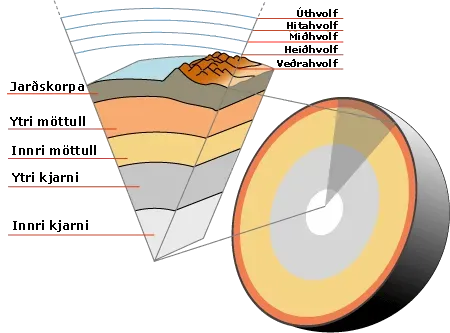
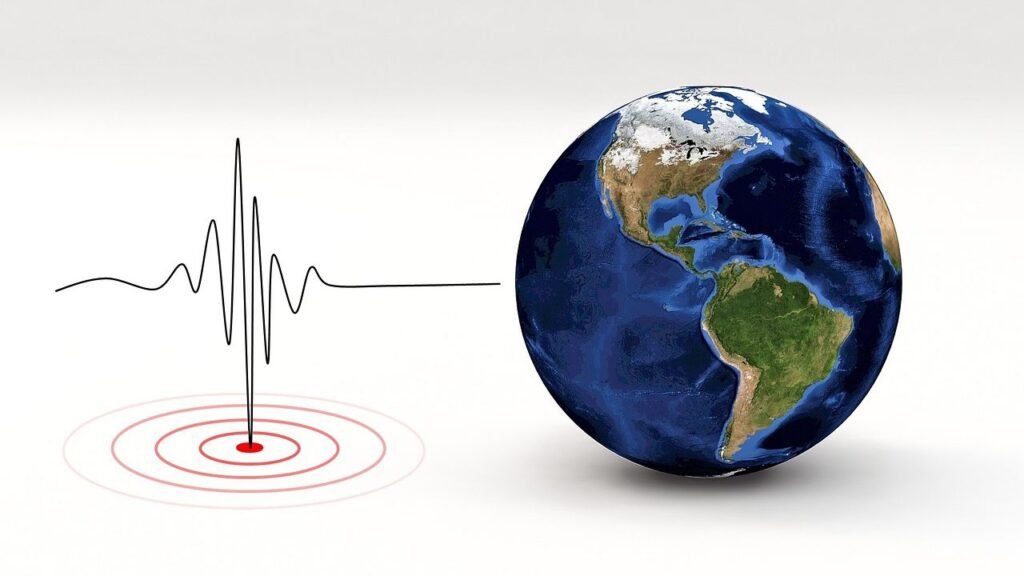
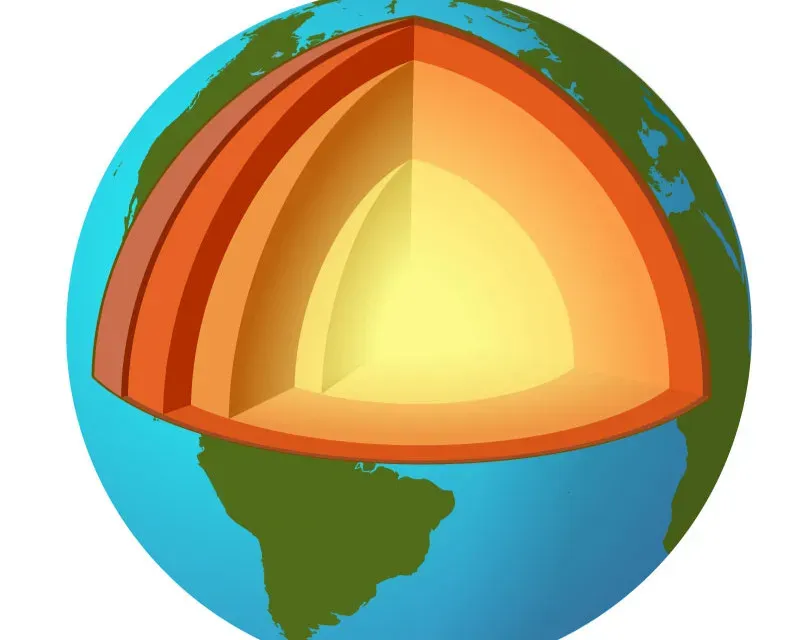
For all the mystery, scientists do agree on a few big things. The core is mostly made of iron, with a bit of nickel mixed in, and it’s split into a liquid outer core and a solid inner core. That conclusion comes from how earthquake waves travel through the planet: some types of waves can’t pass through liquid, others speed up in solids, and by mapping those patterns, geophysicists essentially do a form of medical imaging on Earth itself.
But here’s where it gets interesting: when you calculate how dense pure iron and nickel should be at core pressures and temperatures, the result is slightly too heavy compared with what Earth’s gravity and seismic data tell us. That mismatch implies there must be lighter elements dissolved in the core – maybe silicon, sulfur, oxygen, carbon, or hydrogen. So we know the core isn’t chemically simple, but we don’t yet have a precise recipe. That gap in knowledge leaves just enough space for bolder questions, including whether anything more exotic could be lurking there.
The Periodic Table: Finished Masterpiece Or Work In Progress?
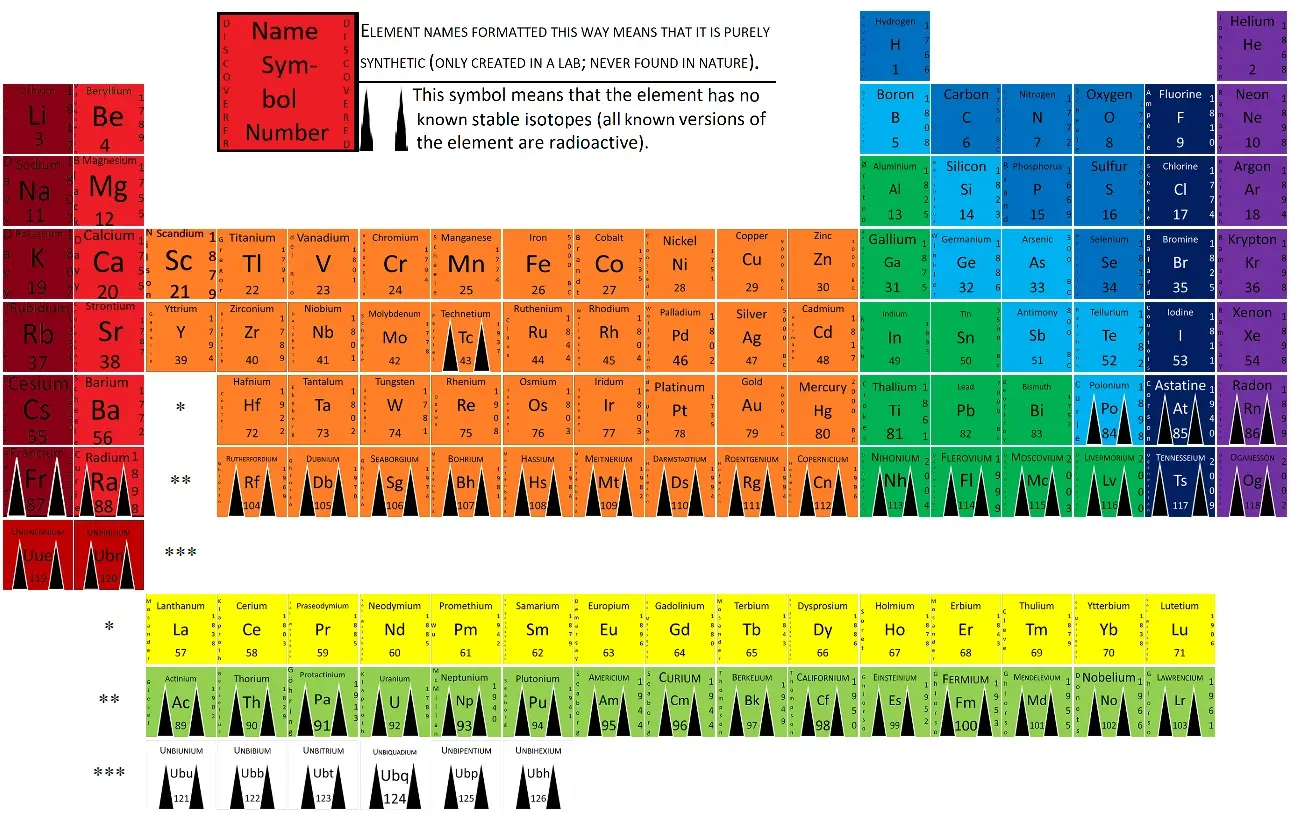
The modern periodic table looks stable and complete, but its recent history says otherwise. In the last few decades alone, researchers have confirmed several superheavy elements – like nihonium and oganesson – that exist only for fractions of a second in particle accelerators before decaying. These elements occupy spots predicted by quantum theory rather than discovered in nature, and they are created one atom at a time in intricate nuclear collisions.
Because these superheavy elements are so unstable, we don’t expect them to sit around in the core for billions of years. Still, the fact that the table has stretched this far raises an awkward question: are we absolutely sure that all naturally occurring, long-lived elements have already been found at Earth’s surface? The general consensus is yes, largely because radioactive decay chains and cosmic abundances have been mapped in detail. But a small part of the fascination with the core comes from wondering whether extreme conditions could stabilize unexpected nuclear or electronic configurations that we haven’t fully explored.
Could Extreme Pressure Create “New” Kinds Of Matter?
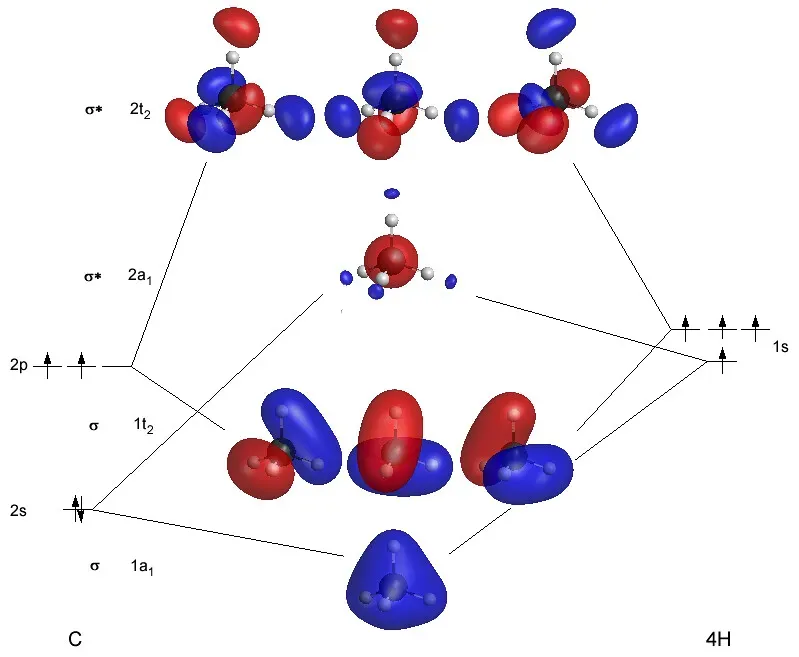
What really changes in the core is not the nuclei themselves, but how electrons behave when atoms are squeezed together unimaginably tightly. Under core conditions, the usual picture of discrete atoms touching each other breaks down; electrons can delocalize, and materials can become metallic, superconducting, or adopt bizarre crystal structures that simply don’t exist at normal pressures. In that sense, while the elements themselves stay the same, the matter they form becomes almost unrecognizable.
Laboratory experiments using diamond-anvil cells – tiny devices that squeeze materials between the tips of two diamonds – have already revealed shocking behaviors. Familiar substances like sodium, for example, can turn transparent and insulating under high pressure, which is the opposite of how it behaves in your kitchen salt. Hydrogen, the lightest element, is predicted to become metallic at very high pressures, potentially even superconducting. These transformations don’t add new elements to the table, but they hint that the core may host phases of matter so alien that, from our everyday perspective, they feel like something entirely new.
Why Hidden Elements Are Unlikely – But Not A Stupid Question
From a strict nuclear physics standpoint, the odds that Earth’s core contains a totally new naturally occurring element are extremely low. Long-lived isotopes of unknown elements would leave signatures in radioactive decay products, in meteorites, in cosmic-ray tracks, and in the spectra of stars. Over the past century, scientists have looked hard for such anomalies and have not found anything that clearly demands a brand-new element hiding out of sight. The broad pattern of element abundances in the universe also fits well with what we know about how stars and supernovae forge atoms.
That said, “unlikely” is not the same as “ridiculous.” The question itself is useful because it forces researchers to check their assumptions about what counts as “ruled out.” Similar questions in the past – like whether there could be unknown particles, unexpected planetary layers, or new phases of ice – have sometimes led to genuine discoveries, even if the original speculation turned out to be slightly off-target. In a way, wondering about hidden elements in the core functions as a stress test for our theories: if our models are solid, they should explain why the answer is probably no, and show clearly what kind of evidence would be needed to prove otherwise.
Where The Real Mystery Probably Lies: Strange Alloys, Not New Elements
The more realistic mystery in the core is not about missing boxes on the periodic table, but about weird mixtures and compounds formed under crushing pressures. Think of it less as discovering a new letter in the alphabet and more as finding words and sentences you didn’t know you could build from the letters you already have. For example, high-pressure research has suggested that iron can mix with light elements like hydrogen or carbon in unexpected ratios, creating alloys with surprising densities and melting behaviors.
These exotic alloys could explain puzzles like why the inner core seems to be softer in some directions than others, or why its rotation may not stay perfectly locked to the mantle. They may also play a role in how heat moves out of the core, which in turn affects the geodynamo that generates Earth’s magnetic field. If you care about why compasses work, why auroras glow, or how well our atmosphere stays shielded from harmful solar particles, then you indirectly care about those mysterious mixtures deep below, even if every atom involved belongs to an element we already know by name.
How Future Experiments Might Tighten The Answer
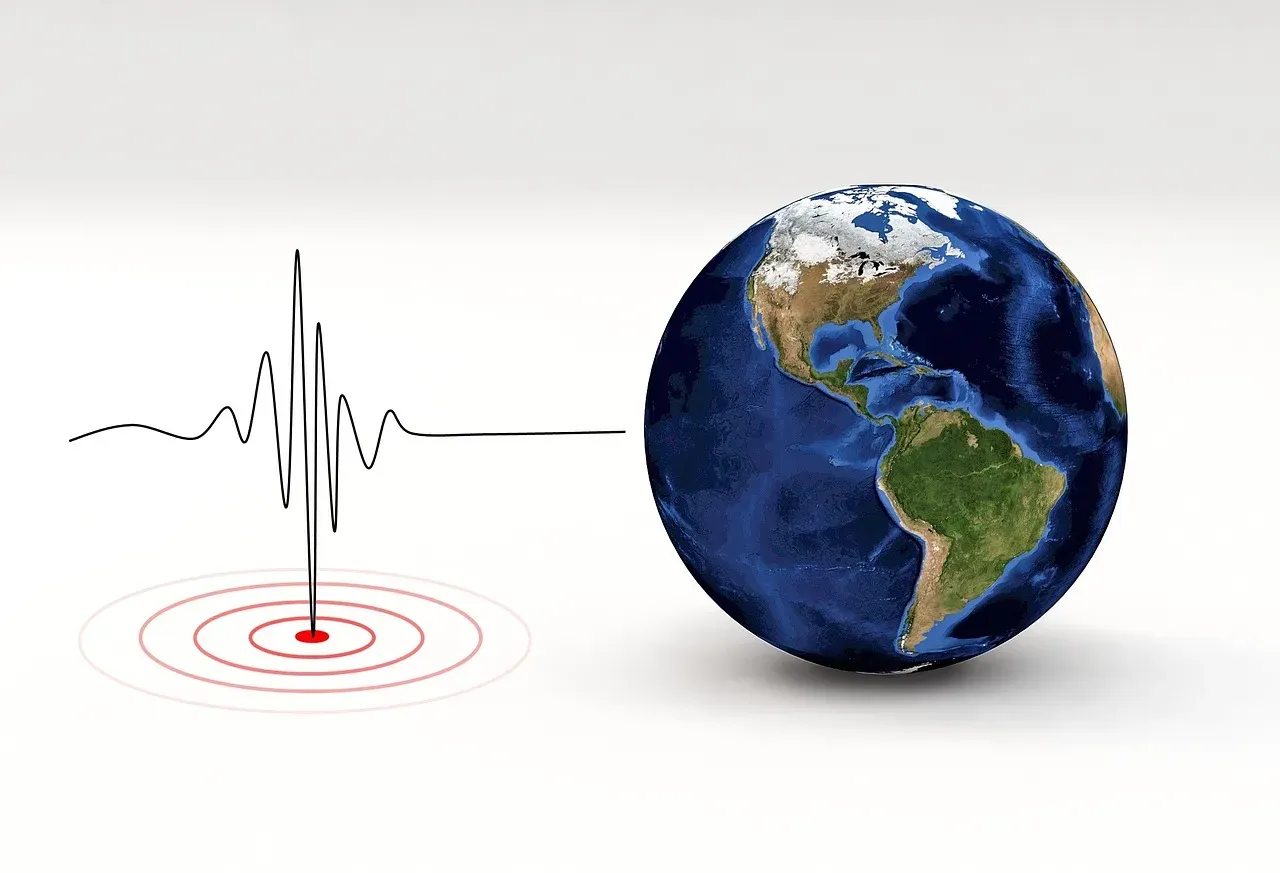
So if we can’t dig, how do we push this question any further? One path is improving seismic imaging: as global networks of seismometers grow denser and computing power increases, scientists can build more detailed three-dimensional models of Earth’s interior. Subtle differences in how waves move through the core can tell us whether the mix of elements and phases we assume actually makes sense, or whether something important is missing. Even tiny deviations challenge researchers to refine their simulations of core composition.
On the lab side, next-generation high-pressure facilities are starting to recreate conditions closer to those in the deep core, combining crushing pressures with intense heating and fast diagnostics. Powerful X-ray sources allow scientists to watch matter rearrange itself in real time under these extremes. Each improved experiment narrows the range of plausible core compositions – and with it, the room left for surprises. If there were some exotic, long-lived element stable only in the core, its fingerprints would eventually have to match up – or fail to match up – with what these measurements are telling us.
The Real Wonder Beneath Our Feet
When you put all the pieces together, the sober answer is that truly undiscovered elements hiding in Earth’s core are highly improbable, but the region is still far from boring. The real fascination comes from how familiar elements are pushed into regimes so extreme that they essentially reinvent themselves, forming alloys and structures that reshape our understanding of planets. In that sense, the core is less a treasure chest of missing elements and more a pressure cooker for strange matter built from the ingredients we already know.
There’s something quietly thrilling about realizing that our own planet still holds such profound secrets just out of reach, not in distant galaxies but directly below the soles of our feet. Even if the periodic table is basically complete, our understanding of how those elements behave in the wild is nowhere near finished. The next big surprise may not be a brand-new element but a new way that iron, hydrogen, or carbon behaves under crushing depths. And when that happens, will it feel any less astonishing just because the name was already on the chart?