
Imagine you’ve lived in the same house your entire life, yet one day you discover there might be a whole extra room you never knew existed. That’s roughly the mind-bending situation astronomers face right now. We’ve explored, mapped, and catalogued our solar system for centuries, and yet a growing body of evidence suggests something enormous could still be lurking in the icy darkness far beyond Neptune, completely invisible to us so far.
The idea of a ninth planet isn’t fringe science or science fiction. It comes from some of the sharpest planetary scientists on the planet, backed by gravitational clues that are genuinely hard to explain away. Whether you’re a casual stargazer or someone who barely remembers what a trans-Neptunian object is, this story is one that will make you see our cosmic neighborhood very differently. Let’s dive in.
The Pluto Problem That Sparked Everything
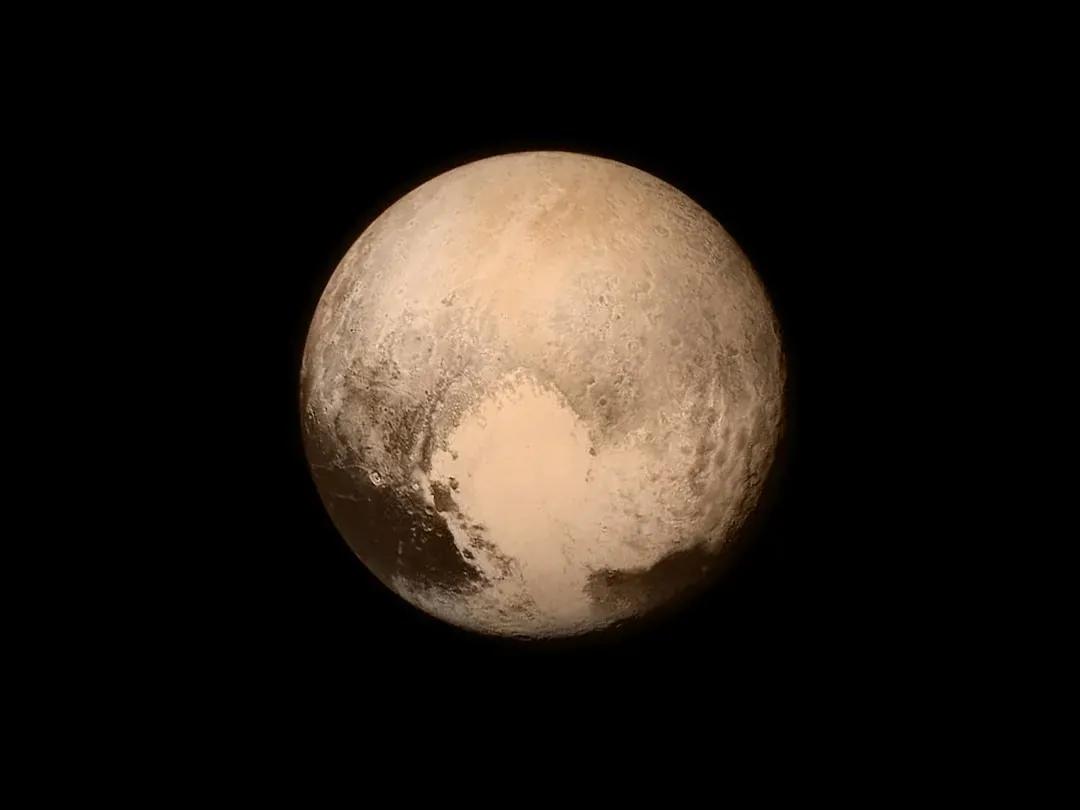
Here’s the thing: this whole story starts with a demotion. In 2006, astronomy lovers mourned the demotion of what had been the solar system’s ninth planet: Pluto. That reclassification left our solar system with eight official planets and a lot of unanswered questions lingering at its edges.
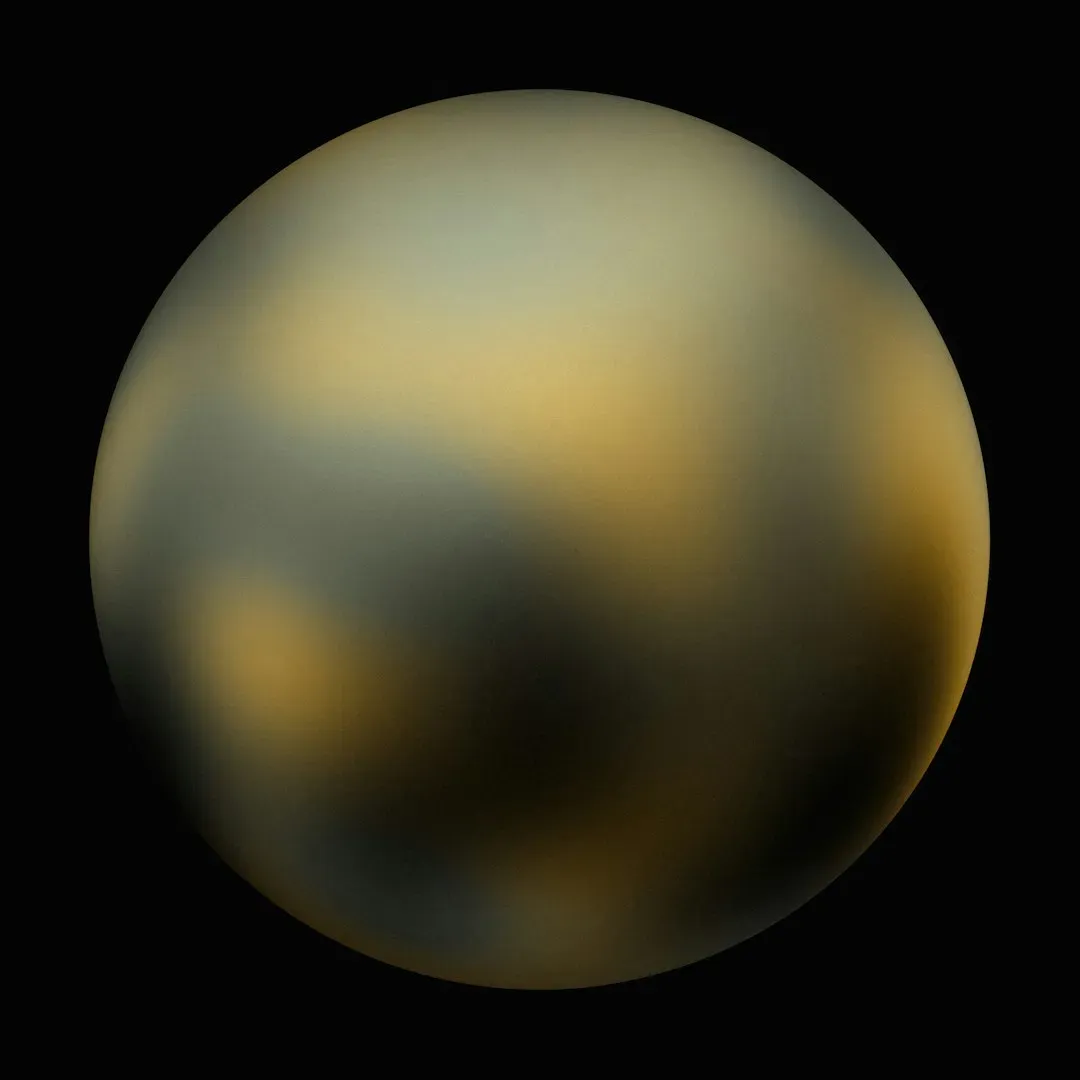
Pluto was considered the ninth major planet in our solar system until the definition of “planet” was changed by the International Astronomical Union in 2006. This new definition reclassified Pluto as a dwarf planet. So in a bittersweet twist of cosmic irony, the very act of removing Pluto from the planetary roster opened the door to searching for a true replacement.
Because Pluto was now labeled a dwarf planet and no longer considered our solar system’s ninth planet, Caltech astronomers referred to their hypothesized planet as Planet Nine when they announced it in 2016. It’s almost poetic. One ninth planet gets kicked out, and the hunt begins almost immediately for another. The solar system doesn’t like staying at eight, apparently.
Who Proposed Planet Nine and Why the Science World Took Notice
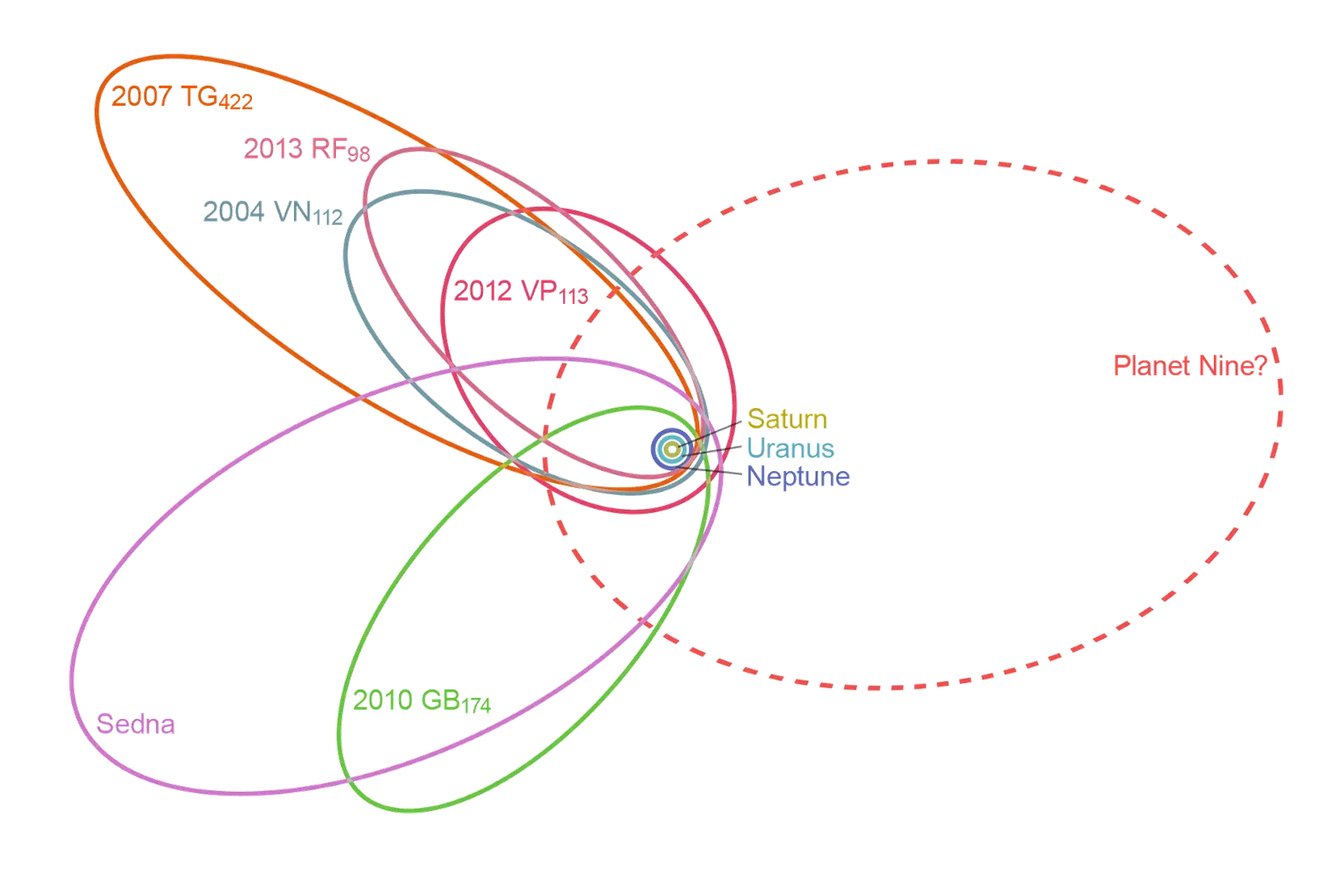
You don’t just stumble onto a planetary hypothesis over morning coffee. In 2016, Mike Brown and Konstantin Batygin published a paper in The Astronomical Journal that proposed that the strange orbits of Kuiper Belt objects could indicate another world orbiting our sun, which they called Planet Nine. These are serious scientists at Caltech, not armchair theorists.
The object, which the researchers nicknamed Planet Nine, has a mass about 10 times that of Earth and orbits about 20 times farther from the sun on average than does Neptune. To put that into perspective, Neptune already sits nearly 2.8 billion miles from the sun. Now imagine something orbiting twenty times farther out than that. That’s almost incomprehensibly distant.
Planet Nine would take somewhere between 10,000 and 20,000 years to orbit our star. Neptune, for comparison, orbits the sun about once every 165 years. That slow, sprawling orbit is exactly why nobody has spotted it yet. It moves at a geological pace, and you’d need to know precisely where to look.
The Strange Gravitational Clues in the Kuiper Belt
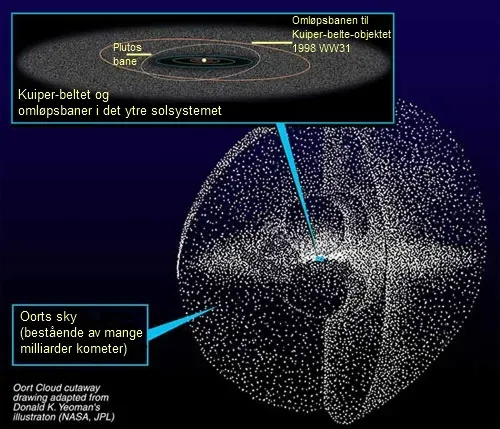
So what actually convinced astronomers this mysterious world might be real? It all comes down to something deeply counterintuitive. Astronomers studying the Kuiper Belt have noticed some of the dwarf planets and other small, icy objects in that region tend to follow orbits that cluster together. By analyzing these orbits, the Caltech team predicted the possibility that a large, previously undiscovered planet may be hiding far beyond Pluto. They proposed that gravitational interactions with a potential giant planet might explain the unusual orbits of those Kuiper objects.
Something was shaping the orbits of these bodies, particularly the ones categorized as extreme trans-Neptunian objects. Instead of having randomly oriented orbits, some of these bodies displayed a distinct clustering with their orbits aligning as they approach their closest point to the sun. These clustered objects also had orbits that were unusually tilted compared to the plane on which the rest of the planets orbit.
A second article from the team showed that Planet Nine could have tilted the planets of our solar system during the last 4.5 billion years. This could explain a longstanding mystery: why is the plane in which the planets orbit tilted about 6 degrees compared to the sun’s equator? Honestly, when a single hypothesis can explain that many separate mysteries at once, it’s worth paying attention.
What Planet Nine Might Actually Look Like
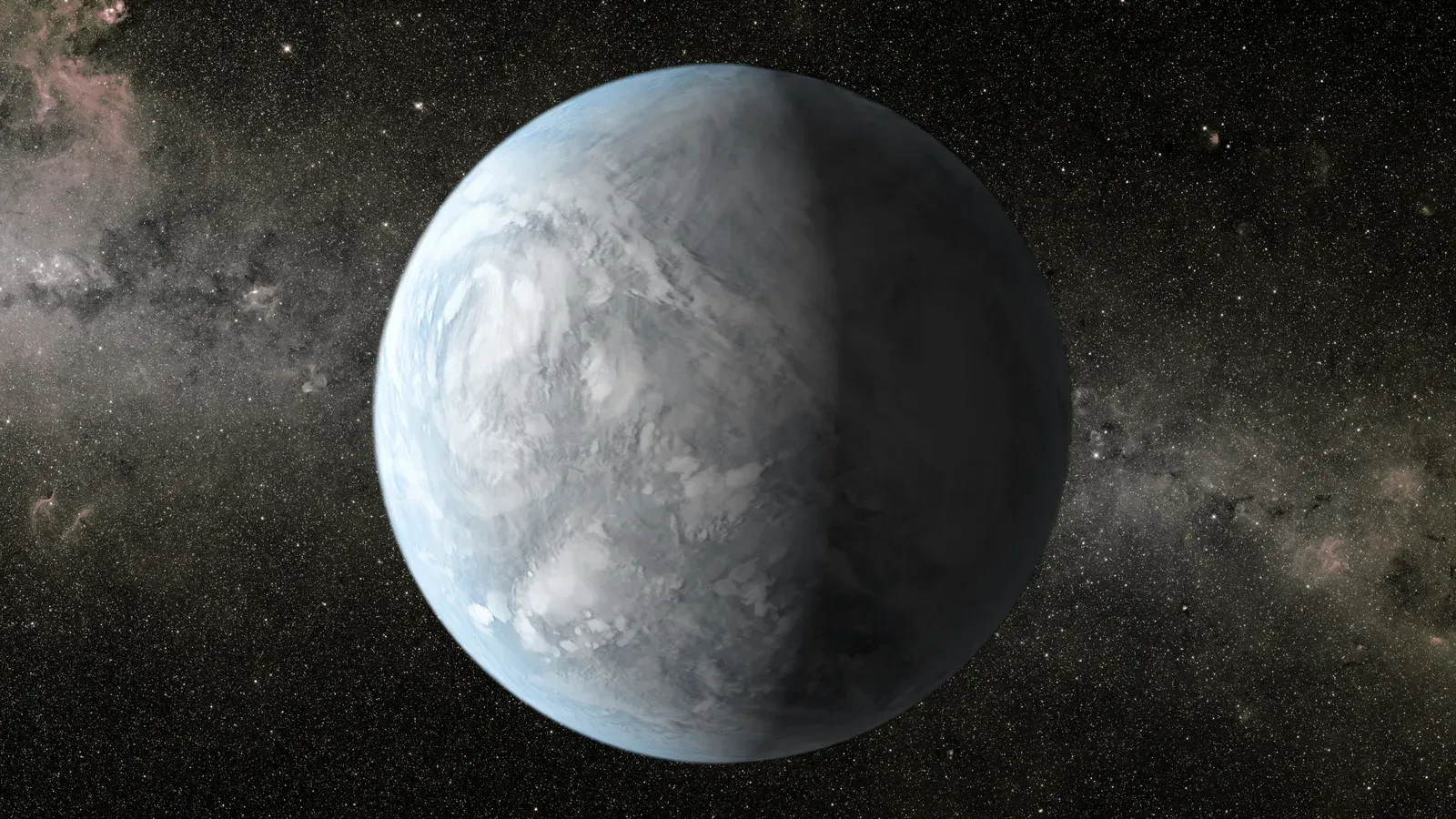
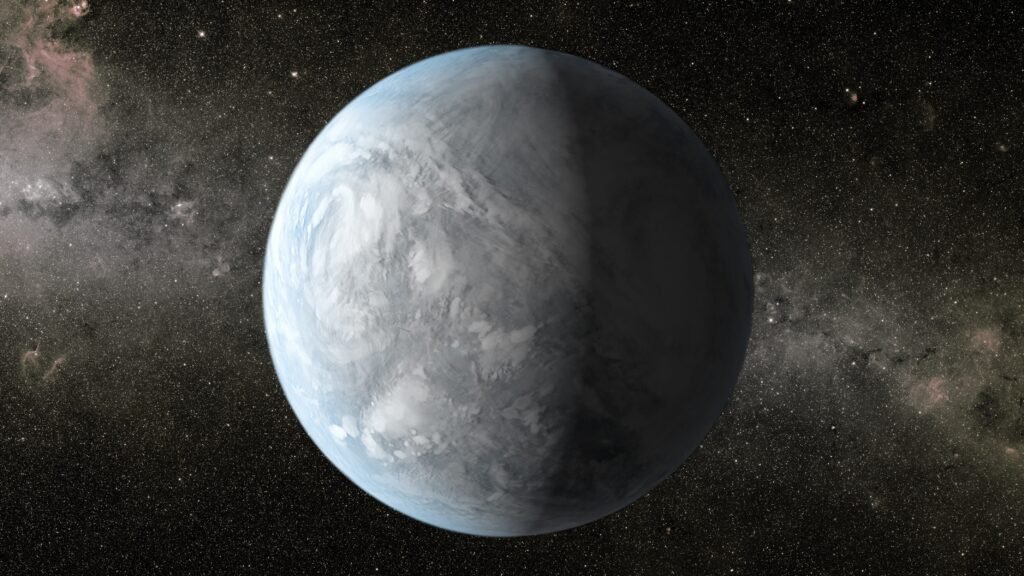
Assuming it’s real, what would this hidden world actually be? Planet Nine is estimated to have 5 to 10 times the mass and 2 to 4 times the radius of Earth. That would make it a so-called “super-Earth,” a class of planet that is extremely common in the galaxy but oddly absent from our own solar system until now.
Surveys of planets around other stars in our galaxy have found the most common types to be super-Earths and their cousins, bigger than Earth but smaller than Neptune. Yet none of this kind exist in our solar system. Planet Nine would help fill that gap. Think about that. Almost every other star system we’ve studied has one of these medium-sized worlds, and ours appears to be missing it entirely. Or does it?
Given a hypothesized mass of roughly 10 Earth masses, Planet Nine’s radius would be about 3.66 times that of Earth’s, and its internal composition would be similar to Uranus and Neptune’s: it would likely have a hydrogen-helium atmosphere averaging 47 kelvins, with a core composed of iron and a mantle filled with magnesium silicate and water ice. A frozen, crushing, utterly alien world sitting silently at the edge of everything we know. I think that’s one of the most haunting images in all of science.
The Skeptics Have a Real Point Too
Let’s be real. Not everyone is convinced. Science earns its credibility precisely because of skeptics, and here there are legitimate ones. Further skepticism about the Planet Nine hypothesis arose in 2020, based on results from the Outer Solar System Origins Survey and the Dark Energy Survey, with the OSSOS documenting over 800 trans-Neptunian objects and the DES discovering 316 new ones. Both surveys adjusted for observational bias and concluded that there was no evidence for clustering. The authors go further to explain that practically all objects’ orbits can be explained by physical phenomena rather than a ninth planet.
A study carried out by Kevin Napier, a physics Ph.D. student at the University of Michigan, and his colleagues challenged Brown and Batygin’s analysis. Napier and his team suggest that selection bias led Brown and Batygin to hypothesize Planet Nine’s existence, and the “cluster” of TNOs may not have been caused by the gravitational pull of Planet Nine. This is an important challenge. If you only look at certain parts of the sky, you’ll naturally find objects that appear to cluster.
To assess whether observational bias is behind the apparent clustering, Brown and Batygin developed a method to quantify the amount of bias in each individual observation, then calculated the probability that the clustering is spurious. That probability, they found, is around one in 500. One in five hundred. That’s not proof, but it’s also not something you just brush aside over coffee.
The Latest Clues: Infrared Data 23 Years Apart
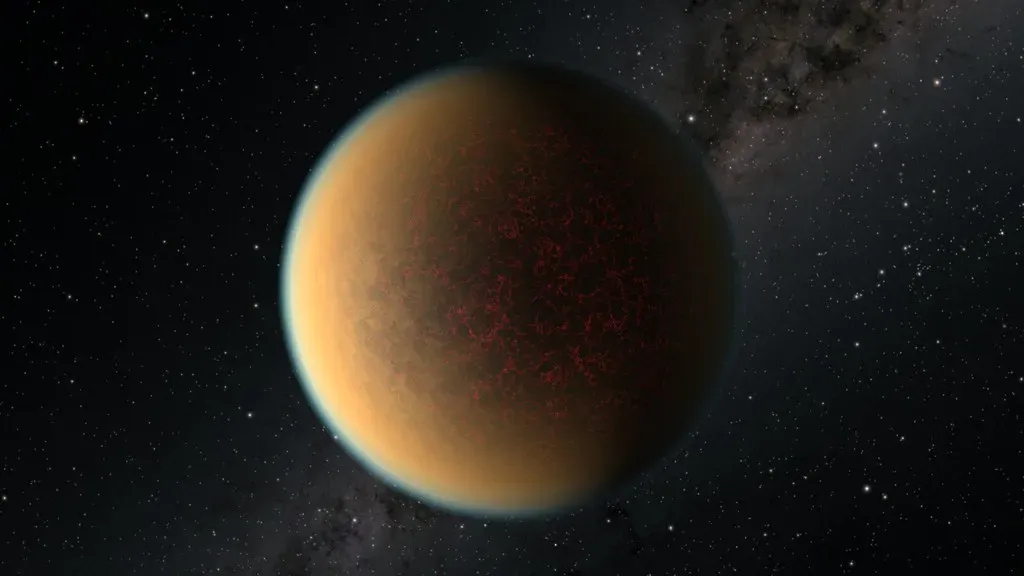
Here’s where it gets really exciting. The best candidate yet for the elusive Planet Nine has been spotted in two deep infrared surveys taken 23 years apart. A team of astronomers from Taiwan, Japan, and Australia noticed something in archival images that sent ripples through the astronomical community in 2025.
It appears in one position in IRAS’s 1983 image, though it was not in that position when AKARI looked. There is an object seen by AKARI in a position 47.4 arcminutes away that isn’t there in the IRAS imagery, and it is within the range that Planet Nine could have traveled in the intervening time. In other words, this object has moved a little further along its orbit around the sun in the 23 or more years between the two surveys.
If this mystery object really is Planet Nine, it would have a mass greater than Neptune, and currently be about 700 times farther from the sun than Earth is. However, it’s worth noting that several astronomers remain cautious. Some experts are skeptical that the signal, just a single pair of faint dots, will survive scrutiny and follow-up observations. If it does, the object lies on an orbit far outside the original Planet Nine prediction, rendering it an entirely different planet. So even promising candidates come with serious asterisks.
The Vera Rubin Observatory: Humanity’s Best Bet for an Answer
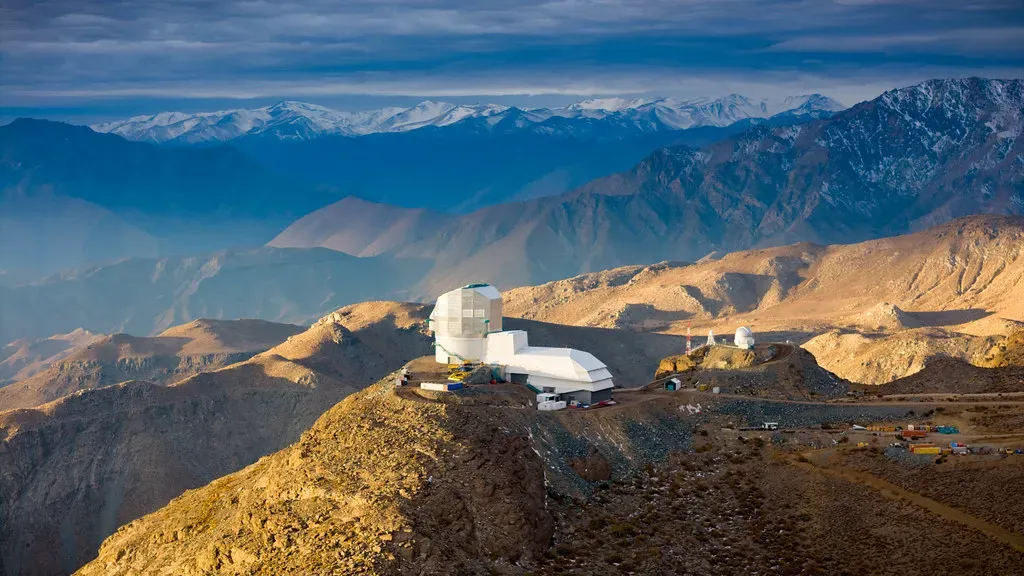
If you’re wondering when we’ll actually know the truth, the answer may be closer than you think. The NSF-DOE Vera C. Rubin Observatory released its first images publicly on June 23, 2025, marking a major milestone for the telescope built to run the decade-long Legacy Survey of Space and Time. This is the instrument that many astronomers believe could finally end the debate once and for all.
The Rubin Observatory boasts an 8.4-meter telescope and the largest camera ever built for astronomy research. The camera will scan the Southern Hemisphere sky every night over the next decade and is expected to access around 10 billion objects. Planet Nine’s estimated brightness and distance fall into the observatory’s capabilities. Think of it less like a telescope and more like a colossal cosmic motion detector, catching the faint drift of anything that moves.
If Planet Nine is real, this observatory has around a 70 to 80 percent chance of finding it, though it’s not a sure thing because there are so many uncertainties. Full survey operations are planned to begin early in 2026. So right now, as you’re reading this, that observatory is already beginning its slow, methodical sweep of the southern sky. Every night. For a decade.
Conclusion: One of the Greatest Mysteries in Our Own Backyard
It’s strange, honestly, that in an era where we can photograph black holes millions of light-years away and detect gravitational waves from colliding neutron stars, we still don’t fully know what’s hiding in our own solar system. Nearly a decade after the original hypothesis was published, the case for Planet Nine remains an open question, one that continues to evolve as new data, objects, and modeling techniques emerge.
If Planet Nine is eventually discovered, it would not only restore the solar system’s planetary count to nine, but also mark the first time a planet was predicted through dynamical modeling before direct observation, echoing the 19th-century discovery of Neptune through perturbations in Uranus’s orbit. That’s a genuinely historic parallel. Neptune was found because its gravity tugged on Uranus. Planet Nine, if it exists, would be found the same way.
Whether the Vera Rubin Observatory spots it in its first year of operations or rules out most of the predicted search zone, we are on the verge of knowing something profound. Either we find a massive, frozen world that has shaped our solar system for billions of years without our ever knowing it was there, or we’re forced to find an entirely new explanation for the bizarre orbits at the edge of everything. Both outcomes rewrite the textbooks. What do you think is out there in the dark? Tell us in the comments.