
Imagine waking up one morning and realizing that everything – your memories, your struggles, the stars overhead – might be running on someone else’s computer. Not metaphorically, but literally: every atom, every heartbeat, every galaxy just lines of code in an unfathomably powerful system. That idea sounds like science fiction, yet it’s now debated seriously by philosophers, physicists, and technologists.
I still remember the first time I encountered the simulation hypothesis; it hit me like the eerie calm you feel after a power outage. On one hand, it felt ridiculous. On the other, it explained a lot of strange things about reality a little too well. Whether you end up believing it or not, simply wrestling with the idea can change how you see life, meaning, and your place in the cosmos.
What Exactly Is the Simulation Hypothesis?
The simulation hypothesis is the claim that our physical universe might not be the “base” reality, but instead a constructed, programmed environment created by some advanced civilization. Think of it like a hyper-realistic video game, but with conscious beings who don’t realize they’re inside it. In this view, what we call physics would really be the rule set of the simulation, like the hidden code behind a game’s graphics.
Proponents argue that if a civilization can reach a certain level of technological maturity, it might gain the ability to simulate entire worlds, including intelligent minds. If that’s possible and if they choose to do it on a large scale, then simulated universes could far outnumber non-simulated ones. From a cold, statistical perspective, that would mean it might be more likely we’re in a simulation than in the original, base reality.
Nick Bostrom’s Argument: A Cosmic Either–Or
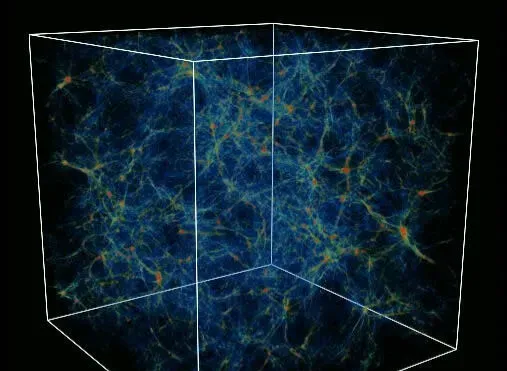
The modern version of the idea largely exploded into serious discussion because of a philosopher named Nick Bostrom. He laid out a stark trilemma: either civilizations like ours almost always die out before becoming technologically advanced enough to run such simulations, or advanced civilizations almost never run ancestor-like simulations, or almost all beings with experiences like ours are living in simulations. It’s not presented as a wild guess, but as a logical fork in the road.
What makes his argument so unsettling is that it does not rely on any obvious sci-fi tropes. Instead, it just asks us to follow a chain of reasoning about technology, probability, and what powerful civilizations might do. You can reject the conclusion, but to do that you have to attack at least one of the assumptions head-on. There’s no comfortable middle ground where you can say it’s just a fun thought with no serious implications.
Clues in Physics: Is Reality “Pixelated”?
Some supporters of the simulation hypothesis point to modern physics and ask a provocative question: why does reality already look so digital? At the smallest scales, quantities like energy and charge come in discrete packets, almost like the pixels on a screen or bits in a processor. The fact that there seems to be a minimum meaningful scale of space and time has led some to compare the universe to a giant information-processing system.
Then there’s the fine-tuning problem: the laws of nature appear to be set in a very narrow range that allows complex structures, stars, planets, and life to exist. To some, that looks suspiciously like someone adjusted the settings to make a rich, interesting world possible. Of course, physicists have other explanations for all this, like multiverse theories or deeper underlying principles, but the simulation angle lingers in the background like an inconvenient question you can’t quite ignore.
Could Future Computers Really Simulate a Universe?
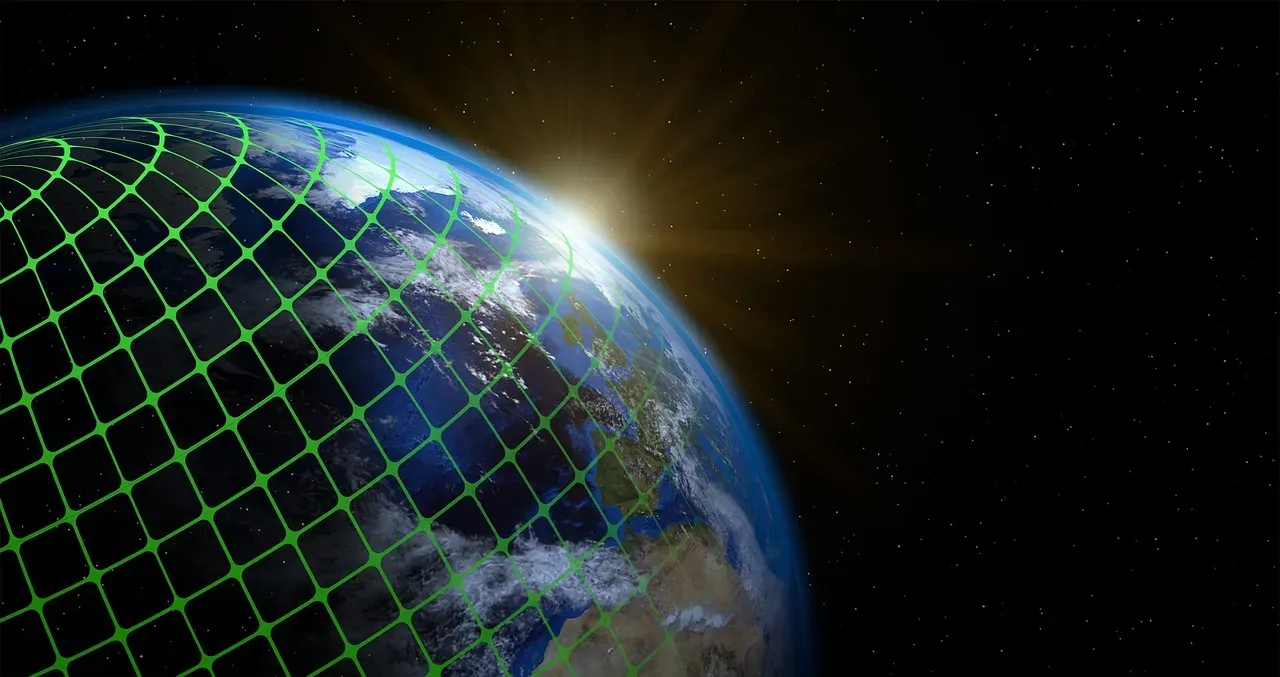
At the heart of the hypothesis sits a practical issue: is it even remotely plausible for any civilization to simulate something as huge and detailed as our universe? A full, exact simulation of every particle seems wildly unrealistic with anything we currently understand about computation. The sheer information content would be staggering, like trying to replay every wave in the ocean by tracking each individual water molecule in real time.
However, the idea does not require perfect fidelity at every scale and every moment. A simulation might only need to render details when they’re being observed, much like how a video game only draws what’s in your field of view. Unobserved regions could be represented more crudely, or even left undefined until a conscious observer points their attention there. From that perspective, the information demands shrink from impossible to merely extreme, and with advances like quantum computing and exotic architectures, some versions of the scenario become harder to rule out entirely.
One suggestion is that consciousness itself might be the key bottleneck: simulating rocks is easy, simulating minds is hard. Still, our own progress in artificial intelligence shows that complex behavior can emerge from relatively simple rules and large-scale computation. If even a fraction of conscious experience can be emulated with code and hardware, then a future civilization with resources far beyond ours might be able to produce countless digital minds and worlds without exhausting its capabilities.
Glitches in the Matrix: Are There Any Testable Signs?
A natural response is to ask whether there could be any observable “glitches” or signatures that reveal a simulated universe. Some scientists have speculated that certain limits in physics – like the maximum speed of light or quantized space-time – might be analogous to constraints in a computational system. Others have suggested searching for unexpected patterns or anomalies in high-energy physics or cosmic rays that could resemble numerical artifacts or lattice effects from an underlying grid.
So far, nothing in mainstream experiments forces us to say “this must be a simulation,” and many physicists remain deeply skeptical of the whole quest. The danger is that nearly any phenomenon can be retrofitted as a possible feature of a simulation, which makes the idea hard to falsify. If a theory can explain everything, it also risks explaining nothing in a scientific sense. Still, the mere attempt to imagine what “debugging reality” might look like has pushed some researchers to think more creatively about the informational foundations of physics.
If It’s a Simulation, Does Anything Still Matter?
Behind the philosophical fireworks lies a very personal question: if the universe is a simulation, does that drain life of its meaning? For many people, the thought feels depressing at first, like being told your favorite childhood memories happened on a stage set. Yet when you look closer, the emotional impact is more complicated. If pain, love, friendship, and beauty feel real from the inside, does it really matter whether the background is silicon or atoms?
There’s also a strangely liberating angle: if reality is simulated, then consciousness is clearly possible in artificial systems, which hints that minds might not be strictly tied to one particular physical form. That could open up ideas about continuity, identity, and what it means to “exist” that go beyond our current biology. Personally, I find that whether we’re carbon-based or code-based, the ethical stakes actually increase. If there are beings capable of joy and suffering inside simulated worlds, then questions of kindness, cruelty, and responsibility suddenly span across layers of reality, not just within one.
Why the Simulation Hypothesis Won’t Go Away
One reason this idea endures is that it sits right at the intersection of our biggest questions: What is consciousness? Why does the universe have the laws it does? How far can technology go? It’s like a pressure point where philosophy, physics, and computer science all press down at once. Even people who strongly reject the hypothesis often admit that grappling with it forces them to clarify what they really believe about reality.
There’s also something undeniably psychological about the attraction. We already live in a world thick with virtual realities, from immersive games to social media feeds that reshape our sense of self and community. The simulation hypothesis is like that feeling cranked to maximum volume: the suspicion that, beneath everything, there might be another layer watching. In the end, whether the universe is simulated or not, you still have to choose how to live in it, and maybe that choice says more about you than about the code that might or might not be running underneath.