
If you’ve ever stared up at the night sky and briefly felt like everything around you was somehow staged, you’re not alone. The idea that our universe might be a sophisticated simulation, running on some unfathomably powerful cosmic computer, has slipped from the realm of science fiction into serious philosophical and scientific debate. It’s unsettling, thrilling, and strangely hard to shake once you start thinking about it.
This theory doesn’t just ask whether reality is “real” in some deep sense; it forces us to question what words like “real,” “physical,” and even “existence” really mean. If our world is simulated, does that make our emotions fake, our choices meaningless, our memories just data? Or could everything still matter just as much, even if, behind the scenes, it’s all zeros and ones? Let’s walk through the wildest parts of this idea, piece by piece.
Why People Take the Simulation Hypothesis Seriously
It might sound like a late-night dorm conversation, but the simulation hypothesis is taken seriously by philosophers and some scientists because it rests on a simple, unsettling logic. If advanced civilizations eventually gain the power to simulate entire universes with conscious beings inside them, and if they actually choose to run many such simulations, then simulated realities could vastly outnumber “base” reality. In that case, the odds that we are in the one original physical universe instead of one of the many simulated ones might be surprisingly low.
What makes this even stranger is that the argument doesn’t depend on any particular technology we know today; it’s about what might be possible in principle. Imagine a civilization millions of years ahead of us, treating universe simulations the way we treat high-end video games or physics models. If they can pack entire worlds into bits and bytes, then our sense of being in the one true universe starts to look a bit arrogant, almost like a fish insisting it must be in the only real ocean.
Digital Physics: Is Reality Made of Information?
One reason the simulation idea feels less ridiculous than it used to is that modern physics often sounds suspiciously like computer science. Quantum mechanics describes particles in terms of probabilities and information rather than neat little billiard balls. Some physicists talk about reality as if it’s built from fundamental “bits” of information, the way a screen is built from pixels. If the universe behaves like a vast information-processing system, it’s not a huge leap to wonder whether it literally is one.
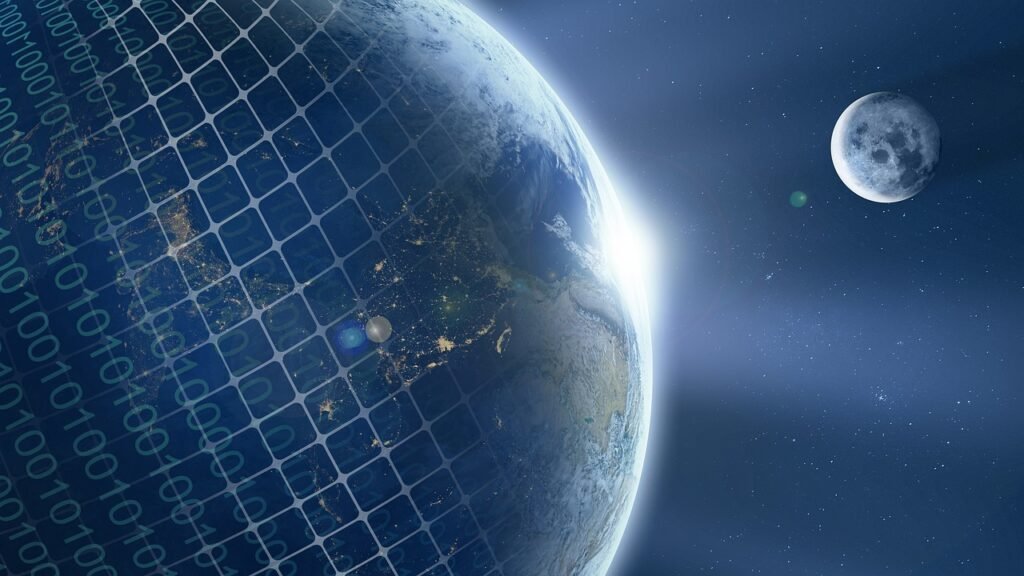
Even the limits we see in nature, like the speed of light or the smallest possible unit of length, can feel like the constraints of a computational system. It’s as if the universe has a maximum refresh rate and finite resolution, similar to how a game engine can only handle so many calculations per second. This doesn’t prove anything, but it gives the eerie sense that we might be living inside a massive, hyper-optimized program with rules that look very much like code.
We Already Build Tiny Simulated Worlds
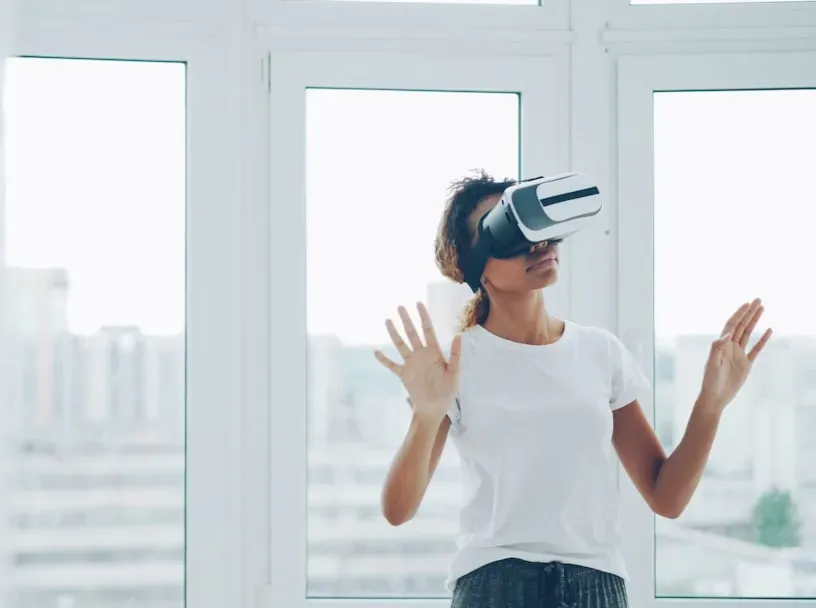
One of the most persuasive parts of the simulation argument is how quickly our own technology is catching up in miniature. We already simulate weather systems, galaxies, economies, and even the evolution of virtual organisms that compete, adapt, and “survive” inside a computer. Video games have leapt from pixelated squares to immersive 3D environments where the line between digital and real is starting to blur, especially with virtual reality and haptic feedback.
Now stretch this trend far into the future: smarter AI, more powerful hardware, better models of physics and consciousness. It’s not absurd to think that at some point, we could create digital beings who believe they have free will, families, and memories, all inside a simulation they never suspect. When you see how far we’ve come in just a few decades, the idea that a far older civilization could simulate an entire universe doesn’t feel quite as outlandish anymore; it starts to feel almost inevitable.
Glitches, Limits, and Alleged Clues in Our Universe
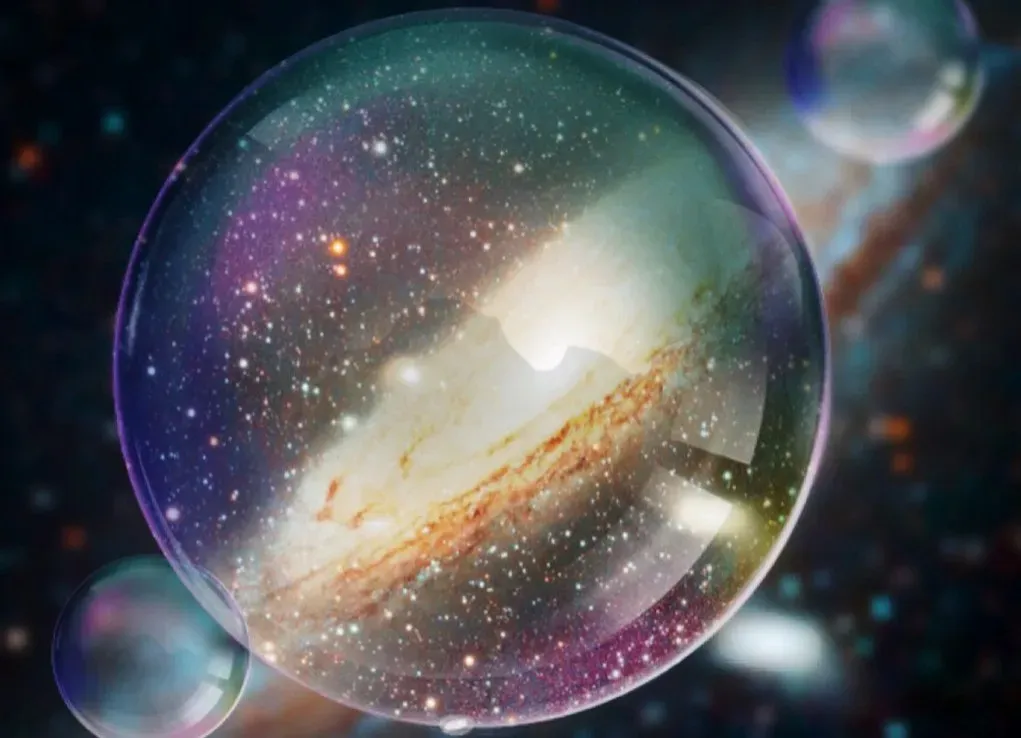
Fans of the simulation theory often point to odd features of our universe as possible “tells,” like you might notice artifacts in a video game if you look closely enough. The quantum world behaves in ways that seem bizarrely rule-based, with particles acting differently when they’re observed, almost like a system saving processing power until it has to render a detail. Some people speculate that things like quantum randomness or cosmic background radiation patterns might be hints of underlying code or compression.
There are also hard limits that sound like computational constraints: you can’t go faster than light, you can’t measure everything about a particle at once, and there seems to be a finite amount of information that can be stored in a region of space. While mainstream physicists don’t generally treat these as “glitches,” it’s easy to see why the metaphor sticks. It’s like noticing that your open-world game only lets you walk so far before you hit an invisible wall and wondering what lies beyond the map.
Free Will, Meaning, and Morality in a Simulated World

If everything is simulated, the big fear is that nothing truly matters, that we’re just characters in someone else’s software experiment. But think about it this way: when you’re dreaming, your feelings still feel real, even though the dream world is generated by your brain. If our experiences are rich, our pain hurts, our joy feels profound, and our relationships shape who we are, then those things carry weight regardless of whether the underlying substrate is carbon atoms or silicon circuits.
Free will gets tricky here too. If we are part of a simulation, maybe every decision is ultimately determined by code and initial conditions. But honestly, that question already haunts us even without simulations, because physics itself might be fully deterministic or deeply constrained. From the inside-looking-out perspective, the one that actually matters to us, we still face choices, wrestle with our conscience, and live with the consequences. Whether we’re made of particles or pixels, the moral stakes in our lives don’t simply evaporate.
Can We Ever Prove We’re in a Simulation?
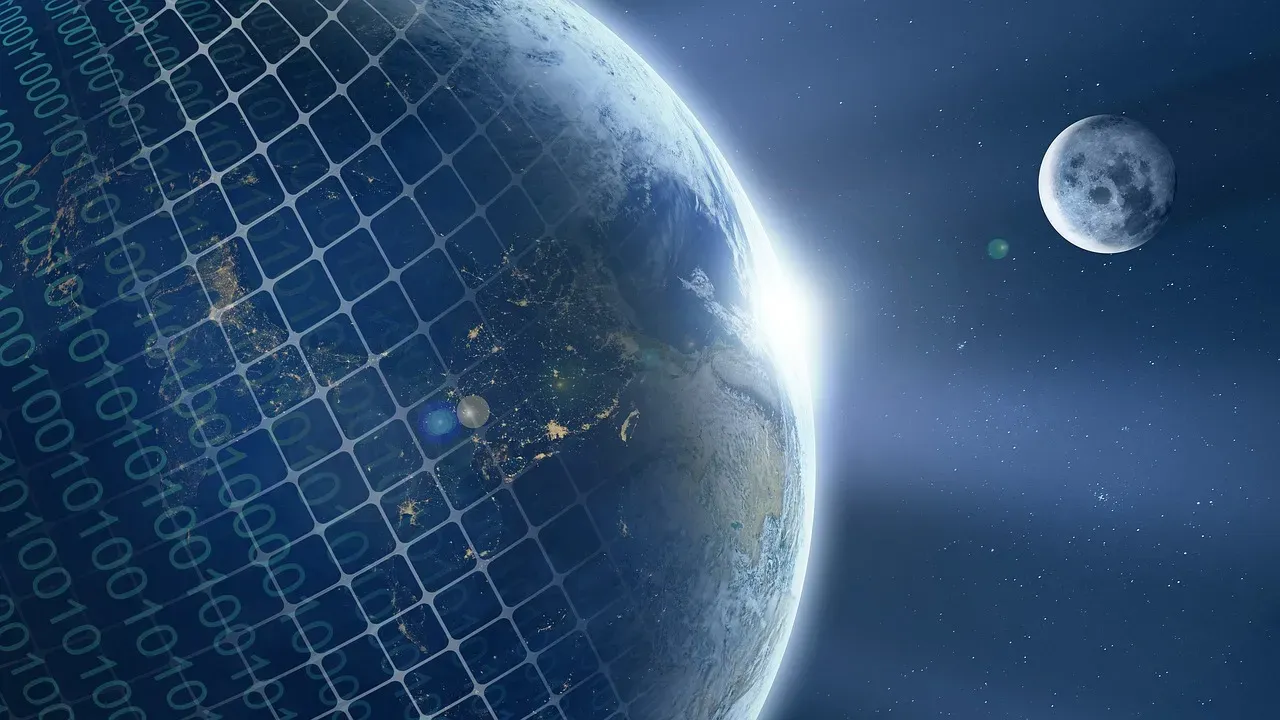
The hardest part of this entire theory is figuring out whether it’s testable at all. Some think we might eventually find weird patterns or “artifacts” in physical laws that suggest an underlying grid or resolution limit, like discovering the pixels on what you thought was a photograph. Ideas range from looking for lattice-like structures in high-energy physics data to searching for constraints on how fine-grained reality can be. So far, though, nothing has shown up that decisively points to a cosmic CPU humming beneath everything.
There’s also a philosophical problem: even if we did find strong hints, how would we be sure we weren’t just misunderstanding nature instead of diagnosing a simulation? And if the simulators are much more advanced than us, they might be able to hide any trace of their system entirely. Some thinkers even suggest that if we got close to discovering the truth, the simulation might be shut down or altered, which sounds more like a plot twist than a scientific plan. That leaves us in a strange place: endlessly curious, but possibly forever locked inside the very system we’re trying to understand.
Why the Simulation Question Still Matters
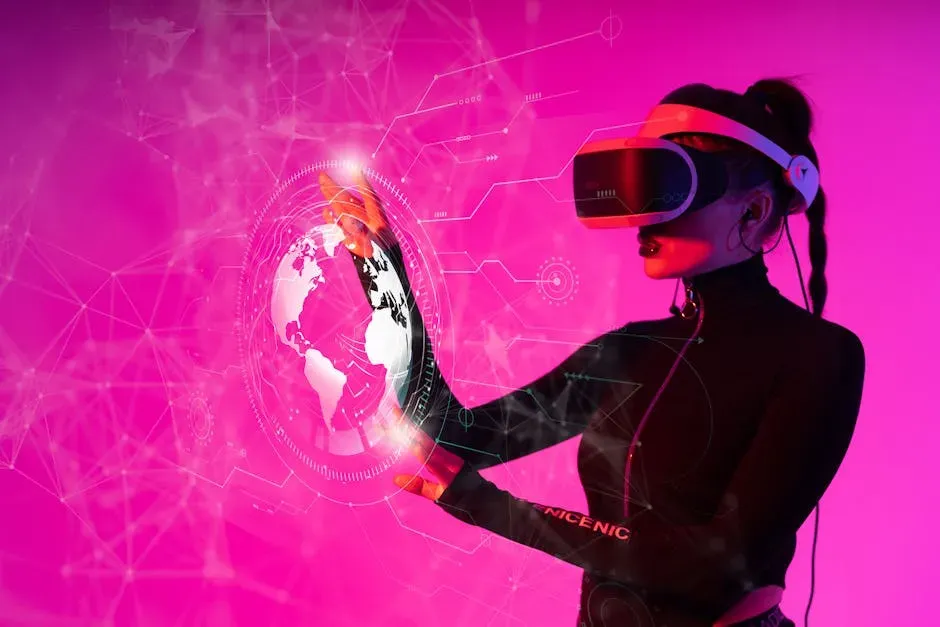
Even if we never prove the simulation hypothesis one way or the other, wrestling with it forces us to sharpen how we think about reality, consciousness, and technology. It asks us how we would treat simulated beings if we ever create them, and that bounces back on how we think about animals, AI systems, and even each other. If we wouldn’t want to be tortured or discarded as data, maybe we should think harder about what it means to create digital minds or virtual worlds that can suffer.
On a personal level, the idea of a simulated universe can either feel crushing or oddly liberating. Some people feel small, like NPCs in a game they can’t control. Others feel energized, imagining that if someone went to all this trouble to simulate a universe like ours, maybe what we do and who we become really does matter. Either way, the question lingers in the background, quietly provocative: if this is a simulation, what kind of character do you want to be while you’re here?