You know that moment when you’re watching a sci-fi movie and someone travels between dimensions? Let’s be real, it sounds wild. Yet here we are in 2025, and some of the most respected physicists on the planet are seriously debating whether parallel universes might actually exist. Not in the way Hollywood imagines them, necessarily. But in ways that might be even stranger.
The line between science fiction and legitimate physics has never been blurrier. What was once dismissed as fantasy is now a topic of intense academic debate, fueled by equations, experiments, and theories that push our understanding of reality to its absolute limits. So let’s dive in and explore whether we’re truly alone in the cosmos, or whether countless other versions of existence might be unfolding right alongside ours.
The Quantum Leap Into Multiple Realities
The Many-Worlds Interpretation of quantum mechanics asserts that the universal wavefunction is objectively real, and that all possible outcomes of quantum measurements are physically realized in different worlds. Imagine that. Every time a subatomic particle faces a choice – spin up or spin down, here or there – the universe actually splits.
Hugh Everett III’s doctoral thesis proposed a radical solution to the measurement problem, positing the existence of multiple branching universes to account for quantum phenomena. When Everett published this work back in 1957, most physicists thought he’d lost his mind. Here’s the thing though. His interpretation elegantly solves one of quantum physics’ biggest headaches: why do particles behave like waves until we measure them?
The Many-Worlds Interpretation implies that there are many parallel, non-interacting worlds. Think of reality as a tree that branches every fraction of a second. Every time a quantum experiment with different possible outcomes is performed, all outcomes are obtained, each in a different newly created world, even if we are only aware of the world with the outcome we have seen. It’s dizzying to contemplate, honestly.
Cosmic Inflation and the Bubble Universe Theory
The idea of cosmic inflation, first proposed by Alan Guth in the 1980s, describes a rapid expansion of the universe following the Big Bang. Picture a balloon inflating at impossible speeds. Now here’s where things get really interesting.
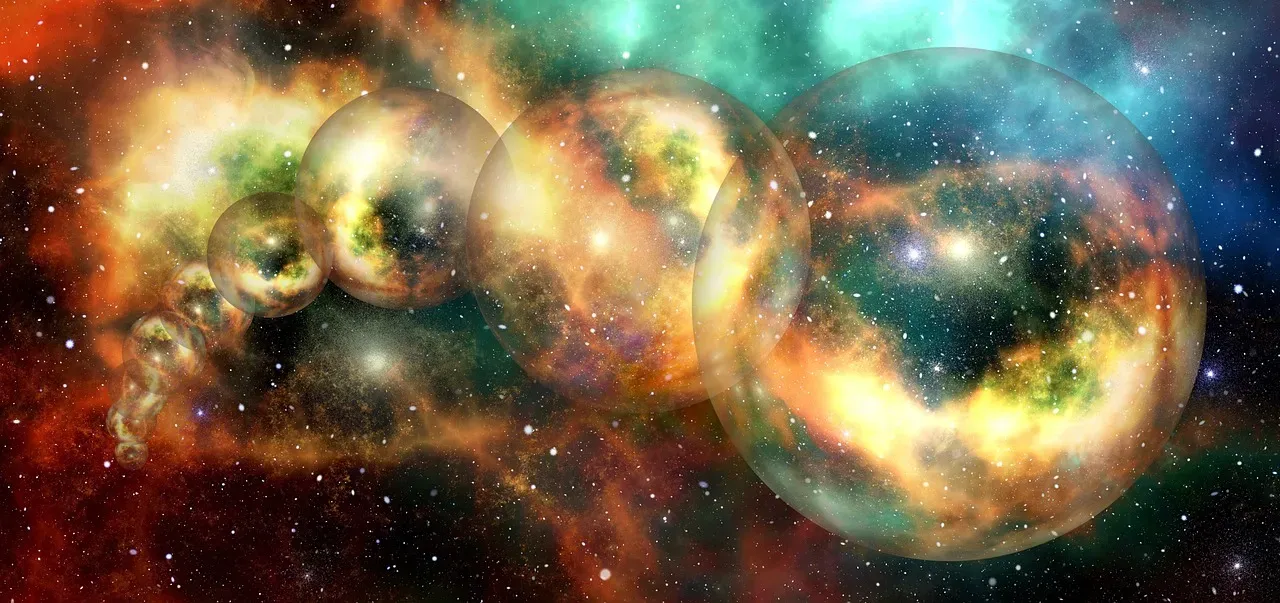
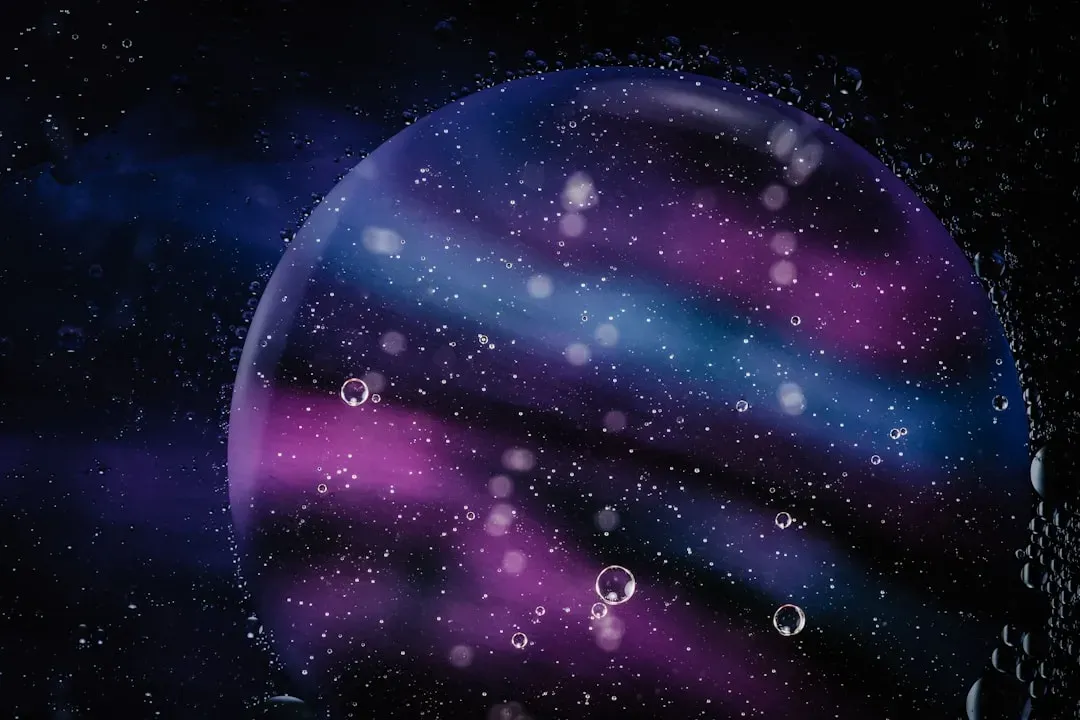
Some models of inflation suggest that this expansion could lead to the formation of multiple, separate regions – so-called bubble universes – that are entirely detached from one another, with each of these bubbles having different physical constants and structures. Our universe might just be one bubble in an endless foam of universes, each with its own rules.
Alan Guth declared that it’s hard to build models of inflation that don’t lead to a multiverse, and that most models of inflation do lead to a multiverse, with evidence for inflation pushing us in the direction of taking the idea of a multiverse seriously. The math seems to insist on it. All models of eternal inflation produce an infinite, hypothetical multiverse, creating pocket after pocket of reality, forever.
String Theory’s Hidden Dimensions

String theory introduces the possibility of multiple universes through the concept of higher-dimensional space, with our universe existing within a multidimensional space known as the brane, while other parallel universes could exist on separate branes, coexisting but largely inaccessible to us. I know it sounds crazy, but stay with me.
String theories require extra dimensions of spacetime for their mathematical consistency. We experience three dimensions of space plus time. But string theory needs ten or even eleven dimensions to work mathematically. Where are those extra dimensions hiding?
To be able to use the theory to explain the physical phenomena we see, these extra dimensions have to be compactified by being curled up in such a way that they are too small to be seen. Imagine them rolled up so tightly at every point in space that they’re invisible. String theory as it is currently understood has an enormous number of vacuum states, typically estimated to be around 10^500, and these might be sufficiently diverse to accommodate almost any phenomenon. That’s not a typo. Ten to the five hundredth power possible universes.
The Fine-Tuning Problem and Anthropic Reasoning
There’s something deeply unsettling about our universe. The constants of nature – gravity’s strength, the electron’s mass, the speed of light – all seem perfectly calibrated for life to exist. Change any of them by even a tiny amount, and stars wouldn’t form, atoms wouldn’t bond, and you and I wouldn’t be here pondering these questions.
The concept of other universes has been proposed to explain how our own universe appears to be fine-tuned for conscious life, with the idea that if there were a large number of universes with possibly different physical laws, then some would have the combination suitable for the development of life. It’s called the anthropic principle. We observe these specific values precisely because only in a universe with these values could observers like us exist.
This isn’t just philosophical hand-waving. For the cosmological theory developed in the 1980s to be adequate, the value of certain physical quantities had to be just-so, with their exact numerical value theoretically constrained to many decimal places, such as a matter-density quantity constrained to sixteen decimal places. That’s almost impossibly precise. The multiverse offers an answer: maybe countless universes exist with random constants, and we inevitably find ourselves in one where the settings happen to allow our existence.
Searching For Evidence: Can We Actually Test This?
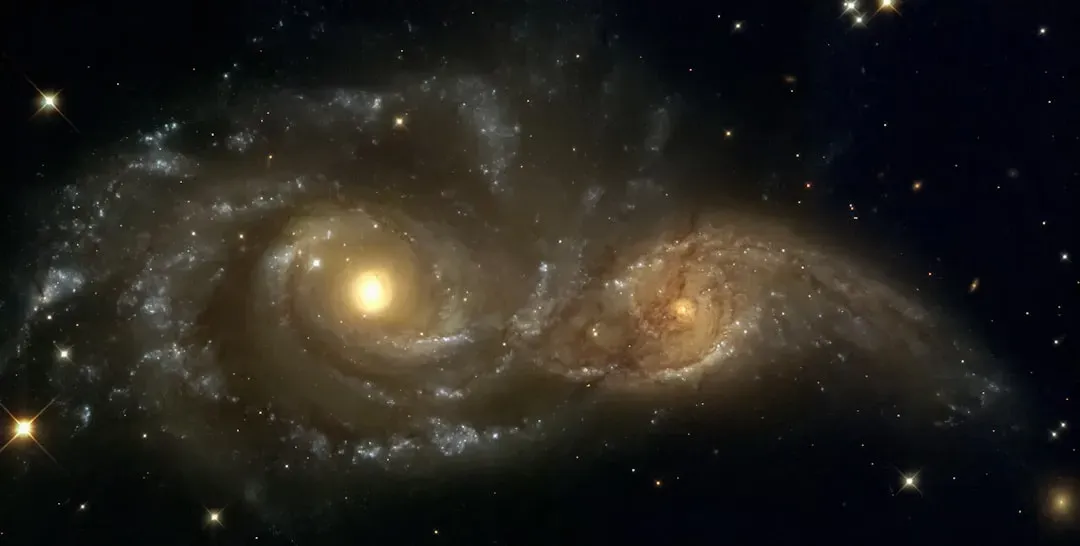
Here’s where skeptics have always pounced. If parallel universes exist beyond our ability to observe them, isn’t the whole idea unscientific? Some physicists have argued that the multiverse is a philosophical notion rather than a scientific hypothesis, as it cannot be empirically falsified. Fair point.
Yet researchers aren’t giving up. The universes predicted by string theory and inflation live in the same physical space, they can overlap or collide, and they inevitably must collide, leaving possible signatures in the cosmic sky which we can try to search for. Scientists have been scouring data from cosmic microwave background experiments, looking for bruises left by collisions with neighboring universes.
Around 2010, scientists analyzed Wilkinson Microwave Anisotropy Probe data and claimed to find evidence suggesting that this universe collided with other parallel universes in the distant past, however, more thorough analysis of data from WMAP and the Planck satellite did not reveal any statistically significant evidence. So far, the searches have come up empty. But absence of evidence isn’t necessarily evidence of absence.
The Controversy: When Physics Becomes Philosophy
Not everyone’s buying into multiverse mania. Paul Steinhardt, who produced the first example of eternal inflation, eventually became a strong opponent of the theory, arguing that the multiverse represented a breakdown of the inflationary theory because any outcome is equally possible, making inflation untestable. If every possibility happens somewhere, what predictions can you actually make?
At this point in time, parallel universes are a fascinating idea and concept worth considering, but there’s no evidence we can point to that suggests they’re likely to be physically real in any way that impacts our observed reality. That’s from a 2025 assessment. The brutal truth is that we’re still in the realm of mathematical possibility rather than experimental confirmation.
Critics worry we’ve crossed from physics into metaphysics. Parallel universes are by definition unobservable from our reference frame, and the falsifiability challenge has led some philosophers and physicists to question whether multiverse theories qualify as genuine scientific hypotheses. Science demands testable predictions. When your theory predicts everything and nothing simultaneously, have you really explained anything?
What Recent Research Tells Us
The field hasn’t stood still. A thesis from August 2025 presents a comprehensive examination of existing methodologies for proving parallel universe existence and introduces a revolutionary theoretical framework called the Quantum Information Coherence Detection paradigm. Researchers continue developing novel approaches to tackle this seemingly impossible detection problem.
In 2025, Nature conducted a survey of more than 1000 physicists about quantum interpretation, revealing no consensus and a strong lack-of-confidence in whatever answer was provided. Even among experts, there’s profound disagreement about what quantum mechanics actually tells us about reality. The Many-Worlds Interpretation remains just one interpretation among several competing visions.
There have been tantalizing anomalies. Strange signals from experiments like ANITA in Antarctica sparked brief excitement about possible evidence for exotic physics. The Pierre Auger Observatory looked at its data and found just one anomalous event consistent with expected background from misreconstructed cosmic ray showers, strongly suggesting something was amiss with the ANITA experiment. The parallel universe explanation didn’t pan out. But scientists continue pushing experimental boundaries, searching for any crack in our understanding that might reveal deeper truths.
The Implications: Living in a Multiverse
Suppose parallel universes are real. What would that actually mean for us? For starters, it would revolutionize our understanding of reality itself. The implications extend far beyond the immediate question of parallel universe existence, potentially revolutionizing our understanding of quantum mechanics and providing new insights into the nature of information, reality, and consciousness.
We are living in one of these pocket universes, and even though pocket universes keep forming, there’s always a volume of exotic repulsive gravity material that can inflate forever, producing an infinite number of pocket universes in a never-ending procession. Life would be eternal on the cosmic scale, even if individual universes die. There’d be more and more universes every instant.
But there are philosophical puzzles too. In the context of the multiverse, if you ask what’s the probability of a coin flip coming up heads, there’s an infinite number of heads and infinite number of tails, with no unambiguous way of comparing infinities. Probability itself becomes problematic when infinities are involved. These aren’t just academic quibbles; they touch the foundations of how we understand chance and prediction.
Where Do We Go From Here?
So are parallel universes more than science fiction? Honestly, the jury’s still out. The mathematics of our best physical theories seem to point toward their existence. Quantum mechanics, cosmic inflation, and string theory all generate multiverses as natural consequences, not wild speculations tacked on afterward.
While the existence of parallel universes may seem like something cooked up by science fiction writers, the idea that we live in a multiverse has long been considered a scientific possibility, though the multiverse view is not actually a theory but rather a consequence of our current understanding of theoretical physics. We didn’t invent the multiverse to be clever. The equations led us there.
Yet without observational evidence, we’re navigating by mathematics alone. That’s a precarious position. Physics advances when theory and experiment dance together, each informing the other. Right now, we’ve got plenty of theoretical choreography but precious little experimental music.
The search continues. More sensitive instruments, cleverer experiments, and deeper theoretical insights might finally crack open this cosmic mystery. Or we might discover that parallel universes forever remain beyond our observational horizon, tantalizingly real in our equations but eternally invisible to our instruments. Either way, the question itself has already transformed how we think about reality. What could be more profound than discovering that everything we see might be just one tiny bubble in an infinite foam of existence? The universe – or should I say multiverse – might be far stranger and more magnificent than even our wildest science fiction ever imagined. What do you think? Could we really be living in just one of countless parallel realities?
Jan loves Wildlife and Animals and is one of the founders of Animals Around The Globe. He holds an MSc in Finance & Economics and is a passionate PADI Open Water Diver. His favorite animals are Mountain Gorillas, Tigers, and Great White Sharks. He lived in South Africa, Germany, the USA, Ireland, Italy, China, and Australia. Before AATG, Jan worked for Google, Axel Springer, BMW and others.