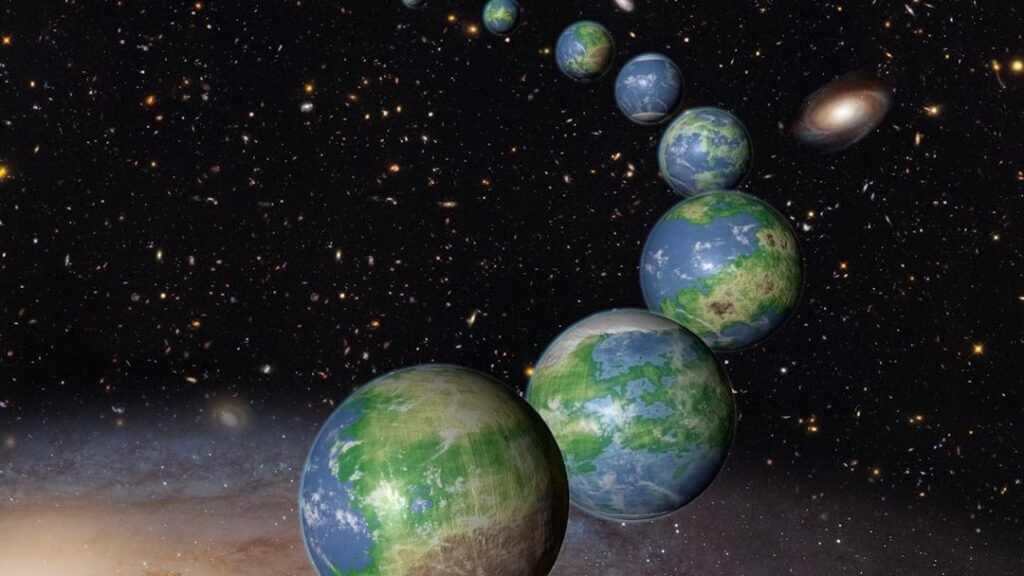

You have probably seen it a dozen times in movies. A portal opens, a hero steps through, and suddenly there is an alternate version of everything you thought you knew. It is a beautiful narrative trick. But here is what most people do not realize: the idea is not just Hollywood fantasy. Serious theoretical physicists, cosmologists, and even quantum computing engineers are wrestling with the very same concept.
The multiverse, the idea that our universe might be one of countless others, has moved quietly from science fiction bookshelves into peer-reviewed physics journals. The reasons why are fascinating, sometimes controversial, and honestly a little mind-bending. So let us dive in.
The Idea That Changed Everything: What Is the Multiverse?
The multiverse is a theoretical concept proposing that our observable universe is just one of potentially infinite universes that coexist in reality. Think of it like a cosmic ocean where our entire known universe, with all its galaxies, black holes, and life, is nothing more than a single drop.
The idea of parallel universes suggests that beyond the observable cosmos, there may exist countless other realms, each with its own unique laws of physics, histories, and possibilities. This concept has been a topic of discussion in both science and philosophy for centuries, but advancements in physics and cosmology have brought it into the realm of scientific hypothesis.
Theories about the multiverse vary widely, with some suggesting universes arranged like a patchwork quilt, while others propose bubble-like universes that can collide with each other. One particularly intriguing notion posits that every decision made creates branching realities, leading to alternate versions of events and histories. It sounds wild, I know. Yet the math behind some of these ideas is surprisingly solid.
The Many-Worlds Interpretation: Your Quantum Twin Might Actually Exist
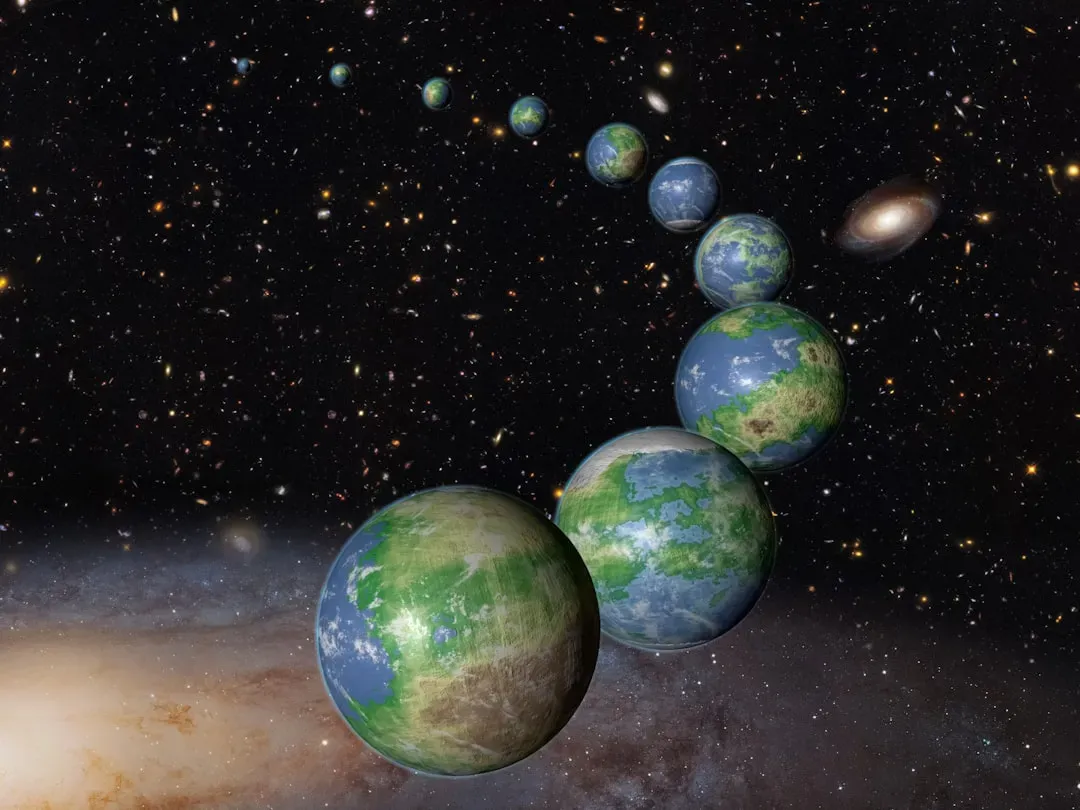
Proposed by physicist Hugh Everett in 1957, the many-worlds interpretation predicts the presence of branching timelines, or alternate realities in which our decisions play out differently, sometimes producing wildly different outcomes. Every quantum event, every tiny particle interaction you cannot even observe, could be spawning a new branch of reality.
The main conclusion of the Many-Worlds Interpretation is that the universe is composed of a quantum superposition of an uncountable number of increasingly divergent, non-communicating parallel universes or quantum worlds. Sometimes dubbed Everett worlds, each is an internally consistent and actualized alternative history or timeline.
Here is the thing: the Many-Worlds Interpretation is not fringe science. Some scientists consider some aspects of it to be unfalsifiable and hence unscientific because the multiple parallel universes are non-communicating, in the sense that no information can be passed between them. That is both its greatest philosophical strength and its biggest scientific weakness at the same time.
Cosmic Inflation and the Bubble Universe Theory
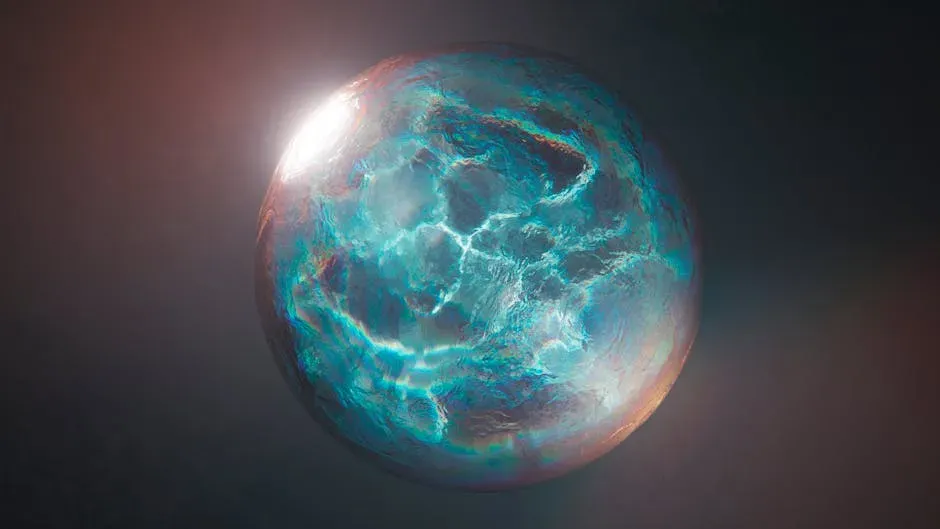
The idea of cosmic inflation, first proposed by Alan Guth in the 1980s, describes a rapid expansion of the universe following the Big Bang. Some models of inflation suggest that this expansion could lead to the formation of multiple, separate regions, so-called bubble universes, that are entirely detached from one another. Each of these bubbles may have different physical constants and structures, giving rise to a multiverse where the fundamental rules of nature can vary.
Eternal Inflation theory suggests that cosmic inflation might never truly stop. Instead, it continues eternally in some regions, constantly spawning new bubble universes that pinch off and grow their own spacetime. Each of these bubble universes could have completely different fundamental constants and laws of physics from our own, potentially leading to wildly different forms of matter and energy.
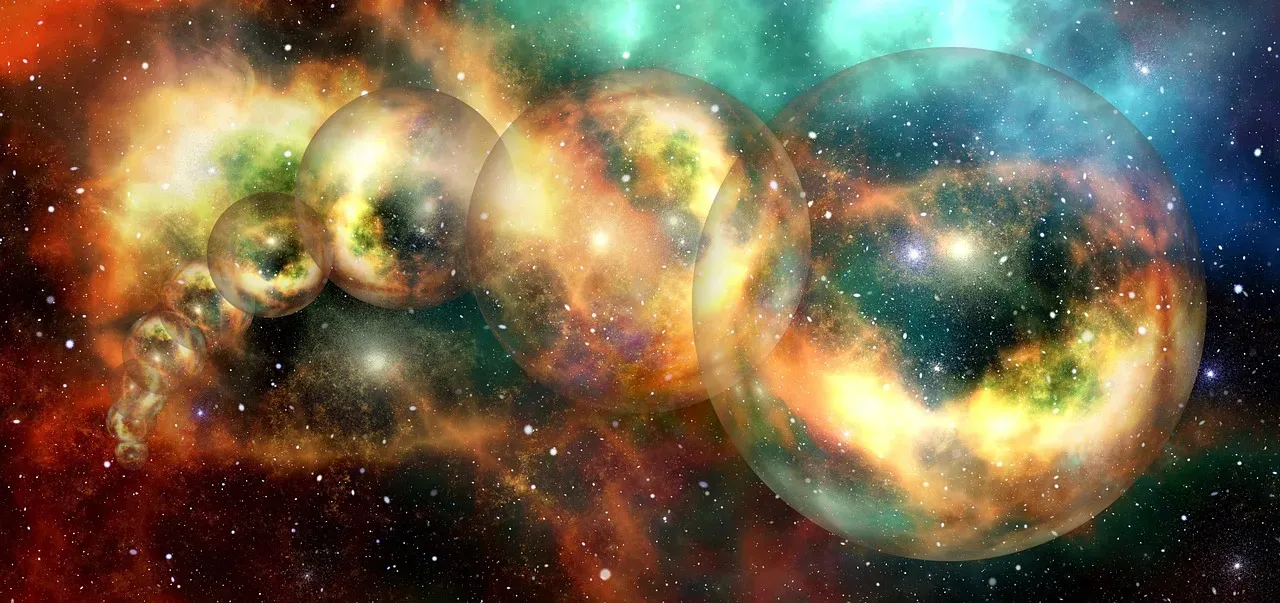
Imagine blowing soap bubbles endlessly. Each bubble is its own universe, floating alongside others. Like soap bubbles, bubble universes that grow too close to one another can and do stick together, if only for a moment. Such temporary mergers could make it possible for one universe to deposit some of its material into the other, leaving a kind of fingerprint at the point of collision. That fingerprint, incredibly, might already be visible to us.
The CMB Cold Spot: Did Another Universe Collide With Ours?
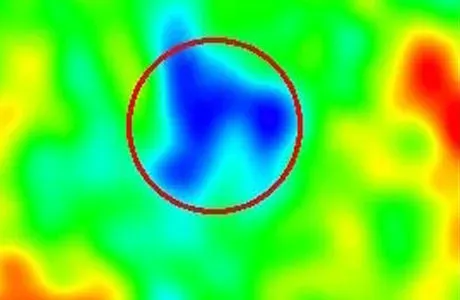
One of the most debated pieces of evidence for a parallel universe comes from the Cosmic Microwave Background, the remnant radiation from the Big Bang. The CMB is a snapshot of the infant universe and is remarkably uniform. However, detailed maps from satellites like Planck have revealed a mysterious and massive Cold Spot, a region of space significantly colder than its surroundings.
Some cosmologists propose that this Cold Spot is a bruise left from a collision with a bubble universe in the multiverse during the early inflationary period of our cosmos. The standard explanations for this anomaly, such as a vast supervoid, have not held up to observational scrutiny. The size and temperature of the Cold Spot are difficult to reconcile with established cosmology.
Honestly, it is hard not to get excited about this. Durham Professor Tom Shanks proposed that the Cold Spot was caused by a collision between our universe and another bubble universe, suggesting it might be taken as the first evidence for the multiverse. Still, the scientific consensus remains cautious, and extraordinary claims require extraordinary evidence before anyone pops the champagne.
String Theory, Branes, and Hidden Dimensions
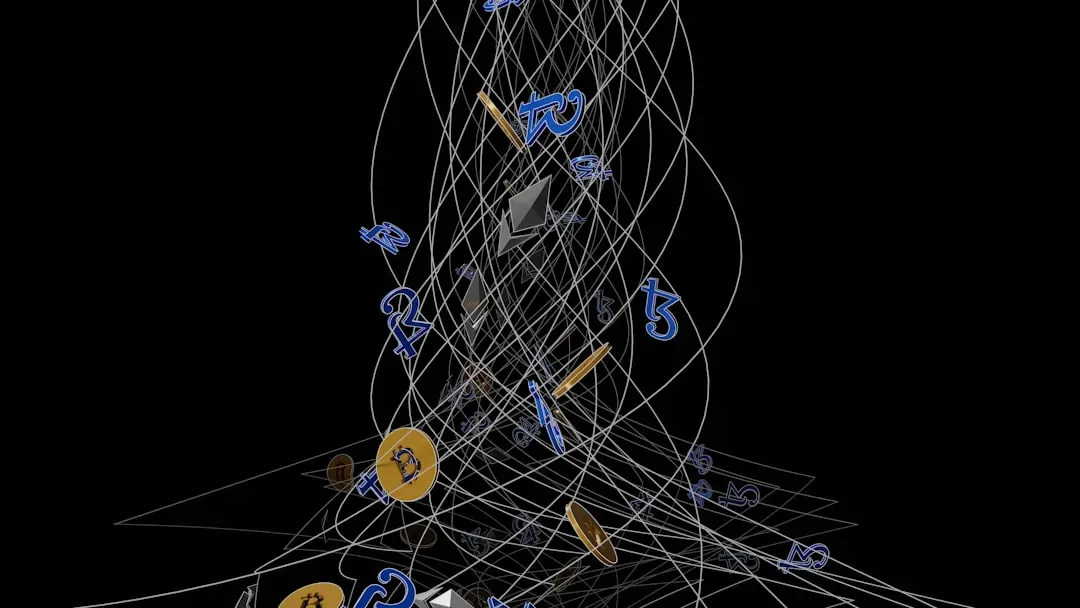
String theory also introduces the possibility of multiple universes through the concept of higher-dimensional space. According to this framework, our universe exists within a multidimensional space known as the “brane,” and other, parallel universes could exist on separate branes, coexisting but largely inaccessible to us. Think of it like two sheets of paper floating millimeters apart in a stack, each completely unaware of the other’s existence.
Bubble universes will in general differ from one another as regards the value of physical quantities, such as the speed of light or the electric charge on an electron, that we normally call constants of nature. In other words, a universe next to ours might have completely different rules. Max Tegmark’s four-level classification of multiverses consists of Level I: an extension of our universe, Level II: universes with different physical constants, Level III: the many-worlds interpretation of quantum mechanics, and Level IV: the ultimate ensemble. These classifications help scientists think about the problem in structured ways, even if direct testing remains elusive.
Google’s Quantum Computer and the Multiverse Connection

Google’s quantum chip Willow solved a computational problem in under five minutes, sparking debates about its implications for the multiverse theory. Hartmut Neven suggested the chip’s performance aligns with the multiverse interpretation of quantum mechanics, but critics argue alternative explanations suffice. The claim turned heads globally and reignited one of physics’ most electrifying debates.
Willow demonstrated it could perform computations so complex that they would take classical computers longer than the age of the universe to complete. Many, including Hartmut Neven, founder and manager of Google’s Quantum Artificial Intelligence Lab, believe that the unprecedented speed of the quantum computer is only possible by its leveraging computations across parallel universes.
However, you should know that plenty of physicists pushed back hard. While the many-worlds interpretation of quantum mechanics is a respected theoretical framework, inferring its validation from computational performance represents a significant logical leap. Conventional quantum mechanics explains the speed of quantum calculations without necessarily requiring the existence of parallel universes. So it is exciting, but not exactly a done deal. Still, quantum technology specialists believe advances like Willow bring us closer to building practical quantum computers capable of groundbreaking applications, such as speeding up drug discovery and strengthening cybersecurity.
Why This Matters and What the Scientists Are Divided On
Critics argue that the multiverse concept lacks testability and falsifiability, which are essential for scientific inquiry, and that it raises unresolved metaphysical issues. This is not a trivial objection. In science, if you cannot even theoretically design a test that could prove something wrong, some argue it does not fully qualify as science at all.
Yet on the other side, parallel universes are not a theory, but a prediction of certain theories, and insofar as those underlying theories receive support, our confidence in their unobservable consequences also increases. There is a real difference between saying “we cannot prove this yet” and “this is not real.” If there are infinite universes, each with different physical laws, then it becomes less surprising that our particular universe has just the right conditions for life. We just happen to be in one of the universes where life is possible.
Modern proponents of one or more of the multiverse hypotheses include Lee Smolin, Don Page, Brian Greene, Max Tegmark, Alan Guth, Andrei Linde, Michio Kaku, David Deutsch, Leonard Susskind, Alexander Vilenkin, Neil deGrasse Tyson, Sean Carroll and Stephen Hawking. That is not exactly a list of people you dismiss easily. The debate is real, the stakes are enormous, and the science is very much alive.
Conclusion: The Most Important Question You May Never Get Answered
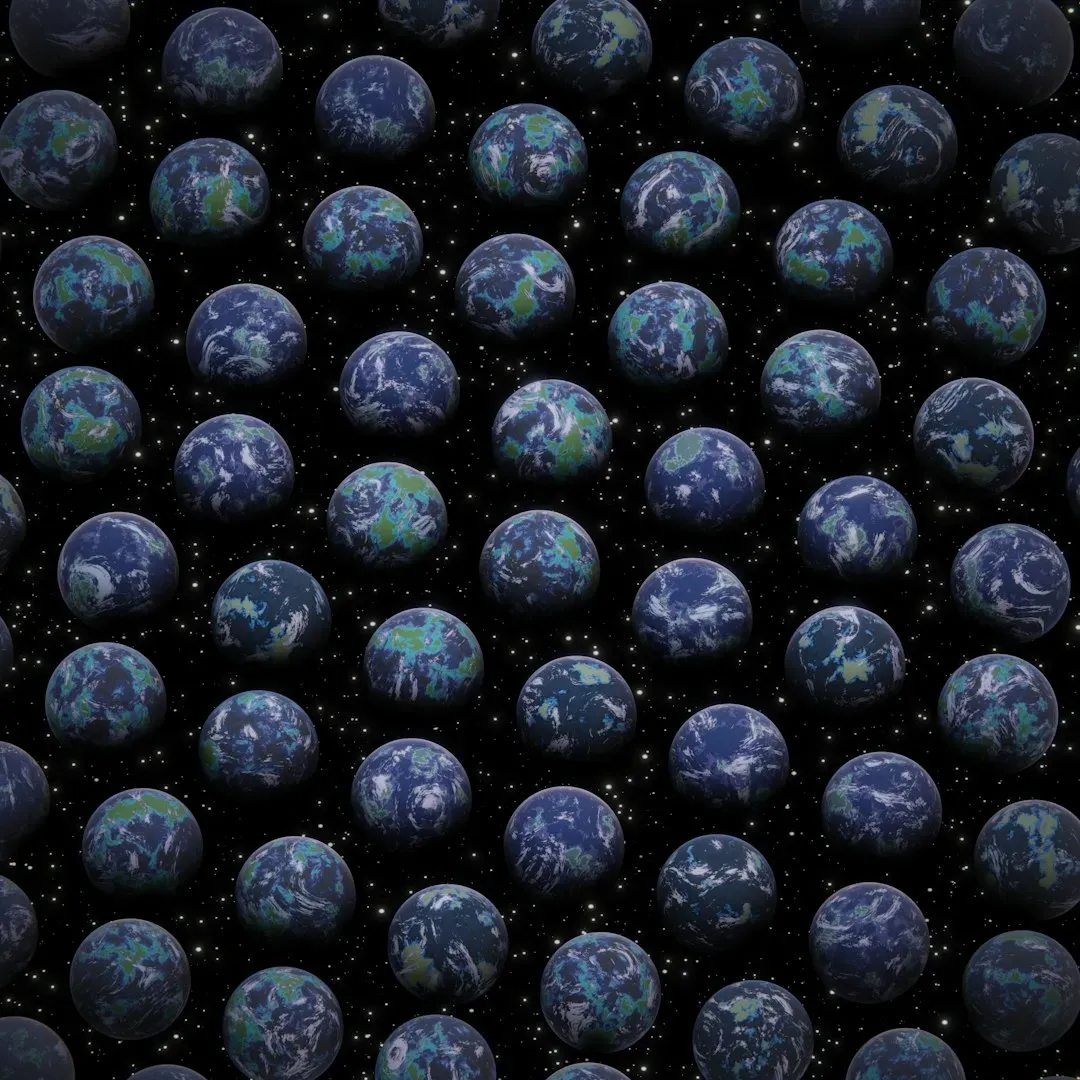
Let’s be real: we may never know for certain whether parallel universes exist. The honest answer, as of 2026, is that multiverse theory continues to reshape how reality is understood, pushing beyond the idea of a single universe into a broader framework. While direct evidence remains out of reach, the concepts behind cosmology multiverse models offer new ways to interpret fine-tuning, quantum mechanics, and cosmic origins. Ongoing research in eternal inflation, quantum many-worlds, and string theory keeps the discussion active and evolving.
What makes this idea so compelling is not just the physics. It is the sheer audacity of the question. The exploration of parallel worlds and multiverse theories not only broadens our understanding of the cosmos but also enriches our perspective on reality itself. Sometimes, the most important questions are not the ones we have already answered but the ones that keep us looking upward, building better instruments, and daring to think bigger.
So here is your parting thought: if every quantum decision you ever faced created a branching version of your reality, somewhere out there is a version of you who made every choice differently. What would that life look like? And more importantly, does the very fact that you are wondering about it right now say something profound about the universe we inhabit? Think about that the next time you make a decision. What do you think? Drop your thoughts in the comments below.