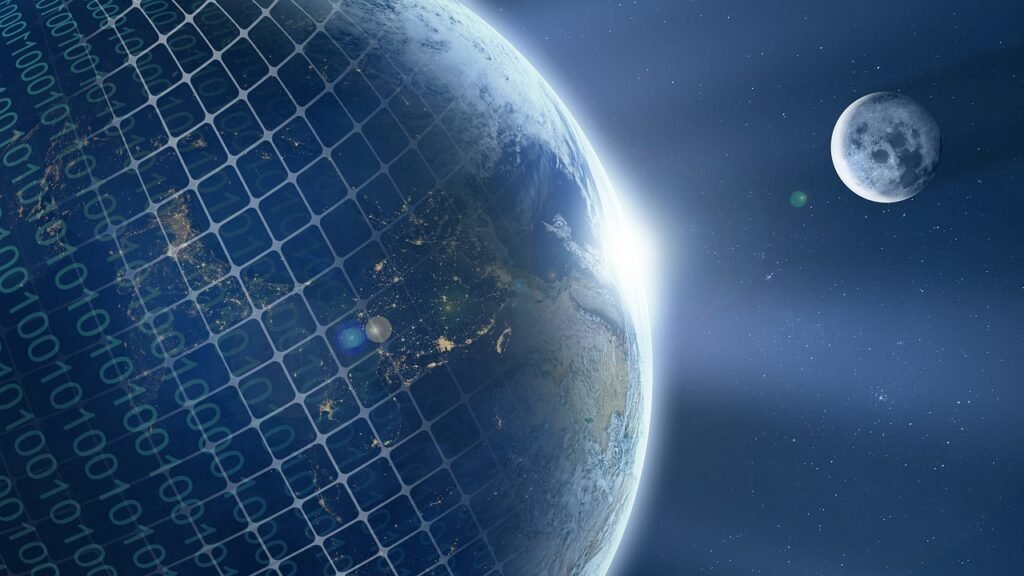

Every now and then, there’s a question that hits you in a quiet moment and refuses to let go: what if everything you see, feel, love, and fear is running on someone else’s hardware? The idea that our universe might be a sophisticated simulation sounds like late-night dorm room talk, yet over the past two decades it has crept from science fiction into serious scientific and philosophical discussion. Physicists, computer scientists, and philosophers are now openly debating whether reality itself could be more like a cosmic video game than the solid, objective world we think we inhabit.
I remember the first time I read a serious paper on the simulation hypothesis: it felt like pulling on a loose thread in a sweater and suddenly realizing the whole thing might unravel. At first, it’s thrilling, then unsettling, and then oddly practical: if this is a simulation, what changes, really, about how we live? To make sense of that, we need to look calmly at the best arguments on both sides – what makes the idea strangely plausible, and what still firmly roots us in a “base reality,” if such a thing exists.
The Core Idea: What the Simulation Hypothesis Actually Claims
The simulation hypothesis, in its modern form, doesn’t say we’re living in some cheap illusion that can be dispelled with a magic trick; it suggests that our entire universe might be the result of information processing in an advanced computing system. In this view, every particle, every law of physics, and every neuron firing in your brain could be the output of underlying code, just as the objects in a video game are generated by software and hardware. The twist is that the simulation would be so detailed and consistent that the “inhabitants” (that’s us) would have no obvious way to tell they’re inside it.
What makes this different from ancient myths about dreams or illusions is that it’s framed using modern technology and information theory. As our own simulations of weather, galaxies, and even human societies become more sophisticated, the question becomes uncomfortable: if we’re already simulating pieces of our own world, what would stop a far more advanced civilization from simulating an entire reality, including conscious beings? The hypothesis doesn’t claim to know who built such a system or why; it simply asks whether, in principle, such a thing is technologically and logically possible.
The Philosophical Argument: Why Some Think It’s Likely
The most influential argument for the simulation hypothesis is a probabilistic one: if civilizations tend to advance far beyond our current technological level, and if those advanced civilizations routinely run enormous numbers of realistic simulations of their ancestors, then simulated minds could vastly outnumber “original” minds. If that’s true, then statistically, any randomly chosen conscious observer would be far more likely to be in a simulation rather than in the original base reality. The unsettling punchline is that, under those assumptions, it becomes rational to suspect that you, right now, are simulated.
This line of reasoning relies on a few key claims: that technological progress continues long enough to create near-perfect simulations, that advanced beings actually want to run those simulations, and that they do so at massive scale. If just one civilization in the universe achieves this and runs countless simulations, then simulated worlds could multiply like digital Matryoshka dolls. The argument doesn’t prove we are simulated; instead, it corners us into a trilemma: either advanced civilizations never reach that level, or they reach it but choose not to simulate conscious beings, or they do – and we probably are in one of their worlds.
The Technological Trajectory: From Video Games to Virtual Universes
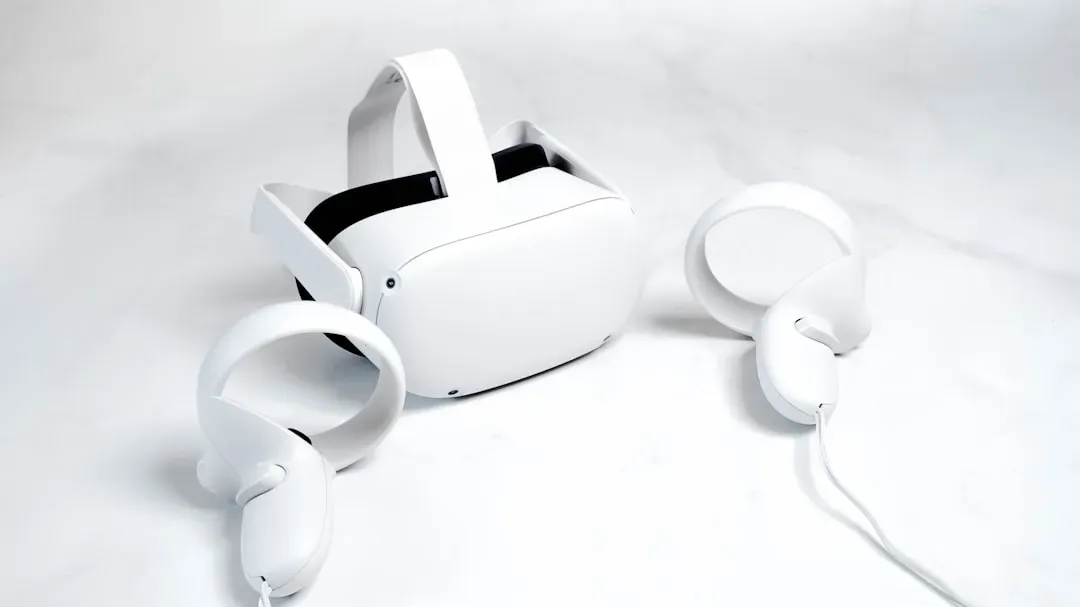
One reason the simulation idea feels less absurd in 2026 than it did a few decades ago is how rapidly our own technology has evolved. Roughly about two generations ago, games were blocky shapes moving on clunky screens; today, we have photorealistic virtual worlds, real-time physics engines, and AI-driven characters that can adapt in surprisingly human-like ways. With advances in mixed reality, brain–computer interfaces, and neural rendering, the line between “virtual” and “real” experiences is already starting to blur at the edges.
Now stretch that trajectory not by fifty years, but by thousands or millions. If we can already simulate fluid dynamics, stellar evolution, and social behavior on modern supercomputers, it doesn’t take wild imagination to picture future systems capable of simulating an entire planet or even a small universe in exquisite detail. At some point, the difference between simulating a storm and simulating a conscious mind becomes more a question of scale and architecture than of principle. Of course, extrapolation can be a trap, but the trend itself is what gives the simulation hypothesis its teeth: what looks impossible today might seem routine from the vantage point of a civilization millions of years ahead.
The Physics Angle: Are There Glitches or Limits in the Code?

If our universe is a simulation, you might expect to find fingerprints of its underlying “code” in the laws of physics themselves. Some researchers have wondered whether things like the speed of light, quantum discreteness, or the apparent pixel-like structure of spacetime at the Planck scale might hint at a computational substrate. There have even been serious proposals to look for subtle anisotropies or artifacts in high-energy cosmic rays that could resemble the limits of a numerical lattice, like the graininess you see when you zoom in too far on a digital image.
So far, though, nothing in physics cleanly screams “this is a simulation,” and that matters. The Standard Model of particle physics and general relativity, for all their tensions, work with astonishing precision across a huge range of scales without revealing obvious glitches. Some argue that quantum randomness and the strange role of observers in quantum mechanics might be easier to explain if the universe were a kind of information-processing system, but that is more an interpretive flavor than a hard test. The sobering reality is that an advanced simulator could easily design their “world engine” to hide any sign of its digital nature far beyond anything we can currently measure.
The Consciousness Question: Can a Simulated Mind Be Real?
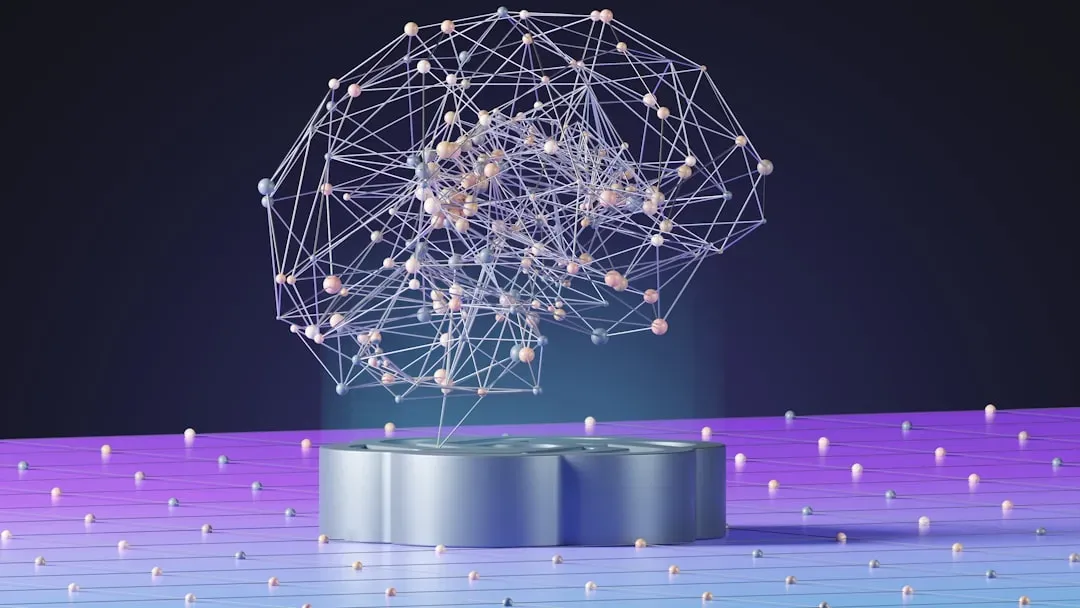
A major fault line in the debate is whether a simulated brain could ever host genuine consciousness, or if it would be nothing more than an empty, mechanical puppet. If consciousness arises from physical processes that can, in principle, be replicated in another medium, then a precise enough simulation of a human brain might have inner experiences that are every bit as vivid as yours right now. Under that view, substrate doesn’t matter: whether the neurons run on wet biology or on silicon, what counts is the pattern and dynamics, not the material.
But not everyone buys that equivalence. Some philosophers and neuroscientists argue that consciousness may depend on specific physical properties of biological brains that can’t be captured by digital abstraction alone. Others point out that we still lack a widely accepted scientific theory of consciousness, making claims about simulated minds speculative at best. This is where the debate turns from physics to philosophy: if you believe that information structures can be conscious, the simulation hypothesis feels more coherent; if you think consciousness is deeply tied to specific physical stuff, then the idea of living in a computer becomes less compelling.
The Skeptical View: Why Many Scientists Think It’s Unlikely or Unhelpful
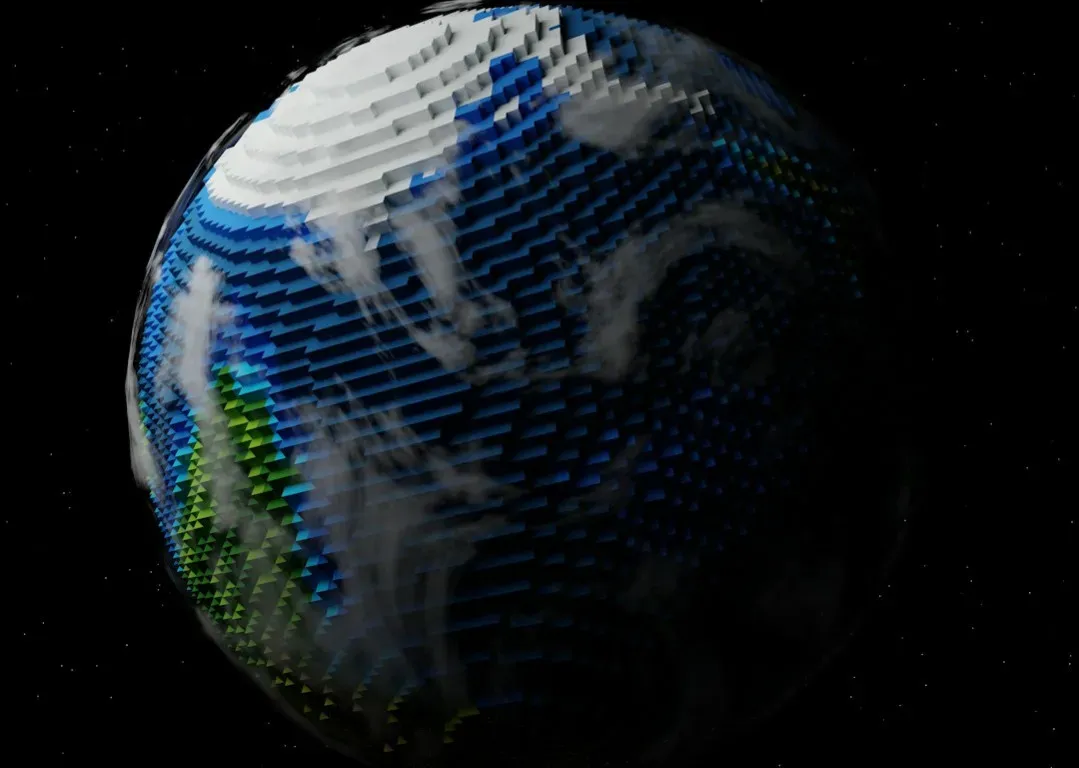
For all its intrigue, many scientists see the simulation hypothesis as either unlikely or, more bluntly, not scientifically useful. One major objection is that it is currently unfalsifiable: if any possible observation can be explained by saying “the simulator made it that way,” then you no longer have a testable scientific theory, just a clever story. Science gains its power by throwing ideas against the wall of experiment and observation, and right now the simulation hypothesis largely slides off that wall untouched.
There’s also the issue of stacked speculation: the main probabilistic argument depends on multiple unproven assumptions about the future of technology, the behavior of advanced civilizations, and the nature of consciousness. If even one of those assumptions fails, the conclusion collapses. Some critics argue that the hypothesis says more about our cultural moment – obsessed with computing and virtual worlds – than about the deep structure of reality. From this angle, asking whether we are in a simulation may be philosophically stimulating but practically sterile, offering little guidance for experiments, predictions, or everyday life.
Meaning, Ethics, and How to Live If Reality Is (or Isn’t) Simulated
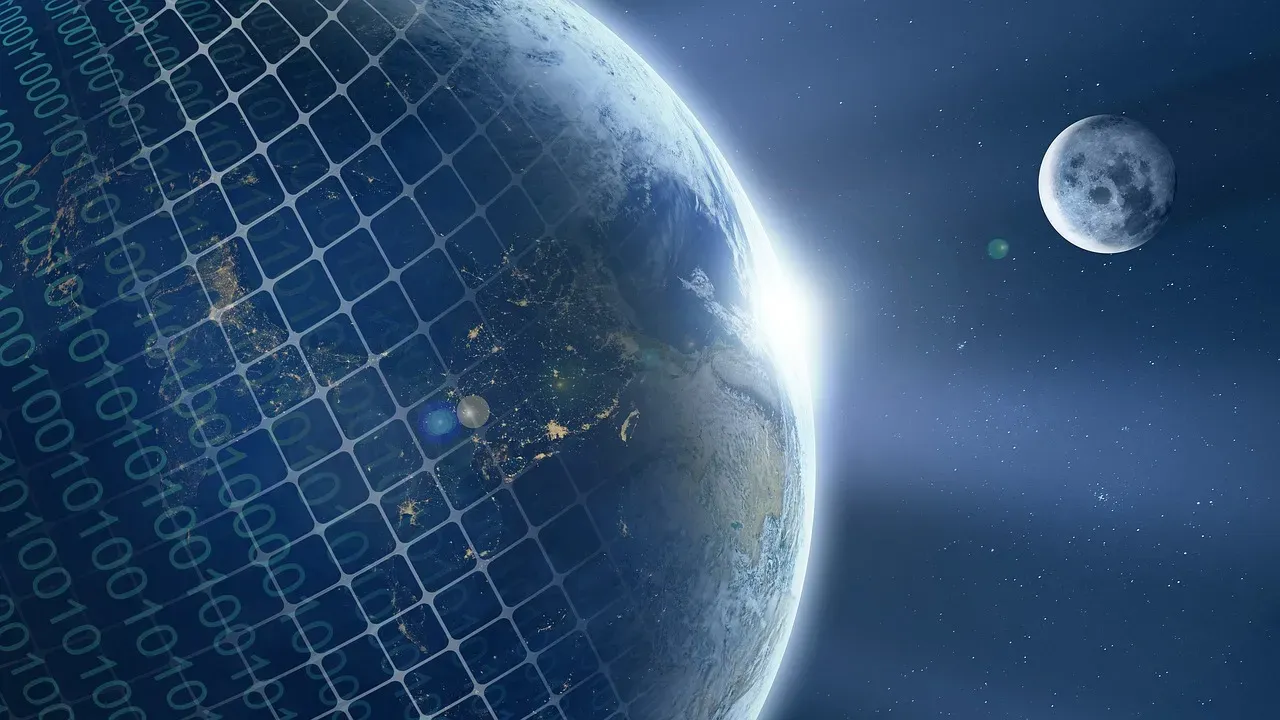
Even if we never prove the simulation hypothesis one way or the other, wrestling with it can change how we think about meaning, ethics, and our place in the universe. If we are simulated, does that cheapen our experiences, or does pain still hurt, love still matter, and grief still break your heart in exactly the same way? In practice, your relationships, your choices, and your sense of purpose feel just as real whether the underlying substrate is quarks or qubits. For many people, the idea that reality might be layered or constructed doesn’t erase meaning; it simply shifts the question toward how we choose to act inside whatever this is.
There’s also a curious ethical twist: if advanced beings might simulate us, then someday we could be the ones simulating conscious descendants or replicas of ourselves. That possibility forces us to think carefully about digital suffering, virtual rights, and the responsibilities that come with creating complex worlds. On a more personal level, I’ve found that treating the simulation idea as a philosophical prompt, not a conclusion, can be strangely grounding. You still wake up, take a breath, and decide what kind of person you want to be in this level of the game, whatever lies beneath it.