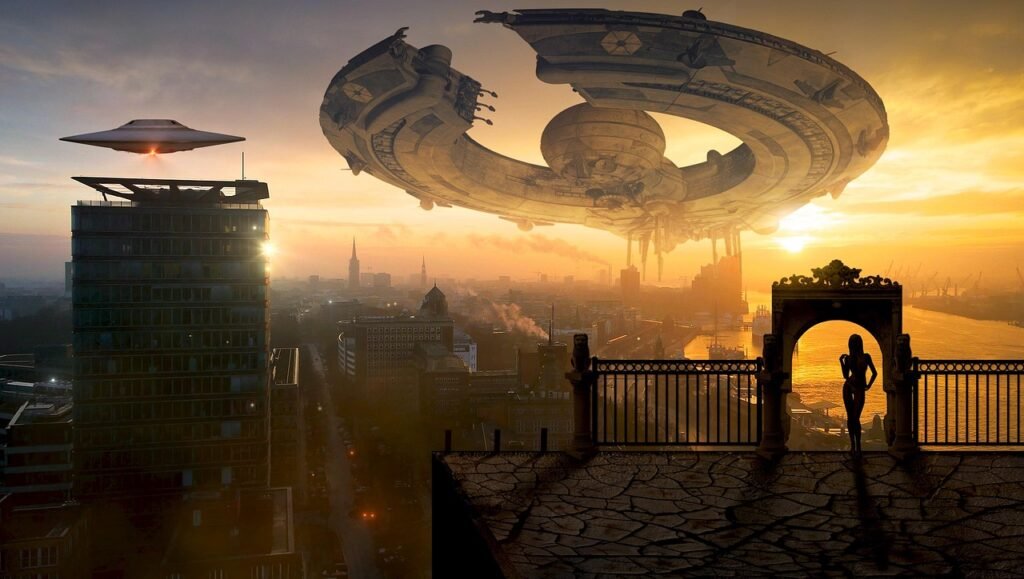

Imagine something slipping through your walls, watching you, and then vanishing into thin air without a trace. No spaceship. No wormhole. Just gone. The idea that intelligent beings from a higher dimension could be interacting with our world is no longer just the stuff of late-night science fiction. It sits, quietly and uncomfortably, at the intersection of theoretical physics, UFO research, and some of the most baffling unexplained phenomena ever recorded.
The concept challenges everything you thought you knew about reality. What if “alien” doesn’t mean something from another star system, but something from another layer of existence entirely? What if the universe is far more layered than our brains can even process? Stick around, because what science actually says on this topic might surprise you more than you expect. Let’s dive in.
What Exactly Is the 4th Dimension, Anyway?
Here’s the thing most people get confused about right away. When physicists talk about the 4th dimension, they don’t always mean the same thing. You live in a three-dimensional world defined by height, width, and depth. Time is often described as the 4th dimension in Einstein’s model of spacetime, but in more advanced theoretical frameworks, there could be a spatial 4th dimension, an additional direction you literally cannot perceive or move through.
Think of it like this. If you were a flat drawing on a piece of paper, you’d have no concept of “up.” You couldn’t see anything above or below your 2D plane, even if a whole three-dimensional world existed just millimeters above your head. A two-dimensional creature would only perceive length and width and wouldn’t understand our reality. That’s the analogy physicists use to describe your relationship to a potential 4th spatial dimension, and it’s humbling once it sinks in.
String Theory and the Science Behind Extra Dimensions
String theory requires higher dimensions for the behavior of vibrating “strings” that make up all particles. Without higher dimensions, the theory simply wouldn’t work. This isn’t fringe thinking. Thousands of peer-reviewed papers have been published on this subject. Almost 5,000 papers have been published in physics literature concerning higher dimensional theories, beginning with the pioneering papers of Theodore Kaluza and Oskar Klein in the 1920s and 30s.
Although higher dimensions have historically been the exclusive realm of charlatans, mystics, and science fiction writers, many serious theoretical physicists now believe that higher dimensions not only exist, but may also explain some of the deepest secrets of nature. For string theory to be accurate, it means there could be more than 10 dimensions, instead of the four we’re used to experiencing: length, width, depth, and time. That’s an extraordinary claim, and it comes from mainstream physics, not conspiracy blogs.
The Flatland Analogy and How 4D Beings Would Actually Appear to You

Honestly, the best way to understand what a 4D being would look like to you is through a simple thought experiment. Imagine a two-dimensional world, often referred to as “Flatland,” inhabited by beings who can only perceive length and width but have no concept of height. Now suppose a three-dimensional sphere passes through this Flatland. The inhabitants would see a series of events: first, a tiny dot appears; it grows into a circle, reaches its maximum size at the sphere’s equator, and then gradually shrinks back into a dot before vanishing altogether.
Science communicator Toby Hendy provides a visualization of how a four-dimensional object, like a ball, would appear in our three-dimensional world: materializing, growing, and then disappearing. To these 2D beings, this would seem like a mysterious, unexplainable phenomenon. Similarly, as three-dimensional beings, our perception of a fourth-dimensional object passing through our space might manifest as strange, unidentified phenomena, UFOs that seem to appear out of nowhere, make abrupt movements, and vanish without a trace. Suddenly, those UAP sighting reports look a whole lot less crazy, don’t they?
The Interdimensional UFO Hypothesis and the Researchers Who Took It Seriously
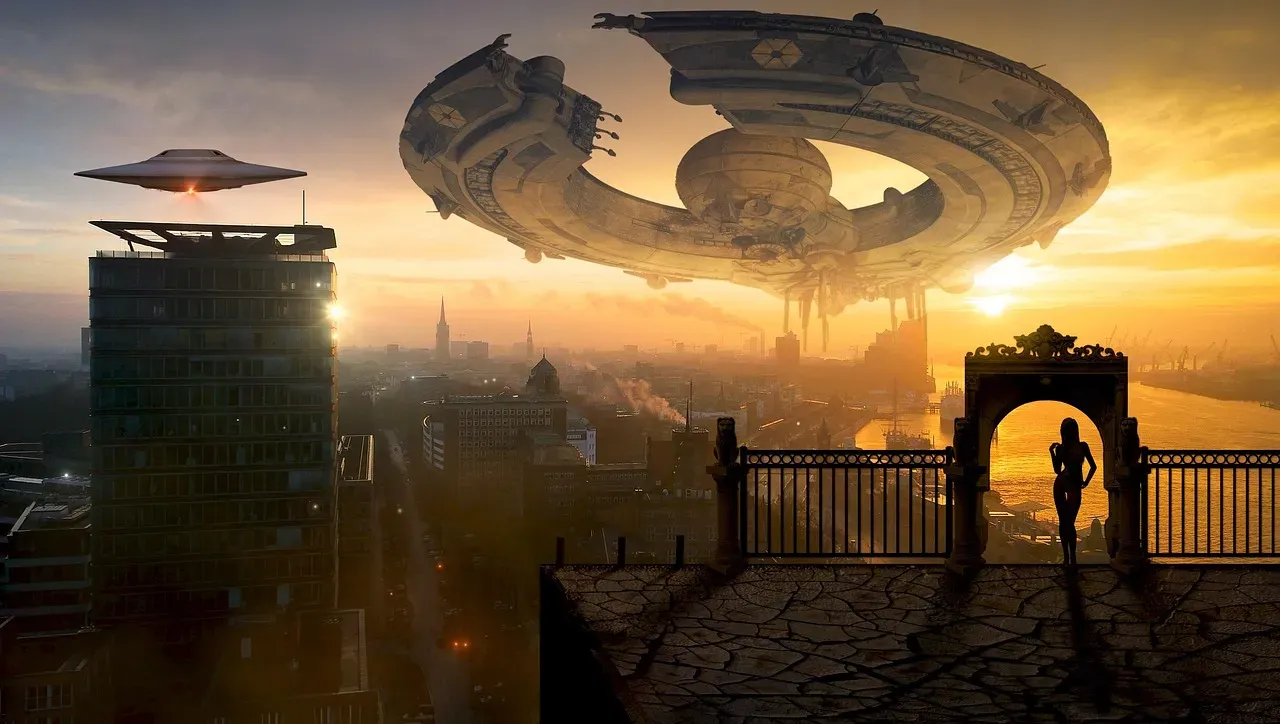
The Interdimensional UFO Hypothesis (IUH) is the proposal that unidentified flying object (UFO) sightings are the result of experiencing other “dimensions” or “portals” that coexist separately alongside our own. This isn’t a fringe internet theory. The hypothesis has been advanced by ufologists such as Meade Layne, John Keel, J. Allen Hynek, and Jacques Vallée. Proponents argue that UFOs are a modern manifestation of a phenomenon that has occurred throughout recorded human history, which in prior ages was ascribed to mythological or supernatural creatures.
In the mid-1960s, Vallée initially attempted to validate the popular Extraterrestrial Hypothesis. However, by 1969, Vallée’s conclusions had changed, and he publicly stated that the ETH was too narrow and ignored too much data. As an alternative to the extraterrestrial visitation hypothesis, Vallée suggested a multidimensional visitation hypothesis. This hypothesis represents an extension of the ETH where the alleged extraterrestrials could potentially be from anywhere. The entities could be multidimensional beyond space-time, and thus they could coexist with humans, yet remain undetected. That’s a bold, fascinating shift from one of the most credentialed minds in the field.
Ultraterrestrials: The Beings That Were Never “Out There” to Begin With
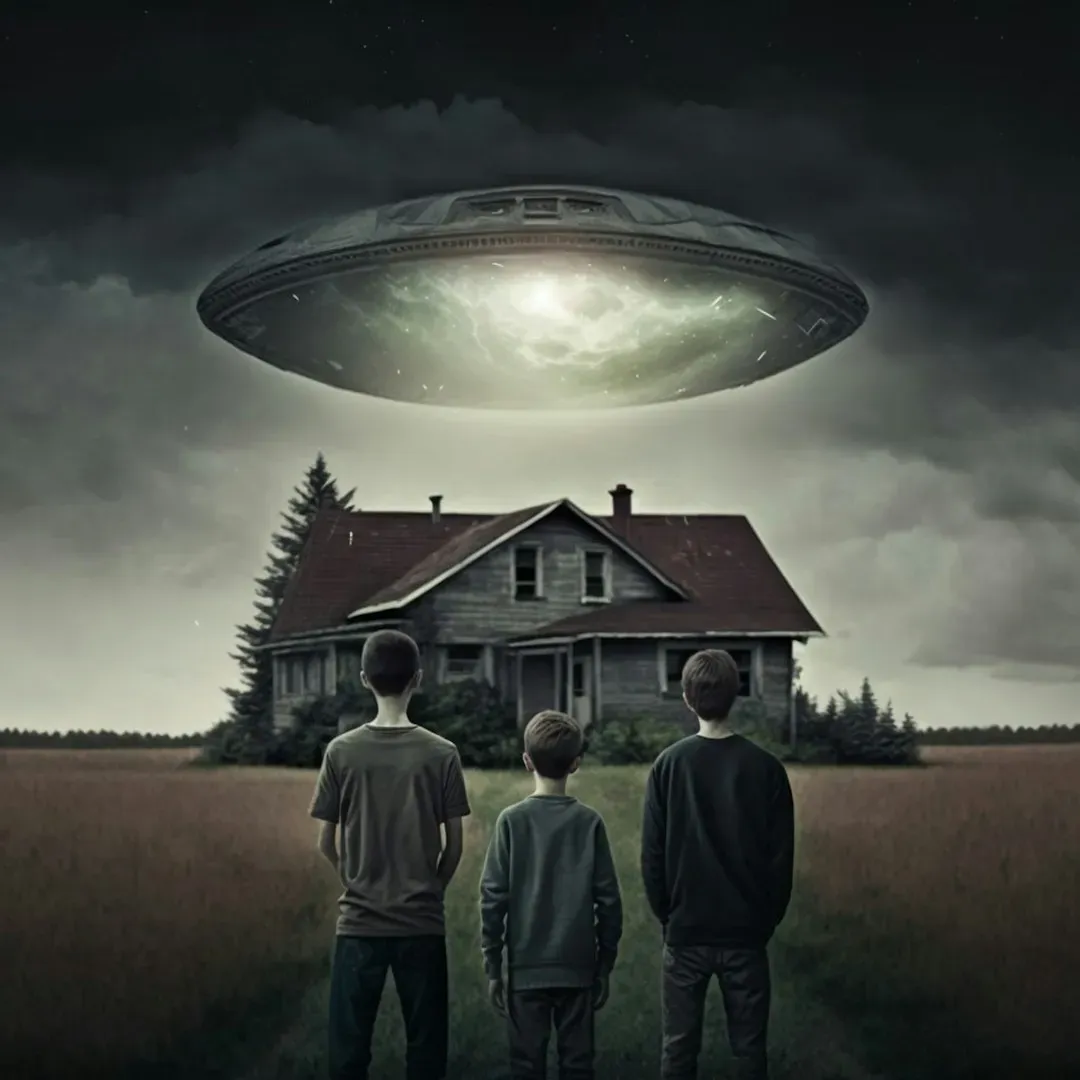
Paranormal researcher John Keel coined the term “ultraterrestrials” to describe beings who can manifest in our reality. John Keel’s theory of ultraterrestrials proposes that beings from other dimensions have influenced human culture throughout history, appearing in folklore and religious texts as demons, fairies, or other supernatural entities, capable of shifting shapes and manipulating mankind. Let’s be real, when you line up medieval fairy legends, demonic encounters, and modern alien abduction reports side by side, the similarities are genuinely unsettling.
John Keel further developed the idea in his 1970 book UFOs: Operation Trojan Horse, suggesting that UFOs were manifestations of “ultraterrestrials,” beings who had always coexisted with humanity and could manipulate our perception and physical reality. Keel connected UFOs with other paranormal phenomena, arguing they were different expressions of the same underlying intelligence. He used the term “ultraterrestrials” to describe UFO occupants he believed to be non-human entities capable of assuming whatever form they desire. In Our Haunted Planet, Keel discussed the possibility that the alien “visitors” to Earth are not visitors at all, but an advanced civilization that may or may not be human.
What Would Their Physics-Defying Behavior Actually Mean?
One of the most perplexing aspects of UFO sightings is their apparent disregard for the known laws of physics. Witnesses often describe extreme accelerations, sudden changes in direction, and movements that would exert unbearable g-forces on any occupants. However, if these objects originate from a higher-dimensional reality, these “impossible” movements could simply reflect their traversal through our three-dimensional space.
One of the benefits of the Interdimensional Hypothesis according to Hilary Evans is that it can explain the apparent ability of UFOs to appear and disappear not only from sight but from radar, as interdimensional UFOs can enter and leave our dimension at will, meaning they have the ability to materialize and dematerialize. Evans also argues that if the other dimension is slightly more advanced than ours, or perhaps our own future, this would explain the tendency of UFOs to represent technologies close to the future. It’s a chilling thought, honestly. What if what you’re seeing isn’t alien at all, but a version of what’s coming?
What Does Science Still Get Wrong, or Simply Don’t Know Yet?
No definitive experimental evidence for extra dimensions has been found. The LHC has not detected microscopic black holes or Kaluza-Klein excitations, and precision gravity experiments have not observed deviations from the inverse-square law at the tested scales. However, these null results do not disprove the existence of extra dimensions; they merely constrain their possible properties and scales. It’s the scientific version of “absence of evidence is not evidence of absence.”
It is impossible for our brains to visualize the fourth spatial dimension. Computers have no problem working in N dimensional space, but spatial dimensions beyond three simply cannot be conceptualized by our feeble brains. The interdimensional hypothesis’s main weakness involves its inability to make testable predictions. Without understanding dimensional mechanics, researchers cannot predict when or where phenomena will manifest, what forms appearances will take, or how to initiate contact. It’s hard to say for sure, but that limitation doesn’t make the question disappear. It makes it more important to keep asking it.
Conclusion: The Question That Won’t Go Away
Science, at its best, is a process of eliminating what’s impossible and taking the remaining possibilities seriously, no matter how strange they seem. The search for intelligent life might be misdirected towards space, with theories suggesting that “ultraterrestrials” from other dimensions, rather than extraterrestrials, could exist alongside us. Particle physics and string theory open the possibility of parallel dimensions where life forms vastly different from our understanding could exist.
Humans, like all animals, tend to be aware only of the small aspect of reality that is pertinent to our existence and that we have the capacity and technology to perceive. That is perhaps the most quietly terrifying sentence in this entire discussion. We are not blank observers of the universe. We are creatures with biological limits, evolved on a single planet, peering through a narrow keyhole of sensory experience. The universe, including any beings in it, owes us no obligation to fit inside that keyhole.
The possibility that something intelligent, ancient, and fundamentally beyond our frame of reference could be sharing this reality with you, right now, is not science fiction. It is an open scientific question backed by serious theoretical frameworks and decades of unexplained data. Whether that possibility excites you, unnerves you, or both, one thing seems clear: maybe we’ve been looking in the wrong direction all along. What do you think? Drop your thoughts in the comments.