
There’s something almost poetic about the idea that the most overlooked stars in the universe might be hiding the most violent secrets. For years, astronomers assumed the brightest stellar explosions came from the biggest, most luminous stars. Turns out, that assumption was wrong in a pretty spectacular way.
New research is flipping the script on what we thought we knew about supernovae and the stars that produce them. The findings are not just surprising – they’re the kind of discovery that makes you rethink the whole framework. So let’s dive in.
The Stars Nobody Was Watching
Here’s the thing about dim stars – they’re easy to ignore. In a galaxy packed with blazing giants, a faint, low-luminosity star barely gets a second glance from observers. Astronomers tended to focus their attention on the heavy hitters, the massive stellar objects that seemed like the obvious candidates for producing powerful explosions.
What recent research has revealed, though, is that these dim stars can produce some of the brightest transient events ever recorded. It’s a bit like assuming the quietest person in the room couldn’t possibly start the loudest argument. The universe, apparently, loves a good plot twist.
What Exactly Is a Stellar Transient Event
Stellar transients are sudden, dramatic increases in brightness from a star, typically caused by an explosion or some form of energetic outburst. These events can briefly outshine entire galaxies, lasting anywhere from days to months before fading. Scientists catalog them carefully because they serve as some of the most important distance markers and energy benchmarks in all of astrophysics.
Supernovae are the most famous type, but the category also includes things like novae, luminous blue variable eruptions, and other exotic phenomena. The challenge has always been linking these outbursts back to their progenitor stars – meaning the stars that existed before the explosion. That’s where this new research starts to get genuinely exciting.
The Progenitor Problem in Astronomy
Identifying a progenitor star is genuinely hard. You need archival images of the exact location before the explosion occurred, good enough resolution to isolate the right star, and then a method to confirm what you’re looking at. Honestly, it’s like trying to identify a person in a crowd photo taken years before a crime, using only the spot where they were standing.
For decades, many supernovae simply had no confirmed progenitor because the stars were too faint to appear in pre-explosion images. That invisibility led scientists to assume the stars were relatively unremarkable. The new research suggests something far more interesting was going on beneath that dimness.
How Dim Stars Produce Such Bright Explosions
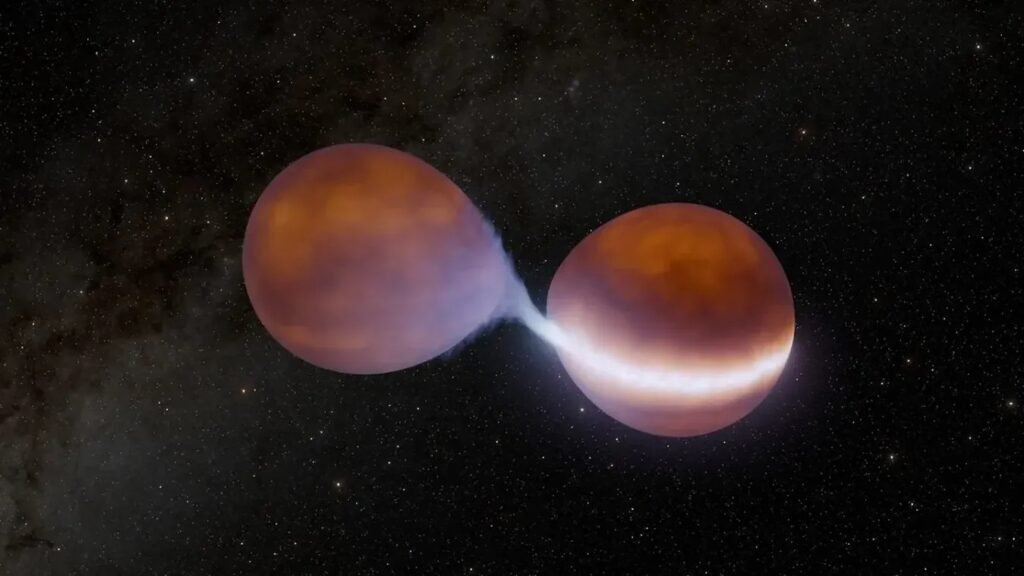
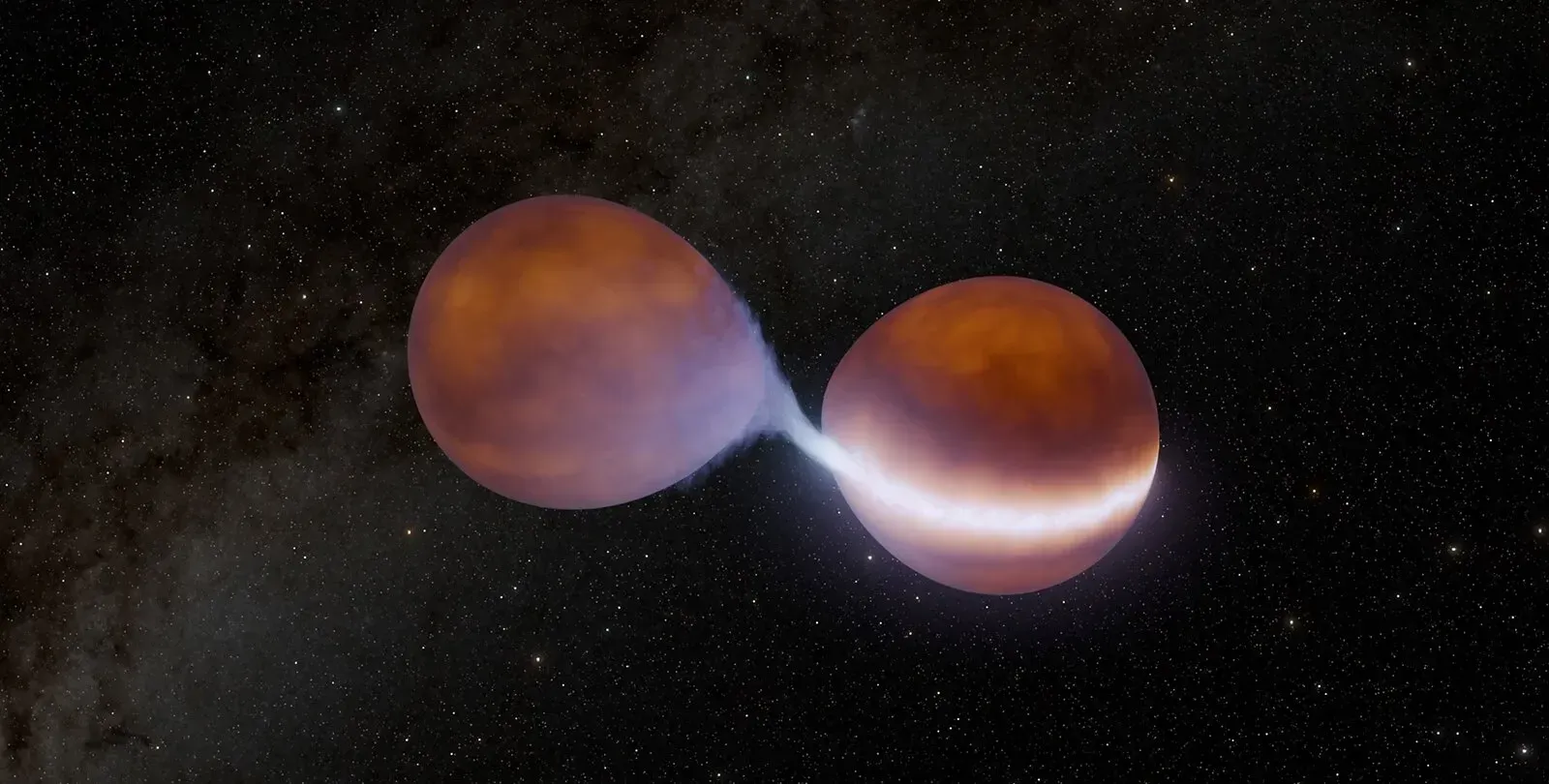
The key lies in a phenomenon that has to do with mass transfer in binary star systems. Many stars don’t live alone – they orbit a companion, and over time, material can flow between them. A dim, low-mass star can accrete enough material from a companion to trigger a thermonuclear explosion of extraordinary power, regardless of how unimpressive it looked beforehand.
Think of it like a nearly empty car slowly being filled with fuel over a long period of time. Once that tank hits a critical threshold, the ignition is spectacular. The underlying star itself may be dim, but the explosion it produces is anything but. This mechanism helps explain why there’s such a puzzling mismatch between progenitor brightness and explosion energy in so many observed cases.
What the Data Actually Shows
Researchers analyzing archival telescope data found multiple cases where extremely faint or even undetected progenitor stars were linked to some of the more energetic transient events on record. The pattern was consistent enough to suggest this isn’t a fluke – it’s a real physical process happening across different types of stellar environments.
I think what makes this particularly compelling is the statistical weight behind it. This wasn’t a single anomalous case that could be brushed off as an outlier. Multiple data points pointing in the same direction carry a different kind of scientific authority. The implications ripple outward into how we model stellar evolution and classify supernovae types going forward.
Why This Changes the Way We Search for Supernovae Progenitors
If dim stars can produce bright explosions, then the entire search strategy for progenitor identification needs a rethink. Astronomers have historically deprioritized faint stars in pre-explosion images, sometimes ruling them out entirely. That approach may have caused researchers to overlook the actual culprit sitting right there in the data.
Going forward, surveys will need to account for low-luminosity objects with far more rigor. Missions with high sensitivity and wide sky coverage, like those enabled by next-generation space telescopes, become even more critical in this context. The universe keeps reminding us that absence of evidence is not evidence of absence – especially when your detector isn’t sensitive enough.
The Broader Picture for Stellar Astrophysics
This discovery matters beyond just supernovae research. It touches on how we understand the life cycles of stars, the role of binary systems in stellar death, and even the chemical enrichment of galaxies. Supernovae are responsible for scattering heavy elements across space – the iron in your blood, the calcium in your bones – and knowing exactly which stars produce which explosions helps trace those origins.
Let’s be real, the more we learn about stellar explosions, the stranger and more wonderful the universe gets. The assumption that bigger always means more powerful has been challenged in physics time and again. Stars, it seems, have one more trick to teach us – that sometimes the quietest ones go out the loudest.
A Final Thought Worth Sitting With
There’s something genuinely humbling about this research. We’ve been studying stars for centuries, building instruments of extraordinary precision, and yet the universe still manages to hide enormous surprises in plain sight. A star too faint to confidently detect becomes the source of one of the most energetic events in the cosmos. It doesn’t get more dramatic than that.
Honestly, this finding should push astronomers to treat every faint object in archival data with renewed respect. The next major breakthrough in stellar science might be sitting in an image where the star of interest is barely a pixel. Science at its best is exactly this – the moment when a quiet corner of the data becomes the loudest story in the room. What do you think would change if we redesigned our search strategies around the dimmest stars rather than the brightest? Drop your thoughts in the comments.