
Imagine discovering that your thoughts are not just flickers inside your skull but ripples in a vast, invisible field that fills all of space. That’s the wild, unsettling claim behind a growing but controversial idea in science and philosophy: consciousness might be as fundamental to the universe as space, time, and energy. Not a side effect of brains, but something woven into the fabric of reality itself.
This theory flips the usual story on its head. Instead of consciousness being the last thing to appear after billions of years of physical evolution, it becomes something like the background stage on which the whole cosmic drama unfolds. For some, that idea feels strangely intuitive, even comforting. For others, it sounds like science veering into mysticism. Either way, it’s hard to ignore.
Why Consciousness Is Still a Deep Mystery

The strange thing is, for all our brain scans and neural models, no one really knows how a lump of biological tissue produces the feeling of being you. We can map which neurons fire when you see red or hear a song, but that doesn’t explain why any of this is experienced from the inside at all. This gap between physical processes and subjective experience is sometimes called the hard problem of consciousness, and it’s been stubbornly resistant to neat solutions.
Traditional neuroscience says consciousness emerges when brains get complicated enough, like steam rising from boiling water. But that metaphor just pushes the problem back a step, because we still don’t know why complexity should lead to inner experience rather than mere data processing. That uncomfortable uncertainty is what drives some researchers to consider more radical possibilities, including the idea that consciousness isn’t something the brain manufactures, but something it accesses or shapes – like a radio tuning into a signal that was already there.
The Radical Claim: Consciousness as a Cosmic Field
The field idea goes roughly like this: just as physics describes electromagnetic fields, gravitational fields, and quantum fields, perhaps there’s also a consciousness field spread throughout the universe. In this view, consciousness isn’t created from scratch inside your head; your brain interacts with and organizes this underlying field into the precise, personal experience you call “me.” It’s a bit like how a guitar doesn’t create sound out of nothing but shapes vibrations that already follow the rules of acoustics.
This doesn’t mean rocks and toasters are secretly having deep emotional lives, but it does suggest that some basic form of proto-experience might be built into reality at a very low level. It’s similar to how every point in space has a gravitational value, even if there’s no planet sitting there. For supporters, this turns consciousness from an awkward afterthought into a core ingredient of the cosmos. For critics, it feels like smuggling in something mystical under a scientific disguise.
How This Differs from Classic Materialism
Standard materialism treats consciousness as an emergent feature of matter: arrange atoms into a brain, run the right electrochemical patterns, and consciousness pops out. In that story, matter is primary and mind is secondary. If you shut off the brain, consciousness disappears the way light does when you unplug a lamp. The universe could, in principle, have been entirely unconscious if no complex nervous systems had ever evolved.
The consciousness-field perspective flips that hierarchy. Here, mind-like properties are as basic as mass or charge, and brains are more like complex instruments that focus and amplify them. Instead of consciousness being a latecomer, it’s part of the starting kit of reality. That doesn’t magically explain everything, but it avoids the need to conjure inner experience from purely non-experiential stuff. It’s a bold move: rather than solve the hard problem by reducing consciousness to matter, it redefines what we think “matter” even is.
What Modern Physics Actually Allows (and What It Doesn’t)
A big question is whether this idea completely contradicts modern physics. Interestingly, physics already deals with invisible fields that fill all of space and can’t be seen directly, only inferred by their effects. Quantum field theory, for example, describes particles as excitations in underlying fields, like ripples on a pond. So the notion of a pervasive field isn’t inherently unscientific; it’s part of the standard toolkit.
Where the controversy heats up is that physics, as it stands, doesn’t include any parameter labeled “experience” or “feeling.” You can write every known equation and never once mention what it’s like to be conscious. A consciousness field would need to connect, somehow, to measurable quantities like energy, information, or entropy. Without clear predictions or testable differences from ordinary brain-based accounts, many scientists see the idea as more philosophical speculation than rigorous theory, at least for now.
Possible Clues from Neuroscience and Information Theory
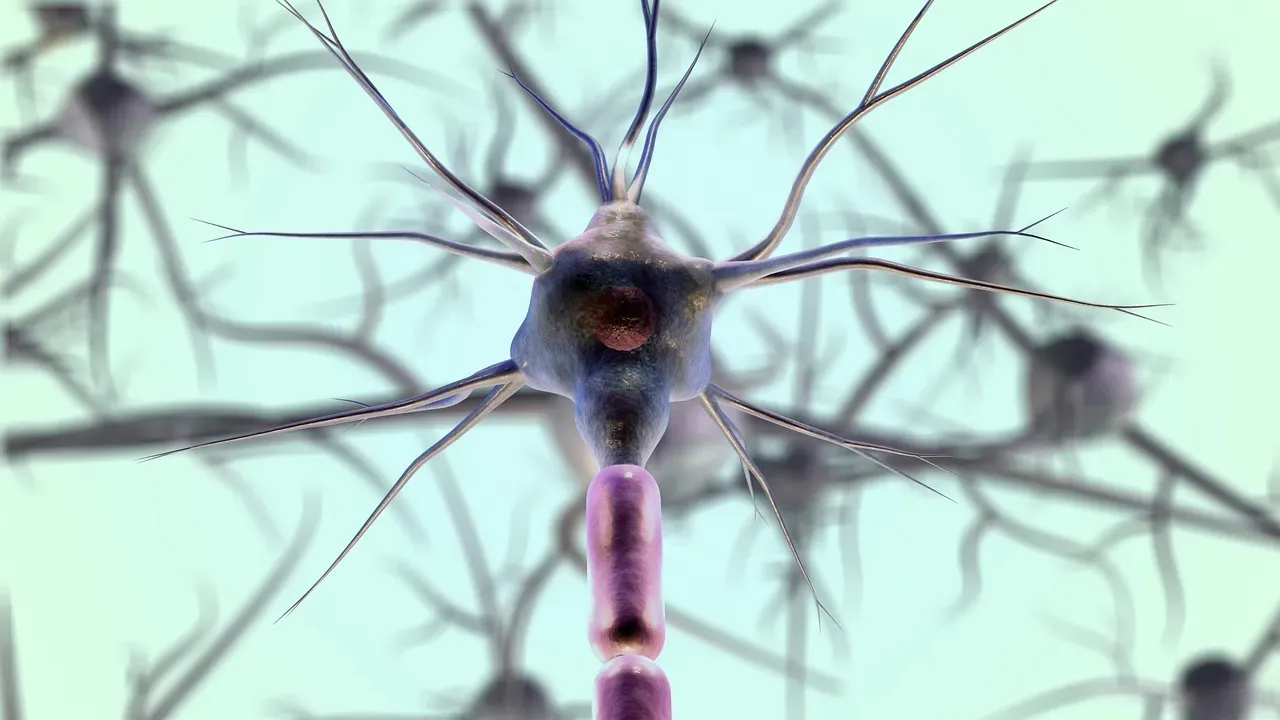
Some researchers think there might already be indirect hints pointing toward a deeper role for consciousness. For example, certain theories measure consciousness in terms of how integrated and differentiated information is within a system. The basic idea is that a system that both unifies and distinguishes information in rich ways has more conscious “depth.” This doesn’t prove a cosmic field exists, but it echoes the notion that consciousness is tied to patterns and flows of information, not just raw biological stuff.
Others point to phenomena like global brain synchrony during conscious states, as if the brain is acting like a coherent network rather than a bunch of isolated modules. Some people (and I’m one of them) find it tempting to see the brain as a kind of antenna or resonator, locking into particular modes of a larger field of possibilities. That’s a metaphor, not a completed theory, but it captures a feeling: that your mind might be less like a closed box and more like a dynamic node in a wider web of reality.
Why This Theory Both Fascinates and Alarms People
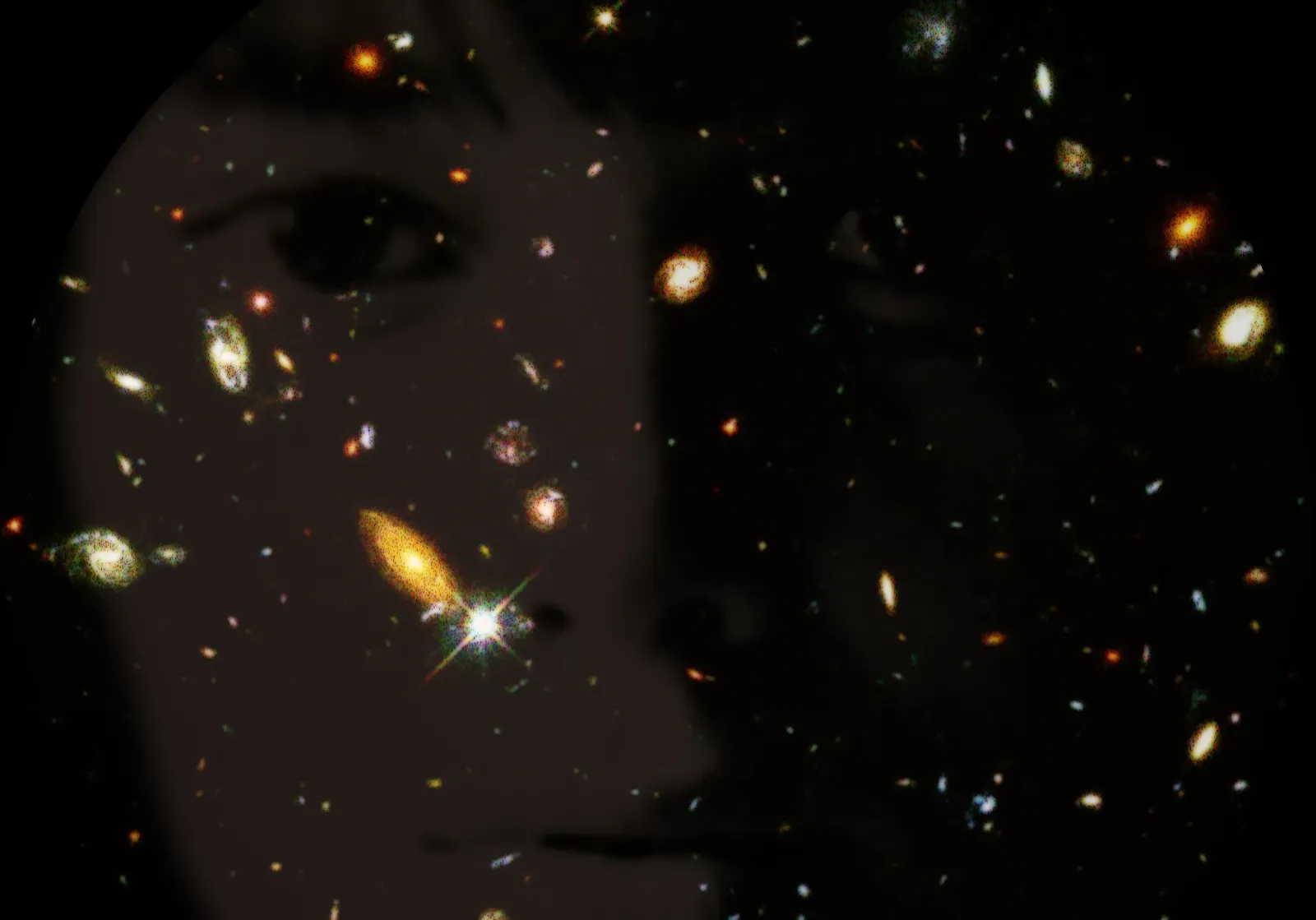
One reason this idea provokes such strong reactions is that it touches on questions we usually file under “spiritual” or “existential.” If consciousness is fundamental, then your inner life is not just a side effect of atoms bumping around; it’s somehow woven into the universe’s basic structure. For some, that suggests a universe that is less cold and indifferent than we were taught, more like a story that includes first-person experience as a core feature, not an accident.
On the flip side, many scientists fear that calling consciousness fundamental opens the door to vague, unfalsifiable claims. They worry it might blur the line between careful physics and wishful thinking, especially when people start using it to justify every odd experience or belief. That tension – between a deep human hunger for meaning and a strict demand for evidence – is part of what makes this theory so divisive. It asks us to reconsider what counts as a serious scientific question and what we’re willing to live with as an unexplained mystery.
What This Would Mean for Free Will and Personal Identity

If consciousness is a basic field of the universe, it quietly reshapes how we think about ourselves. In a purely materialist picture, you’re essentially a biochemical machine whose thoughts and choices are the end result of physical processes, whether or not you like the word “determinism.” In a field-based view, your individual mind is more like a local pattern in a universal background – a wave appearing in a larger ocean of awareness. You’re still uniquely you, but maybe not as isolated as you feel.
This could soften the edges around questions like free will. If consciousness is woven into the structure of reality, then your decisions might not be just the mechanical output of blind matter, but expressions of a deeper layer of order we don’t yet fully grasp. Personally, I find that idea oddly grounding rather than mystical. It doesn’t solve moral responsibility or make life easier, but it suggests that when you wrestle with a choice, you’re not just a clever robot calculating options – you’re a local flare-up of something the universe, at its core, actually does: experience.
Where the Debate Stands Now – and What Comes Next

Right now, the idea of consciousness as a fundamental field sits in a strange in-between space: too bold to ignore, too underdeveloped to accept as established science. There are serious philosophers and a small number of scientists exploring versions of it, trying to connect it to measurable structures like information, entropy, and network dynamics in the brain. At the same time, the mainstream view in neuroscience and physics still leans heavily toward consciousness as an emergent property of complex matter, not a basic ingredient of reality.
The real test will be whether any of these field-inspired theories can make concrete predictions that differ from standard models of the brain and then survive experimental scrutiny. Until that happens, this idea will remain provocative but provisional – something that stretches our imagination more than it settles our questions. Still, the very fact that serious thinkers are willing to ask whether consciousness might be as fundamental as space and time says a lot about how unfinished our picture of the universe really is. What would you have guessed: that the deepest mystery in science might be the simple fact that you’re aware right now?