
You probably grew up with a simple picture of your mind: it lives inside your head, sealed off from everything else, looking out at the world like a person watching a movie from a theater seat. That idea feels obvious, comforting, and tidy. But in the last couple of decades, researchers in neuroscience, psychology, and philosophy of mind have been quietly chipping away at it, and the picture that’s emerging is much stranger and more exciting. You’re starting to see results from brain imaging, behavioral experiments, and even robotics that suggest your mind may not stop neatly at your skull. Instead, your body, your tools, your social relationships, and even your physical environment all seem to shape what you think, feel, and perceive in real time. Once you see the evidence, the old sharp line between “inside” and “outside” starts to blur in a way that’s hard to unsee.
The Classic Picture: Your Mind as a Brain in a Box

You’ve been taught, mostly without anyone saying it outright, that your mind is what your brain does and that it lives safely inside your head. In this picture, your eyes, ears, and skin send information in, your brain does some secret processing, and then decisions and actions go back out. It’s like a computer with input and output devices, but the real action is hidden in the CPU. This view has been incredibly powerful in science and medicine, and it’s not exactly wrong. Your brain is obviously crucial. But when you treat the brain as a closed box, you tend to think of everything else – your body, your notebook, your phone, your friends – as just sources of data or passive tools. The new research is nudging you to see those “extras” as active parts of how your mind actually operates, not just accessories bolted on to a core mental engine.
Your Body Is Not Just a Vehicle, It’s Part of Your Thinking

If you’ve ever had “butterflies” in your stomach before a big talk or felt your shoulders suddenly loosen when you finally relax, you already know your body and emotions are intertwined. What’s changing now is that scientists are showing how your heartbeat, posture, breathing, and gut activity influence things you normally call “mental”: attention, memory, even moral judgment. In some experiments, simply changing people’s body positions or facial muscles shifts what they report feeling or how risky they think a situation is. You can see this in your own life when you pace while thinking, gesture with your hands to explain something tricky, or feel mentally sharper after a brisk walk. Instead of your body being a dumb vehicle driven by your brain, it behaves more like a co-author of your thoughts and feelings. The border between “my mind” and “my body” turns out to be not a solid wall but more like a constantly moving shoreline.
Tools and Technology as Temporary Pieces of Your Mind

Think about the last time you used your phone’s map to get somewhere new. You probably did not memorize every turn; instead, you offloaded navigation to the device and checked in when needed. In a very literal way, part of your “sense of where you are” was sitting in your hand, glowing on that screen. Researchers studying cognition argue that when you reliably lean on tools like this, they effectively become extensions of your mind. You’ve done this with paper and pen for years: a to‑do list becomes extra memory, a calculator handles arithmetic for you, a calendar holds commitments you’d otherwise forget. The key idea is that your thinking is not locked inside your brain but stretches out into whatever stable tools you use to support it. When you start to see your notebook or your phone as part of your thinking system, the supposed edge between mind and world feels a lot more porous.
Perception as a Dance Between Brain, Body, and World
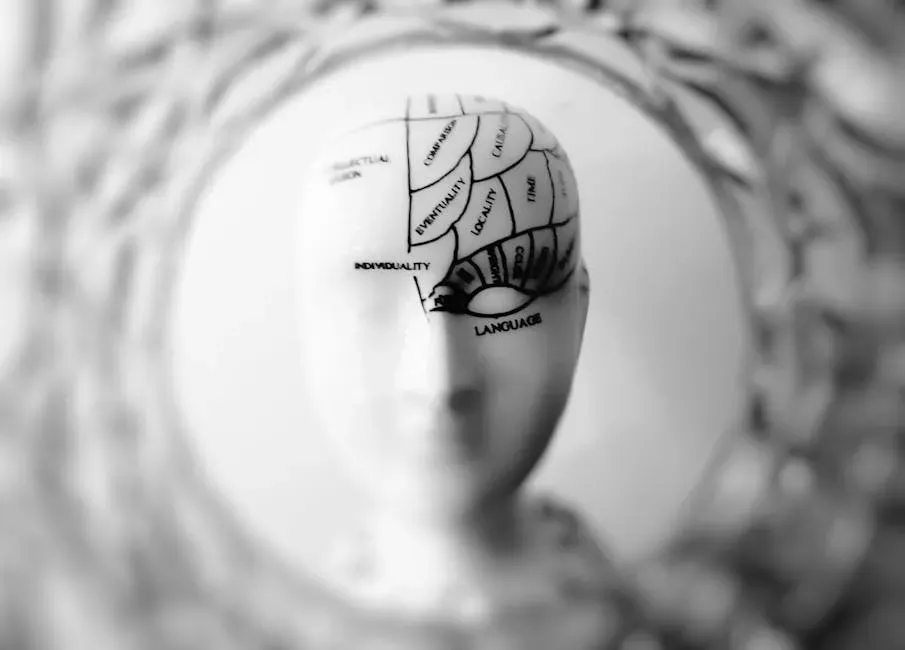
You might assume that your senses work like cameras and microphones, passively recording a fixed external reality. Modern neuroscience paints a different picture: your brain is constantly predicting what it expects to see, hear, and feel, then updating those predictions based on incoming signals. What you experience is less like a photograph and more like the brain’s best guess, assembled on the fly from both internal expectations and external data. You notice this whenever you mishear song lyrics and then can’t “unhear” them, or when you jump at a shadow because you expected something frightening. Your perception depends on how you move through the world, where you direct your gaze, how your hands explore an object, and what you’re primed to notice. In that sense, seeing and hearing are not purely internal events; they are active exchanges between your brain, your moving body, and the environment that responds to your movements.
Other People Live Inside Your Head More Than You Realize
You probably feel like your thoughts are private, but they’re shaped by other people far more than you’d like to admit. Language is the clearest example: the concepts you use to describe your inner life – like “stress,” “identity,” or “imposter syndrome” – are social tools you inherited. Without this shared vocabulary, your inner landscape would be fuzzier and harder to navigate. On a more subtle level, you constantly simulate others in your mind: what they might think, how they might react, whether they approve. Studies of social cognition and mirror systems show how your brain reuses circuits for your own actions when you watch or imagine someone else’s. When you run a conversation in your head, argue with a friend who isn’t in the room, or feel motivated because you imagine someone’s judgment, you’re letting other people occupy mental space inside you. Your “mind” starts to look less like a sealed unit and more like a crowded intersection of voices and perspectives.
Environment and Habit: How Places Quietly Think for You

Look around the room you’re in right now, and you’ll probably notice that it “nudges” your behavior. A tidy desk invites you to focus; a cluttered kitchen whispers that you should snack; a comfortable couch almost pulls you into scrolling on your phone. Psychologists studying situated cognition argue that your surroundings are not neutral backdrops. They quietly steer your attention and actions, doing cognitive work that you might otherwise have to do consciously. You can use this to your advantage. When you put your running shoes by the door, you’re letting the environment remember your intention for you. When you keep healthy food at eye level and hide junk food, you’re outsourcing self‑control to your pantry layout. Over time, these physical cues and routines form loops where the environment prompts you, you respond, and then you reshape the environment again. In that ongoing loop, it becomes hard to say exactly where your “mind” ends and your “context” begins.
What This Means for Free Will and Responsibility

Once you accept that your mind leaks into your body, your tools, and your social world, it raises uncomfortable questions about free will and personal responsibility. If your choices depend heavily on your surroundings, your habits, and the people around you, then you’re never just a solitary decision-maker weighing options in a vacuum. You’re more like a node in a web of influences, some of which you did not choose. That doesn’t mean you lose responsibility; it means responsibility widens. You can see your job not only as “making better choices” but also as deliberately designing your environment, selecting your tools, and curating your relationships so they support the person you want to be. Instead of asking only what kind of mind you have, you start asking what kind of mind‑world system you’re building around yourself every day.
How You Can Experiment with a More “Extended” Mind in Daily Life

You don’t need a lab to test these ideas; you can play with them right now. Try shifting your posture when you feel stuck, stepping outside for a few minutes, or talking through a problem out loud, even if no one’s listening. Notice how quickly your inner state changes when your body or surroundings change first. You’re not just decorating your life; you’re tuning the instrument your mind plays through. You can also deliberately treat tools and people as part of your cognitive system. Use checklists to relieve your memory, set up digital reminders where you actually need them, and build small rituals with friends or coworkers that help you think more clearly together. When you do this, you’re not “cheating” or making up for a weak mind. You’re acknowledging that your mind was never meant to work alone in the first place.
Conclusion: Living with a Mind That Spills Over Its Edges

Once you start seeing how much your body, tools, relationships, and surroundings shape your inner life, the old image of a mind sealed in a skull starts to feel too small for you. Instead, you begin to see yourself as a living process stretched across brain, body, and world, constantly negotiating what counts as “inside” or “outside” from one moment to the next. That can feel unsettling, but it’s also oddly freeing, because it gives you more levers to pull when you want to change how you think and feel. You’re not just a passenger inside your head; you’re also an architect of the larger system your mind depends on. Every choice about how you move, what you carry, where you spend time, and who you share your life with becomes part of the story your mind is able to tell. So the next time you notice your thoughts shifting as you stand up, step out, or speak to someone new, you might quietly ask yourself: were those thoughts ever really just in your head at all?