

Imagine waking up one day to find out that everything science told you about your mind was only part of the story. The idea that consciousness is just neurons firing in your skull has been repeated for decades, but cracks are starting to show in that simple picture. From strange lab results to age‑old philosophical puzzles that refuse to die, more scientists and thinkers are starting to admit: we might be missing something big.
This doesn’t mean throwing away neuroscience or denying that the brain matters. It means asking a braver question: what if consciousness is not only produced by the brain, but also connected to something deeper, more fundamental about reality itself? It’s a bit like realizing that the light coming from a lamp matters, not just the wires and the bulb inside. The hardware is crucial, but maybe it’s not the whole story.
The Hard Problem That Refuses To Go Away
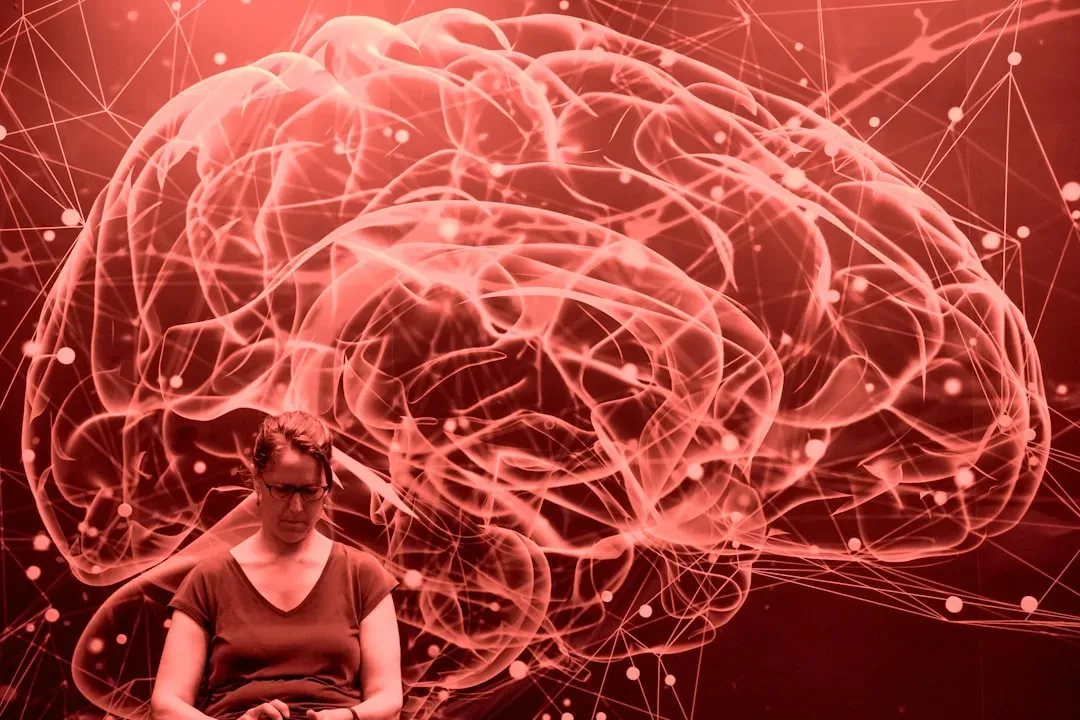
Here’s the uncomfortable truth: we still don’t know why anything feels like something from the inside. You can map brain activity in stunning detail, track electrical signals, and even predict someone’s decisions a split second before they’re aware of them, but that doesn’t explain why pain hurts or why chocolate tastes pleasant. This mystery has been called the “hard problem” of consciousness, and despite decades of brain research, it remains stubbornly unsolved.
Think of it this way: if you open a computer, you’ll find circuits and chips, not YouTube videos and music. The same goes for your brain – scan it all you want, you’ll only see cells and chemistry, not the feeling of heartbreak or awe. Some researchers argue that consciousness might be more like a fundamental property of the universe, woven into reality itself, rather than a mere byproduct of neural machinery. That idea sounds wild, but it at least takes our lived experience seriously instead of brushing it aside as an illusion.
When Brains Break But Awareness Stays Strange

Some of the most puzzling clues come from what happens when the brain is damaged, disrupted, or deeply altered. Take split-brain patients, whose left and right hemispheres are surgically separated to treat severe epilepsy. In certain tasks, they behave almost as if there are two centers of awareness in one skull, each with its own access to different information. That alone raises unsettling questions about how tightly consciousness is tied to a single, unified brain system.
Then there are people who lose large parts of their brain and still function surprisingly well, or those in so‑called “minimally conscious” or “locked‑in” states who show signs of inner awareness despite not being able to communicate. Add near-death experiences and certain anesthesia paradoxes, where brain activity drops but people later report vivid experiences, and the picture gets even messier. None of this proves that consciousness floats free of the brain, but it suggests the relationship might be more complicated than simple “brain on, experience on; brain off, experience off.”
Psychedelics, Meditation, And The Edges Of The Mind
In the last decade, serious research into psychedelics and deep meditation has made something clear: change brain activity in certain ways and people report radical shifts in how reality feels. Under substances like psilocybin or DMT, many describe a powerful sense of unity, timelessness, and connection to something larger than themselves. Brain scans often show a temporary breakdown of usual networks and patterns, as if the normal filters that shape our experience of the world have been loosened.
Experienced meditators, after years of disciplined practice, can enter states where the sense of a solid, separate “self” fades, leaving behind a kind of open, spacious awareness. Some neuroscientists interpret these effects as the brain simply misfiring or reorganizing itself temporarily. Others suggest that our normal waking consciousness might be a narrow slice of a much broader landscape, like one radio station out of many that reality can broadcast. Either way, these altered states hint that consciousness might not be as fixed or as local as we once believed.
Is Reality Itself Conscious In Some Way?
One of the most provocative ideas gaining attention is that consciousness might be a basic feature of the universe, not an accidental quirk of biology. This view, sometimes called panpsychism, suggests that at some fundamental level, the building blocks of reality might have tiny slivers of experience. Our rich human consciousness would then be what happens when these countless fragments combine and organize in complex ways, especially in brains.
This idea isn’t about rocks having thoughts or phones feeling lonely. It’s more like saying that consciousness doesn’t suddenly appear out of nowhere when matter reaches a certain complexity; instead, it’s gradually built into the fabric of existence. While this is still controversial and far from proven, it offers one way to bridge the gap between physical processes and inner experience without pretending the gap doesn’t exist. It also quietly challenges the old view that the universe is just a giant, mindless machine with us as a strange exception.
Quantum Puzzles And The Observer Question
For over a century, quantum physics has shown that at very small scales, reality behaves in ways that seem to depend on observation and measurement. Particles act like smeared-out waves until they are measured, at which point they appear to “choose” a definite state. Some interpretations of these experiments raise a tantalizing question: does consciousness play any role in how reality becomes definite, or is it just another physical interaction doing the job?
Most physicists today avoid saying consciousness causes quantum effects, and with good reason – there’s no solid proof of that. But the fact that the act of observation sits so awkwardly at the heart of modern physics keeps fueling speculation. A few researchers explore the idea that mind and matter might be more deeply intertwined than we usually admit, not in a magical way, but as two sides of the same underlying reality. Even if quantum theory doesn’t ultimately rely on consciousness, the mere possibility pushes us to think beyond simple “brain as a machine” metaphors.
Information, Networks, And Consciousness As A Field
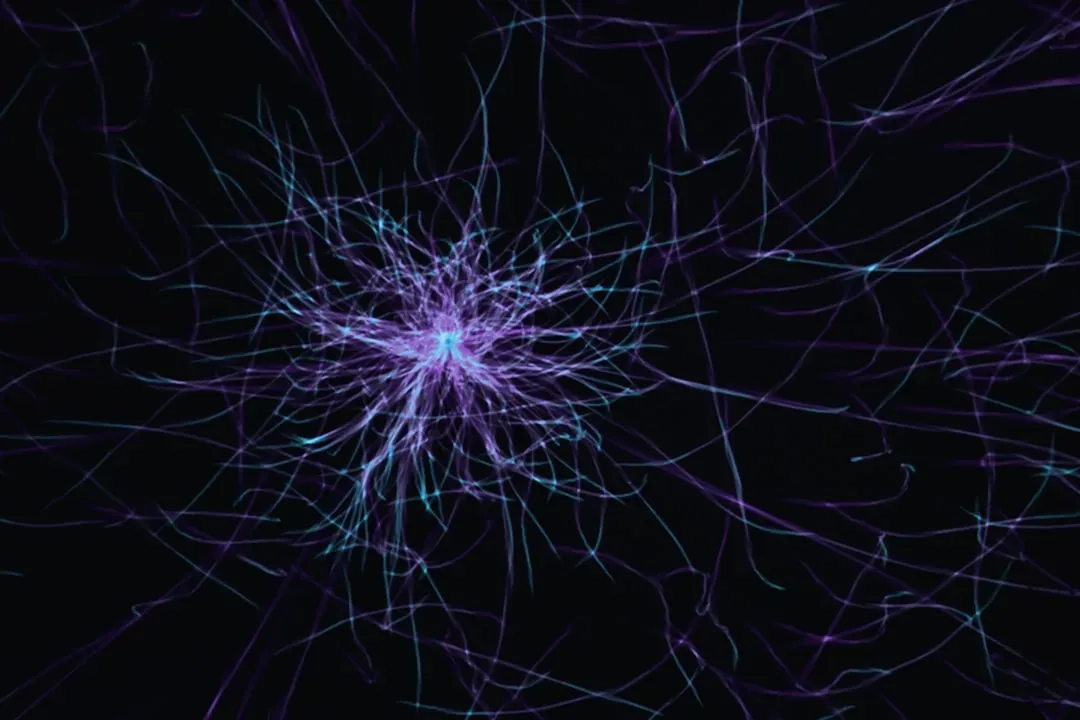
Another route many scientists are exploring is to treat consciousness as closely tied to information and its organization. Some theories propose that what really matters is not the specific biological stuff the brain is made of, but the patterns of information flowing through it. According to this view, a sufficiently complex and integrated system of information could give rise to conscious experience, whether it’s made of neurons, silicon chips, or something else entirely.
Others flirt with the idea of a kind of “field of consciousness,” loosely comparable to how electromagnetic fields work, where brains don’t so much create consciousness from scratch as they tune into and structure it in particular ways. These ideas remain speculative and testable evidence is still limited, but they at least offer a clearer framework than simply pointing at gray matter and saying, “It just somehow happens here.” If consciousness tracks information, networks, or fields, then our minds might be more entangled with the world than we usually imagine.
Why This Question Matters For How We Live

As abstract as all of this sounds, what we believe about consciousness shapes how we treat each other and the world around us. If we’re convinced that humans are nothing but biological machines and consciousness is a disposable side effect, it becomes easier to dismiss suffering, ignore inner life, or treat people as data points. On the other hand, if consciousness is fundamental or more widespread than we think, then every experience – yours, mine, even those of nonhuman animals – starts to look more precious.
It also affects how we approach technology and artificial intelligence. If consciousness is tightly bound to biological brains, building a conscious machine might be impossible, no matter how advanced our computers become. But if consciousness is deeply connected to information, fields, or universal features of reality, then creating or awakening new forms of awareness might be more than science fiction. Either way, taking consciousness seriously forces us to slow down, question our assumptions, and rethink what it means to be alive and aware in a mysterious universe.
A Mystery Hiding In Plain Sight

For all our brain scans, models, and theories, the simple fact that you are reading this and having an experience remains profoundly unexplained. Consciousness might turn out to be a clever trick of neural circuits, or it might be a window into something far deeper than our current science can fully grasp, something woven into the very structure of reality. Either way, treating it as just a side effect of biology feels more and more like an unfinished story rather than a final answer.
Maybe our brains are not factories that manufacture consciousness from nothing, but instruments that tune, shape, and focus a kind of awareness that is already there in some form. Standing in that possibility is both unsettling and strangely comforting, like staring up at the night sky and realizing how little we truly know. As research pushes forward, the real question might not be whether consciousness is more than the brain at work, but whether we’re ready to face what that could mean for who we are. What would you be willing to question if the answer turned out to be far stranger than you expected?